
Paddy Rice Grain Dryer
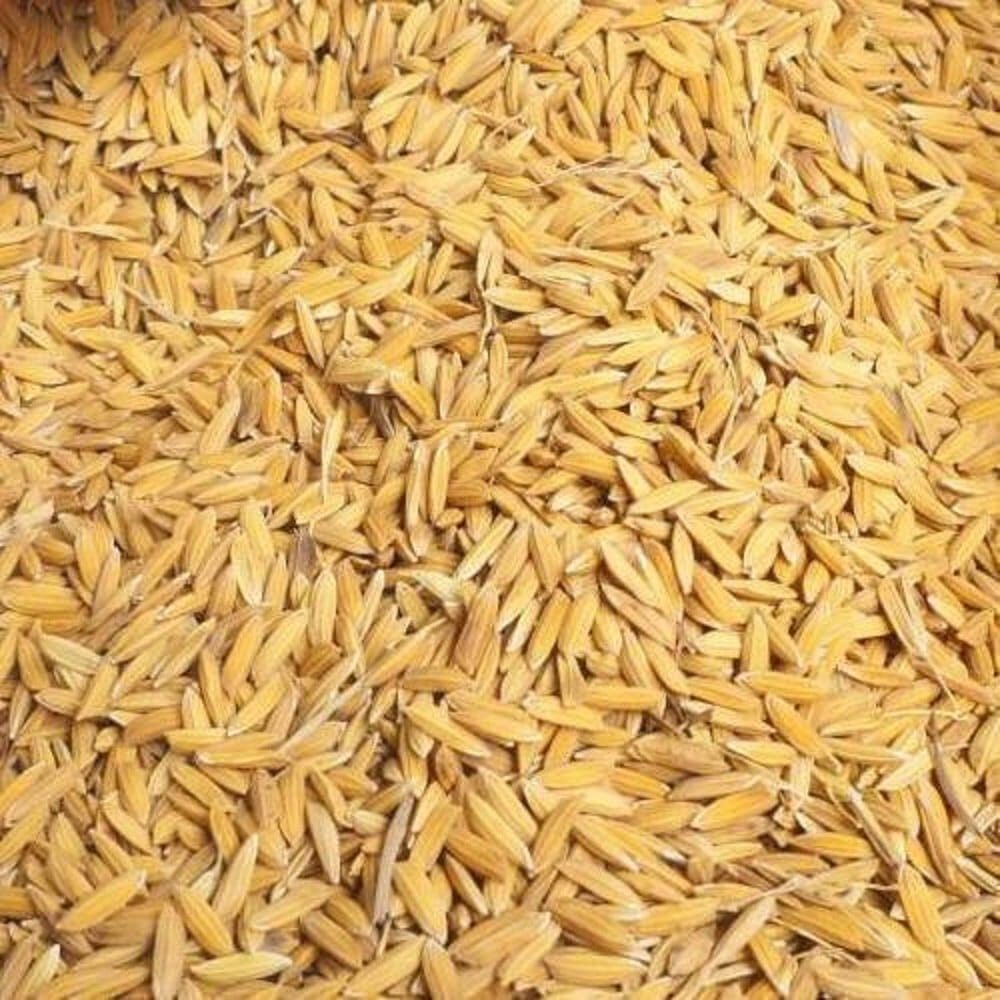
Paddy rice is dried before husking. Rice in this pre-husked state is called paddy rice (rough rice). Paddy rice has a number of characteristics and requirements that a grain dryer must take into account. That is precisely what this article addresses.
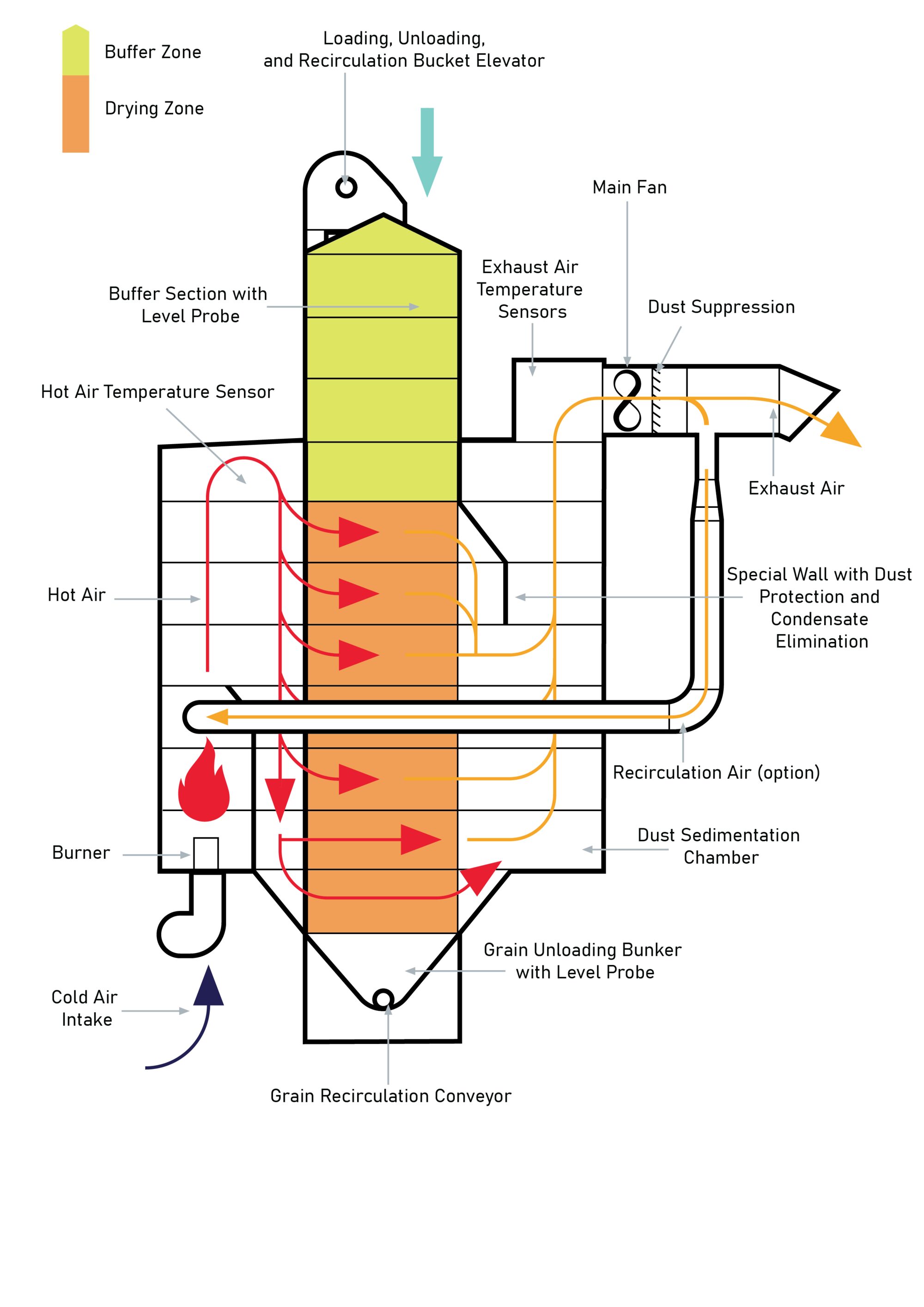
In brief, paddy rice is dried at low temperature and for a comparatively long time, allowing the grain to periodically “rest” from heat. That is precisely why batch (recirculating) grain dryers with a tempering zone are optimal for rice, rather than the high-temperature continuous-flow dryers used for corn.
Paddy rice is highly abrasive yet at the same time brittle. For this reason, the critical components of the dryer (air ducts, bucket elevators) are manufactured from wear-resistant steels and linings, and the grain itself is conveyed gently at low speeds to avoid damage during multiple recirculation passes.
Rice dryers are flexible in terms of fuel — they operate on natural gas, liquefied petroleum gas (LPG), diesel, or biomass, which helps optimise drying costs. And if a farm dries only rice, it makes sense to reduce the output of the main fan: rice does not require the large airflow volumes needed for corn — this also reduces fuel consumption and dust generation.
Characteristics of Paddy Rice Drying
We already know that truly universal grain dryers do not exist, and paddy rice is no exception. This is due to the specific properties of the product itself.
A grain dryer intended for paddy rice must possess specific characteristics. Although it is technically possible to use a “standard” grain dryer for drying rice, the efficiency and quality of such drying will be far from ideal. Indeed, many grain dryers used in Eastern Europe are optimised for corn. What exactly is the issue?
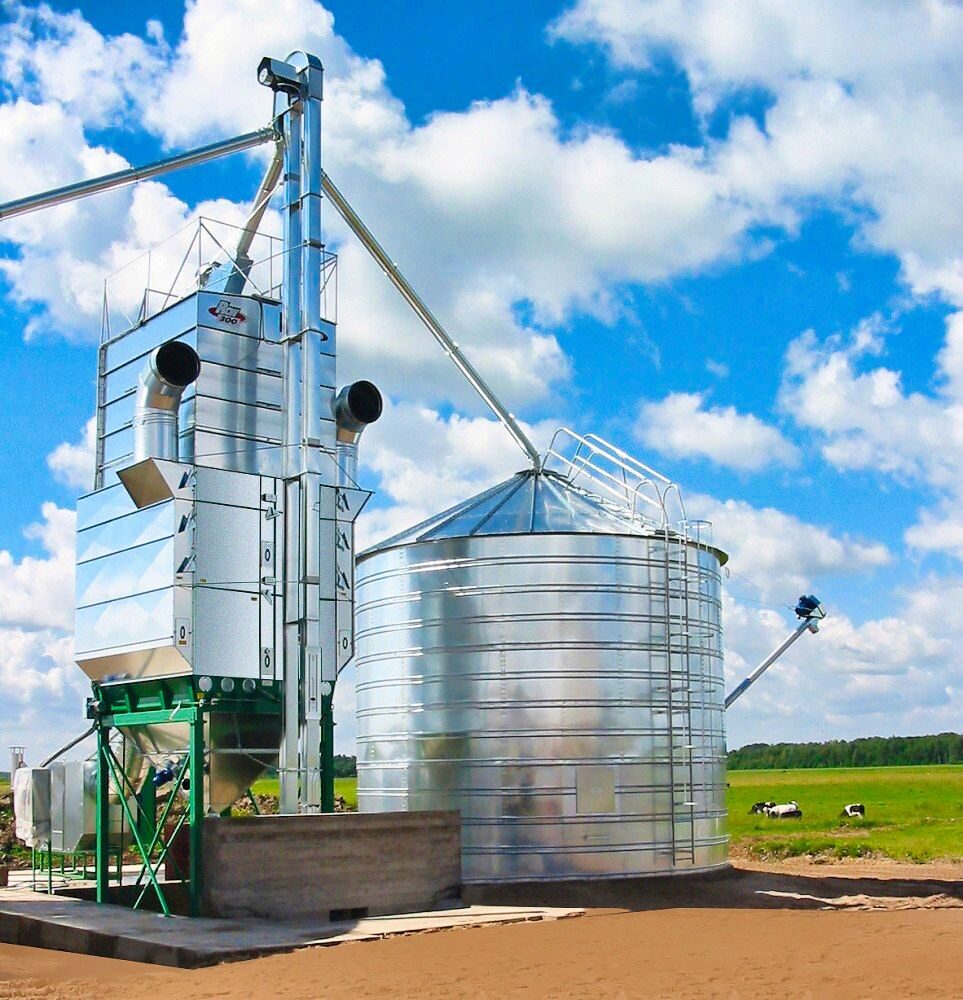
Photo: A typical Finnish paddy rice grain dryer — Mepu. How do you identify a rice grain dryer from a photograph? Read the answer below.
Below are some key characteristics of paddy rice that are significant for selecting the appropriate type of grain dryer.
1. Grown by small-scale farms
Worldwide, rice is cultivated by small farmers and small agricultural enterprises. Therefore, unlike corn, large-capacity grain dryers are not required for rice.
2. Many different varieties
Rice is a unique crop that has a great many different varieties and types. For this reason, a grain dryer must be capable of drying small batches of rice so that different varieties are not mixed together. (This is difficult to achieve in a large continuous-flow dryer, such as one used for feed corn.)
3. Highly abrasive crop
Rice is extremely abrasive — possibly even more so than soybean. Therefore the dryer construction must be built from the most wear-resistant components possible.
4. Rice requires tempering
To obtain high-quality rice, the drying process requires brief rest periods away from heat. The grain dryer must be able to provide this drying regime.
During tempering, moisture migrates from the interior of the kernel to its surface, and the overall temperature and moisture gradients within the grain equilibrate, reducing kernel damage and favourably affecting the organoleptic properties of the rice.
Our Grain Dryers for Rice
For drying paddy rice we select gentle batch grain dryers with a tempering zone, wear-resistant components, and low-speed bucket elevators. Below are our dryers; the specific type for rice is selected individually based on variety, throughput requirements, and quality criteria.
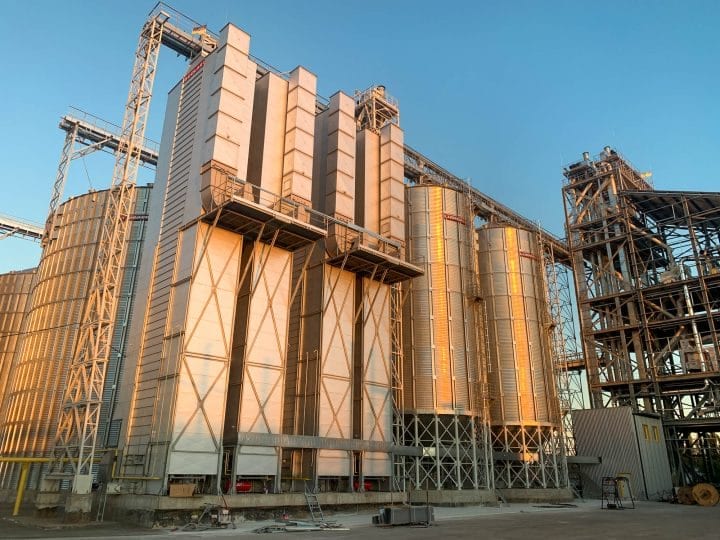
Scolari Grain Dryers
Italian mixed flow grain dryers equipped with full heat recovery and heat recirculation systems offer the most economical solutions for drying corn, which requires high drying temperatures.
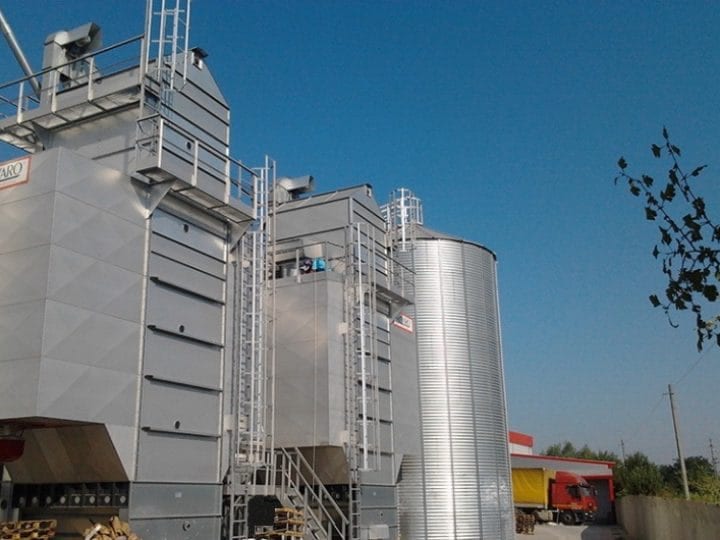
Ravaro Batch Grain Dryers
Italian mixed-flow batch grain dryers, suitable for medium-sized farms or tailored for special products like paddy rice that require a resting period.
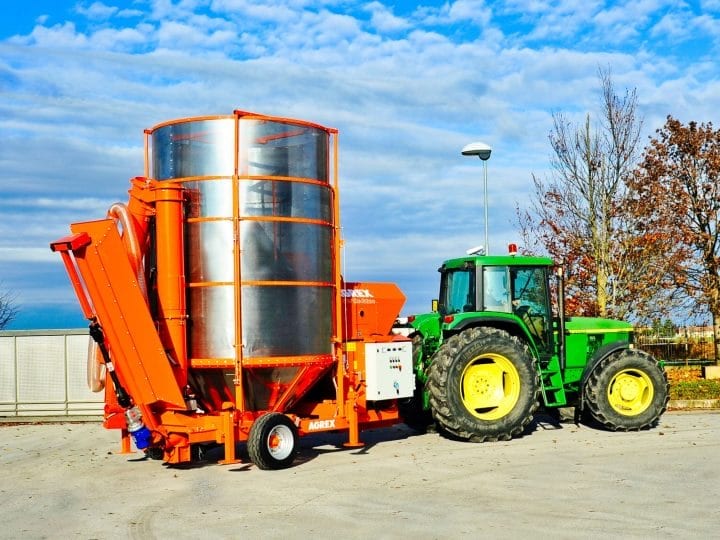
Agrex Mobile Grain Dryers
Italian mobile batch grain dryers for small and medium-sized farmers do not require construction work, are completely autonomous in operation, and can run on any type of fuel.
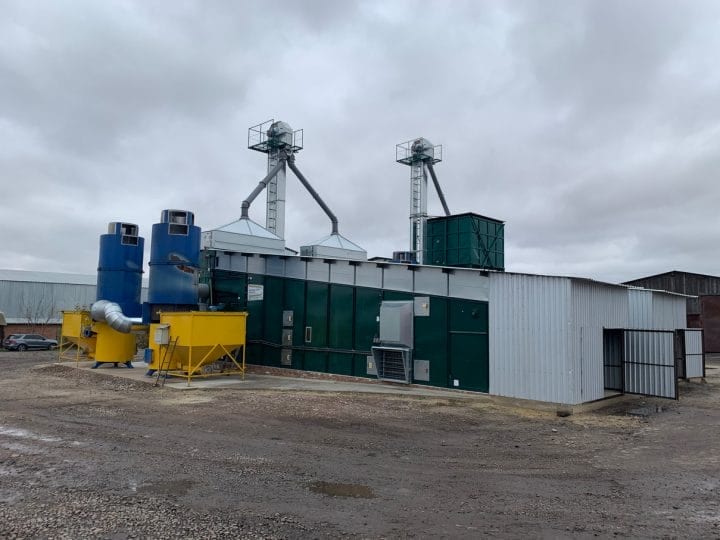
Alvan Blanch Grain Dryers
Horizontal grain dryers from Great Britain. The short height allows to minimize total capital investments. Conveyor belt technology ensures gentle grain drying.
Design of a Paddy Rice Grain Dryer
Taking into account the characteristics of paddy rice drying, we arrive at what a dryer for paddy rice should look like:
Drying mode – batch
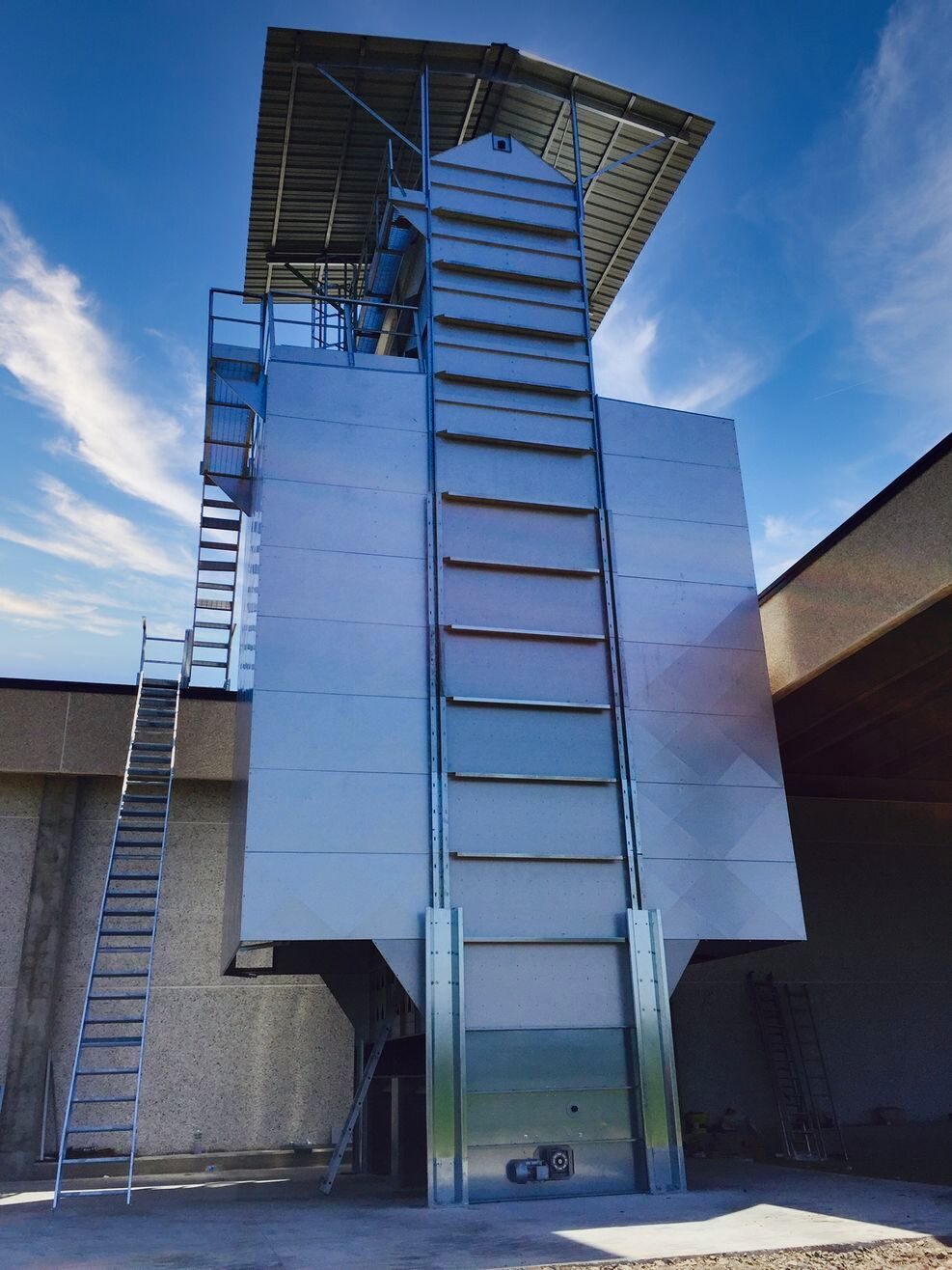
For drying paddy rice we recommend using batch grain dryers. This is necessary for two reasons:
1) To be able to dry a small batch of grain.
(In a continuous-flow dryer this would be difficult!)
2) To allow the rice to temper between cycles in the buffer zone.
(Continuous-flow dryers have no buffer zones. Only a two-zone dryer is equipped with a small tempering zone. Its capacity is sufficient for corn — but not for rice…)
Photo: An Italian batch rice dryer — Ravaro.
Large buffer zone
The buffer zone (silo section) is the upper part of the grain column in which the grain is not aerated. This section serves several purposes:
- Creating a barrier between the ambient air and the air ducts.
- Providing control of the dryer fill level (grain-level sensors are installed here for this purpose).
- In batch grain dryers it may also serve as the tempering zone.
In a corn dryer this section is minimal, occupying 2–3 dryer sections, and its purpose is limited to points 1 and 2 only. In rice dryers, however, it typically occupies no less than 2/5 of the entire grain column height! This is done so that the rice grain has sufficient time to “rest” (temper) between cycles.
Photo: A batch Chinese paddy rice grain dryer. An ideally large buffer zone.
Low-speed bucket elevators
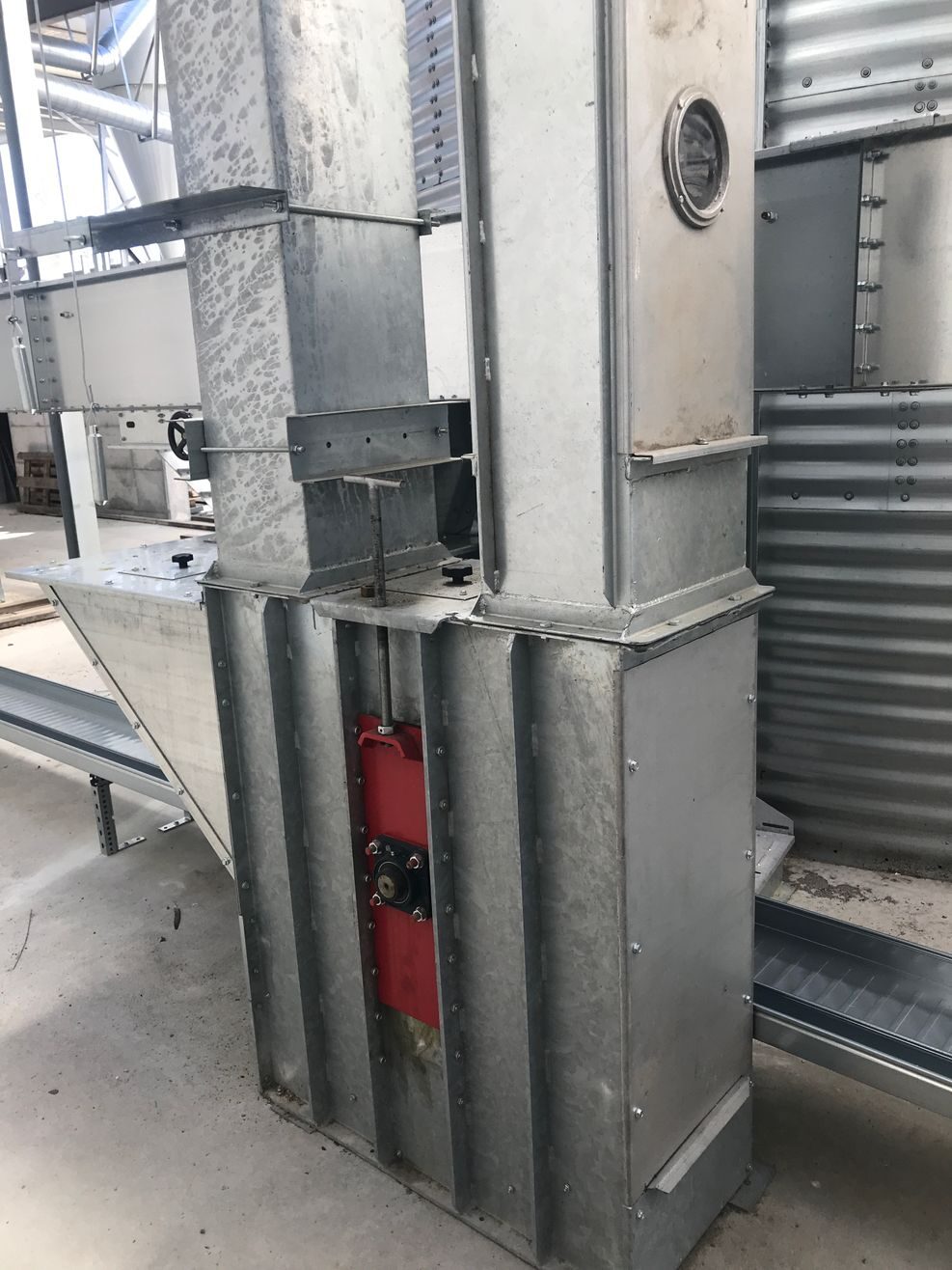
For drying any grain in batch mode, it is important to minimise grain damage as much as possible. During drying in dryers of this type, the grain passes through the tower 3–5 times, and sometimes more. Therefore the bucket elevators of a batch grain dryer must be low-speed.
However, paddy rice is a more fragile crop than other types of grain, and therefore must be handled with even greater care.
We recommend that the bucket elevators of a rice grain dryer have a belt speed of no more than 1.8–2.0 m/s to reduce grain damage. For reference: a standard elevator bucket conveyor has a belt speed of 2.5–3.0 m/s, and sometimes higher. Such speeds are unacceptable for rice.
Photo: A low-speed (1.75 m/s) Ravaro bucket elevator for gentle grain handling.
Wear resistance
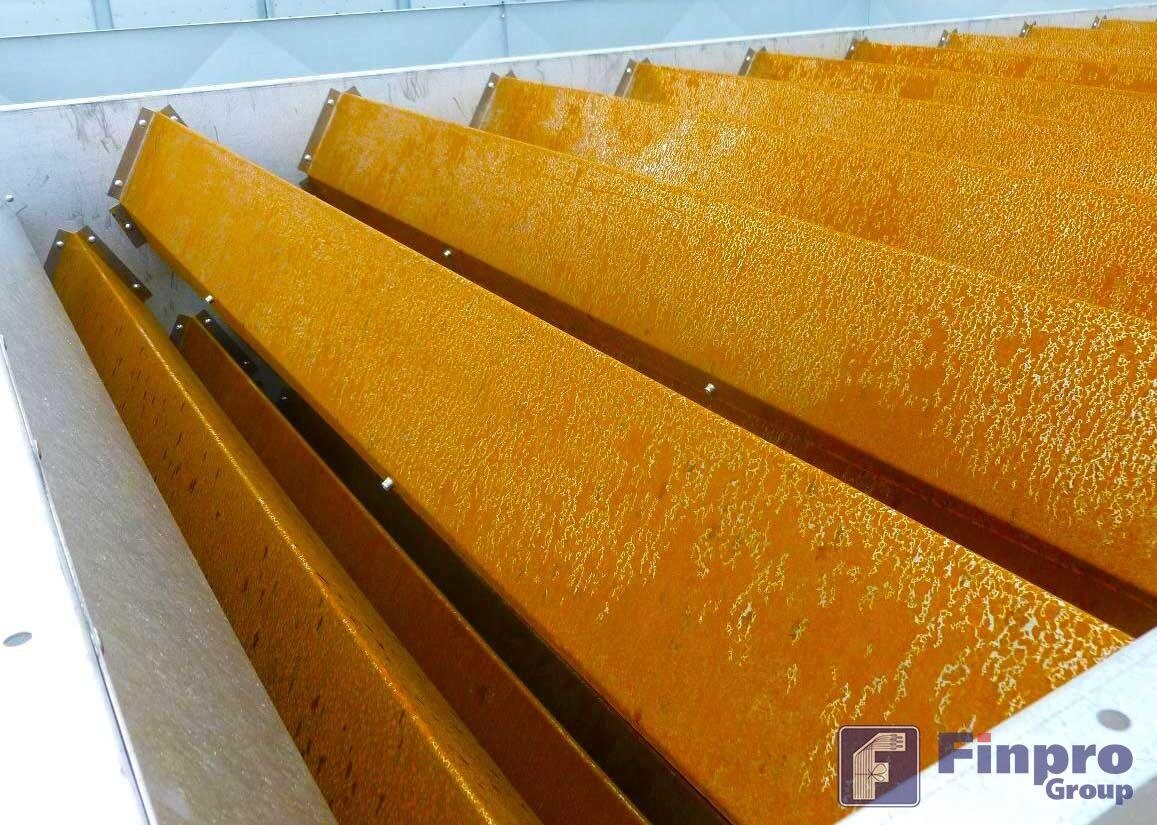
Given the high abrasiveness of paddy rice, the dryer components must be manufactured from specially wear-resistant steels.
This applies in particular to the air ducts inside the grain column. Aluminium or, better still, Cor-Ten steel are recommended. You can read more about Cor-Ten steel in the article linked below.
Bucket elevator aspiration
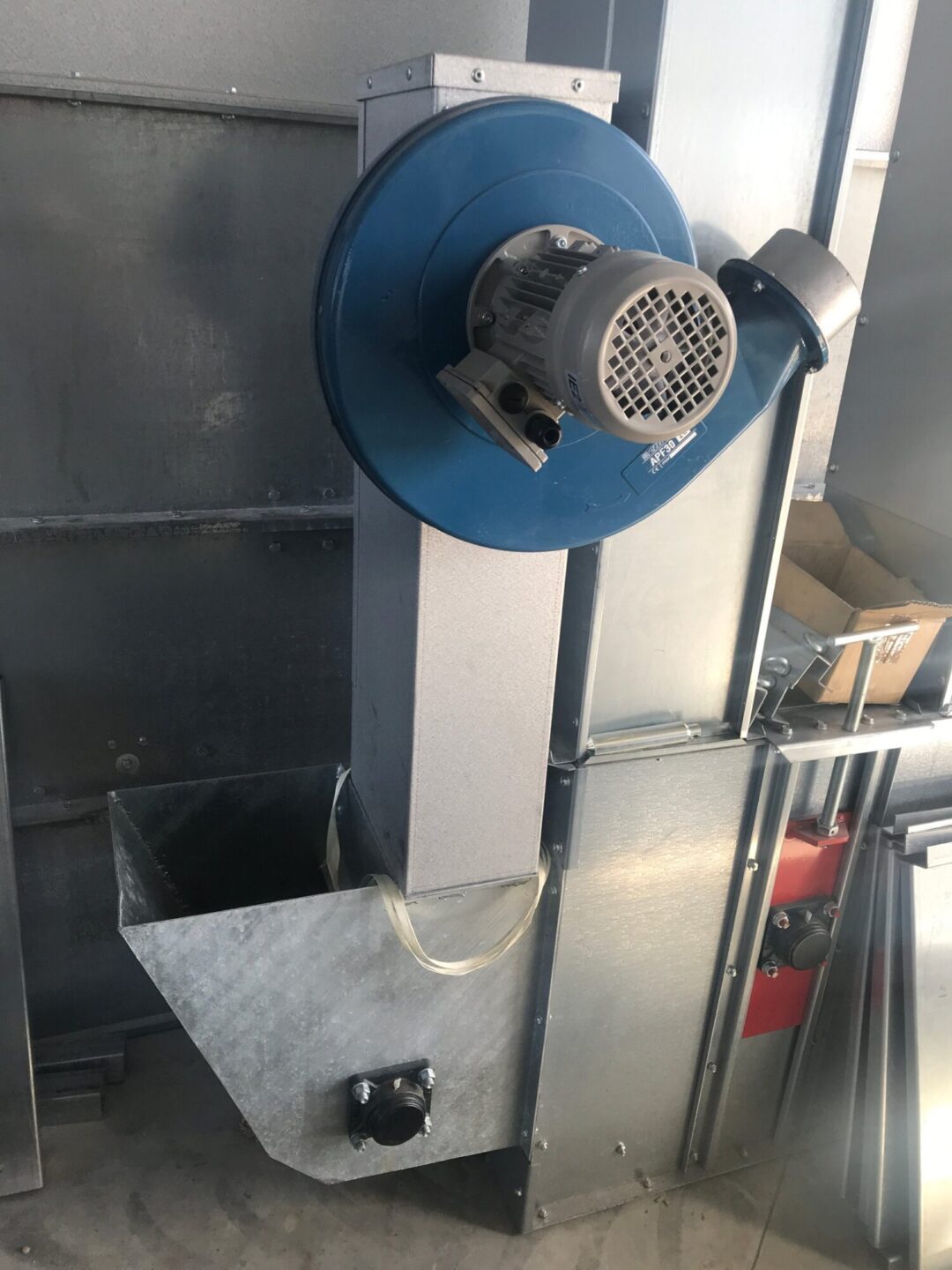
Since the grain passes through a batch grain dryer multiple times, elevator aspiration is desirable for any batch grain dryer.
It is even more desirable for drying paddy rice.
Photo: Ravaro bucket elevator aspiration unit (during installation).
Using a Rice Dryer for Corn
Why is it a bad idea to dry corn in a rice grain dryer?
Throughput
Drying corn in a rice dryer is unproductive. A grain dryer for corn should ideally be a continuous-flow type (unless it is a small farm operation). A continuous-flow grain dryer delivers significantly higher throughput for the same grain column volume. Furthermore, rice dryers are typically low-temperature units, whereas feed corn is dried at temperatures of 120°C and sometimes higher. Drying corn in a rice dryer will take a very long time.
Not designed for cold weather
Corn is dried during cold weather, often in freezing conditions. Finpro Engineering customers dry corn at temperatures of -20°C and below. Paddy rice, by contrast, is dried in warm weather. For this reason, not all manufacturers insulate rice grain dryers. When an uninsulated dryer is operated in winter, throughput drops significantly, fuel consumption increases, and final moisture uniformity deteriorates. In addition, various problems may arise — for example, corn freezing to the walls of the upper silo section, condensate running down the dryer walls into the grain, pneumatic actuators freezing up, and so on.
No heat recovery
Rice grain dryers do not incorporate fuel savings through heat recovery systems. Since they are batch units, cooling takes place in a separate cycle after the drying cycle has completed. This means it is not possible to recover cooling air during the drying cycle.
This should not be confused with the recirculation of part of the exhaust drying air (shown in the diagram at the beginning of this article as “Recirculation Air, option”): this can be implemented on a batch dryer and partially returns heat. However, it is not the same as full heat recovery from the cooling zone — that is fundamentally impossible in a batch dryer, since drying and cooling are separated in time.
Corn, as a high-temperature product, consumes very large amounts of fuel. Drying corn without heat recovery will be expensive!
Good news
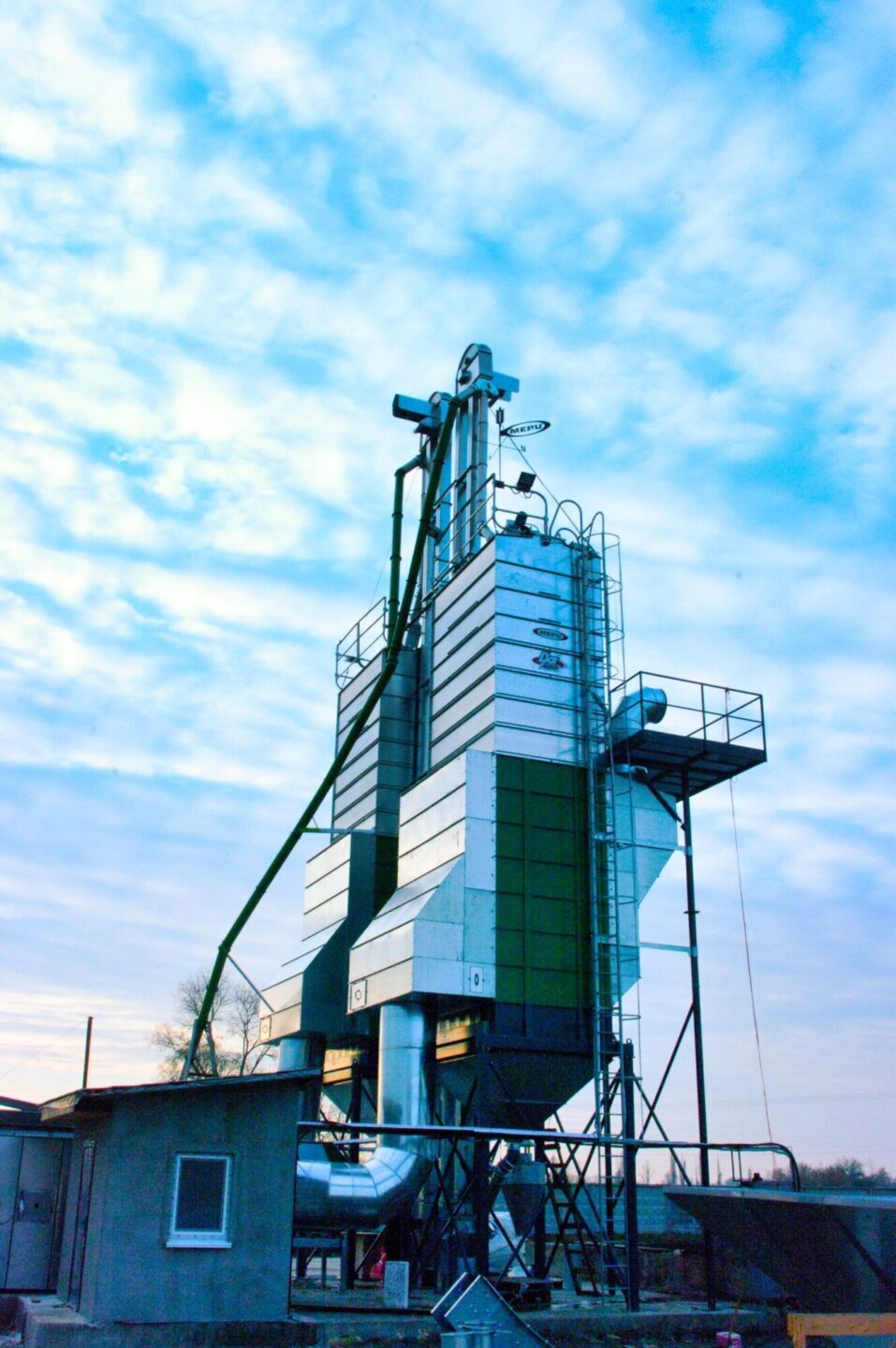
There are many manufacturers in Europe that produce both rice dryers and conventional grain dryers designed for drying other crops — those more traditional in Eastern Europe.
Purchasing continuous-flow grain dryers from such manufacturers is a safe choice. The fact that they also produce rice grain dryers is not a shortcoming — it is an advantage. After all, if a dryer's components can handle such a fragile and highly abrasive crop as paddy rice, coping with corn or sunflower will be considerably easier.
However, it is important to examine carefully what is actually being offered. Is it genuinely a corn dryer? For example, the majority of Chinese grain dryers marketed as corn or universal dryers turn out on closer inspection to be batch, low-temperature units. Only the Chinese can dry corn in them.
Before purchasing any grain dryer, we still recommend either inviting us to a meeting or reading the overview of grain dryer types on our website.
Photo: A Mepu rice grain dryer operating in real field conditions revealed a whole range of problems when drying corn.
Conclusion
We do not recommend purchasing a rice dryer for drying corn, nor purchasing a corn grain dryer for drying rice. As discussed above, drying rice requires a wear-resistant, batch grain dryer with a large buffer zone and low-speed bucket elevators with aspiration. For corn, a continuous-flow, high-throughput, high-temperature dryer is required. These are two completely different machines!
If it so happens that you need to dry both rice and corn, contact us. Semi-universal grain dryers exist that can dry both crops with reasonable efficiency, but we need to understand exactly which crops, where, and when you plan to dry them.
We will help you make the right choice, purchase a grain dryer and avoid the various associated risks. Finpro Engineering supplies the equipment and supports the project from engineering to commissioning and maintenance of the facility. Call us: +380 (67) 111-6668.
Still have questions? Get in touch!
By phone
WhatsApp: +90 (536) 452-1184By e-mail
Our address: info@finpro.engineering
Related products

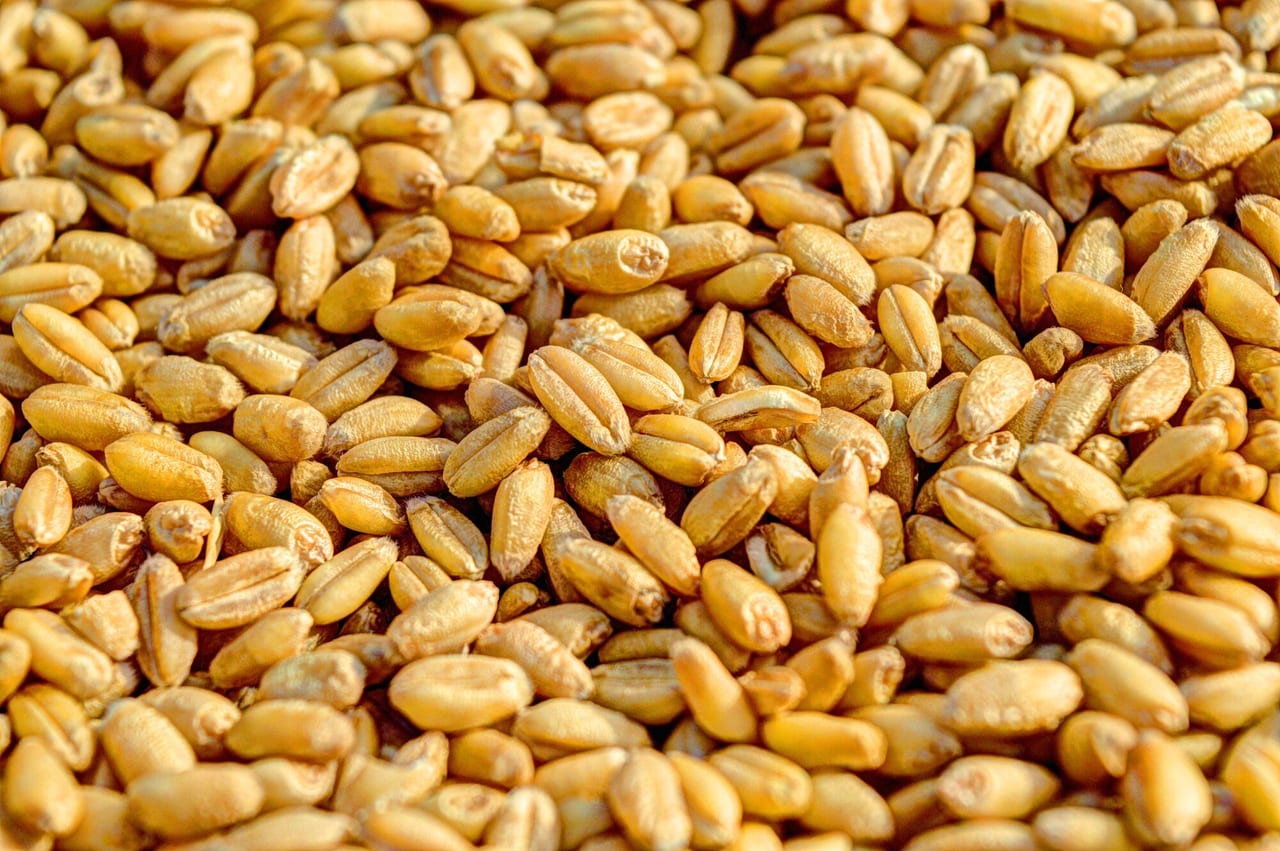
Our Products
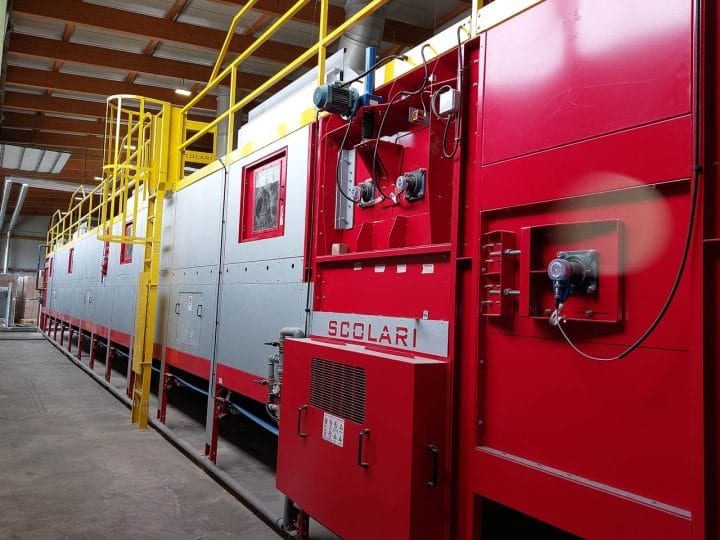
Universal Dryers
These dryers can be customized to dry any industrial or agricultural product you may require. Depending on the specific product and its moisture content, the dryers can be equipped with mixers, movable floors, vibrating floors, and other advanced technologies.
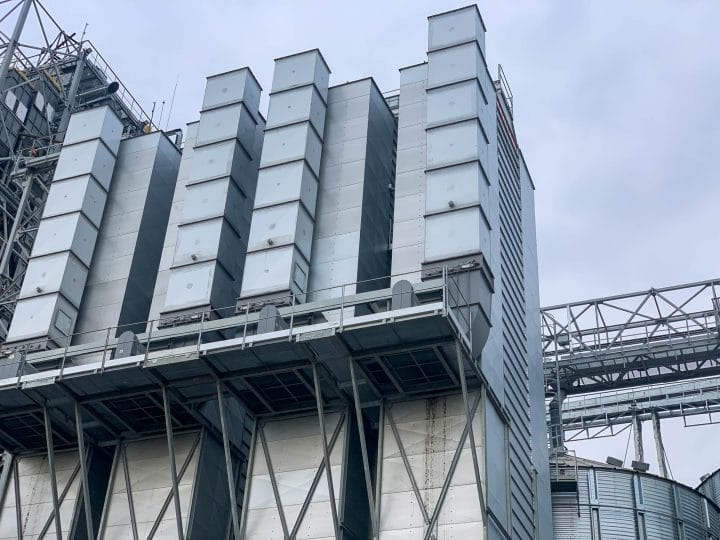
Grain Dryers
Authorized representative for top European grain dryer manufacturers like Alvan Blanch, FAO, and Agrex. Offering a full range of advanced drying solutions for agriculture.
Contact Us
If you are interested in purchasing any of our products, need a price quotation, or have any questions, comments, or suggestions, please do not hesitate to contact us via our contact form, by phone, or by email.
- WhatsApp: +90 (536) 452-1184
- E-mail: write to us
Our phones:
- Kazakhstan: +7 (747) 095-1626
- Moldova: +373 (22) 011-214
- Romania: +40 (31) 229-8484
- Türkiye: +90 (536) 452-1184 (English)
- Ukraine: +380 (67) 111-6668