
Drying Barley in Industrial Grain Dryers
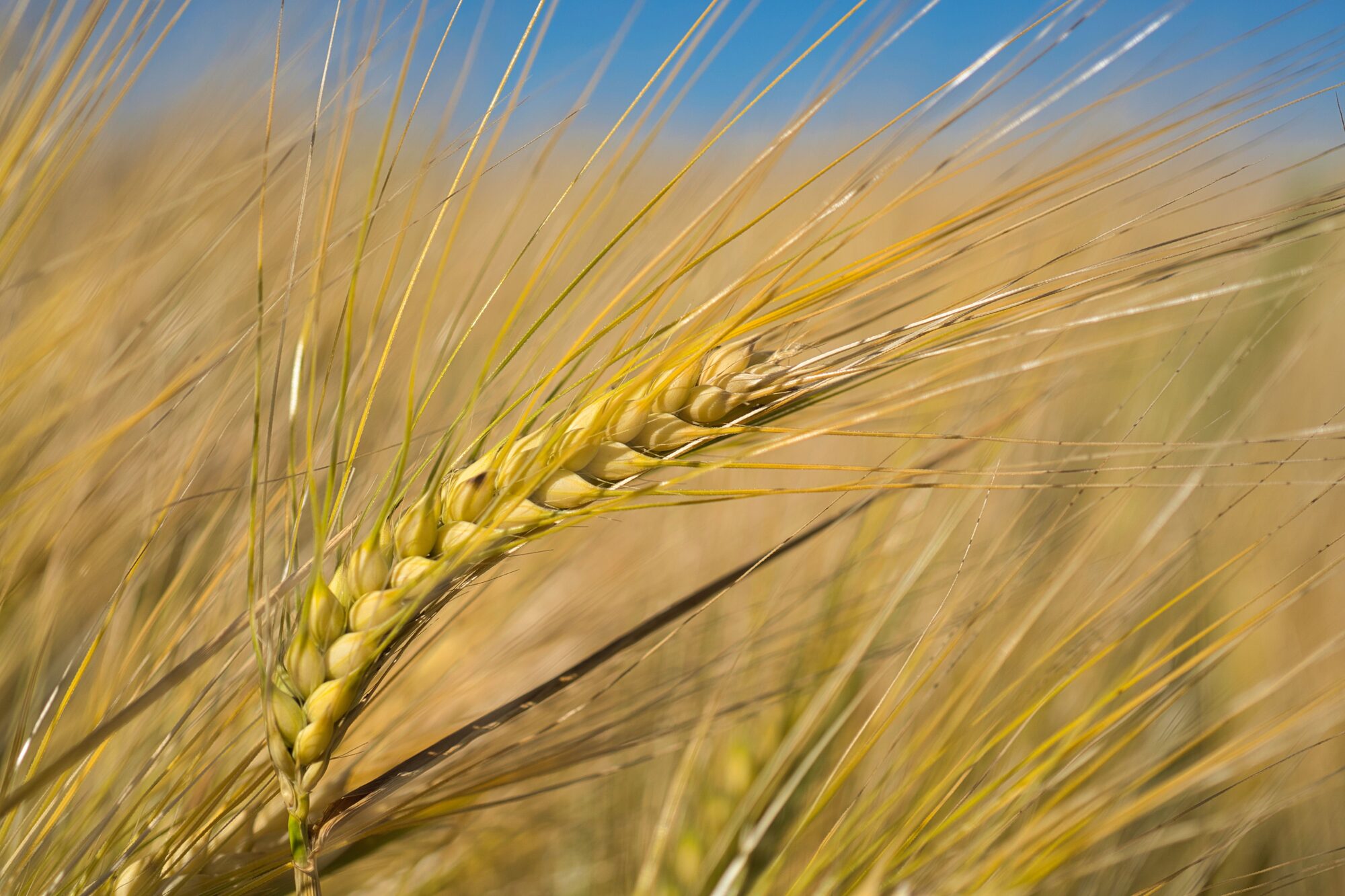
Barley is one of the world's staple grain crops. But it is not a homogeneous product: the same crop is used for animal feed, food and groats, seed, or malting. And each end use requires a different drying regime.
The key question when drying barley is not the air temperature inside the dryer in isolation, but the intended use of the batch. Feed and commodity barley can be dried at higher throughput. Malting and seed barley must be handled much more gently: this grain must retain germination because it will be sprouted at the malthouse.
Summary: barley is dried according to its end use, not at a "universal temperature." A more productive regime is acceptable for feed and commodity grades; for malting and seed barley the key limit is grain temperature (approximately 40–43 °C) to preserve germination and malting quality.
Quick Answer
Barley is dried in batch, continuous-flow and mobile grain dryers. For most batches the target storage moisture is around 13–14 %. However, the regime is not defined by a single number but by a combination of parameters: intended use of the batch, grain temperature, air temperature, dryer type, tempering and cooling.
Guidelines by intended use:
| Scenario | Key criterion | Regime guideline |
|---|---|---|
| Malting barley | germination and malting quality | gentle regime, grain temperature approx. 40–43 °C |
| Seed barley | germination and germination energy | seed-material regime, grain temperature 40–43 °C |
| Feed / commodity barley | efficient drying to storage moisture | higher-throughput regime permissible, air up to 80–100 °C in continuous-flow dryers |
| Food / groats barley | preserve kernel quality | moderate regime without aggressive overheating |
| Storage | safe moisture | approx. 13–14 % |
Our Grain Dryers for Barley
Our grain dryers are well suited for barley, enabling both a high-throughput regime for feed batches and a gentle, controlled regime for malting and seed grain. We offer batch and continuous-flow series Ravaro RR/RC, mobile and stationary Agrex AGD/AGD-F, continuous-flow Alvan Blanch DF and batch BD, as well as vertical dryers FAO (continuous-flow series ACE/ACEX/SCE and batch AR). The specific series and regime are selected to match the intended use of the batch, volume and germination requirements.
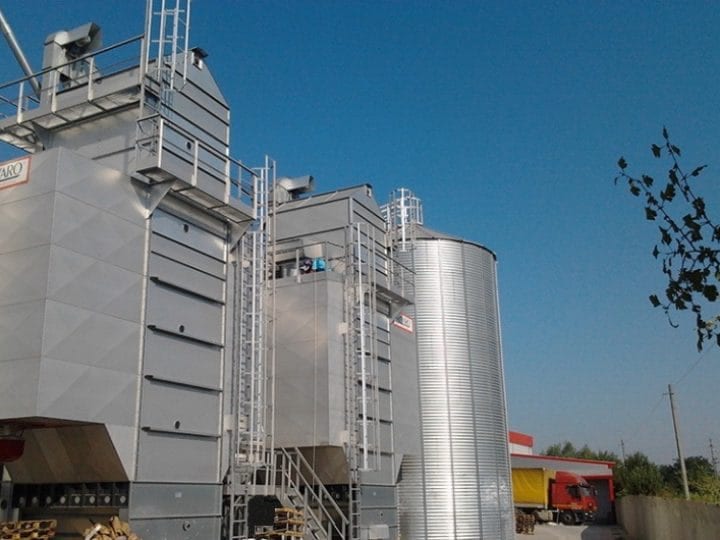
Ravaro Batch Grain Dryers
Italian mixed-flow batch grain dryers, suitable for medium-sized farms or tailored for special products like paddy rice that require a resting period.
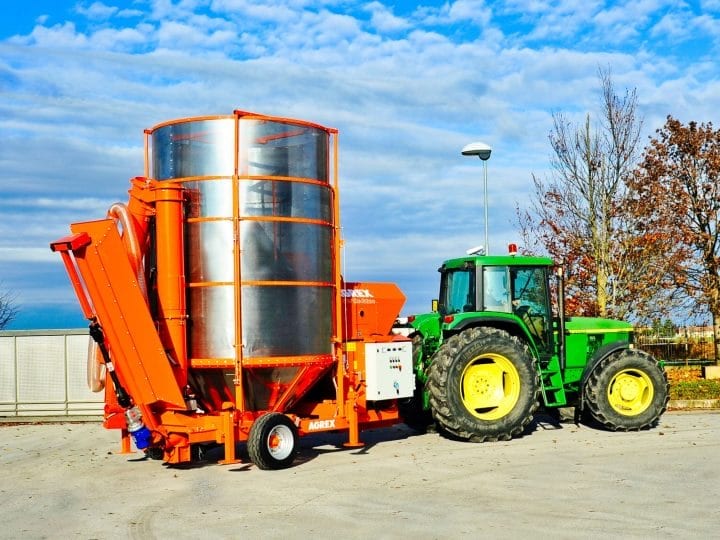
Agrex Mobile Grain Dryers
Italian mobile batch grain dryers for small and medium-sized farmers do not require construction work, are completely autonomous in operation, and can run on any type of fuel.
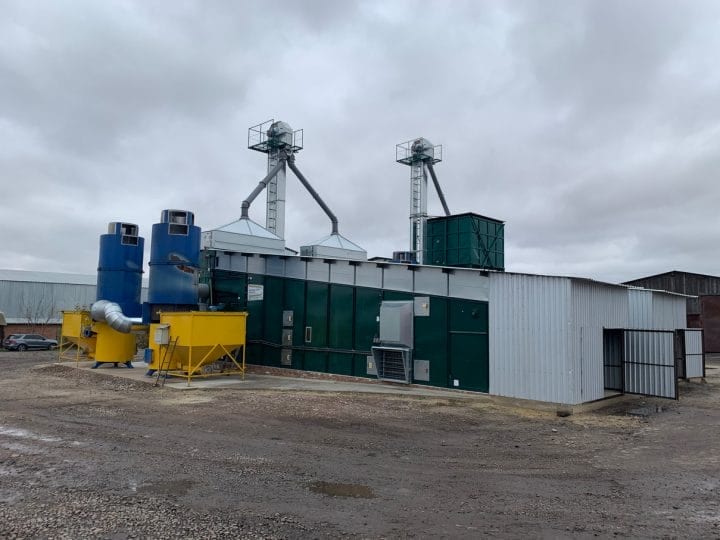
Alvan Blanch Grain Dryers
Horizontal grain dryers from Great Britain. The short height allows to minimize total capital investments. Conveyor belt technology ensures gentle grain drying.
Why Barley Cannot Be Dried on a Single Regime
Barley has a distinctive characteristic: the same crop can have completely different drying requirements. A single batch may be:
- feed barley;
- food barley for groats (pearl barley, barley grits);
- seed material;
- malting barley for germination.
The most demanding scenario is malting barley. It is dried almost like seed material, because malt is produced from live grain: after drying, the barley must sprout uniformly. Overheating, over-drying and rough handling reduce germination and impair malt quality.
Feed barley has different requirements. It does not need to sprout, so the regime can be more productive. However, this does not mean overheating is irrelevant: excessively aggressive drying reduces nutritional value, increases breakage, generates dust and results in uneven final moisture.
Why malting barley requires a regime similar to seed material
Malting barley is purchased not merely as dry grain but as a raw material that must sprout at the malthouse. The decisive quality factor is therefore not only moisture, test weight, protein content and absence of impurities, but the viability of the embryo.
If the grain is overheated during drying, the embryo is damaged. The batch may look visually normal: the grain does not darken or disintegrate. But at the malthouse it will sprout poorly or unevenly. This is why malting barley cannot be dried on the same regime as feed grain.
Barley Moisture: Target Drying Values
For ordinary storage, barley is dried to a moisture content of approximately 13–14 %. For malting barley, not only the moisture percentage matters but also cooling, batch uniformity, absence of overheating and preservation of germination.
A typical industrial regime found in the specifications of mobile and stationary dryers is a moisture reduction of approximately 20 % down to 14 %. For barley, Agrex's rated regime covers exactly this range. This is a good benchmark for commodity and feed barley, but for malting barley one cannot simply set the maximum temperature and remove moisture quickly.
| Parameter | Guideline | Comment |
|---|---|---|
| Typical intake moisture for commodity barley | approx. 20 % | commonly used for throughput calculations |
| Storage moisture | 13–14 % | basic safe-storage benchmark |
| Malting barley after harvest | often above 14 % | requires careful drying and germination monitoring |
| Short-term storage of malting barley | the lower the temperature and the more uniform the moisture, the better | cooling after drying is important |
Why malting barley cannot simply be dried like feed barley
A feed batch is evaluated on nutritional value, moisture, absence of mould and storage stability. A malting batch is additionally evaluated on the grain's ability to germinate.
It is possible to achieve 13–14 % moisture while overheating the embryo and losing malting condition. For malting barley, controlling grain temperature and the rate of moisture removal is therefore more important than formally reaching the target final moisture.
Barley Drying Temperature
Various drying temperatures for barley appear in the literature — from very gentle regimes for malting grain to approximately 100 °C air temperature in continuous-flow dryers for commodity and feed regimes. This is not a contradiction: these are different end uses and different temperature measurement points.
It is necessary to distinguish:
- air / drying-agent temperature — the value set on the dryer;
- grain temperature — the value that limits quality and germination;
- heating-medium temperature — sometimes higher, but this is not the grain temperature;
- temperature after cooling — important for storage.
For feed and commodity barley, manufacturers specify fairly high air temperatures. For example, the Alvan Blanch DF rated throughput for barley is quoted at 100 °C air temperature for the 20 % → 15 % regime. This should not be applied automatically to malting barley.
For malting and seed barley the key limit is grain temperature itself, typically around 40–43 °C.
| Scenario | What we monitor | Guideline |
|---|---|---|
| Malting / seed barley | grain temperature | approx. 40–43 °C |
| Malting barley, gentle bin drying | air temperature | low-temperature regime |
| Commodity / feed barley in a continuous-flow dryer | air temperature | approx. 80–100 °C |
| Storage | grain moisture | 13–14 % |
Air temperature and grain temperature are not the same
Barley may pass through an airstream whose temperature is higher than the temperature of the grain itself. Part of the heat is used not to heat the grain but to evaporate moisture; the grain moves, is mixed and spends a limited time in the heating zone.
For malting barley, however, the safety margin is small. If the grain overheats, the embryo can be killed even if the batch looks normal on the outside. For this type of barley we therefore focus primarily on grain temperature rather than the air-temperature figure.
Drying Malting Barley
Malting barley is the most critical scenario. Its quality is determined not only by moisture and cleanliness but also by the grain's ability to sprout uniformly. For such a batch the following are essential:
- low grain temperature;
- limited moisture removal per pass;
- tempering and recirculation;
- gentle handling;
- no over-drying;
- rapid cooling after drying;
- germination checks before and after the process.
Why germination loss may go unnoticed
Overheated malting barley can look perfectly normal: the grain remains intact, colour does not always change, and moisture meets the buyer's specification. The problem appears later, at the malthouse: the grain sprouts poorly or unevenly.
For malting barley one therefore cannot rely solely on appearance and final moisture. Controlling grain temperature, gentle drying and germination testing matter more than formal indicators.
Drying Feed and Commodity Barley
Feed and ordinary commodity barley can be dried at higher throughput. Higher air temperatures are permissible provided there is no over-drying, overheating, dust, excessive breakage or uneven final moisture. In this scenario the key factors are:
- throughput;
- fuel consumption;
- uniformity of final moisture;
- pre-cleaning;
- fire safety;
- cooling before storage.
Dust, Awns and Mechanical Damage
Barley frequently contains light chaff, awns and dust. These impurities reduce drying uniformity, foul equipment and increase fire risk. Pre-cleaning is therefore not a secondary step.
For malting and seed barley, gentle handling is equally important. Aggressive conveying can damage the husk and embryo and reduce germination. Gentle loading, properly adjusted bucket elevators, minimising unnecessary transfer points and controlled conveying speed are therefore preferred.
Which Grain Dryers Are Suitable for Barley
Various dryer types are suitable for barley, but the choice depends on the intended use of the batch. For feed and commodity barley the priority is throughput. For malting and seed barley the priority is gentle drying, grain-temperature control and careful handling. We offer series Ravaro RR/RC, Agrex AGD/AGD-F, Alvan Blanch DF/BD and FAO (continuous-flow ACE/ACEX/SCE and batch AR).
Ravaro RR — Batch Drying with Recirculation and Tempering
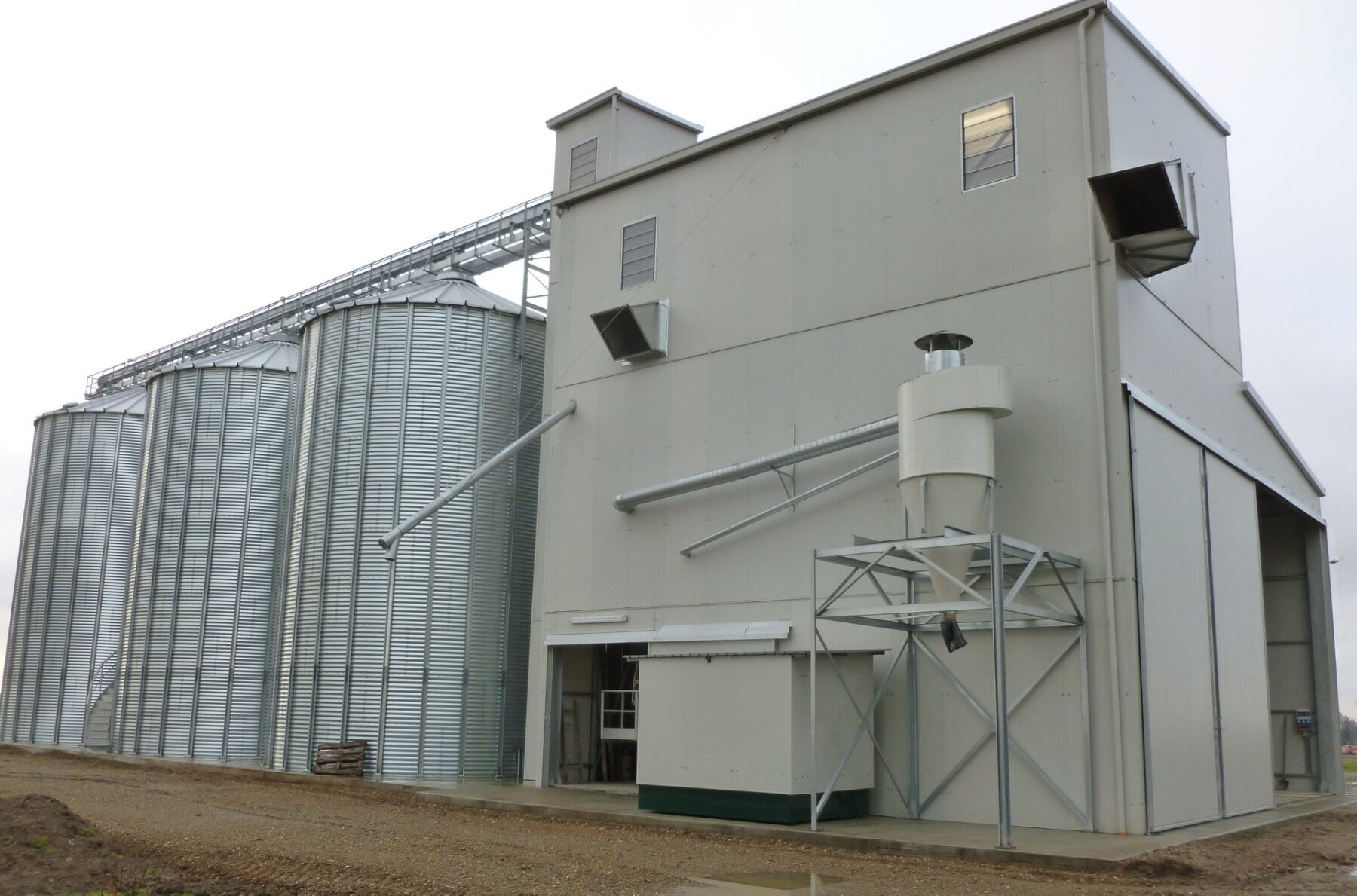
The Ravaro RR is the logical choice for malting, seed and food barley where gentleness, uniformity and quality preservation are paramount. The gentle regime, recirculation and tempering phase keep grain temperature lower than in a purely continuous-flow line and equalise moisture. This suits farm-scale and medium-volume operations.
Ravaro RC — Continuous-Flow Drying for Large Volumes
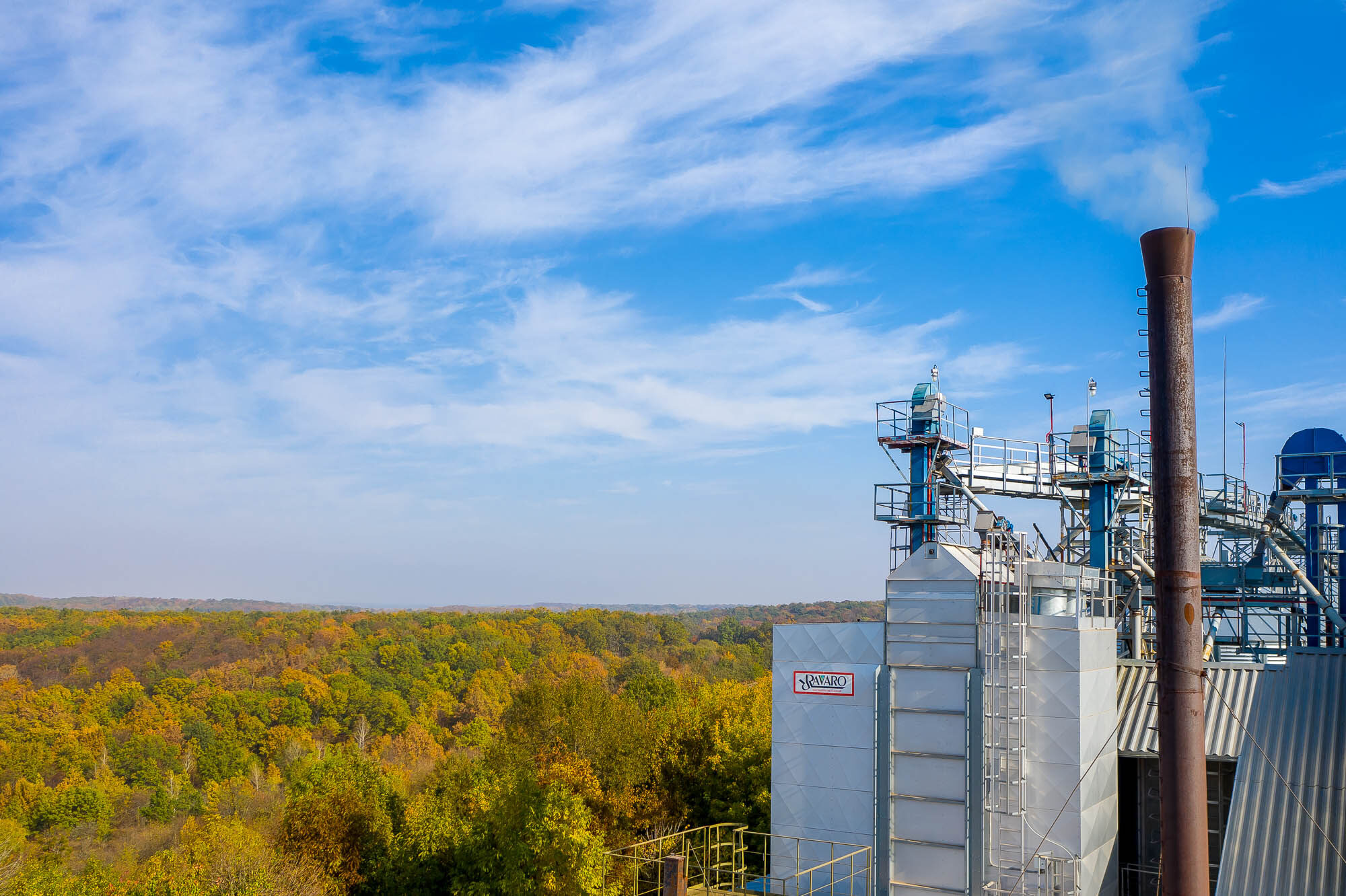
The Ravaro RC is suited to a continuous grain flow and large volumes of feed and commodity barley. Correct setting of temperature, residence time and discharge is important here to avoid increasing breakage and overheating the grain. A continuous-flow line makes sense where grain intake, pre-cleaning, buffer capacity and a clear storage regime are all in place.
Agrex AGD / AGD-F — Mobile and Stationary Solutions
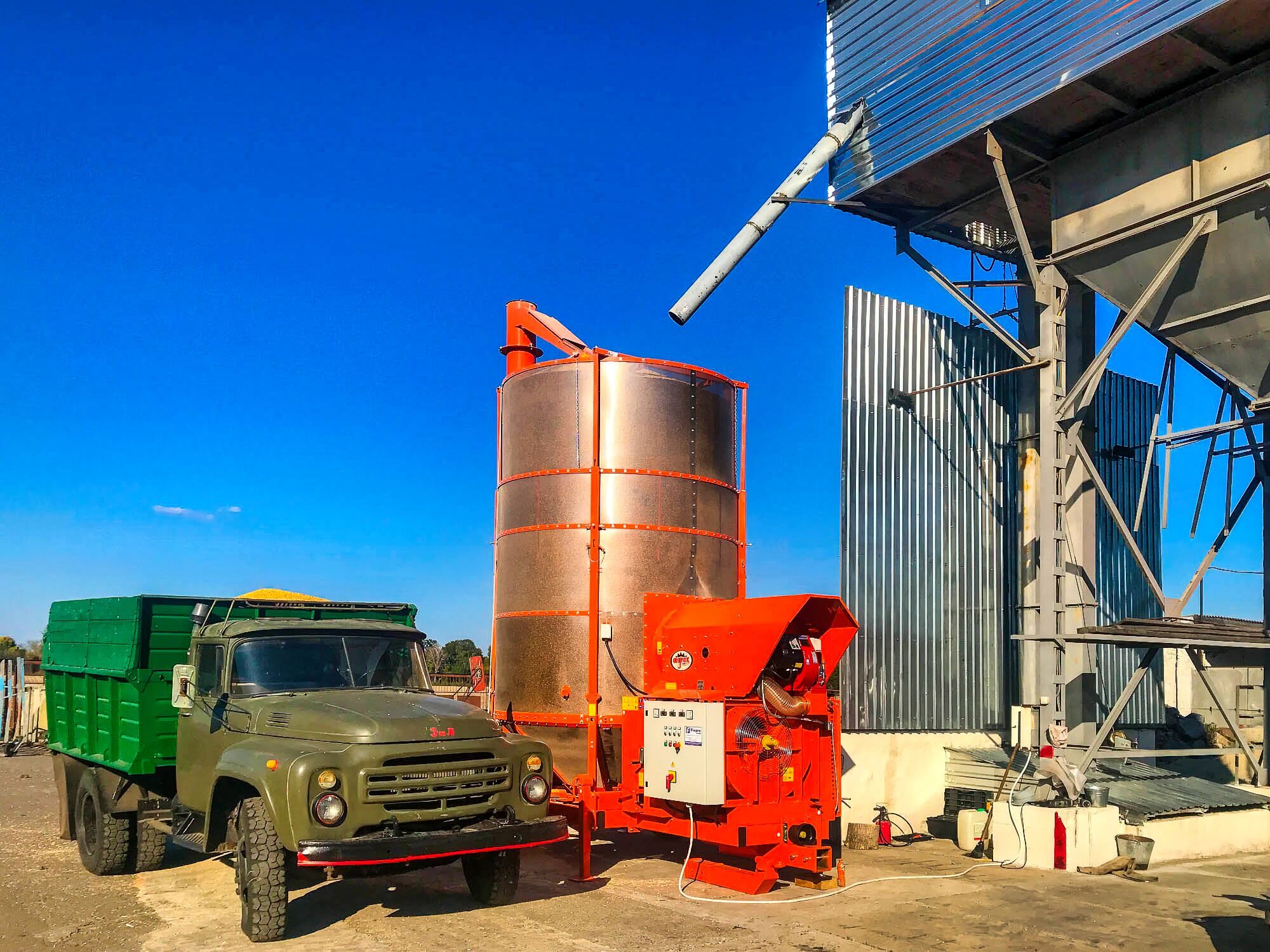
The Agrex AGD and AGD-F suit farms that need a mobile or compact stationary dryer without a full elevator complex. The rated regime for barley in Agrex's documentation is moisture reduction from 20 % to 14 %. An important detail: most mobile solutions on the market are equipped with recirculation augers, and augers increase breakage and mechanical damage to the grain — which is critical for malting and seed barley. For applications where quality is the top priority, Agrex developed the AGD-F models, which replace augers with bucket elevators — these convey grain more gently and preserve germination.
Alvan Blanch DF — Continuous-Flow Double-Pass Dryer
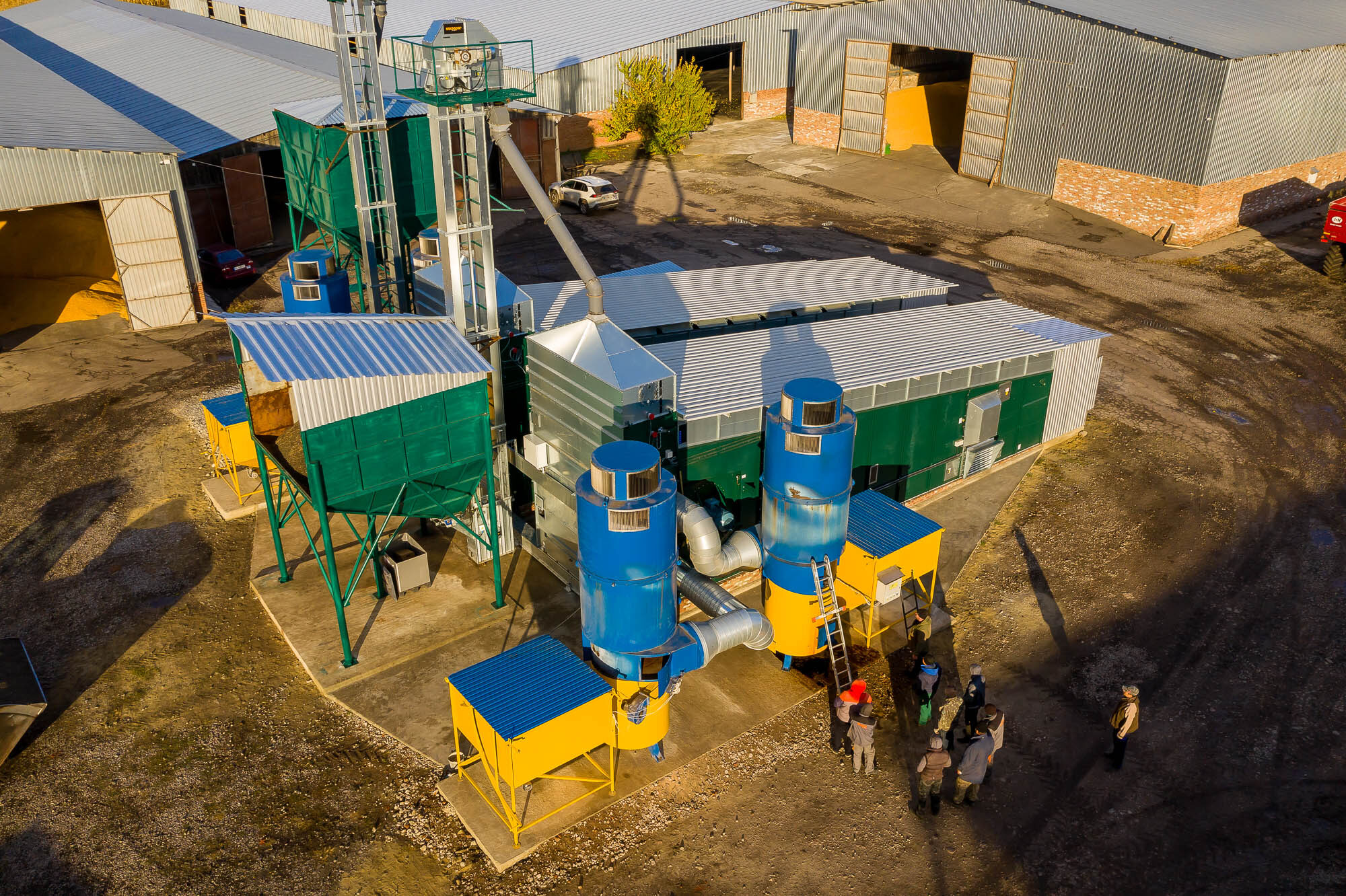
The Alvan Blanch DF is a versatile continuous-flow double-pass dryer for free-flowing crops. Its rated throughput for barley is quoted at 100 °C air temperature for the 20 % → 15 % regime — a commodity and feed-grain regime. For malting barley we run it more gently, monitoring grain temperature rather than applying the commodity regime directly.
Alvan Blanch BD — Batch Dryer
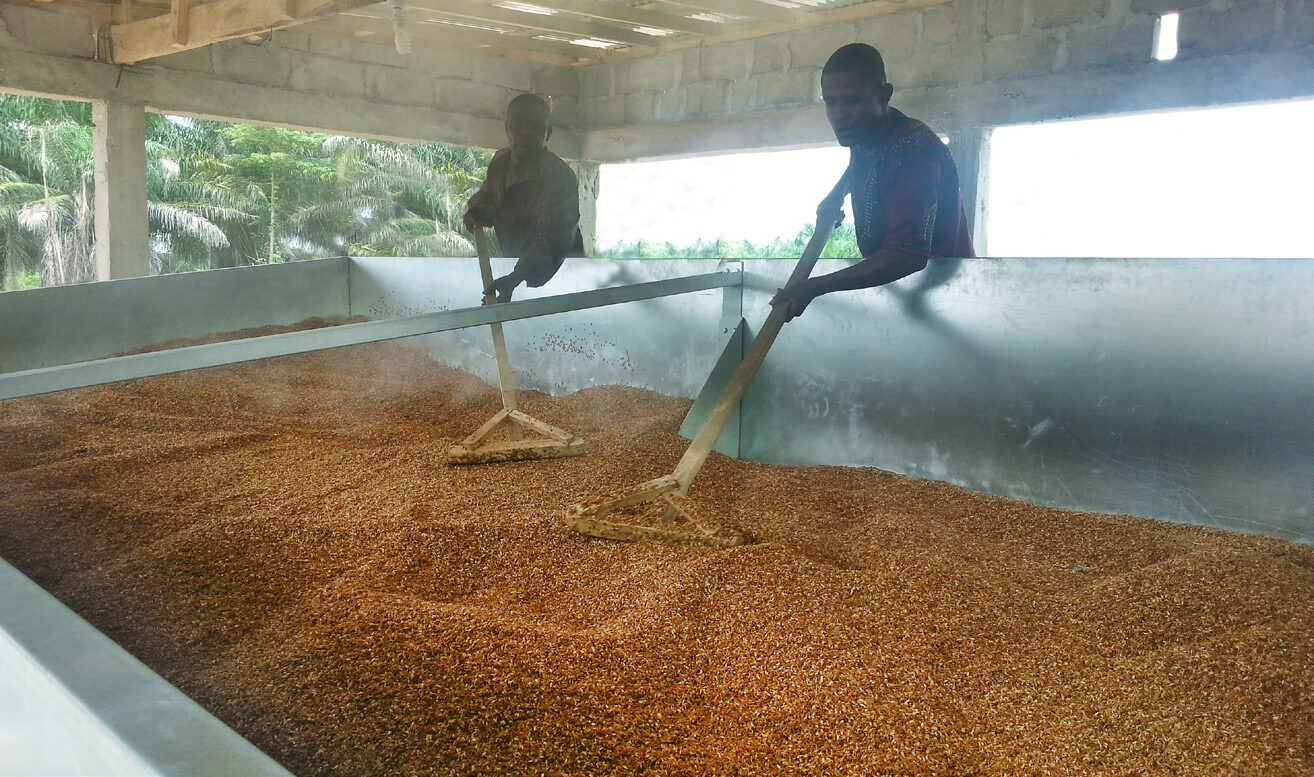
The Alvan Blanch BD is a batch dryer. It is worth considering for seed, malting and premium barley batches where not only throughput but also process gentleness matters: limited moisture removal per pass, mild heating and grain quality control.
FAO — Vertical Continuous-Flow and Batch Dryers
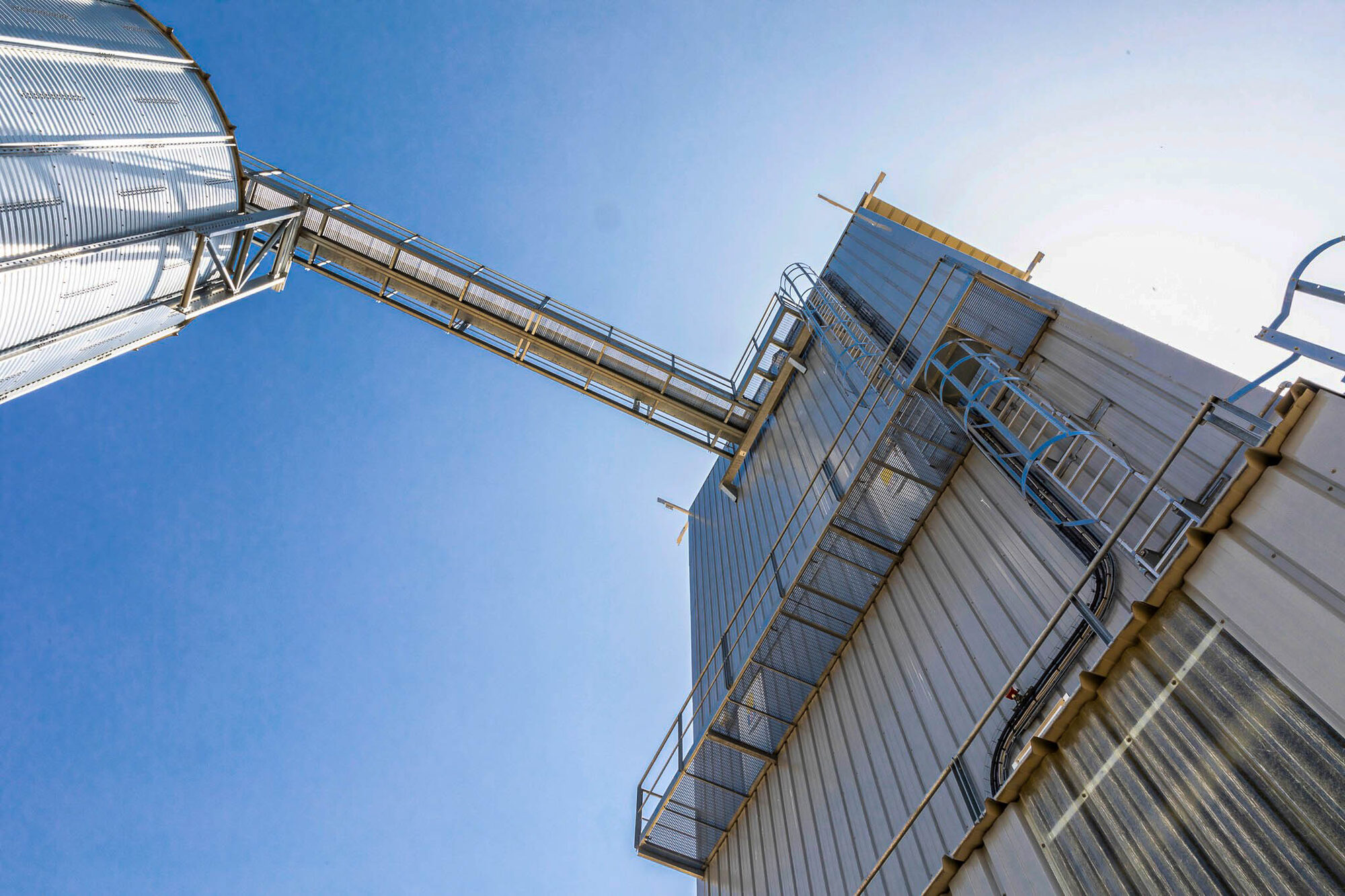
FAO is a French grain dryer manufacturer. For barley, both continuous-flow (series ACE, ACEX, SCE) and batch (series AR) FAO dryers are suitable — when throughput, automation and regime control are important. The continuous-flow series are logical for commodity and feed barley; the batch AR is suited for farm-scale volumes, malting and seed grain with a gentler regime and tempering phase.
Comparison of Suitable Solutions
| Solution | When to choose | Advantages for barley | What to consider |
|---|---|---|---|
| Ravaro RR | malting, seed and food barley; farm-scale and medium volumes | gentle regime, recirculation, tempering, embryo protection | lower throughput than continuous-flow lines |
| Ravaro RC | continuous-flow drying of large volumes of feed and commodity barley | steady throughput, productivity with temperature control | discharge and residence time must be tuned to avoid breakage |
| Agrex AGD / AGD-F | mobile or compact stationary drying | rated regime 20 % → 14 %; AGD-F with elevators is gentler on germination | for malting/seed barley, select the elevator (AGD-F) version |
| Alvan Blanch DF | continuous-flow drying of commodity and feed barley | uniform double pass, rated regime at 100 °C air temperature | for malting barley the regime is run more gently |
| FAO (ACE/ACEX/SCE, AR) | large volumes and automation (continuous-flow) or farm batches (AR) | high throughput, regime control, uniformity | series and regime are selected to match the intended use of the batch |
Key Dryer Properties for Barley
- Grain temperature control — critical for malting and seed barley.
- Gentle handling and bucket elevators — less breakage and embryo damage, careful discharge.
- Tempering and recirculation mode — help equalise moisture and reduce stress on the grain.
- Cooling after drying — hot barley cannot be placed directly into storage.
- Pre-cleaning and aspiration — remove awns, chaff and dust.
- High-throughput mode capability — for feed and commodity batches.
- Low-temperature mode capability — for malting and seed grain.
Barley Drying Process Flow
- Intake and batch analysis — determine intended use, moisture, contamination; for malting barley — germination.
- Pre-cleaning — reduces dust and awns, improves drying uniformity and fire safety.
- Regime selection by intended use — feed barley at higher throughput; malting and seed barley gently, with grain-temperature control.
- Drying — for malting barley, run the process in stages, not removing too much moisture per pass.
- Cooling — warm grain cannot be placed directly into storage.
- Post-drying check — moisture, temperature; for malting barley — repeat germination test.
Why cooling is not a secondary step
If grain remains warm after drying, respiration continues in the mass, moisture redistributes and a heating hotspot can develop at the centre. For feed grain this is a risk of mould and spoilage. For malting barley it is a risk of reduced germination.
Barley drying should therefore be treated as a system: heating, moisture removal, tempering, cooling and storage monitoring.
Barley Drying and Storage
After drying, barley must be stored dry, cooled and clean. For malting barley, storage is particularly important: poor ventilation or localised overheating can reduce germination even after a correctly conducted drying process. Recommendations:
- do not store warm barley without cooling;
- monitor temperature in the silo;
- do not mix batches with different intended uses;
- store malting barley separately from feed barley;
- check moisture and temperature regularly.
Common Mistakes When Drying Barley
| Mistake | Consequence |
|---|---|
| Drying malting barley the same way as feed barley | loss of germination and malting condition |
| Quoting air temperature without grain temperature | hidden overheating of sensitive batches |
| Ignoring tempering and recirculation | uneven batch moisture |
| Inadequate pre-cleaning before drying | dust, awns, non-uniformity and fire risk |
| Rough handling | breakage and embryo damage |
| Not cooling grain after drying | self-heating during storage |
What We Need to Select a Grain Dryer for Barley
To select equipment precisely, we ask for the following batch data:
- intended use of the batch: feed, food, seed or malting barley;
- initial moisture after harvest;
- required final moisture;
- throughput, t/h;
- germination requirements (for malting and seed barley);
- acceptable breakage percentage;
- available fuel;
- whether a mobile, batch or continuous-flow dryer is needed;
- how pre-cleaning, cooling and storage are organised;
- malthouse or buyer requirements.
Based on this data we select the dryer type, regime and thermal scheme specifically for your barley batch — not "for grain in general."
Frequently Asked Questions About Drying Barley
What is the correct drying temperature for barley?
It depends on the intended use. Feed and commodity barley can be dried at higher air temperatures. Malting and seed barley are dried gently: the key limit is grain temperature of approximately 40–43 °C to preserve germination.
Why can malting barley not be dried like ordinary grain?
Because it will be germinated at the malthouse. If the embryo is killed during drying, the batch loses its malting condition even if it looks normal on the outside.
To what moisture content is barley dried?
Usually to 13–14 % for safe storage. For malting barley, cooling, moisture uniformity and germination preservation are also important.
Can malting barley be dried in an ordinary grain dryer?
Yes, if the dryer allows a gentle regime, grain-temperature control, uniform drying, tempering/recirculation and careful handling. The feed-grain regime must not simply be applied.
Which dryer is best for malting barley?
Dryers with a gentle and controlled regime are most suitable: batch dryers with tempering (Ravaro RR, Alvan Blanch BD, FAO AR) and elevator-equipped versions (Agrex AGD-F). What matters is not just the dryer name but the settings and the handling mechanics.
What are the risks of high temperature for barley?
For feed barley — loss of nutritional value, breakage and over-drying. For malting and seed barley — embryo death and loss of the ability to germinate.
Should barley be dried immediately after harvest?
If moisture is elevated — yes. Malting barley in particular must not be kept warm and wet for long: germination can decline before visible mould appears.
What is malt drying and does it relate to barley drying?
Malt drying is the processing of already-germinated green malt at the malthouse. It is not the same as post-harvest drying of field barley prior to storage.
Ready to Discuss Drying Your Barley?
Describe the intended use of your batch (feed, food, seed or malting barley), initial and target moisture, volumes, germination requirements and available fuel — we will select the dryer type, temperature regime, thermal scheme and indicative throughput for your specific task. Contact us in any convenient way.
Still Have Questions? Contact Us!
By Phone
WhatsApp: +90 (536) 452-1184By Email
Our address: info@finpro.engineering
Related products
Our Products
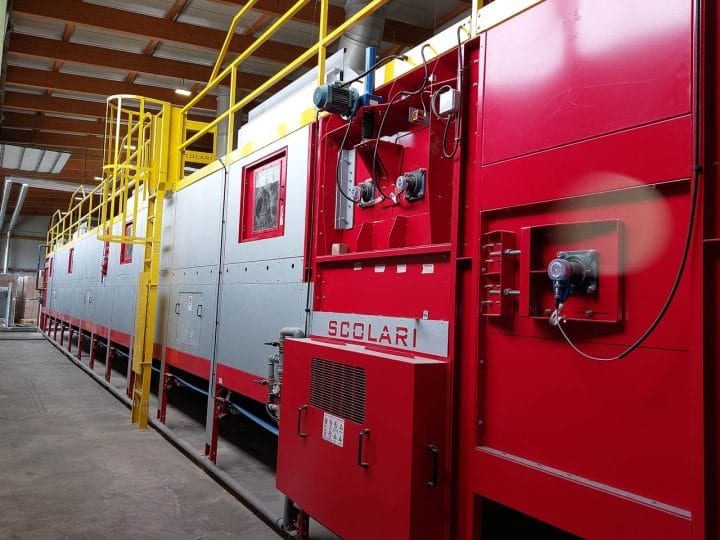
Universal Dryers
These dryers can be customized to dry any industrial or agricultural product you may require. Depending on the specific product and its moisture content, the dryers can be equipped with mixers, movable floors, vibrating floors, and other advanced technologies.
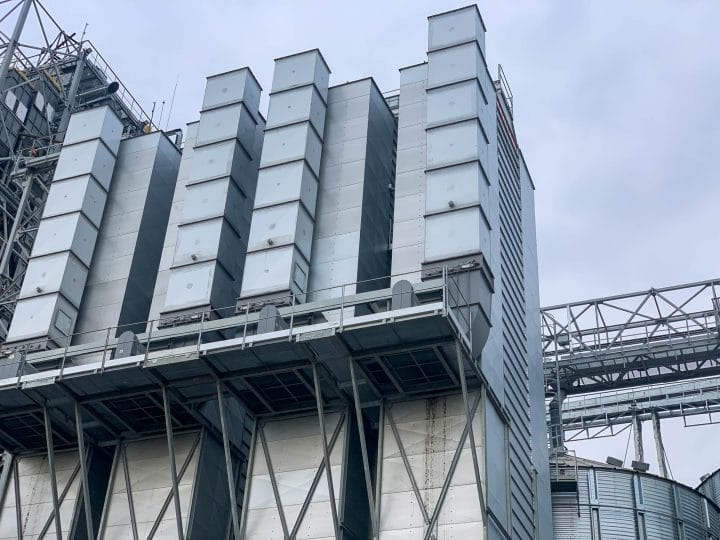
Grain Dryers
Authorized representative for top European grain dryer manufacturers like Alvan Blanch, FAO, and Agrex. Offering a full range of advanced drying solutions for agriculture.
Contact Us
If you are interested in purchasing any of our products, need a price quotation, or have any questions, comments, or suggestions, please do not hesitate to contact us via our contact form, by phone, or by email.
- WhatsApp: +90 (536) 452-1184
- E-mail: write to us
Our phones:
- Kazakhstan: +7 (747) 095-1626
- Moldova: +373 (22) 011-214
- Romania: +40 (31) 229-8484
- Türkiye: +90 (536) 452-1184 (English)
- Ukraine: +380 (67) 111-6668