
Drying Millet in Industrial Grain Dryers
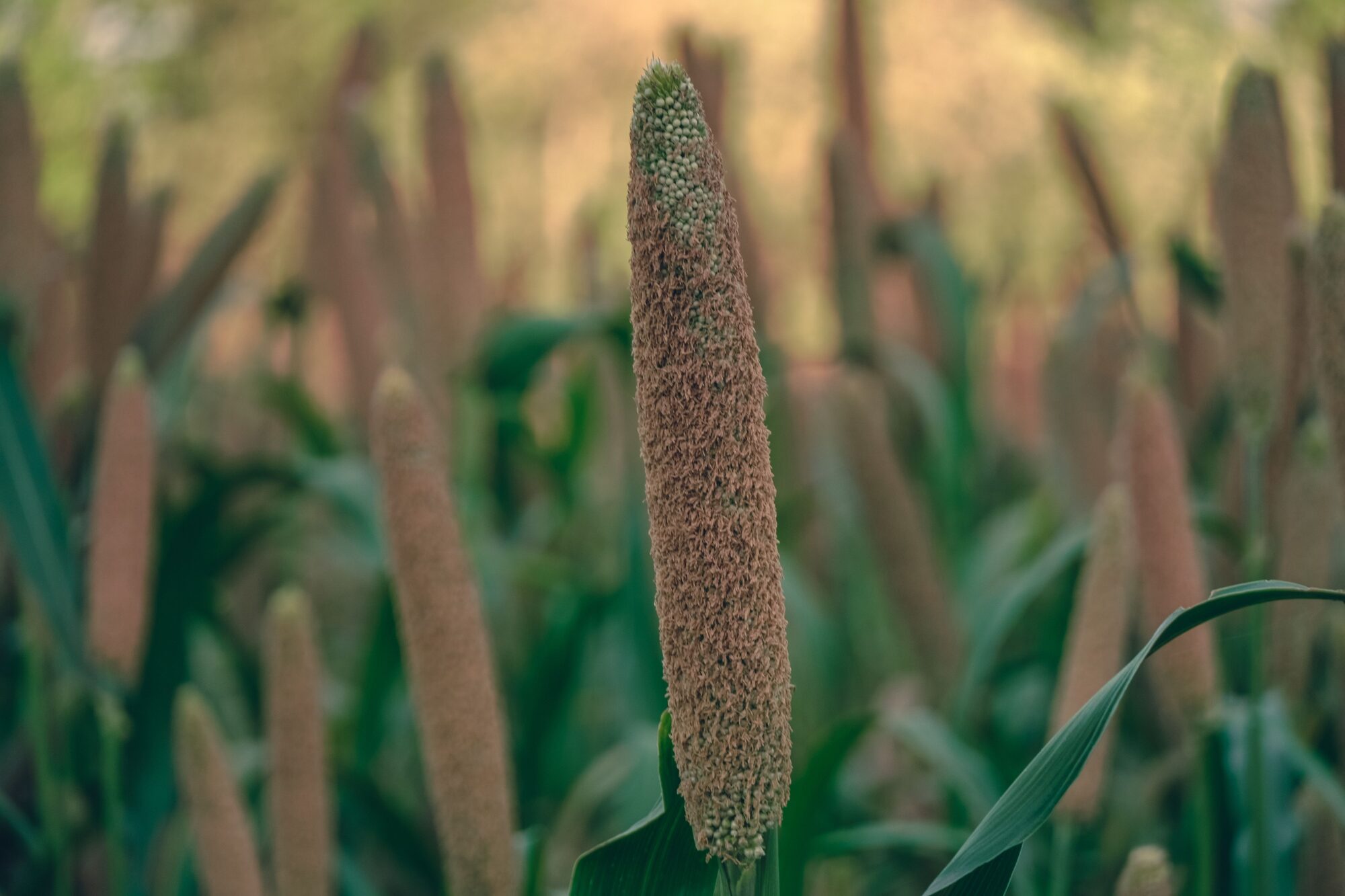
Millet is a small-seeded grain crop grown in many countries as a food, feed or niche crop. Dehulled millet yields millet groats. However, millet must be dried more carefully than many conventional grains.
The reason is its small hulled kernel. Correct screens, gentle handling, careful aspiration and control of grain temperature — not just the burner reading — are especially important for it.
Summary: for standard millet the key guideline is not to overheat the grain above approximately 40 °C; the drying air temperature may be higher. For storage, millet is dried down to a moisture content of about 10–12 %. Seed and food millet are dried more gently than feed millet.
Quick answer
Millet is dried in batch, continuous-flow and mobile grain dryers with a carefully controlled drying regime and correctly selected screens. For most batches the target storage moisture is around 10–12 %. The drying regime is defined not by a single figure but by a combination: intended use of the batch, grain temperature, air temperature, perforation and aspiration, tempering and cooling.
Guidelines by intended use:
| Scenario | Primary criterion | Regime guideline |
|---|---|---|
| Food / commercial millet | colour, absence of rancidity, quality of the resulting groats | grain heating to approximately 40 °C |
| Seed millet | germination and germination energy | gentle regime, grain temperature not exceeding 40–45 °C |
| Feed millet | safe storage and nutritional value | higher throughput possible, but no overheating or breakage |
| Raw material for groat processing | kernel integrity and dehulling | moderate regime, gentle mechanics |
| Storage | safe moisture content | approximately 10–12 % |
Our grain dryers for millet
The primary solution for millet is Agrex AGD / AGD-F: its continuous-recirculating logic is well suited to small-seeded grain when the correct screens and aspiration are selected. Also suitable are the batch and continuous-flow Ravaro RR/RC series, the continuous-flow Alvan Blanch DF and batch BD, and the vertical FAO dryers (continuous-flow series ACE/ACEX/SCE and batch AR). The specific series and drying regime are selected to match the intended use of the batch and the aerodynamics of small-seeded grain.
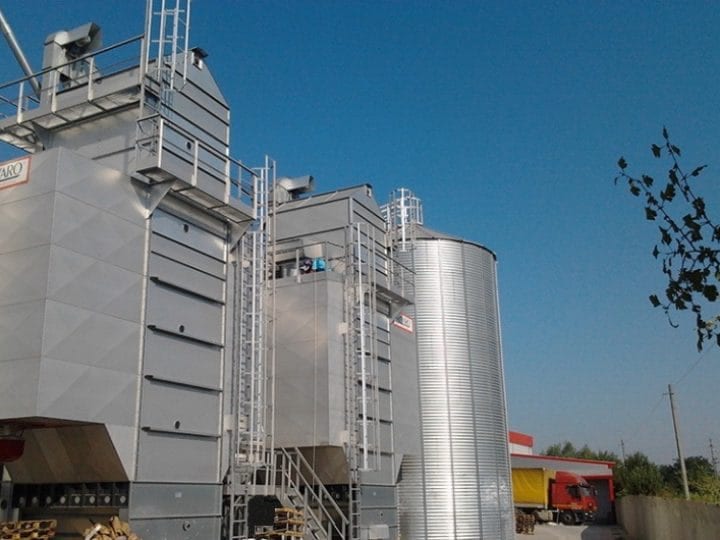
Ravaro Batch Grain Dryers
Italian mixed-flow batch grain dryers, suitable for medium-sized farms or tailored for special products like paddy rice that require a resting period.
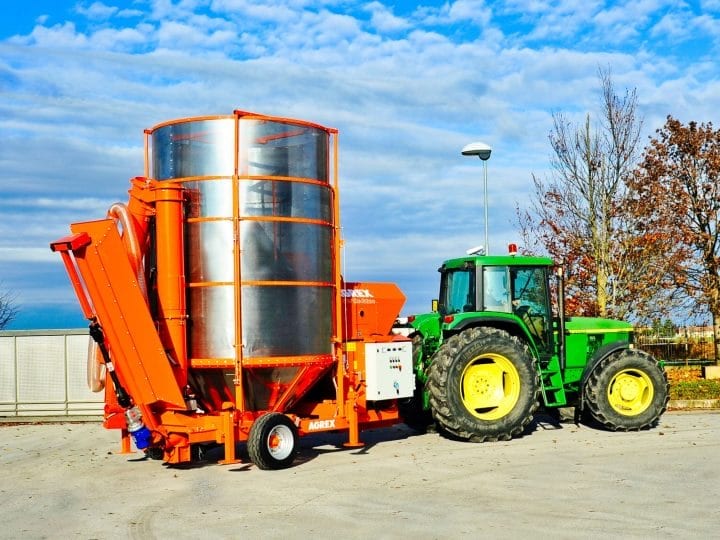
Agrex Mobile Grain Dryers
Italian mobile batch grain dryers for small and medium-sized farmers do not require construction work, are completely autonomous in operation, and can run on any type of fuel.
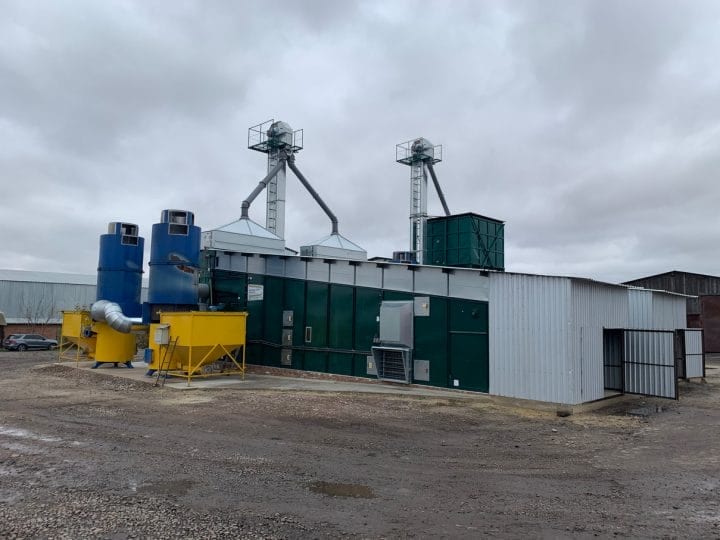
Alvan Blanch Grain Dryers
Horizontal grain dryers from Great Britain. The short height allows to minimize total capital investments. Conveyor belt technology ensures gentle grain drying.
What is meant by millet
Millet is not a single crop but a group of small-seeded cereals — including common (proso) millet, as well as pearl, foxtail and finger millet. These species differ in grain size, husk structure, geographic distribution and post-harvest handling, so the drying parameters for one cannot simply be transferred to another.
This article deals primarily with common (proso) millet — the species most widely grown as a food, feed or niche grain, which yields millet groats after dehulling. Other millet species are mentioned only where it helps avoid confusion.
Are millet and millet groats the same thing?
No. Millet is the grain before processing, still in its hull. Millet groats are the dehulled, cleaned millet kernel — i.e. a cereal product. Pearl millet, foxtail millet and finger millet are different crops within the millet group; their drying regimes cannot be automatically applied to common millet.
Uses of millet
Millet is valued for its drought tolerance, short growing season and ability to be grown where moisture is a limiting factor. It is grown as a food, feed or niche crop. Main end uses:
- food millet — raw material for groats, flour, dietetic and gluten-free products;
- feed millet — a component of feed mixtures, including poultry feed;
- seed millet — batches where germination is critical;
- processing raw material — grain that is subsequently cleaned, dehulled and sorted.
The drying regime must match the intended use. Food millet is dried to preserve the colour, odour and quality of the resulting groats. Seed millet is dried to preserve embryo viability. Feed millet permits a more productive regime, but must still not be mouldy, overheated or over-dried.
Nutritional and feed value of millet
For human consumption, millet and millet groats are valued as a nutritious, gluten-free grain product. A clean odour, normal colour, absence of rancidity, mould and excessive broken groat content are all important.
In animal feeding, millet is used in grain mixes and feeds, including for poultry. Requirements for grain appearance are lower here than for food groats, but dryness, absence of toxins, batch purity and nutritional integrity remain critical.
What a grain dryer actually dries: millet grain or millet groats
An industrial grain dryer dries millet grain — before storage or before processing. Millet groats are the result of dehulling and cleaning. A grain dryer does not replace a groat-processing line: it stabilises the grain — reduces moisture, lowers the risk of mould and self-heating, and prepares the batch for storage, sale or further processing.
If millet is over-dried or overheated, dehulling is impaired and the proportion of broken groats increases. The drying regime therefore directly affects the quality of the resulting millet groats.
Target moisture content for drying millet
For safe storage, millet is normally dried down to a moisture content of approximately 10–12 %. Wider guidelines of 12–14 % or 14–15 % are also encountered in practice, but such values are best treated as the upper range for short-term storage with adequate cooling, ventilation and temperature monitoring.
The higher the moisture content, the more active the grain respiration, and the greater the risk of self-heating, mould, insects and mycotoxins. For small-seeded grain this is especially important: even a small error in moisture content or ventilation can quickly degrade batch quality.
| Intended use | Moisture guideline | Comment |
|---|---|---|
| Commercial / food millet | approximately 10–12 % | preferred for long-term storage |
| Short-term storage | up to 13–14 %, sometimes up to 14–15 % | only with cooling and monitoring of storage duration |
| Seed millet | below commercial | depends on storage duration and germination requirements |
| Millet groats | separate product | airtightness, dry storage and protection against rancidity are important |
Drying temperature for millet
For millet, the most important parameter to control is grain temperature. In practice, for standard millet the grain heating guideline is approximately 40 °C. This is especially important for food and seed material.
The drying agent temperature may be higher. In tower/shaft direct-flow dryers, regimes of approximately 80 °C air temperature and two-stage regimes of 80/100 °C are encountered, but such figures are only valid together with the condition that the grain must not exceed the permissible temperature limit.
Air temperature is a dryer setting. Grain temperature is the quality limit. For millet, managing only the burner is not enough: airflow velocity, bed depth, residence time, recirculation, uniformity of loading, cleaning and cooling all matter.
| Scenario | What we control | Guideline |
|---|---|---|
| Commercial / food millet | grain temperature | approximately 40 °C |
| Seed millet | grain temperature | not exceeding 40–45 °C |
| Tower/shaft direct-flow drying | drying agent temperature | approximately 80 °C or 80/100 °C with grain temperature monitoring |
| General grain drying (air temperature guideline) | air temperature | lower values for seed, higher for processing |
| Storage | grain moisture content | 10–12 % |
Why 80 °C air temperature can coexist with 40 °C grain temperature
Grain does not heat up instantaneously to the air temperature. Part of the heat is consumed by moisture evaporation; moreover, in an industrial dryer the grain moves, is mixed and spends a limited time in the heating zone.
The drying agent temperature can therefore be higher than the product temperature. However, the safety margin for small-seeded grain is narrow: millet responds quickly to overheating, so grain temperature is the primary parameter we monitor.
Why millet cracks during drying
Millet is a small-seeded hulled crop. The hull protects the kernel, but when moisture is removed too rapidly, stresses develop between the outer hull and the inner kernel. If the surface dries too quickly and the internal moisture cannot redistribute in time, cracks appear.
This impairs dehulling, increases the proportion of broken groats and reduces commercial quality. A gentle start-up regime, recirculation, tempering and careful cooling are therefore beneficial for millet.
What is tempering for?
Tempering is a pause between heating phases during which moisture redistributes inside the grain without active heating. For millet this is especially useful: the outer layer does not over-dry as sharply, internal moisture has time to migrate to the surface, and the subsequent finish-drying pass is gentler.
Batch dryers with recirculation and tempering phases are therefore well suited to small-seeded and sensitive crops.
How millet drying differs from wheat and corn drying
Millet is generally less energy-intensive than corn and does not require such aggressive moisture removal. However, it is more sensitive to mechanical handling and localised overheating. Key differences:
- Small grain — correct screens, perforations, sieves, aspiration and carry-over protection are required.
- Hulled nature — the hull affects dehulling and the quality of the resulting groats.
- Low grain temperature limit — for standard millet the guideline is approximately 40 °C.
- Cracking risk — aggressive handling degrades the quality of food and seed material.
- Demanding cleaning requirements — dust, hulls and light impurities reduce drying uniformity.
- Species ambiguity — common, pearl, foxtail and finger millet are different crops.
Seed millet
Seed millet is dried as seed material, not as ordinary commercial grain. The primary objective is to preserve germination and germination energy. For seed batches the following are important:
- gentle temperature and grain heating not exceeding 40–45 °C;
- minimal mechanical damage;
- absence of over-drying;
- careful cleaning;
- gentle handling;
- uniform cooling;
- monitoring of final moisture content.
Why seed millet cannot be dried like feed millet
Feed grain must retain its nutritional value and safety. Seed grain must remain alive. If seeds are overheated, they may look normal externally, but the embryo will have lost its viability. For a commercial seed batch this is a critical defect.
Food millet and groat quality
For food millet, not only moisture content and absence of mould matter, but also the quality of the resulting groats:
- kernel colour;
- absence of musty odour;
- absence of rancidity;
- low proportion of broken groats;
- good dehulling;
- stable taste and aroma.
Millet groats contain fats and therefore lose quality more rapidly if stored incorrectly or at elevated temperatures. After drying, the grain must be cooled, cleaned of impurities and stored dry.
Feed millet and poultry feed mixtures
Millet is also used as a feed crop, including as a component of poultry feed mixtures. In this scenario, appearance requirements for the grain are lower than for food millet, but storage safety cannot be ignored. Feed millet must be dry, clean, free of mould, musty odour and signs of self-heating. A more productive drying regime is possible, but the small grain size, dust, carry-over (entrainment), aspiration and final moisture content must all be taken into account.
Which grain dryers are suitable for millet
The primary solution for millet is Agrex AGD/AGD-F. All other series are selected for small-seeded grain with mandatory verification of screens, perforation, aspiration, gentle handling and grain temperature. We consider the Agrex AGD/AGD-F, Ravaro RR/RC, Alvan Blanch DF/BD and FAO series (continuous-flow ACE/ACEX/SCE and batch AR).
Agrex AGD / AGD-F — primary solution for millet
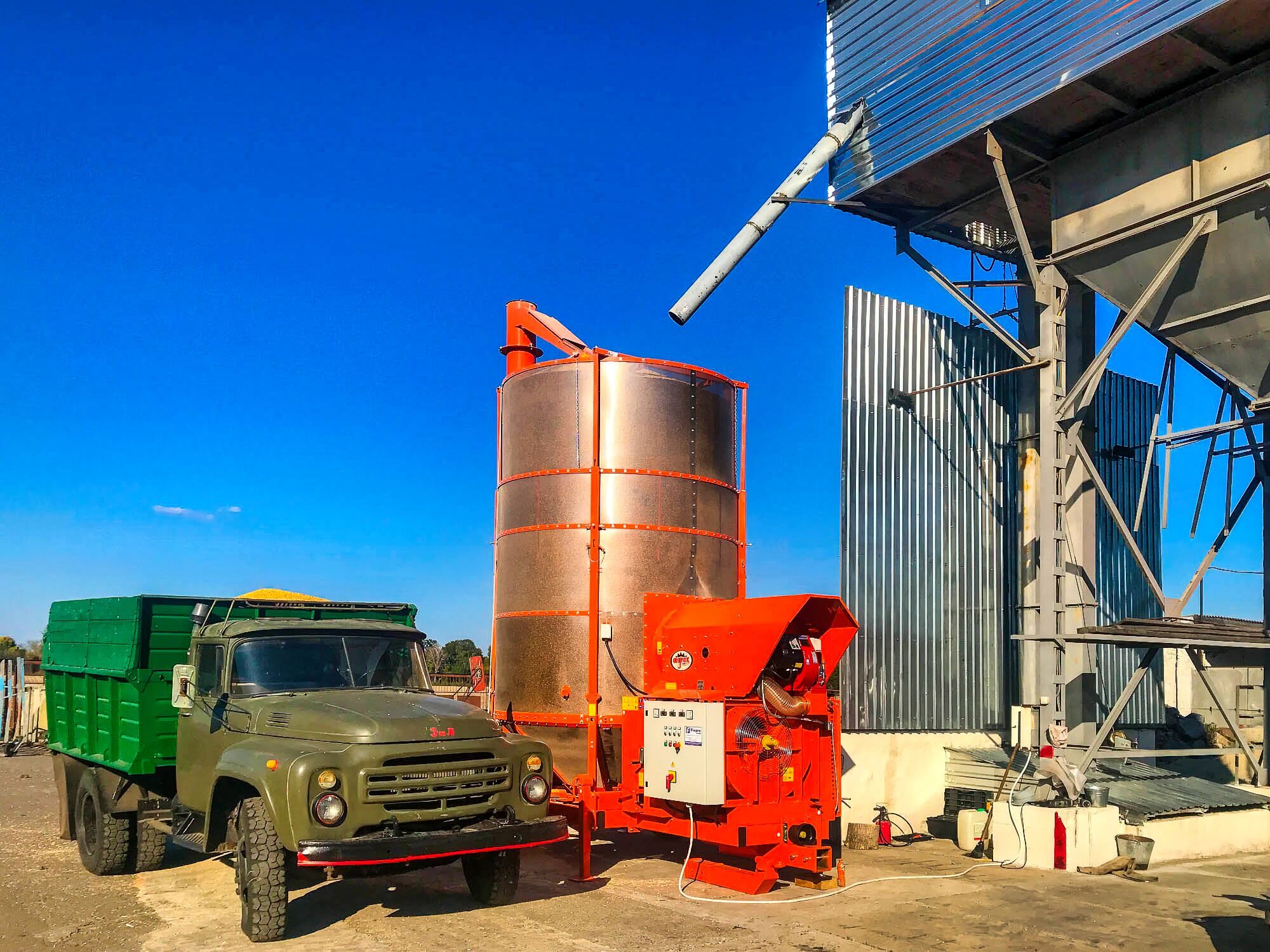
Agrex AGD and AGD-F are mobile and compact stationary dryers. For small-seeded grain, correct perforation and screens, recirculation speed, drying agent temperature, grain temperature monitoring, aspiration and cleaning are all important. Most mobile solutions on the market are fitted with recirculating augers, which increase breakage; for applications where quality is a priority, Agrex produces AGD-F models with bucket elevators instead of augers — these handle small-seeded grain more gently.
Ravaro RR — batch drying with recirculation and tempering
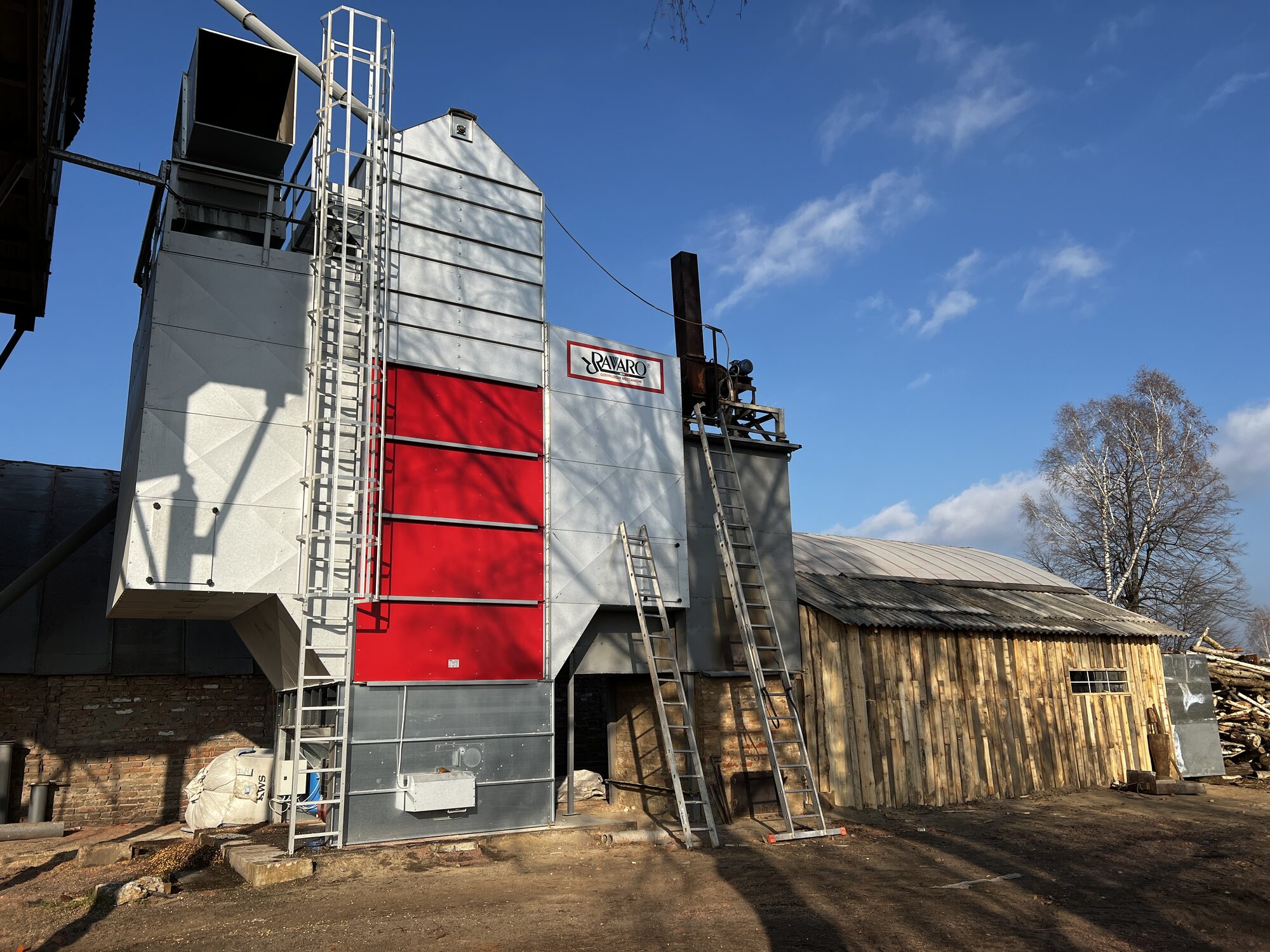
Ravaro RR is an interesting option for farm operations, seed and food millet where quality rather than maximum throughput is the priority. Tempering helps equalise moisture and reduce breakage. For millet it is important to verify that the perforation and aspiration are matched to small-seeded grain.
Ravaro RC — continuous-flow drying for high volumes

Ravaro RC is a continuous-flow dryer for commercial millet when uninterrupted throughput is required. It is important to ensure that the perforation, aspiration and drying regime are suited to small-seeded grain and that the handling does not damage the grain.
Alvan Blanch DF — dual-flow continuous-flow dryer
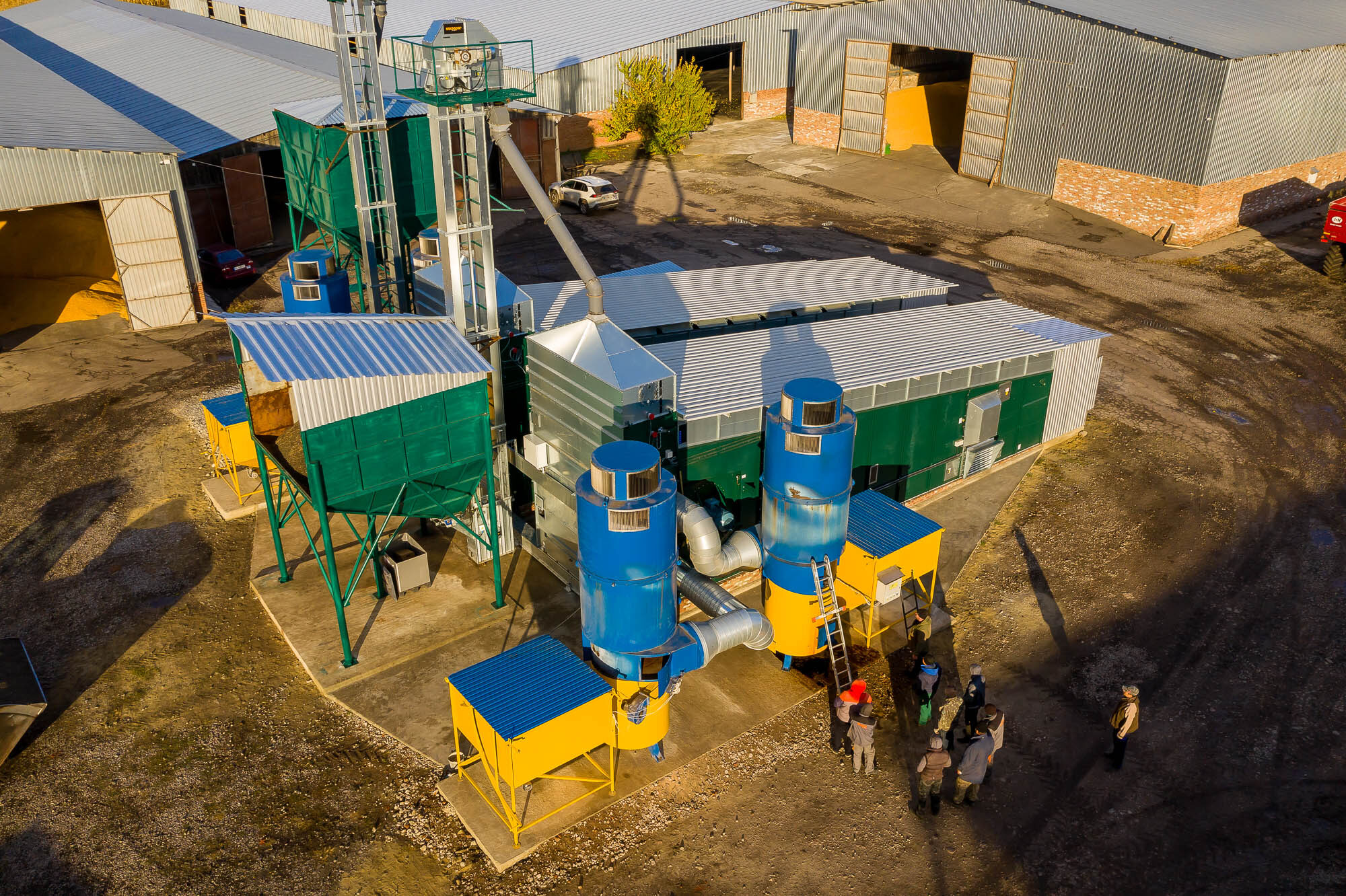
Alvan Blanch DF is a versatile dual-flow continuous-flow dryer for free-flowing crops. For millet we operate it on a gentle regime suited to small-seeded crops rather than the corn regime, with verification of perforation, aspiration and grain temperature monitoring.
Alvan Blanch BD and FAO
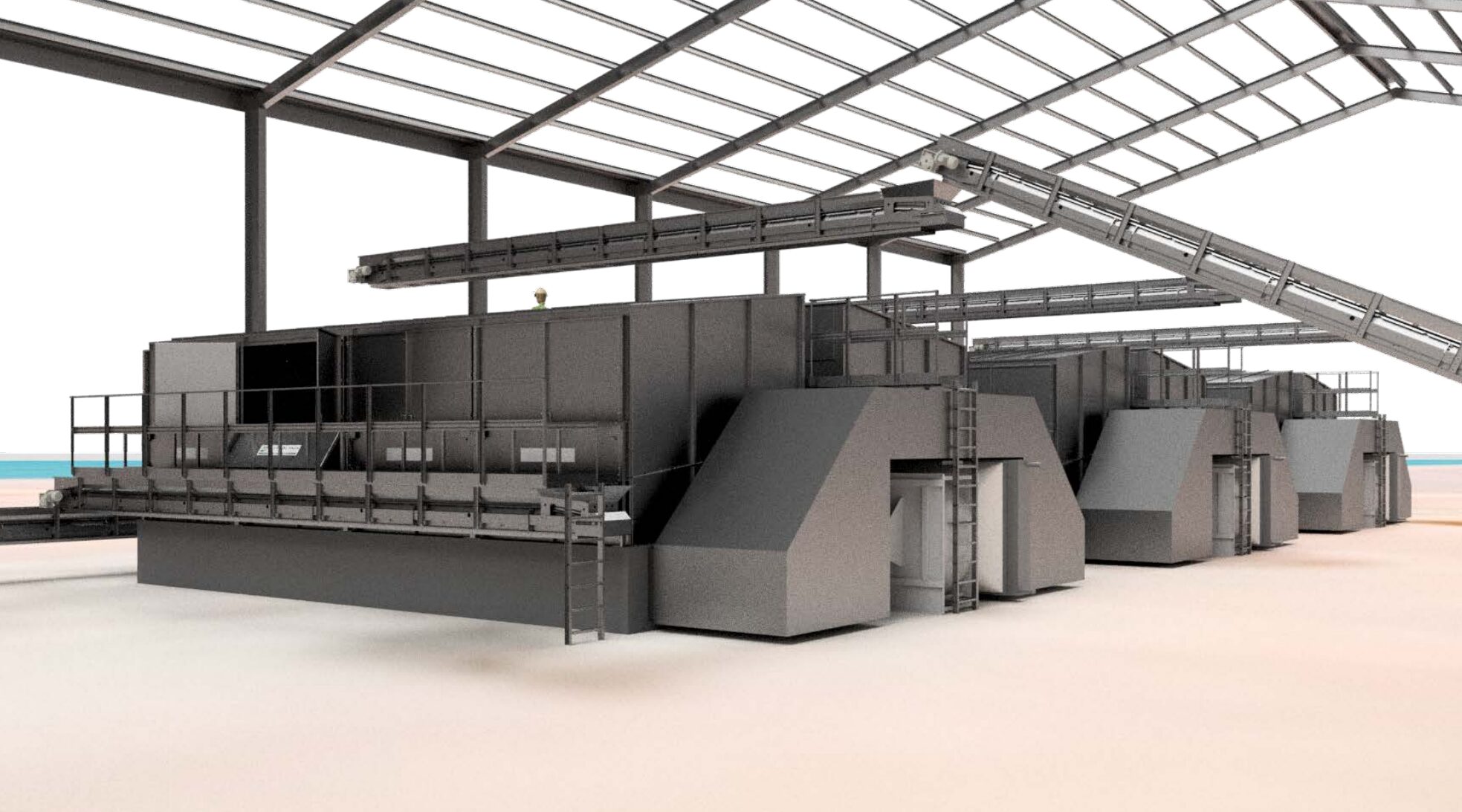
For seed, food or high-value millet, the Alvan Blanch BD batch line may be of interest, including low-temperature variants where germination, colour and minimal grain damage are priorities. Among vertical FAO dryers, the batch series AR (farm-scale volumes, gentle regime, tempering) and the continuous-flow series ACE, ACEX, SCE (commercial millet at continuous throughput) are suitable for millet — with selection of screens, perforation, aspiration and grain temperature monitoring.
Comparison of suitable solutions
| Solution | When to choose | Advantages for millet | What to consider |
|---|---|---|---|
| Agrex AGD / AGD-F | primary solution; mobile or compact stationary drying | suited to small-seeded grain; AGD-F with elevators is gentler | selection of screens, perforation and aspiration for millet |
| Ravaro RR | seed and food millet, farm-scale and medium volumes | gentle regime, tempering, less breakage | lower throughput than continuous-flow lines |
| Ravaro RC | continuous-flow drying of commercial millet at high volumes | steady flow and throughput | verify perforation, aspiration and gentle handling |
| Alvan Blanch DF | continuous-flow drying of various crops, including millet | uniform dual flow, grain mixing | operate on a gentle regime, not the corn regime |
| FAO (ACE/ACEX/SCE, AR) | high volumes (continuous-flow) or farm-scale batches (AR) | throughput, automation, regime control | series and screens selected for small-seeded grain |
Dryer characteristics that matter for millet
- Grain temperature control — critical for food and seed millet (guideline approximately 40 °C).
- Correct screens and perforation — small-seeded grain must not fall through, clog the sieves or be carried over.
- Careful aspiration — removes dust and hulls without losing grain.
- Gentle handling — bucket elevators, augers and transfer points must not crack the grain.
- Recirculation and tempering — equalise moisture and reduce the risk of cracking.
- Pre-cleaning — removes dust, straw, hulls and weed seeds.
- Cooling after drying — hot millet must not go straight into storage.
Typical workflow for millet
- Pre-cleaning — remove light impurities, dust, coarse inclusions and weed seeds.
- Identify the species and intended use — standard millet, seed, food, feed or a blend.
- Check initial moisture content — it determines the permissible regime and moisture removal rate.
- Select screens and perforation — prevent fall-through, carry-over (entrainment) and clogging.
- Gentle regime start-up — do not immediately apply aggressive heating at high moisture content.
- Monitor grain temperature — keep the product within the safe temperature range.
- Dry down to target moisture content — for storage the guideline is approximately 10–12 %.
- Cooling — do not place warm grain into storage without control.
- Post-drying checks — moisture content, cracking, odour, cleanliness; for seed — germination.
Common mistakes when drying millet
| Mistake | Consequence |
|---|---|
| Mixing different millet species | different regimes and uneven drying |
| Referring to 40 °C as "drying temperature" without clarification | this is the grain heating limit, not the air temperature |
| Applying a corn or wheat regime | cracking, breakage, quality loss |
| Not changing screens for small-seeded grain | carry-over, fall-through, clogging, non-uniformity |
| Drying seed millet as feed millet | hidden loss of germination |
| Placing wet millet into storage | mould, self-heating, mycotoxins |
| Not cooling grain after drying | accelerated quality deterioration |
Information required to select a grain dryer for millet
To make an accurate equipment recommendation, we request the following batch parameters:
- what exactly is being dried: common millet or another species;
- intended use: food, feed, seed or raw material for processing;
- initial moisture content;
- target moisture content;
- required throughput;
- whether pre-cleaning is available;
- fraction size and batch homogeneity;
- whether germination must be preserved;
- permissible proportion of broken grain;
- available fuel type;
- dryer type: mobile, batch or continuous-flow;
- constraints regarding dust, aspiration and storage.
Frequently asked questions about drying millet
At what temperature should millet be dried?
It depends on the species, intended use and dryer type. For standard millet the key guideline is not to overheat the grain above approximately 40 °C. Air temperature may be higher — for example approximately 80 °C in a tower/shaft direct-flow dryer — provided the grain temperature itself remains within the safe range.
What moisture content should millet be dried to?
For storage, the typical guideline is approximately 10–12 %. Higher values are possible for short-term storage with adequate cooling, but for long-term storage small-seeded grain is better kept drier. Seed millet is dried to more stringent specifications.
What is the difference between millet and millet groats?
Millet is the grain before processing. Millet groats are the dehulled, hull-free millet kernel — i.e. a cereal product.
Can millet be dried in a grain dryer designed for wheat?
Yes, but only after verifying the regime, screens, aspiration and grain temperature. You cannot simply run the standard wheat or corn regime — millet is smaller and more sensitive.
Which dryer is best for millet?
For commercial millet the most obvious choice is Agrex AGD/AGD-F, as these are directly associated with millet. Ravaro RR/RC, Alvan Blanch DF/BD, FAO AR and FAO ACE/ACEX/SCE can also be considered — with selection of the regime, perforation, aspiration and grain temperature.
Does millet require gentle handling?
Yes. Especially if it is seed or food millet. Gentle handling, correct screens, temperature control and the absence of over-drying are all important.
Why can millet crack?
Due to excessively rapid moisture removal, localised overheating and internal stresses between the hull and the kernel. Tempering and a gentle regime reduce the risk.
Ready to discuss drying your millet?
Describe the species and intended use of the batch (food, feed, seed or raw material for processing), initial and target moisture content, volumes, groat quality and germination requirements, and available fuel — and we will recommend a grain dryer series, drying regime, screens and heat circuit for your application. Contact us using any convenient method.
Still have questions? Get in touch!
By phone
WhatsApp: +90 (536) 452-1184By e-mail
Our address: info@finpro.engineering
Related products
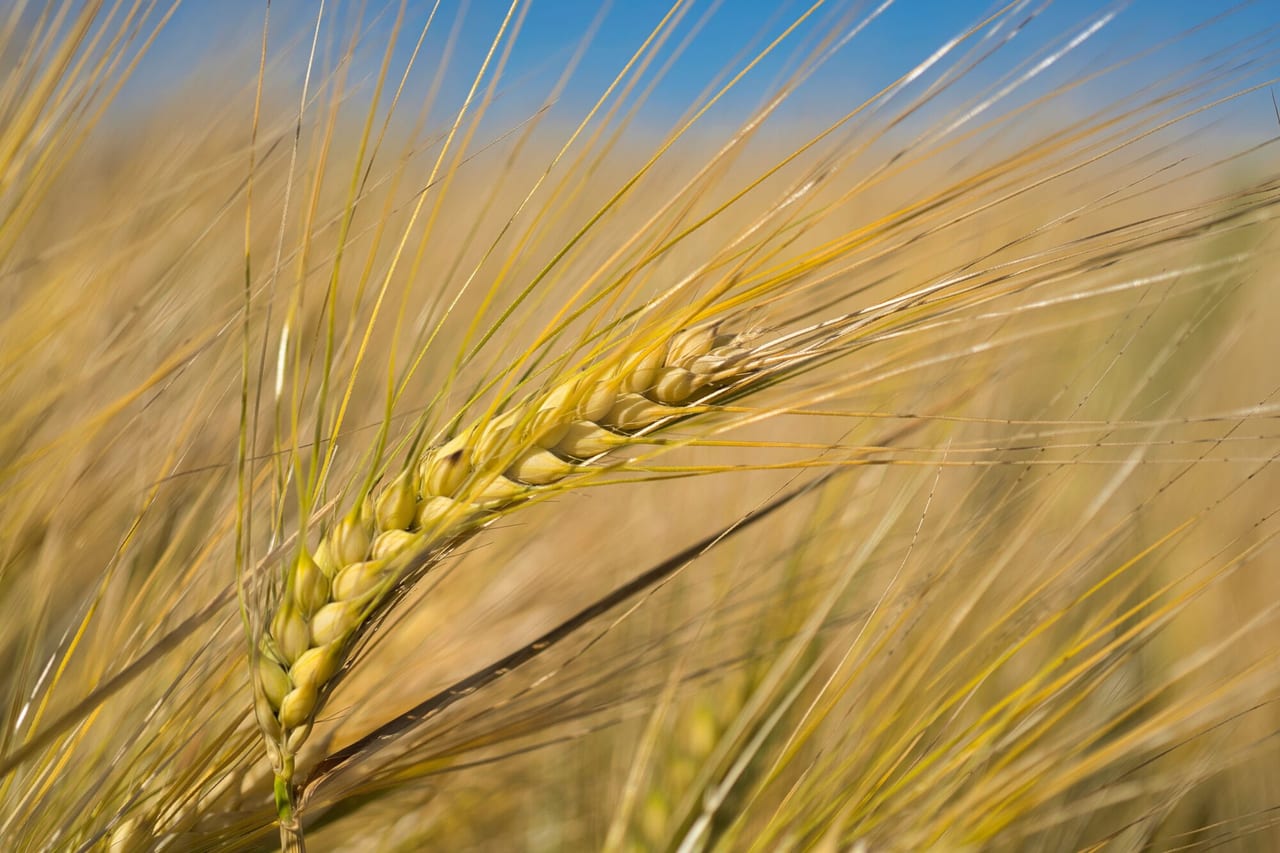
Barley
For malting barley, preserving germination and quality is critical and a gentle regime is required; feed barley is dried more aggressively.
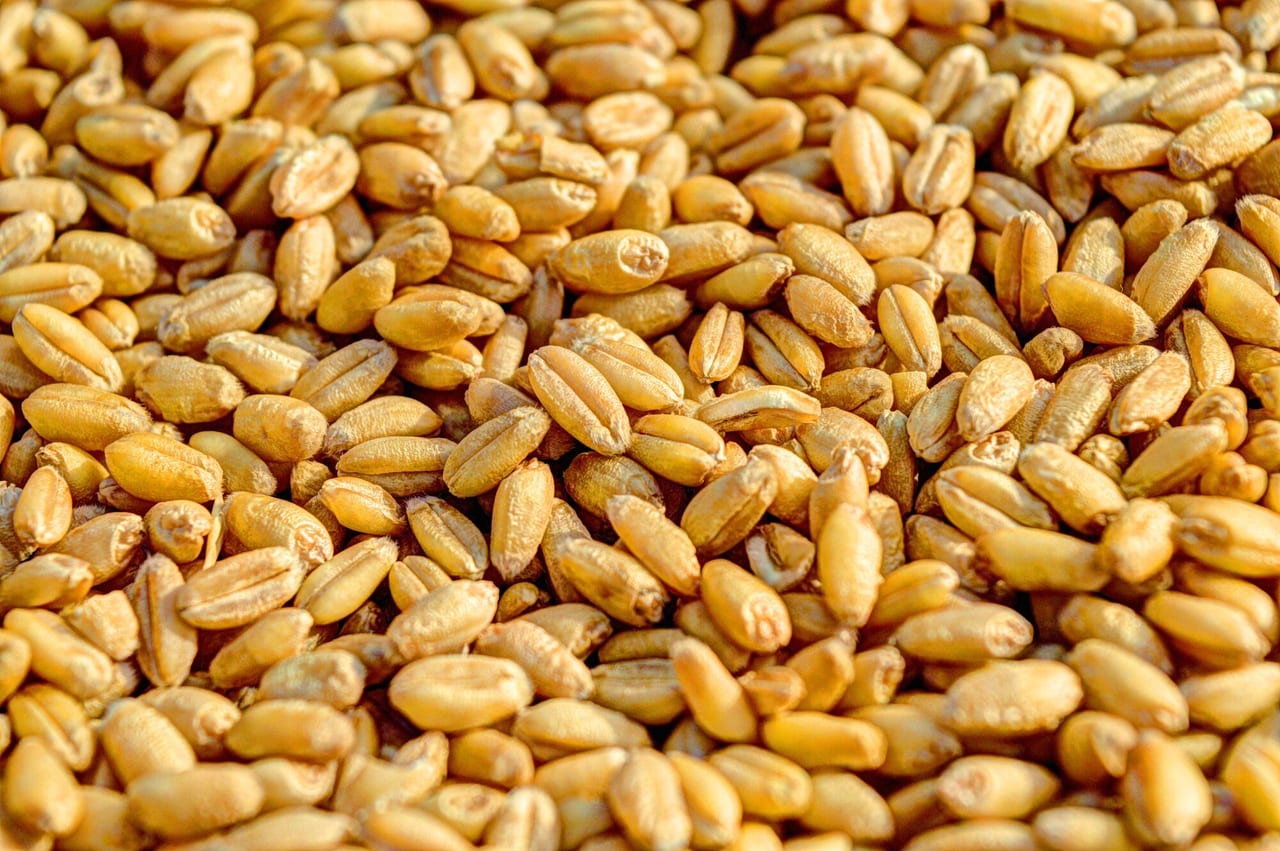
Wheat
A staple cereal crop. The drying regime depends on the end use (food, feed, seed) and the permissible grain temperature.
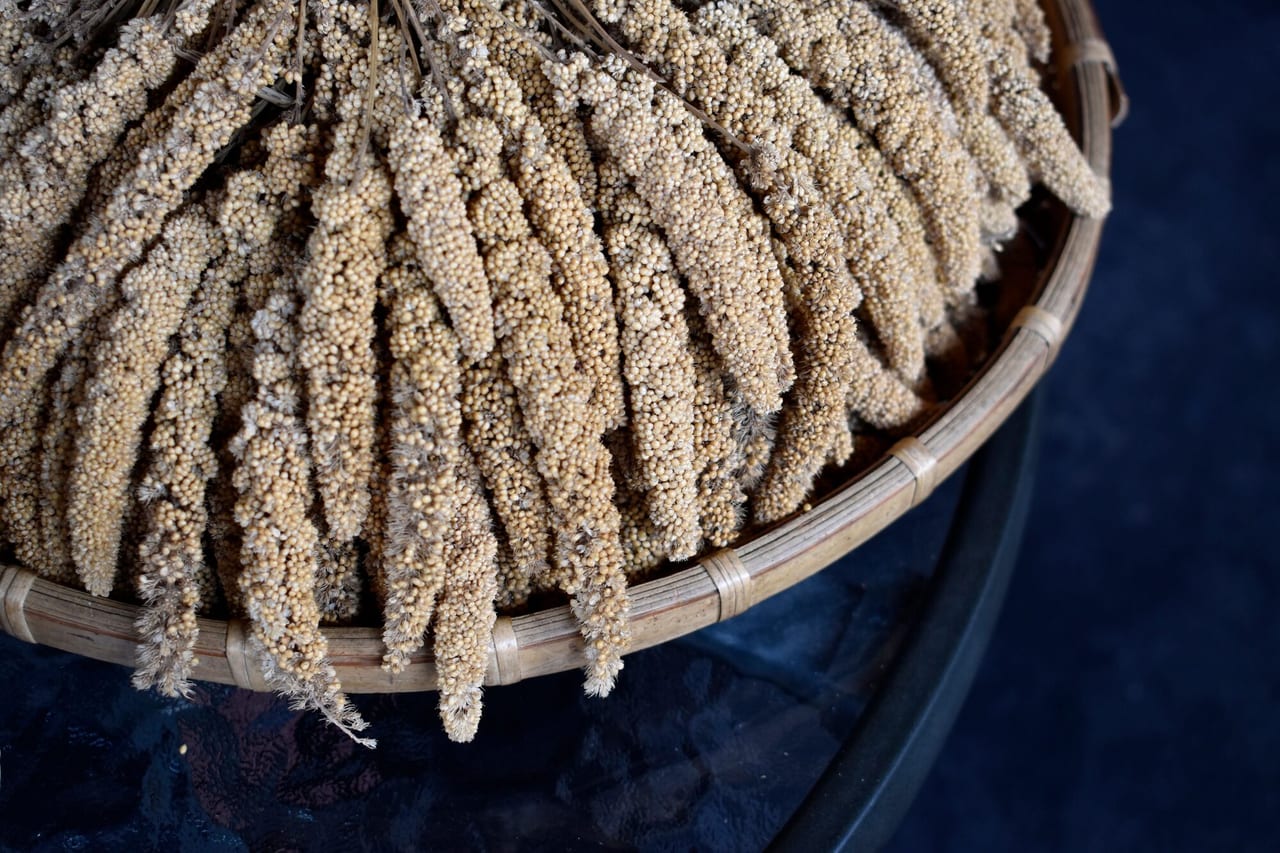
Sorghum
Grain sorghum is dried as a cereal crop; the regime is selected by moisture and end use.
Our Products
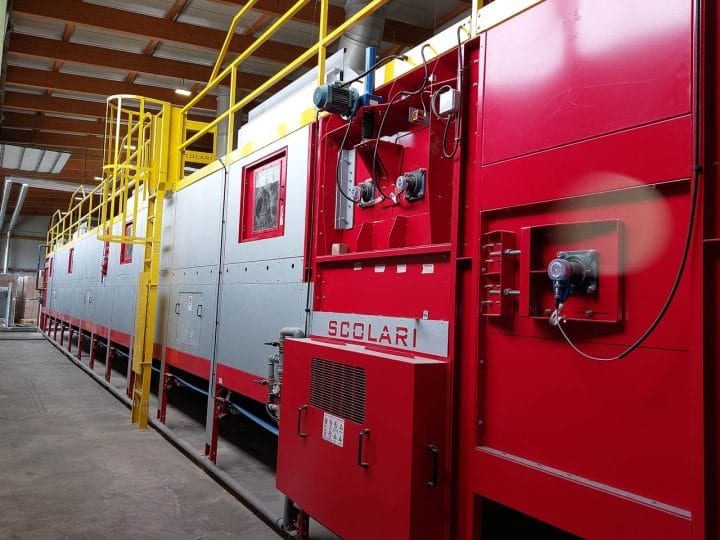
Universal Dryers
These dryers can be customized to dry any industrial or agricultural product you may require. Depending on the specific product and its moisture content, the dryers can be equipped with mixers, movable floors, vibrating floors, and other advanced technologies.
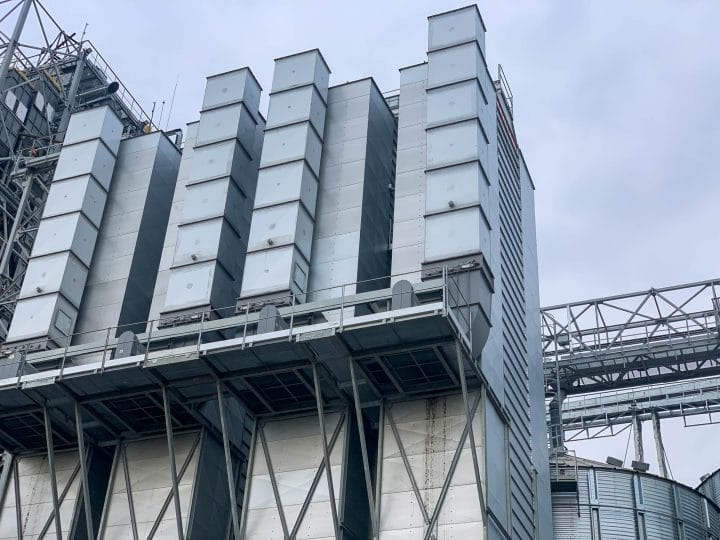
Grain Dryers
Authorized representative for top European grain dryer manufacturers like Alvan Blanch, FAO, and Agrex. Offering a full range of advanced drying solutions for agriculture.
Contact Us
If you are interested in purchasing any of our products, need a price quotation, or have any questions, comments, or suggestions, please do not hesitate to contact us via our contact form, by phone, or by email.
- WhatsApp: +90 (536) 452-1184
- E-mail: write to us
Our phones:
- Kazakhstan: +7 (747) 095-1626
- Moldova: +373 (22) 011-214
- Romania: +40 (31) 229-8484
- Türkiye: +90 (536) 452-1184 (English)
- Ukraine: +380 (67) 111-6668