
Drying Wheat in Industrial Grain Dryers
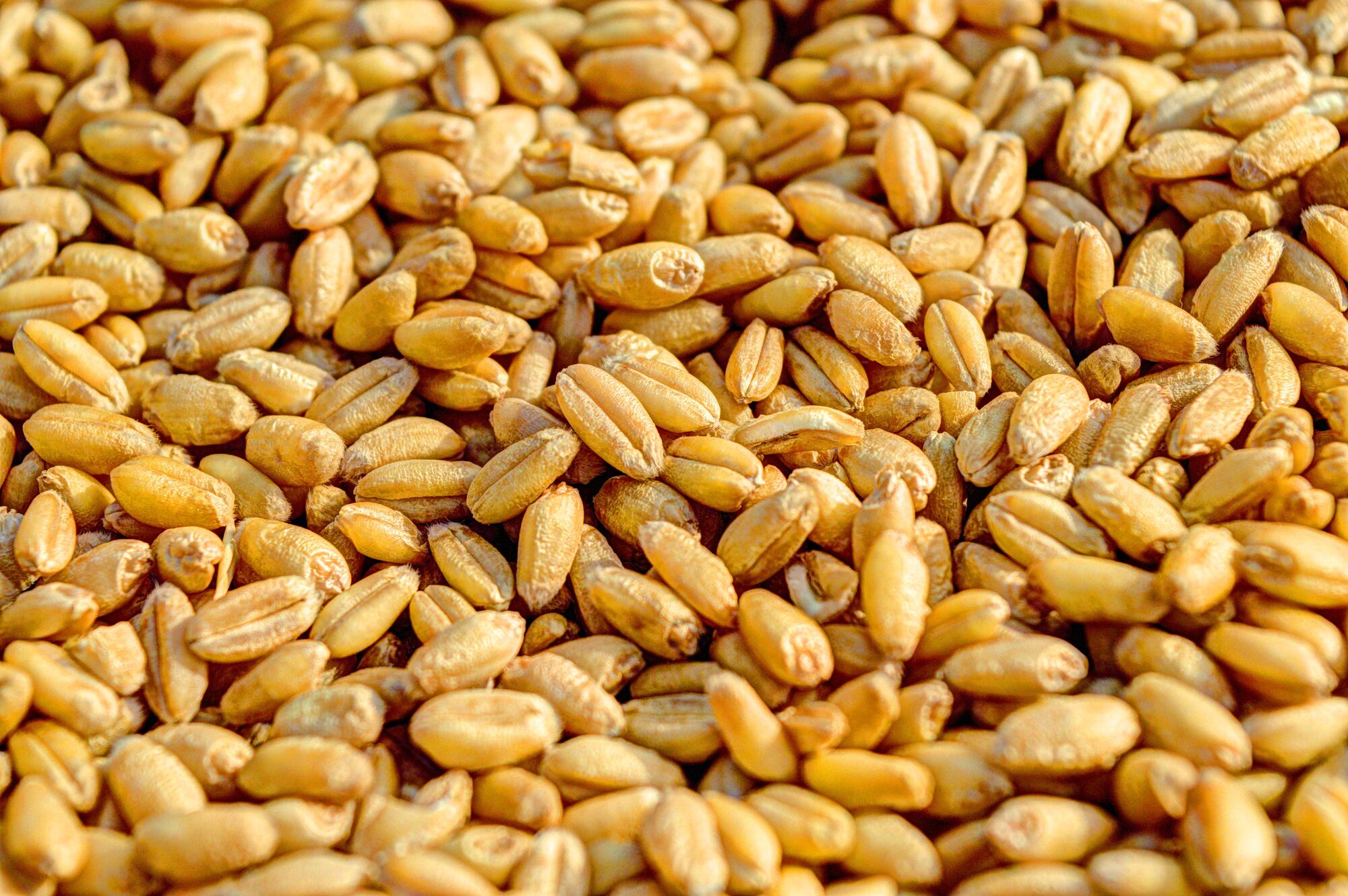
Wheat appears to be a more "straightforward" crop to dry than corn: it typically arrives at lower moisture, requires less moisture removal, and does not always demand complex heat-recovery systems. Yet wheat carries its own distinct risk — the assumption that as long as the grain shows no visible scorching or cracking, quality has been preserved.
For food (milling) wheat, the primary risk is not over-drying or breakage but damage to baking quality. Overheating the grain can impair gluten and reduce milling and baking performance even when the batch looks perfectly normal on the outside. For seed wheat the risk is even more critical: excessive temperature reduces germination and germination energy.
The question "at what temperature should wheat be dried?" therefore cannot be answered with a single number. It is essential to distinguish between the temperature of the hot air, the amount of heat actually transferred to the grain, the grain temperature itself, and the intended use of the batch: food/milling, feed, seed material, or durum wheat for processing.
Key takeaway: wheat is not dried to a "universal temperature" but according to the grain's intended use and the dryer type. For food wheat it is critical to preserve gluten and falling number; for seed wheat — germination; for feed wheat, more intensive settings are acceptable.
Quick Answer
Wheat is dried in continuous-flow, batch, mobile, and recirculating grain dryers. For food wheat, what usually matters more than the maximum air temperature is gentle moisture removal without overheating the grain. For feed wheat, settings can be more intensive. For seed wheat, grain temperature must be kept substantially lower, as germination is the primary criterion.
For safe storage, wheat is commonly brought to approximately 13–14 % moisture. The exact target depends on storage duration, grain temperature, buyer requirements, wheat grade, and storage conditions.
There is no universal drying temperature for wheat. It is necessary to distinguish:
- the temperature of the hot air or drying agent;
- the amount of heat actually transferred to the grain;
- the grain temperature itself;
- the dryer type and the direction of airflow through the grain bed;
- the intended use of the wheat: food/milling, feed, seed material, or durum wheat for processing.
Our Grain Dryers for Wheat
Wheat is one of the primary cereal crops, so virtually all of our grain dryers are suitable for drying it: continuous-flow tower/shaft dryers, batch recirculating dryers, and mobile or stationary solutions. The difference lies not in basic applicability but in the calculation of capacity, temperature settings, heat scheme, automation, airflow rate, and grain quality requirements.
For wheat drying we primarily consider the Ravaro RR/RC, Agrex AGD/AGD-F, Alvan Blanch DF, and FAO vertical dryer series. The specific series and settings are selected individually based on the intended use of the grain, throughput volumes, and quality requirements.
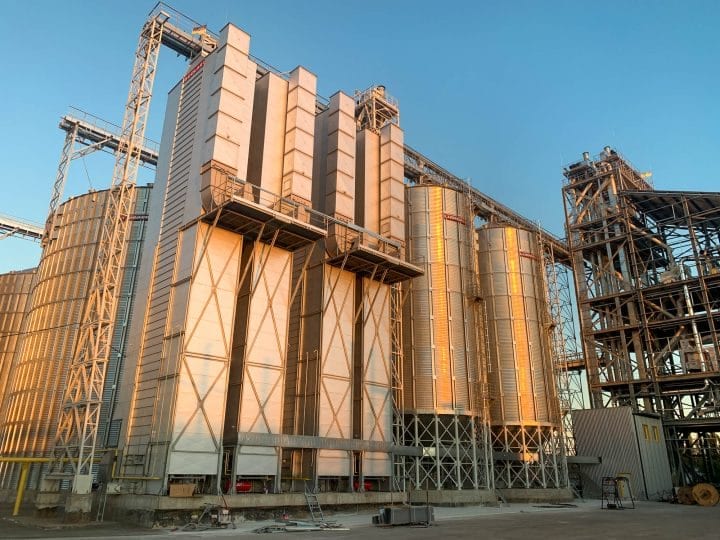
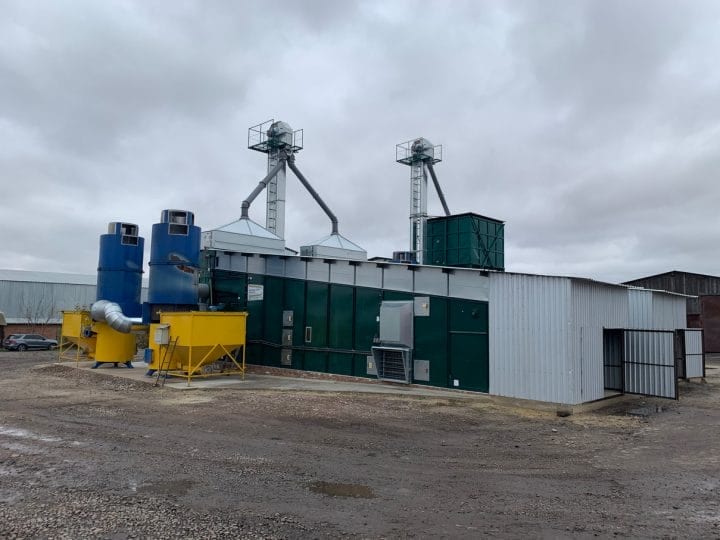
Scolari Grain Dryers
Italian mixed flow grain dryers equipped with full heat recovery and heat recirculation systems offer the most economical solutions for drying corn, which requires high drying temperatures.
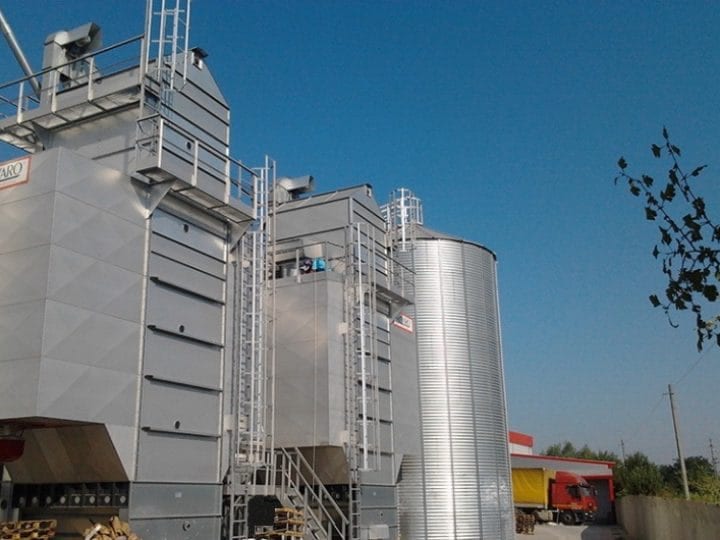
Ravaro Batch Grain Dryers
Italian mixed-flow batch grain dryers, suitable for medium-sized farms or tailored for special products like paddy rice that require a resting period.
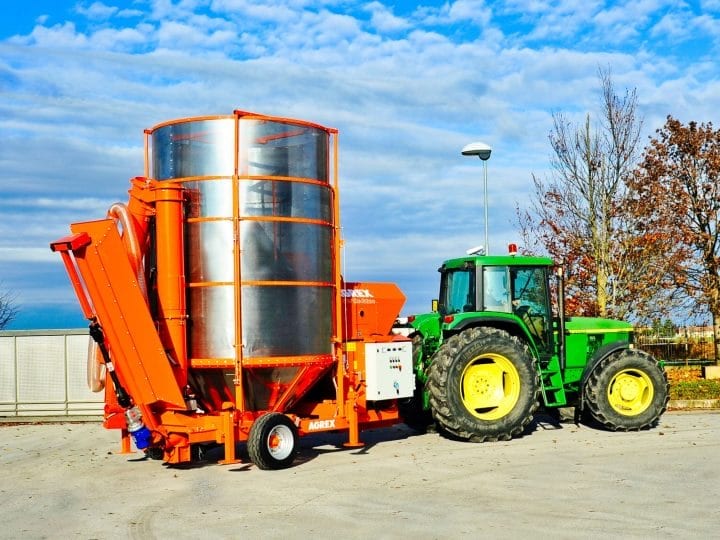
Agrex Mobile Grain Dryers
Italian mobile batch grain dryers for small and medium-sized farmers do not require construction work, are completely autonomous in operation, and can run on any type of fuel.
Alvan Blanch Grain Dryers
Horizontal grain dryers from Great Britain. The short height allows to minimize total capital investments. Conveyor belt technology ensures gentle grain drying.
Why Wheat Is Dried
For Safe Storage
Wheat with elevated moisture stores poorly. Mould develops more rapidly, the risk of self-heating increases, quality deteriorates, and losses grow. Drying reduces moisture to a level at which the grain can be stored, transported, and processed without rapid batch deterioration. For ordinary storage the common target is 13–14 %, but this is not an absolute figure for every situation: for long-term storage and especially for seed material the requirements may be stricter.
To Preserve Milling and Baking Quality
Food wheat is valued not only by moisture and test weight. Mills require gluten, protein, falling number, baking strength, and batch quality consistency. Improper drying can reduce grain value even when the grain looks physically intact. The dryer's task is not merely to remove water but to do so without thermal damage to the protein complex.
To Prepare for Processing
Wheat may be destined for flour, groats, compound feed, malt, and other technological processes. Moisture stability and the absence of overheating are important for all end uses. An unevenly dried batch performs worse during storage and processing: some grain may be over-dried while another portion remains wet.
For Feed Use
Feed wheat tolerates more intensive settings than milling or seed wheat. This does not mean it can be dried without control. Over-drying still causes mass and fuel losses, while uneven moisture undermines storage.
For Seed Material
Seed wheat is a separate technological scenario. The key parameter here is germination. Even brief overheating of the grain can impair sowing quality. The drying regime must therefore be gentler for seed batches, and single-pass moisture removal must be limited.
In depth: why grain can look normal yet lose quality
When drying wheat, an operator may see normal-looking grain with no obvious signs of damage. Yet baking quality depends on the protein complex, gluten, and enzymatic activity — properties that can deteriorate without any visible scorching.
It is therefore impossible to assess the drying regime by visual inspection alone. For food wheat, what matters is the grain temperature, moisture after drying, batch uniformity, and laboratory measurements of gluten and falling number. For seed wheat — laboratory germination testing.
Why Wheat Requires a Different Logic Than Corn
Corn often arrives at high moisture and demands a large amount of heat. Wheat is typically harvested at lower moisture, making its drying less fuel-intensive. For wheat, preserving grain quality usually matters more than pushing for maximum temperature and fuel savings.
This does not mean energy efficiency is unimportant. At a large elevator any percentage of fuel saving is significant. But unlike corn — where high moisture and large moisture removal make heat recovery and recirculation especially valuable — for wheat such systems are more often an economic option than a technological necessity.
The main risk with wheat is overheating the grain to the point where gluten or germination suffers.
In depth: why food wheat cannot be dried as aggressively as feed wheat
Baking quality depends on the protein complex and gluten. At excessively high grain temperatures these properties can deteriorate, and flour from such a batch will perform worse — even though the grain remains visually intact.
Feed wheat tolerates a more intensive regime because no baking-strength requirements apply to it. But even for feed grain, overheating means mass and fuel losses, and uneven moisture undermines storage. Drying "as hot as possible" is therefore economically unfavourable for any batch.
The Key Principle: What Matters Is Not Temperature in Isolation But Thermal Load on the Grain
In wheat drying, just as in corn drying, comparing only air temperatures is the wrong approach. What matters more is how much heat is actually transferred to the grain and how uniformly that happens.
Thermal load is affected by:
- Air or heating-medium temperature. This is a dryer setting, not a quality indicator in itself.
- Airflow rate. A high airflow at moderate temperature can transfer a large amount of heat. A low airflow at high temperature behaves differently.
- Duration of grain contact with hot air. Brief contact and prolonged exposure in the hot zone produce very different results.
- Dryer type and airflow path through the grain bed. Cross-flow, mixed-flow, recirculation, and vertical shaft/tower configurations create different temperature gradients.
- Grain moisture. Wet grain heats differently because water evaporation absorbs energy.
- Intended use of the grain. What is acceptable for feed may be unacceptable for flour or seed.
The same air temperature can therefore be acceptable in one dryer and risky in another. Conversely, a higher heating-medium temperature does not always mean a higher grain temperature if the dryer design provides brief contact, uniformity, tempering, and proper cooling.
In depth: air temperature, grain temperature, and dryer type
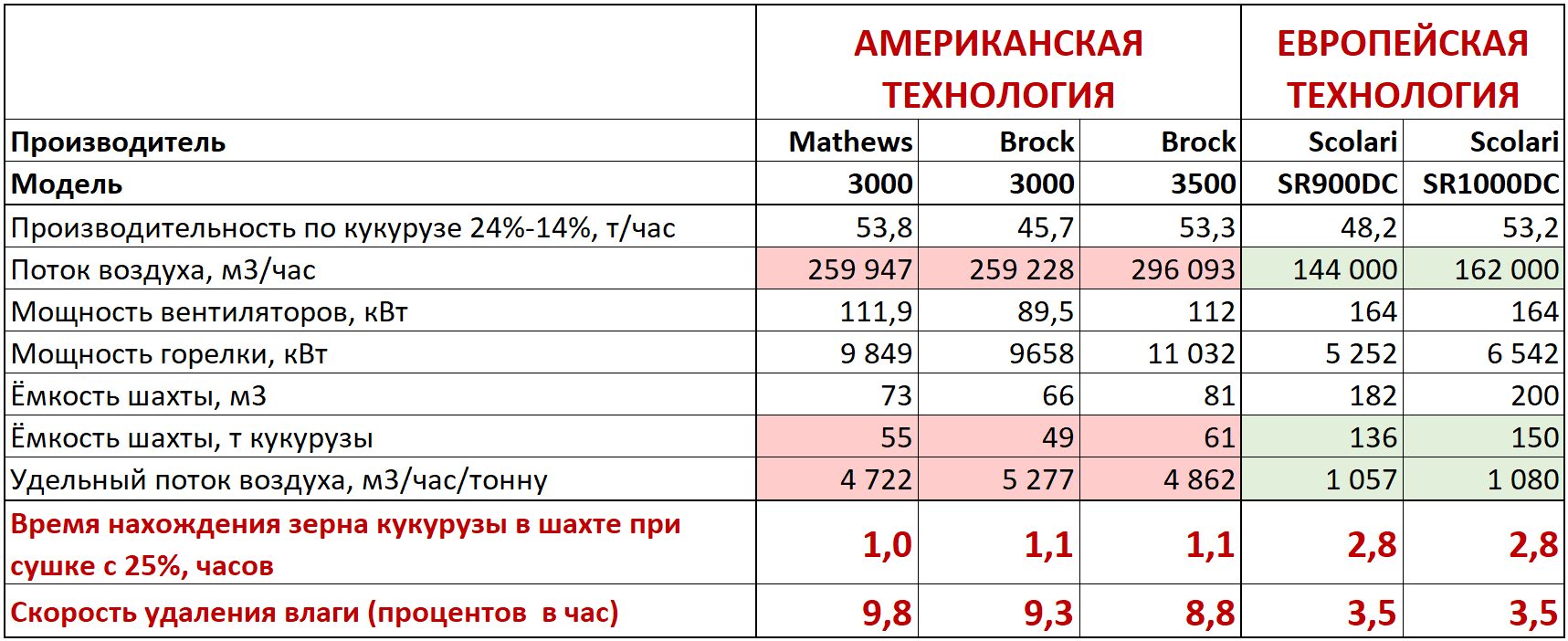
Various sources cite very different wheat drying temperatures: from 40–50 °C to 110 °C and above. This is not always a contradiction. In most cases one source refers to grain temperature, another to drying-air temperature, and a third to the heating-medium temperature at the system inlet.
For a technical article it is important not to conflate these values:
- air temperature — a dryer parameter;
- grain temperature — a quality limit;
- heating-medium temperature — may be higher than the air temperature in the grain contact zone;
- storage temperature — a separate value measured after drying and cooling.
For food wheat, the reference point is not the maximum air temperature but maintaining grain temperature within a safe range for gluten and baking properties. For seed wheat the threshold is even lower.
Wheat Drying Temperatures: How to Read the Numbers Correctly
Food (Milling) Wheat
For food wheat it is critical to preserve milling and baking quality. Technical sources commonly cite the following guideline: grain temperature should remain roughly in the range of up to 50–60 °C, depending on grade, gluten strength, and intended use of the batch.
Grain with strong gluten is usually dried more gently. Overheating such wheat can produce a batch that looks normal externally but has impaired baking properties. The drying-air temperature at this point may differ between dryer types: practical settings often show ranges of around 80–90 °C air temperature for certain tower/shaft or continuous-flow configurations, while for regimes aimed at preserving milling quality the air temperature may be lower.
Feed Wheat
Feed wheat tolerates more intensive settings. In this context a drying-air range of 80–110 °C can be considered, provided it matches the dryer type and does not result in excessive grain overheating. But even for feed grain there is no need to dry "as hot as possible": over-drying means mass loss, excess fuel consumption, and the risk of uneven moisture.
Seed Wheat
For seed wheat the regime must be gentle. The primary objective is to preserve germination. Technical sources for wheat specify a grain-temperature guideline of no more than 40–43 °C, as well as softer drying-agent settings and limited single-pass moisture removal.
If the batch is wet, it is better to dry it in stages: remove part of the moisture, allow the grain to temper, then continue drying. This approach reduces the risk of embryo damage and deterioration of sowing quality.
Durum Wheat
Durum wheat for the pasta industry follows a grain-drying logic closer to food milling wheat: it is essential not to overheat the grain and not to damage the quality of the vitreous endosperm. The temperature regimes from the pasta-dough drying process must not be transferred to grain durum — that is a separate food-industry process, not a setting for a grain dryer.
Temperature and Moisture Reference Points
This table is not a universal operator instruction. It illustrates why the same question — "what is the drying temperature for wheat?" — has different answers. The actual regime is determined by the dryer type, moisture content, intended use, quality requirements, and real sensor readings.
| Parameter | Reference point | Context |
|---|---|---|
| Wheat storage moisture | 13–14 % | general guideline for safe storage; the exact value depends on duration and conditions |
| Food wheat, grain temperature | up to 50–60 °C | guideline for preserving gluten and baking quality |
| Seed wheat, grain temperature | up to 40–43 °C | guideline for preserving germination |
| Feed wheat, air temperature | 80–110 °C | potentially more intensive regime, subject to dryer type suitability |
| Food wheat, air temperature | often 80–90 °C; lower in certain regimes | depends on dryer type, moisture content, and quality requirements |
| Alvan Blanch DF, wheat example | 20 % → 15 % at 110 °C | DF-series production specification; not a universal norm for all dryers |
| Agrex AGD45, wheat | 20 % → 14 %, approx. 213–242 t/24 h | model rated capacity; temperature regime is selected to match the batch |
| Cooling after drying | to near-ambient temperature | important for storage and reduction of internal stresses |
Where do the figures of 180–250 °C come from, and can wheat be dried at those temperatures?
Online sources and even some educational materials sometimes cite very high drying temperatures — 180–250 °C and above. Taken literally, one might conclude that wheat may be dried at 200 °C. This is incorrect, and such figures must be read with their context in mind.
In almost every case they refer not to grain temperature, nor to air temperature in the grain bed, but to the heating-medium or combustion-gas temperature at the inlet of a high-temperature recirculating system. The grain itself heats to a much lower temperature: contact with the hot agent is brief, and the air cools and becomes saturated with moisture as it passes through the grain mass.
When you encounter such a figure, always clarify what exactly it refers to. For food wheat the reference is grain temperature (roughly up to 50–60 °C to preserve gluten), and for seed wheat it is even lower (up to 40–43 °C to preserve germination). These limits are more important than any "impressive" heating-medium figure.
What Happens to Wheat Quality When Drying Is Done Incorrectly
Loss of Gluten and Baking Quality
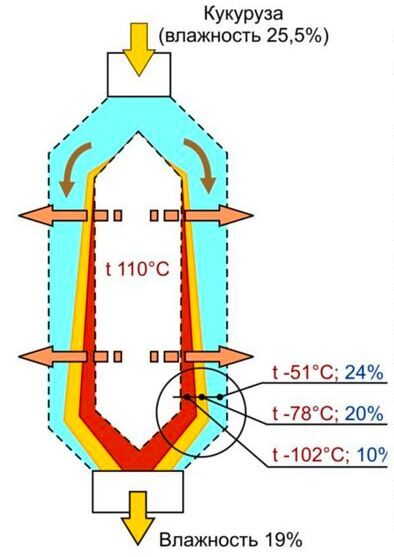
The primary risk for food wheat is damage to the protein complex. At excessively high grain temperatures gluten can deteriorate and baking properties will decline. The grain may look physically intact, but flour from such a batch will be of lower quality.
This is why when drying milling wheat one cannot focus solely on the rate of moisture removal. An overly aggressive regime may save time but reduces the value of the batch.
Drop in Germination of Seed Material
Seed wheat is sensitive to overheating. The embryo can be damaged even when the grain does not look visually impaired. For seed wheat a gentle regime is therefore selected, grain temperature is monitored, and single-pass moisture removal is limited.
Over-Drying
Over-drying causes direct economic losses. The grain loses mass, the dryer burns excess fuel, and overly dry wheat may crack more readily during transport and cleaning.
Under-Drying and Uneven Moisture
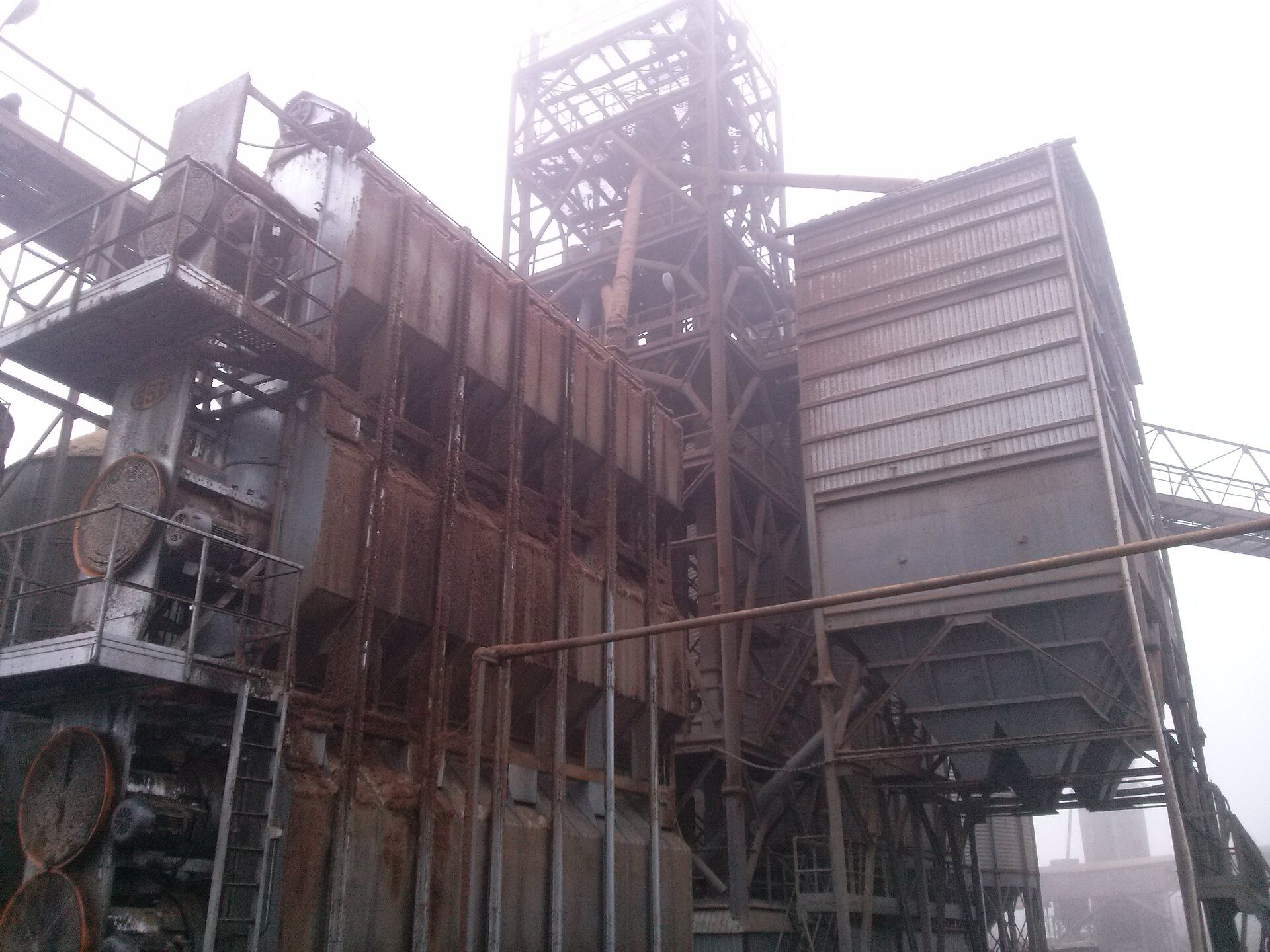
Under-dried wheat stores poorly. Wet pockets within a batch can lead to self-heating, mould, and quality deterioration. Uneven drying is particularly dangerous when the average moisture appears acceptable but part of the batch remains wet.
Pre-Harvest Sprouting and Falling Number
If wheat has sprouted in the field, drying will not restore already-damaged quality. Pre-harvest sprouting is associated with increased enzyme activity and a reduced falling number. Drying helps stop further deterioration and stabilise the batch, but it does not "cure" grain that has already sprouted.
In depth: what falling number is and why drying cannot fix sprouted wheat
Falling number is a measure of enzymatic activity, primarily alpha-amylase. During pre-harvest sprouting enzymatic activity rises, starch begins to break down, and flour from such wheat may become unsuitable for normal bread baking.
Drying reduces moisture and helps stabilise the grain after harvest. But if biochemical changes have already occurred in the field, a dryer cannot restore the original falling number. When there is a risk of rain and sprouting, the farm's task is to harvest wheat on time and quickly bring it down to a safe moisture level.
Which Grain Dryers Are Suitable for Wheat
Various dryer types are suitable for wheat. The choice depends on farm scale, moisture content, intended use, seasonal load, and available fuel. As relevant solutions we consider the Ravaro RR/RC, Agrex AGD/AGD-F, Alvan Blanch DF, and FAO series.
Ravaro RR — Batch Recirculating Dryer with Tempering
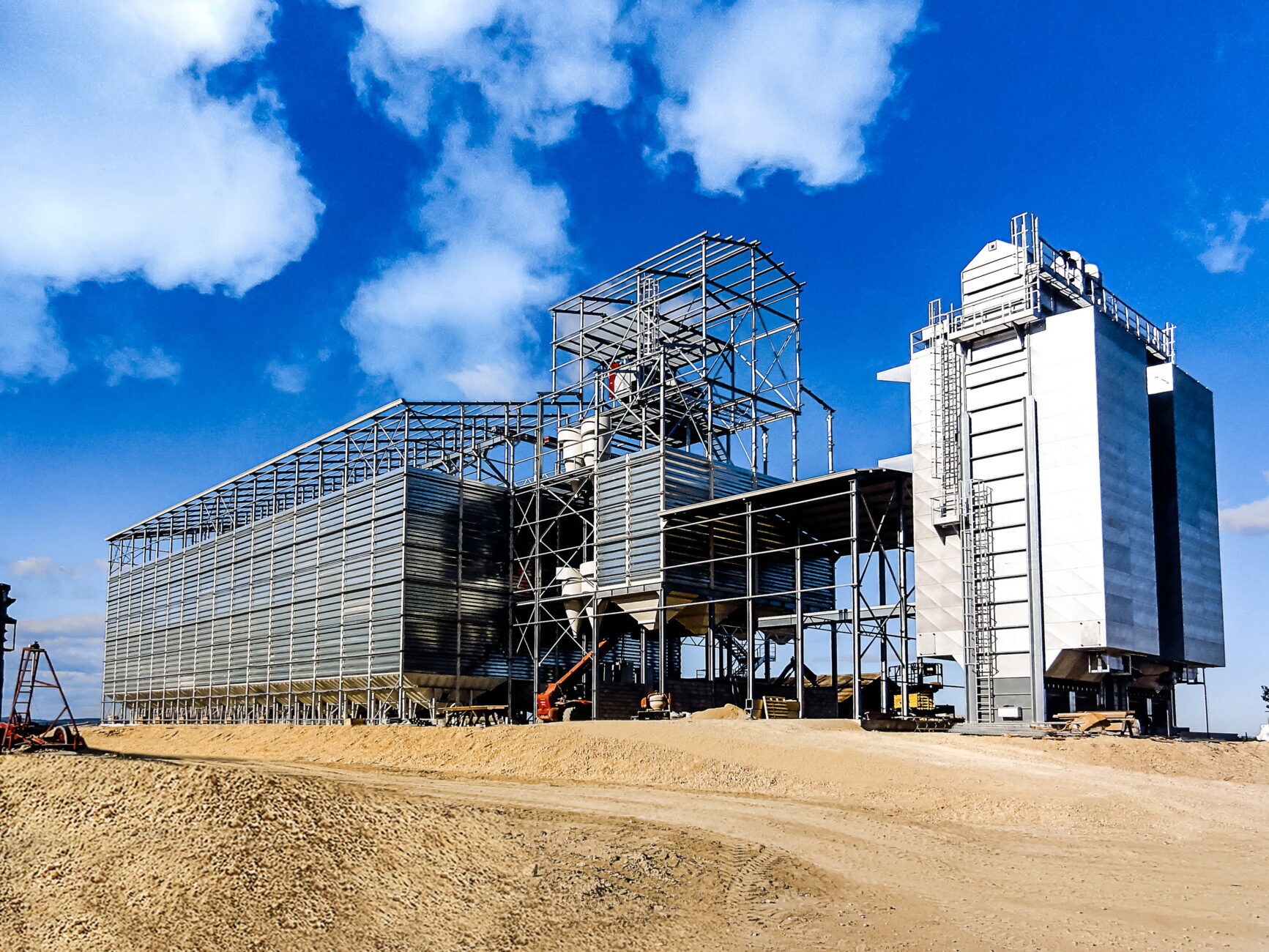
Ravaro RR is suitable for farms that need flexible batch drying of various crops including wheat. For wheat, uniformity matters as much as temperature. Batch mode with recirculation and a tempering phase helps equalise moisture within the grain mass and reduce sharp temperature gradients.
When it is appropriate:
- farm-scale or medium-sized operation;
- different crops throughout the season;
- batches at varying moisture levels;
- requirement for a gentler drying regime;
- limited grain volume compared with a large elevator.
For seed or high-quality food wheat, tempering and a gentler regime are especially beneficial because they reduce sharp moisture and temperature gradients.
Ravaro RC — Continuous-Flow Dryer
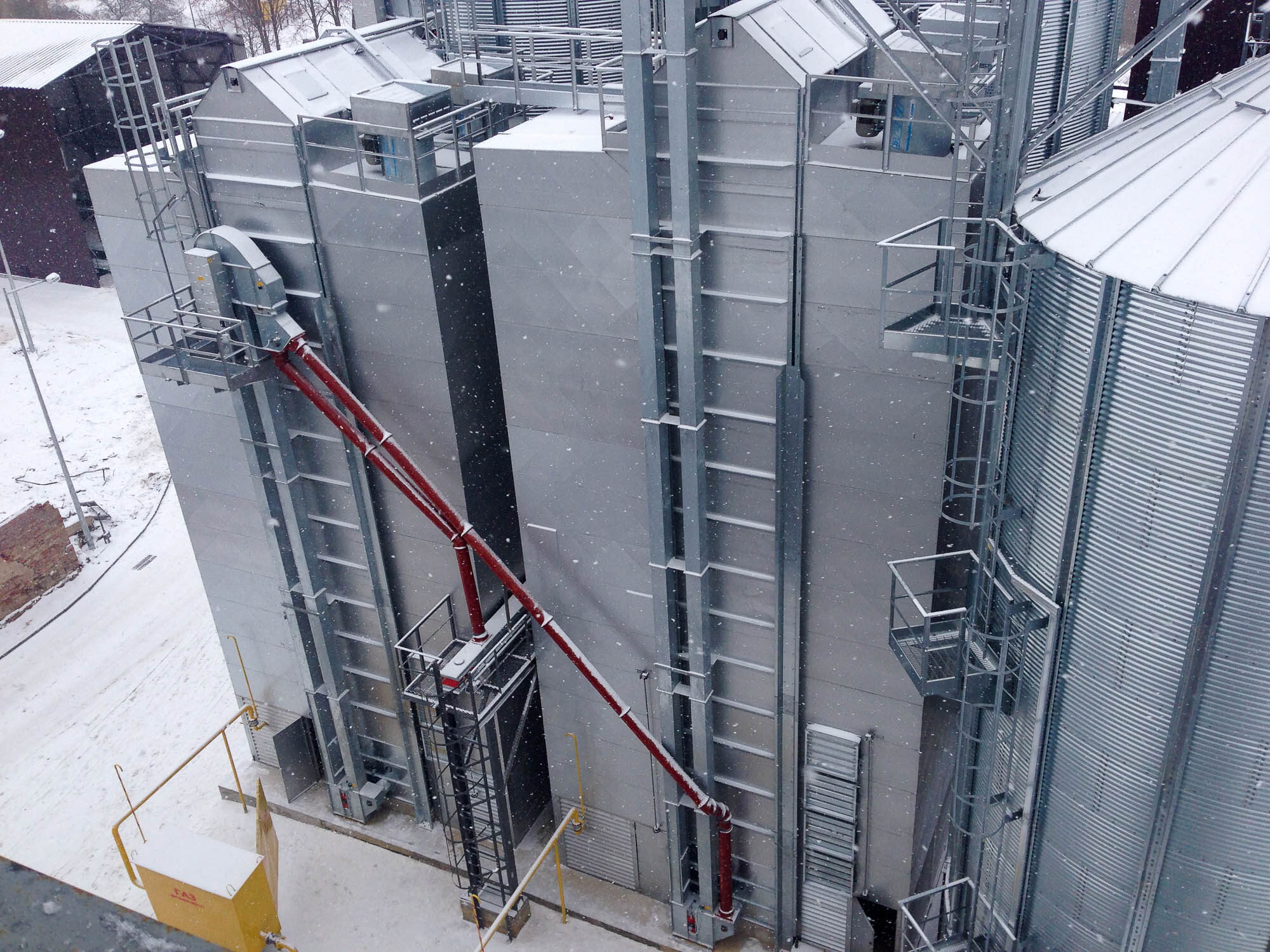
Ravaro RC is suited for more continuous operation and higher volumes compared with the batch scenario. The logic here is more oriented towards throughput and capacity. For wheat this makes sense where the operation has stable intake, cleaning, buffer storage, and a well-defined storage regime.
When it is appropriate:
- continuous-flow drying of commercial or feed wheat;
- seasonal harvest peaks;
- need to reduce downtime between batches;
- operation as part of a complete grain handling line.
Agrex AGD — Mobile Continuous-Flow/Recirculating Dryers
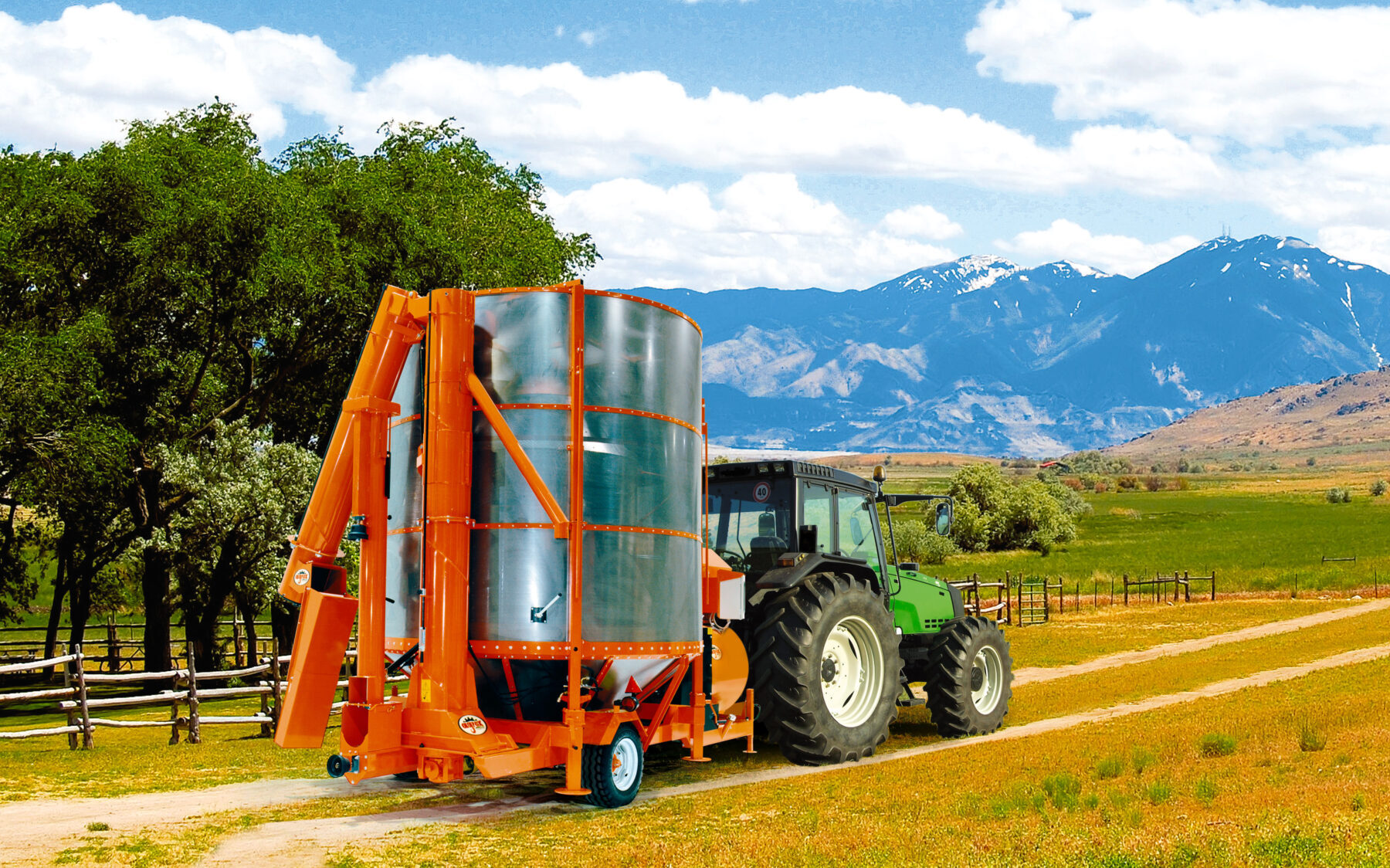
Agrex AGD is a practical solution for operations that need mobility and relatively simple infrastructure. For wheat this is particularly attractive where there is no large elevator complex but there is a need to quickly bring the harvest to a safe moisture level.
When it is appropriate:
- farm-scale operation;
- drying own-grown wheat;
- seasonal operation without a capital complex;
- multiple crops: wheat, corn, rapeseed, sunflower, soybean;
- need for a straightforward mobile system.
For wheat, the AGD45 model has a rated capacity of approximately 213–242 t/24 h when reducing moisture from 20 % to 14 %. This is a capacity reference point; the specific regime is matched to your batch and model.
Agrex AGD-F — Stationary Solutions
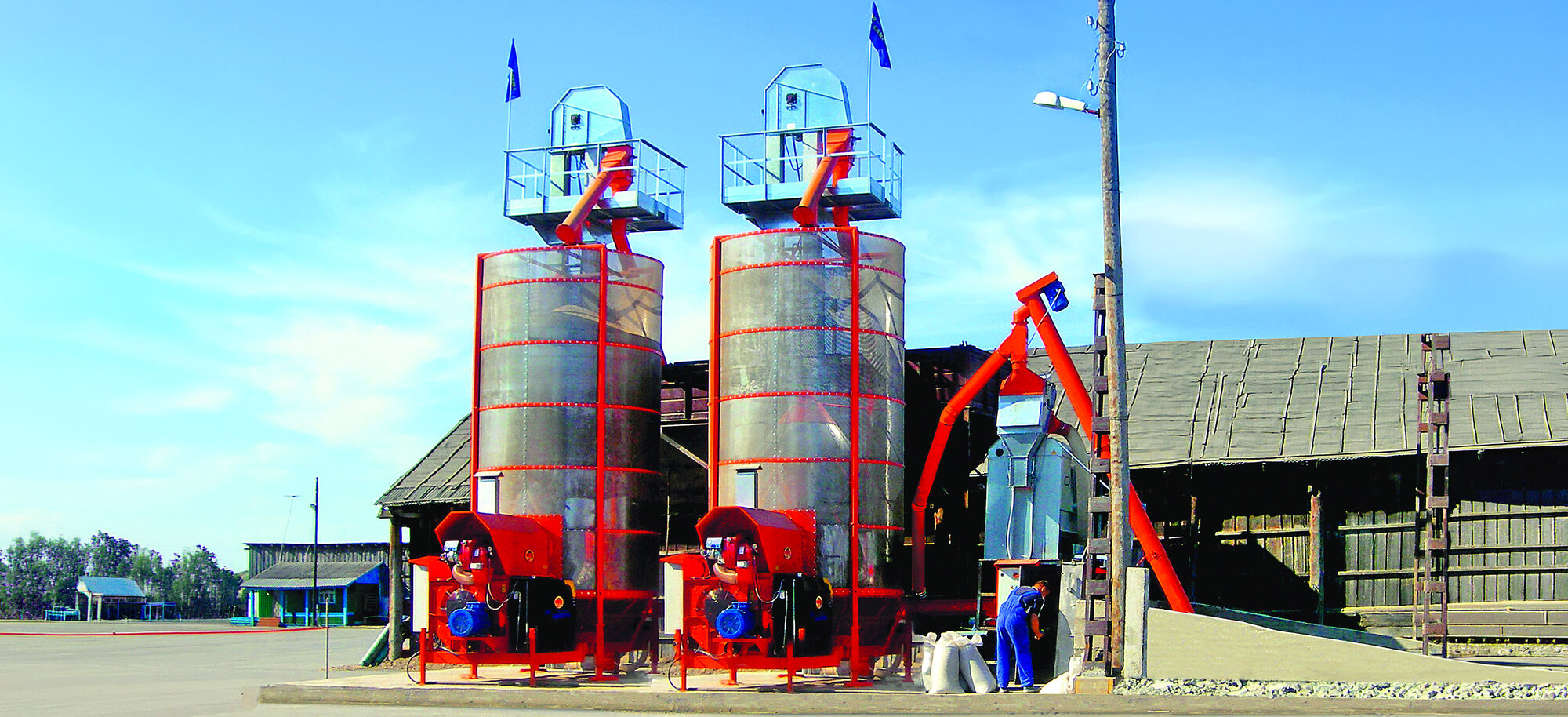
AGD-F makes sense where a mobile dryer is no longer sufficient and a stationary line is needed with greater organisation of intake, conveying, and storage. For wheat this can be a solution for operations that want to retain the simplicity of an agricultural dryer while moving to more permanent infrastructure.
When it is appropriate:
- regular drying of wheat and other cereals;
- growing throughput volumes;
- more stable logistics scheme;
- need for integration with conveyors, silos, and cleaning equipment.
Alvan Blanch DF — Continuous-Flow Double-Flow Dryer
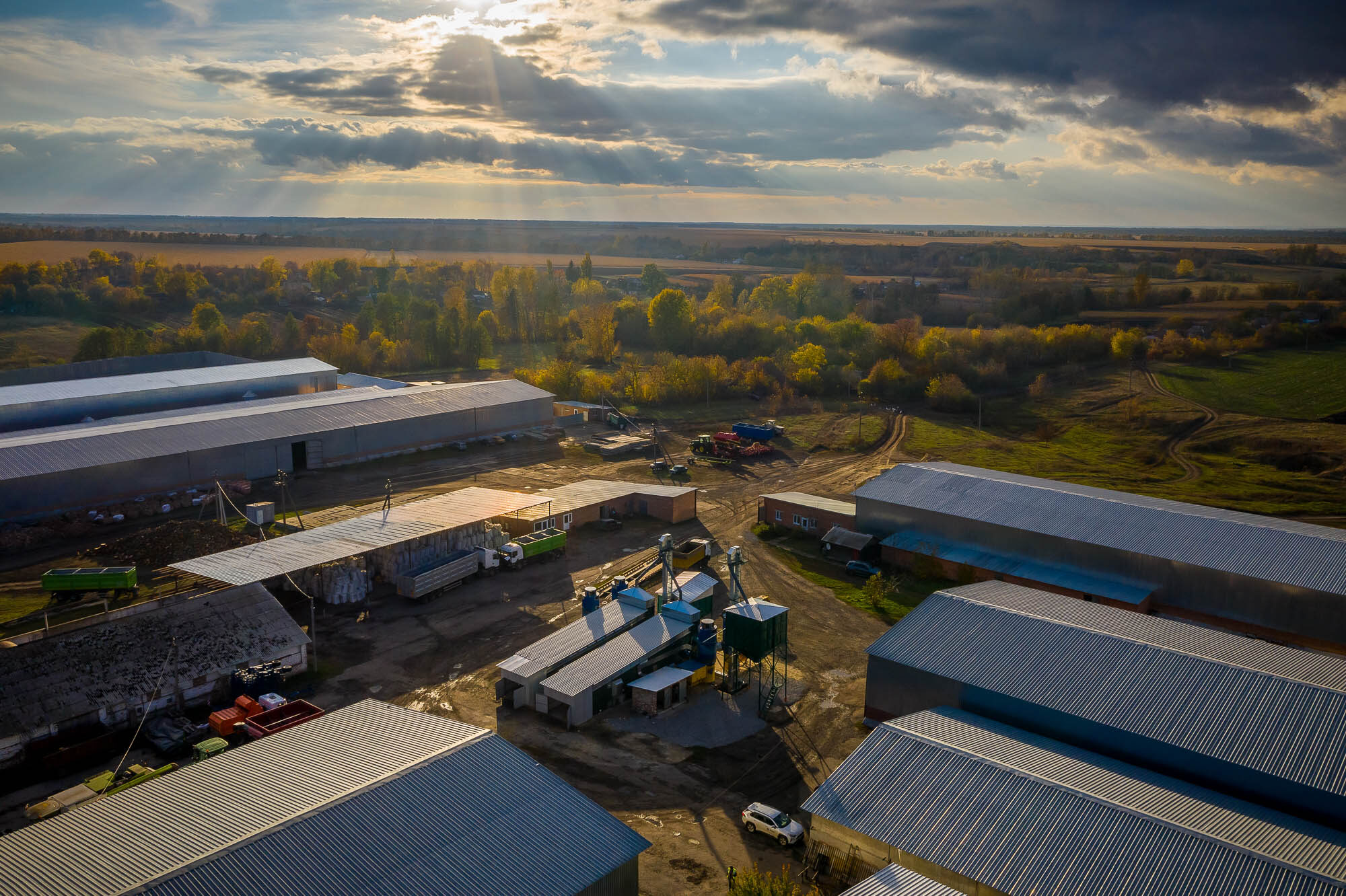
Alvan Blanch DF is of interest for wheat as a continuous-flow dryer providing more uniform grain treatment than simple cross-flow solutions. The technical data include a production specification for wheat at 110 °C and 20 % → 15 % moisture.
When it is appropriate:
- farms and enterprises requiring continuous operation;
- wheat and other cereals;
- requirement for drying uniformity;
- projects where simplicity of operation and consistent results are important.
For food wheat, the regime must be selected with grain temperature and quality requirements in mind, not based solely on the rated air temperature.
FAO — Vertical Continuous-Flow and Batch Dryers
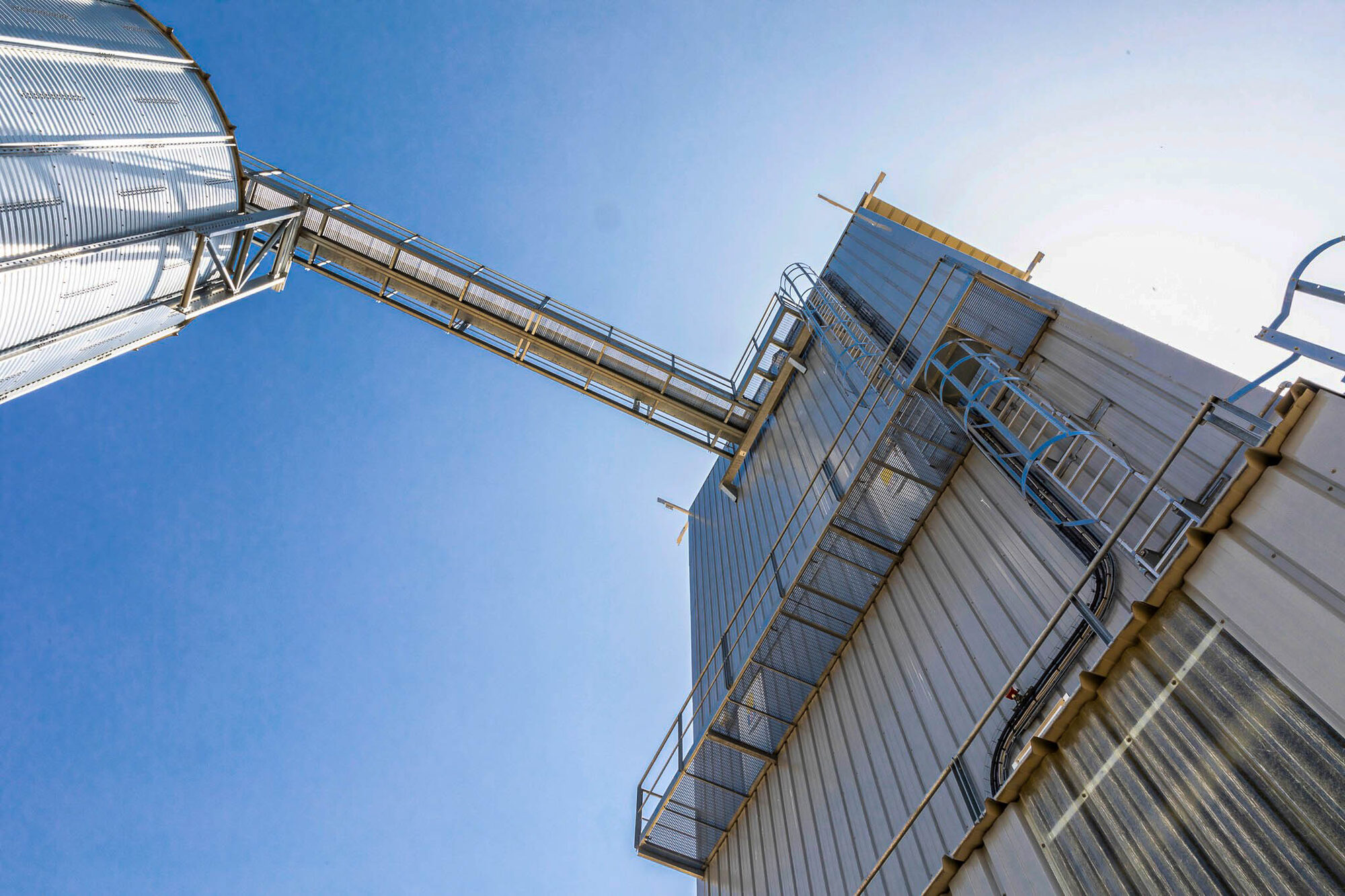
FAO is a French grain-dryer manufacturer (not the Food and Agriculture Organization). For wheat, the relevant options are FAO vertical continuous-flow and batch dryers. They are designed for cereals and oilseeds as well as for high-capacity, uniform-drying applications.
Continuous FAO dryers are suitable for operations with large daily throughput. Recirculating FAO dryers make sense where flexibility, batch operation, and a more controlled process are important.
When it is appropriate:
- large farm or elevator;
- high daily capacity;
- requirement for uniform air distribution;
- interest in energy-saving options;
- working with wheat, barley, corn, rice, rapeseed, sunflower, and other crops.
Comparison of Suitable Solutions
| Solution | When to choose | Advantages for wheat | Limitations / what to check |
|---|---|---|---|
| Ravaro RR | batch drying, farm and medium-scale operations | recirculation, tempering, crop flexibility, gentle treatment | lower continuous throughput compared with large continuous-flow lines |
| Ravaro RC | continuous-flow drying of commercial wheat | more stable throughput, higher capacity | requires organised intake, cleaning, buffers, and storage |
| Agrex AGD | mobile farm-scale drying | mobility, ease of deployment, suitable for own-grown wheat | capacity and regime depend on the model and moisture level |
| Agrex AGD-F | stationary farm line | more permanent infrastructure, integration with conveyors and silos | the full complex — not just the dryer — must be engineered |
| Alvan Blanch DF | continuous-flow drying of various cereals | uniform double-flow, rated data available for wheat | for food wheat verify regime against grain temperature, not rated air temperature alone |
| FAO continuous vertical | large volumes, continuous operation | high daily capacity, uniform air distribution, energy-saving options | requires full elevator logistics |
| FAO recirculating vertical | batch operation, flexibility, various crops | recirculation, process controllability, works with cereals and oilseeds | model, volume, and regime must be confirmed against batch moisture |
Does Wheat Need Heat Recovery?
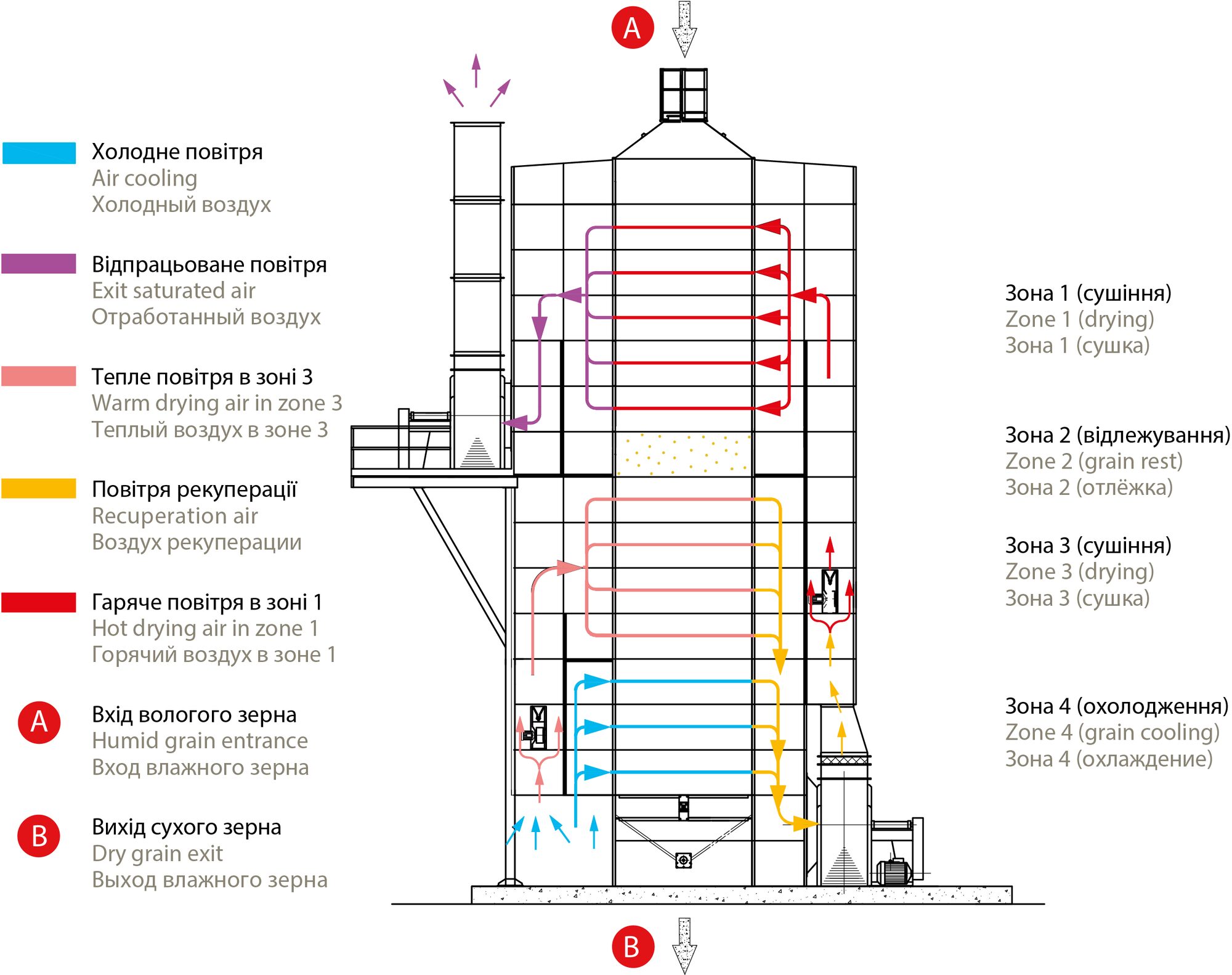
For corn, heat recovery and recirculation are often among the main economic factors: corn is wet, moisture removal is large, and the season is cold. For wheat the situation is milder. It is usually dried from a lower initial moisture level and requires less heat per tonne of product.
For wheat it is therefore more accurate to state:
- heat recovery is not always technologically mandatory;
- at large volumes it may be economically advantageous;
- for feed or commercial wheat with large seasonal volumes, energy-saving options are worth calculating;
- for a small farm, simplicity, cost, and dryer flexibility may matter more.
In depth: why wheat is less fuel-intensive but economics still need to be calculated
The amount of heat required for drying depends primarily on how much water must be removed. If wheat arrives at 17–20 % moisture and corn at 25–30 %, the moisture-removal task is fundamentally different.
Yet economics cannot be assessed by crop alone. Ambient temperature, air humidity, operating schedule, cost of gas or other fuel, capacity, insulation quality, the possibility of air recirculation, cooling organisation, and conveying equipment losses all matter.
For wheat, heat recovery may therefore not be a "mandatory sales argument," but at large elevator throughputs it should be considered as a cost-saving option.
How to Manage Wheat Drying in Practice
1. First, Determine the Intended Use of the Batch
Before selecting a regime, identify what type of wheat it is: food/milling, feed, seed, durum, a batch with a risk of pre-harvest sprouting, or a batch destined for long-term storage. Applying the same regime to all batches is a typical mistake.
2. Check Initial Moisture and Batch Uniformity
A single average moisture figure does not always reflect reality. If the batch contains wet pockets, green admixtures, or field-to-field variation, the dryer must operate with a control margin and the operator should check output moisture more frequently.
3. Do Not Rely on Air Temperature Alone
Air temperature is a setting, but quality is determined by grain temperature and process uniformity. If grain temperature sensors are available, their readings matter more than any "impressive" hot-air figure.
4. Use Cooling and Tempering
Cooling after drying reduces storage risks. Tempering helps equalise moisture within the grain mass, especially in batch and recirculating systems.
5. Monitor Output Moisture Regularly
When drying wheat it is important to avoid over-drying. Each percentage point of moisture lost unnecessarily is not only excess gas consumption but also lost mass that can no longer be sold.
What You Need to Know for Selecting a Grain Dryer for Wheat
A preliminary equipment calculation requires more than saying "I need a dryer for wheat." The following baseline data must be gathered:
- Wheat type: food/milling, feed, seed, durum, mixed batch.
- Initial moisture: average, range across batches, maximum expected.
- Required final moisture: for storage, sale, processing, or seed material.
- Capacity: tonnes per hour, tonnes per day, total seasonal volume, permissible hours of operation per day.
- Quality requirements: gluten, falling number, test weight, seed germination, permissible cracking/breakage.
- Available fuel: natural gas, diesel, LPG, biomass/heat generator, steam/hot water/waste heat.
- Infrastructure: cleaning before drying, intake, bucket elevators and conveyors, silos, buffer storage, aspiration, automation.
With these data it becomes possible to select not an abstract "wheat dryer" but a specific configuration: mobile, batch, continuous-flow, or vertical industrial.
Common Mistakes in Wheat Drying
Mistake 1. Treating Air Temperature as the Only Parameter
The operator sees the burner setting and assumes that is enough. But grain can heat differently depending on airflow rate, dryer design, and residence time.
Mistake 2. Drying Food Wheat the Same Way as Feed Wheat
A feed batch may withstand a more intensive regime. Food wheat requires a careful approach; otherwise gluten and baking quality are reduced.
Mistake 3. Drying Seed Wheat Like Commercial Grain
Seed material requires a separate regime. Loss of germination may not be immediately apparent but will show up in a laboratory test or at sowing time.
Mistake 4. Trying to Fix Sprouted Wheat Through Drying
If the falling number has already been reduced by pre-harvest sprouting, drying will not restore quality. It can only stop further deterioration.
Mistake 5. Over-Drying "For Safety"
Excessively low final moisture means mass loss and fuel waste. For a commercial batch, over-drying directly reduces revenue.
Mistake 6. Not Cooling Grain After Drying
Hot grain must not be placed directly into long-term storage without monitoring. Grain temperature, ambient air, ventilation regime, and storage safety must all be taken into account.
Frequently Asked Questions About Wheat Drying
At what temperature should wheat be dried?
There is no single universal number. For food wheat, grain temperature and gluten preservation matter more; for seed wheat — germination; for feed wheat, more intensive regimes are acceptable. Air temperature depends on the dryer type, moisture content, and intended use of the batch.
To what moisture level is wheat dried for storage?
The common target is 13–14 %. For long-term storage, seed material, or specific buyer requirements the target moisture may be determined separately.
Why can wheat lose baking quality after drying?
Because overheating damages the protein complex and gluten. The grain may look normal, but the flour produced from it will be of lower quality.
Can wheat be dried at 110 °C?
Only in a specific context: dryer type, intended use of the grain, moisture content, airflow rate, contact time, and actual grain temperature. For example, the Alvan Blanch DF has a rated specification for wheat at 110 °C, but this does not mean 110 °C is a universal norm for any dryer and any food wheat.
How is drying seed wheat different?
Seed wheat is dried more gently. Grain temperature must be limited, single-pass moisture removal must be reduced, and a more careful technology must be used. The primary criterion is germination.
Can drying fix sprouted wheat?
No. If pre-harvest sprouting has already reduced the falling number, drying will not restore the original baking properties. It helps stabilise the grain and stop further deterioration.
Does wheat need heat recovery?
Not always. Wheat is typically less wet and less fuel-intensive to dry than corn. However, at large volumes heat recovery and recirculation can be economically advantageous.
Which dryer is best for a farm?
Mobile Agrex AGD or batch Ravaro RR are often suitable. The choice depends on seasonal volume, moisture content, crop mix, available fuel, and budget.
Which dryer is best for a large elevator?
For large wheat throughputs it is logical to consider continuous-flow and vertical solutions: Ravaro RC, Agrex AGD-F, Alvan Blanch DF, FAO vertical dryers. The specific model is selected based on moisture content, t/h, operating schedule, and quality requirements.
Ready to Discuss Drying Your Wheat?
Tell us the wheat type, initial and target moisture, volumes, quality requirements, available fuel, and storage scheme — and we will select the dryer type, temperature regime, heat scheme, and indicative capacity for your application. Contact us by any convenient method.
Still Have Questions? Contact Us!
By Phone
WhatsApp: +90 (536) 452-1184By E-mail
Our address: info@finpro.engineering
Related products
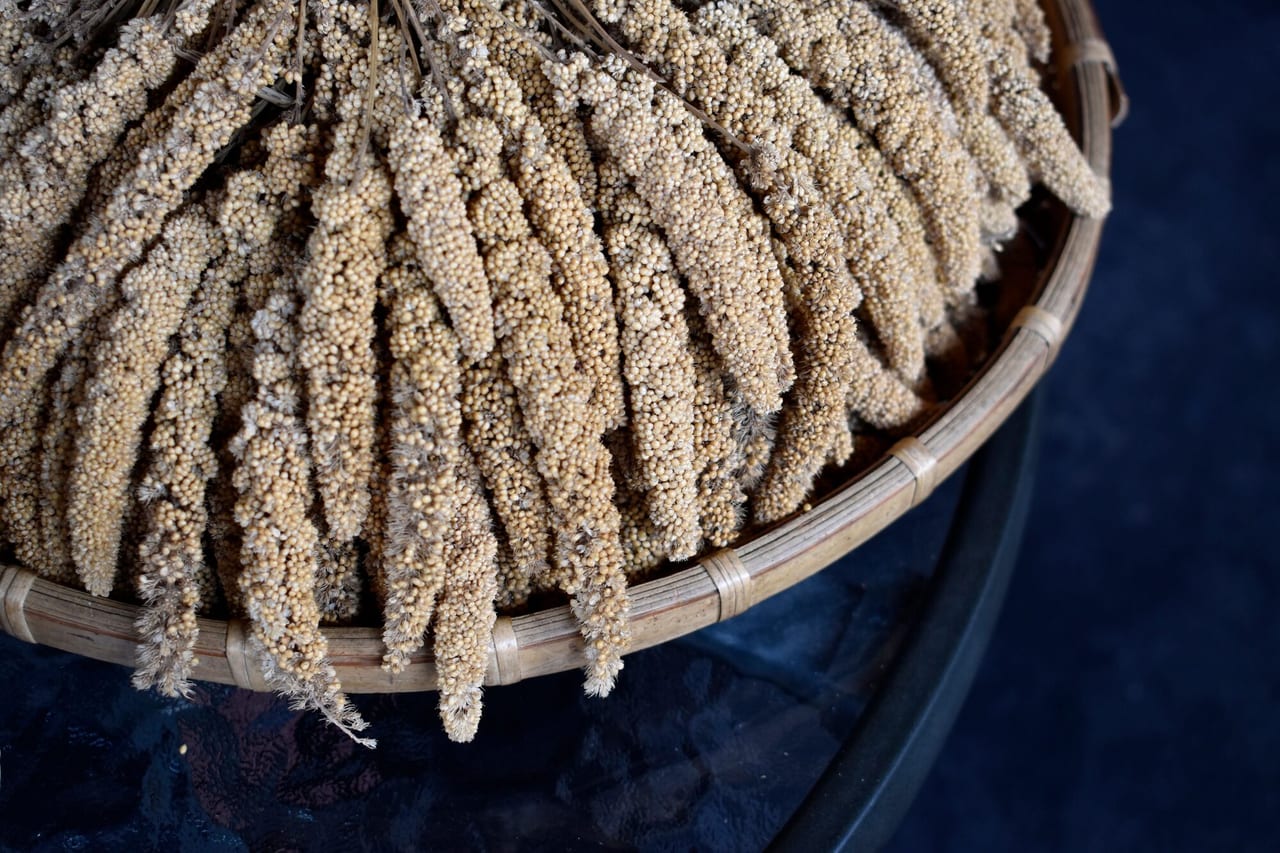
Our Products
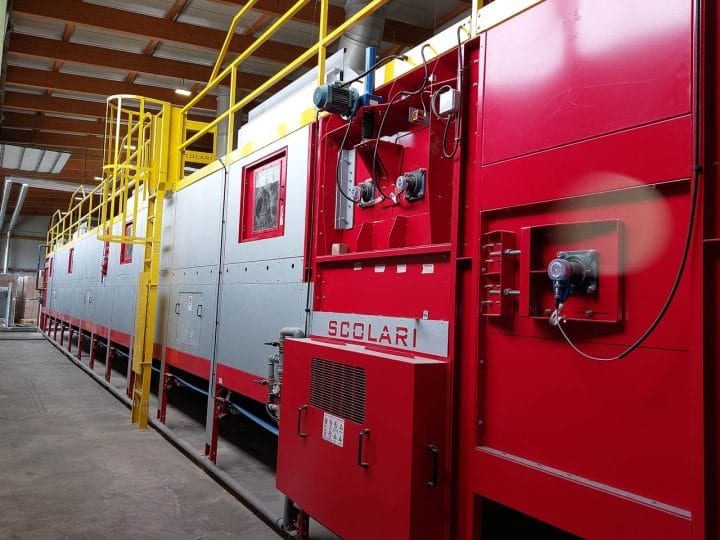
Universal Dryers
These dryers can be customized to dry any industrial or agricultural product you may require. Depending on the specific product and its moisture content, the dryers can be equipped with mixers, movable floors, vibrating floors, and other advanced technologies.
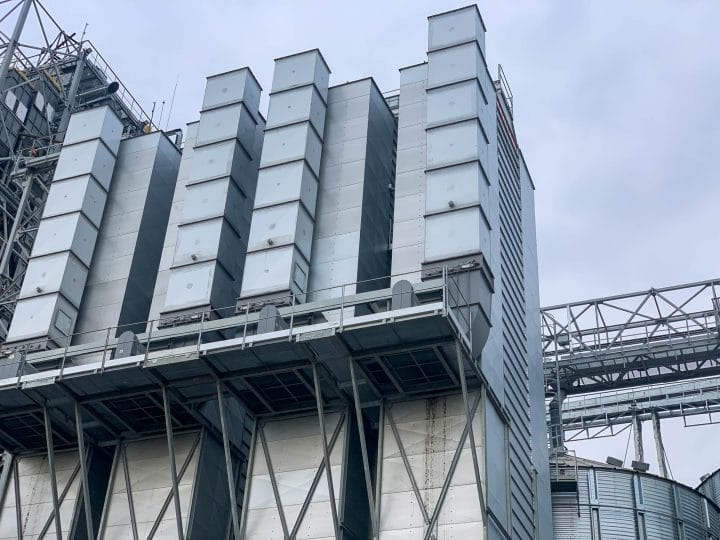
Grain Dryers
Authorized representative for top European grain dryer manufacturers like Alvan Blanch, FAO, and Agrex. Offering a full range of advanced drying solutions for agriculture.
Contact Us
If you are interested in purchasing any of our products, need a price quotation, or have any questions, comments, or suggestions, please do not hesitate to contact us via our contact form, by phone, or by email.
- WhatsApp: +90 (536) 452-1184
- E-mail: write to us
Our phones:
- Kazakhstan: +7 (747) 095-1626
- Moldova: +373 (22) 011-214
- Romania: +40 (31) 229-8484
- Türkiye: +90 (536) 452-1184 (English)
- Ukraine: +380 (67) 111-6668