
Alvan Blanch Grain Dryers
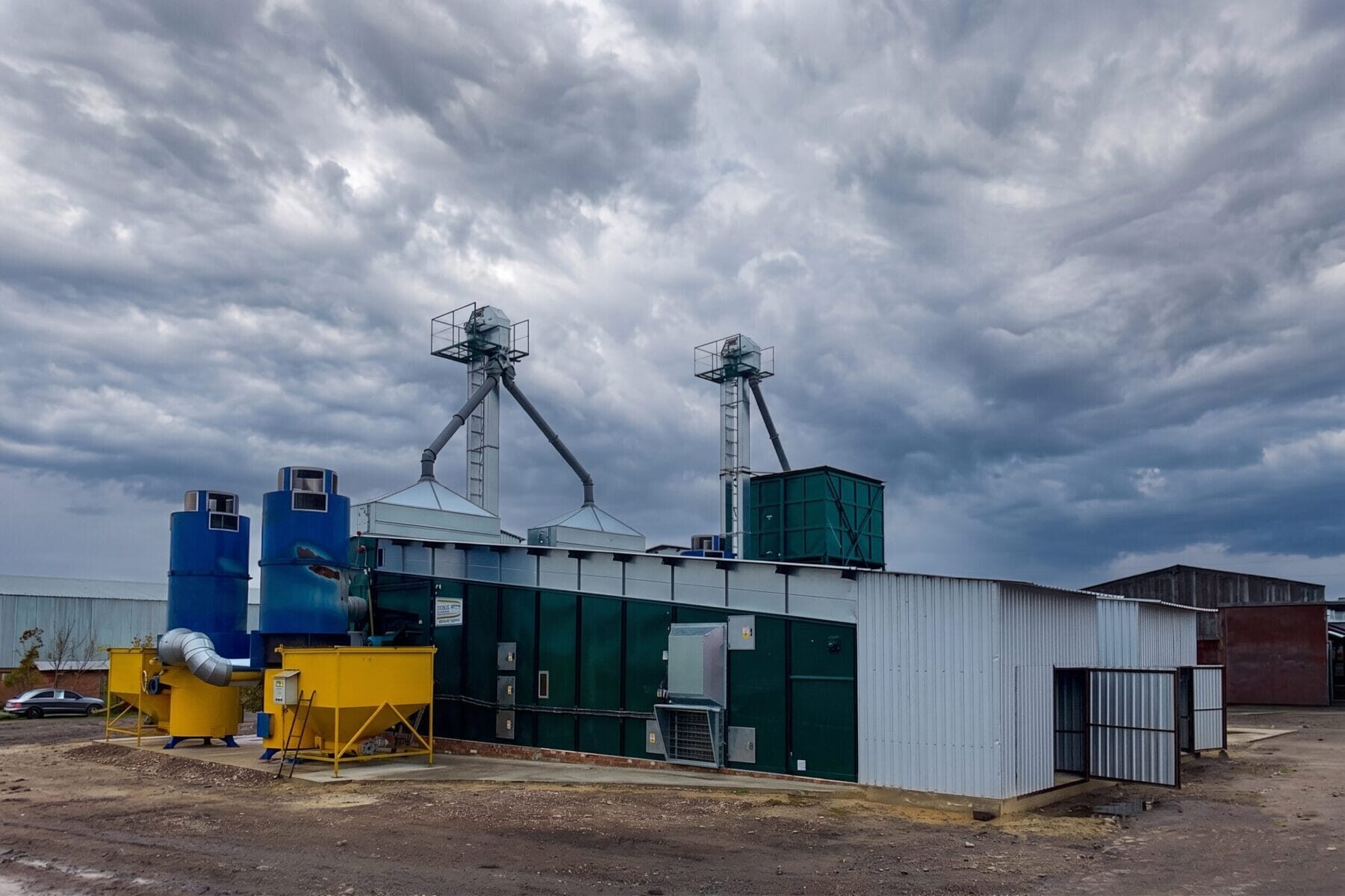
The Alvan Blanch DF series are British Double Flow continuous-flow grain dryers with a heat recovery and heat recirculation system. They are manufactured by Alvan Blanch Development Co. Ltd in Chelworth (United Kingdom) since 1952. Supplied, installed and serviced by Finpro Engineering.
7–115 t/h
🌾 wheat, 20% → 15%
3–51 t/h
🌽 corn, 25% → 15%
since 1952
🇬🇧 United Kingdom
100+ countries
🌍 export markets
Why farms and elevators choose Alvan Blanch
Four key reasons buyers worldwide come to Alvan Blanch instead of the more familiar shaft, column and tower grain dryers:
Lower height
Fewer demands on elevators, foundations and high-level installation work.
Gentle on grain
A thin layer of grain on the conveyor, with no drop from height.
Fire-safe
No tall column of grain — so no conditions for it to hang up.
Fuel savings
Heat recovery and recirculation reduce energy consumption.
Six reasons to choose Alvan Blanch
The practical effects delivered by the unique design of Alvan Blanch grain dryers.
Each card reads in three lines: your need — what the Alvan Blanch design offers — the practical effect for your grain-drying complex.
01. Lower the cost of the complex
Solution: Low horizontal design, a simple foundation, lower elevators, short gravity chutes.
Effect: Lower capital cost for the whole complex.
02. Preserve grain quality
Solution: A thin 20–50 cm layer is moved gently along the drying bed by the conveyor, with no drop from height and no compression.
Effect: Less mechanical damage. Especially important for seed and food grain and for oil extraction.
03. Reduce fire risk
Solution: Alvan Blanch has no tall grain column like column or shaft dryers — the design creates no conditions for grain to hang up or for stagnant zones to form.
Effect: Substantially lower fire risk when drying oilseeds and when running on solid-fuel heat generators.
04. Lower the cost of drying
Solution: Heat recovery and recirculation return warm air back into the drying process.
Effect: On corn, fuel savings in typical conditions can reach 25–35% compared with dryers without such systems.
05. Keep your flexibility
Solution: Gas, diesel, steam, hot water or a heat exchanger. Cereals, oilseeds, pulses, seed grain.
Effect: Adapt to changes in the fuel market or crop rotation — without buying a new dryer. The Alvan Blanch design includes an airflow-switching system for flexible adaptation to any fuel.
06. Easy to integrate
Solution: Low profile, simple feed and discharge. Install outdoors, under a canopy or in a shed.
Effect: Integration into an existing grain-handling plant or elevator without major rebuilding. In a new project a minimum of peripheral equipment is required.
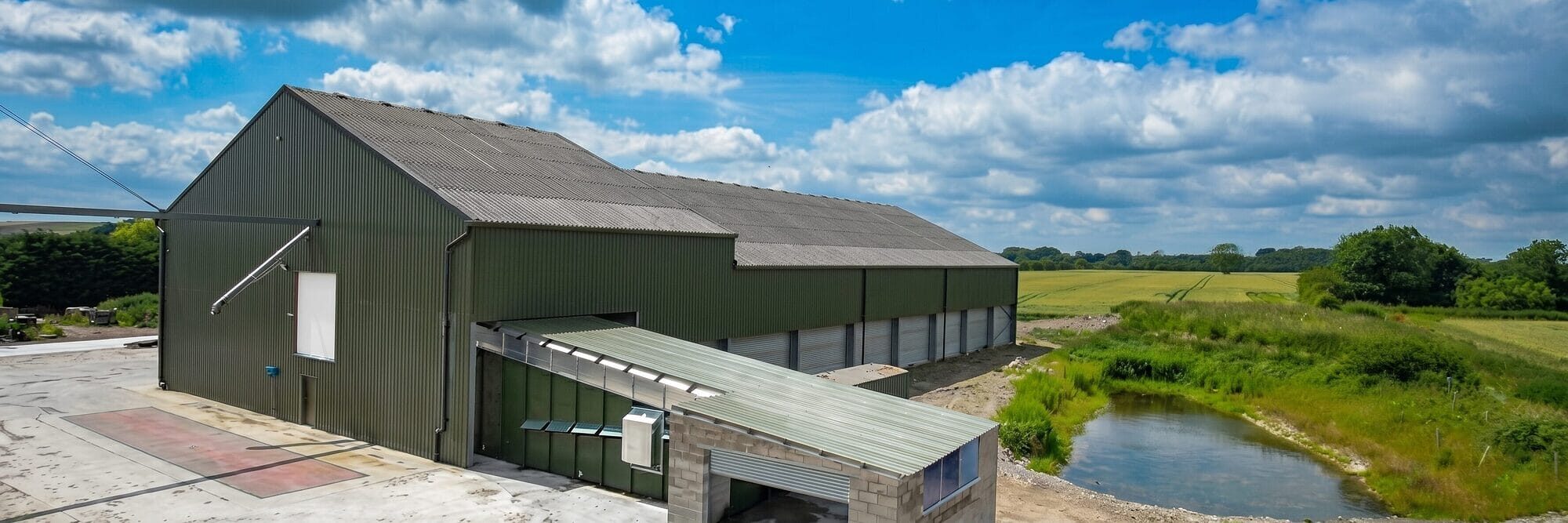
When Alvan Blanch is the rational choice — and when it isn't
Finpro Engineering is a multi-vendor company. That means we supply not only Alvan Blanch but also shaft, mobile and batch grain dryers from other European manufacturers. So if another type suits your task better, we'll say so.
Alvan Blanch is especially fitting when:
- the lowest possible cost of dried grain matters;
- you need to reduce the height of the complex and the cost of elevators, gravity chutes, foundations and installation;
- you need to gently dry seed, oilseed or impact-sensitive grain;
- you need to handle trashy or non-uniform grain without fire risk;
- you need to run not only on gas but also on diesel, steam or a solid/biomass heat source;
- the dryer must be built into an existing grain-handling plant, shed or elevator without a full rebuild;
- you'd like to visit several working installations before buying;
- the dryer is needed as a temporary solution for 1–3 years — Alvan Blanch has the highest resale liquidity thanks to easy relocation to a new site (especially the mobile versions);
- the dryer is needed as a capital asset for decades — to be passed on to the next generation.
Alvan Blanch is not always optimal when:
- the seasonal drying volume is roughly under 1,000–2,000 tonnes per year — for such volumes a batch dryer is often more sensible;
- the main selection criterion is the lowest purchase price, with no regard for fuel consumption, grain quality, lifetime operating cost and resale liquidity;
- the product technology requires two-pass drying with intermediate tempering — for which we have two other solutions;
- you need to dry not grain but grass, wood chips, compost, digestate, vegetables, fruit, nuts or other non-free-flowing products — the DF series is not intended for these; Alvan Blanch has other dryer types.
In these cases, get in touch. We'll tell you which alternatives make more sense — and supply them if needed.
How the Alvan Blanch design creates an advantage
In the Alvan Blanch Double Flow dryer the grain travels along two sequential conveyor beds (one above the other), through which hot air is blown from the bottom upwards. This architecture eliminates the three weak points of traditional grain-dryer types (shaft, column, tower): a static tall column of grain, uneven heating and heat losses after cooling.
| Criterion | Alvan Blanch | Mixed-flow (shaft) dryers | Cross-flow column / tower |
|---|---|---|---|
| Height of the complex | Low and horizontal (4–11 m) | Heights can reach 20–30 m and more; an even taller elevator tower is often required. | Tall vertical column or tower; an additional buffer bin above or ahead of the dryer is recommended; requires an even taller elevator tower or an additional elevator. |
| Blockage and fire risk | Blockages are impossible by design. This substantially lowers fire risk. | Stagnant zones are possible inside the shaft columns. | Stagnant zones are possible, especially in corners and along the walls. |
| Impact on the grain | Thin layer, no drop from height, no pressure on the grain. | Grain falls from height when fed into the shaft and bears the pressure of a tall column. | More transfers and vertical movement of the product; mechanical friction. |
| Moisture uniformity | Thin layer, mixing, alternating ventilation of the lower layers. | Grain moves slower along the walls — over-dried there, wetter in the middle. | Grain at the inner (hot) wall is over-dried, at the outer wall under-dried. Even a moderate side wind leaves part of the grain significantly under-dried. |
| Fuel flexibility | Gas, diesel, steam, solid fuel, heat exchanger. | Difficult to switch to heat exchangers on dryers with non-switchable heat recovery. No flexibility when changing the heat-generator type. | Switching to solid fuel is harder and costlier and requires replacing or removing the existing supply fan; the grain sits too close to sparks from the heat generator (without a heat exchanger, or when it burns through — a fire). |
| Heat recovery and recirculation | A full system that can be switched on/off for easy adaptation to different generator types. | Not switchable on every model. Switching it off, where possible, reduces corn throughput. A version without heat recovery is inflexible when changing the heat-generator type. | Usually no heat recovery or recirculation. Running without a heat exchanger uses more fuel than dryers with recovery. |
| Integration | Convenient for sheds and low sites, temporary and permanent complexes, and fast installation. | Requires more construction and design work (cost). | Usually requires more peripheral equipment — buffer bins ahead of the dryer, external cooling bins and so on. |
Conveyor instead of a column of grain — a thin 20–50 cm layer on two conveyors, with no pressure and no blockages
In vertical dryers (shaft, column, mobile) the grain moves top-down under gravity through a tall column. The lower layers bear the weight of the mass, and wet, trashy or oilseed product can form blockages — a classic cause of fires.
In Alvan Blanch there is no tall grain column at all. The product lies in a thin 20–50 cm layer on two sequential chain conveyors and moves continuously. Air is supplied from below at high pressure. This changes the physics of the process: no vertical pressure on the lower layers, no high-drop transfers, no conditions for the product to hang up inside a column.
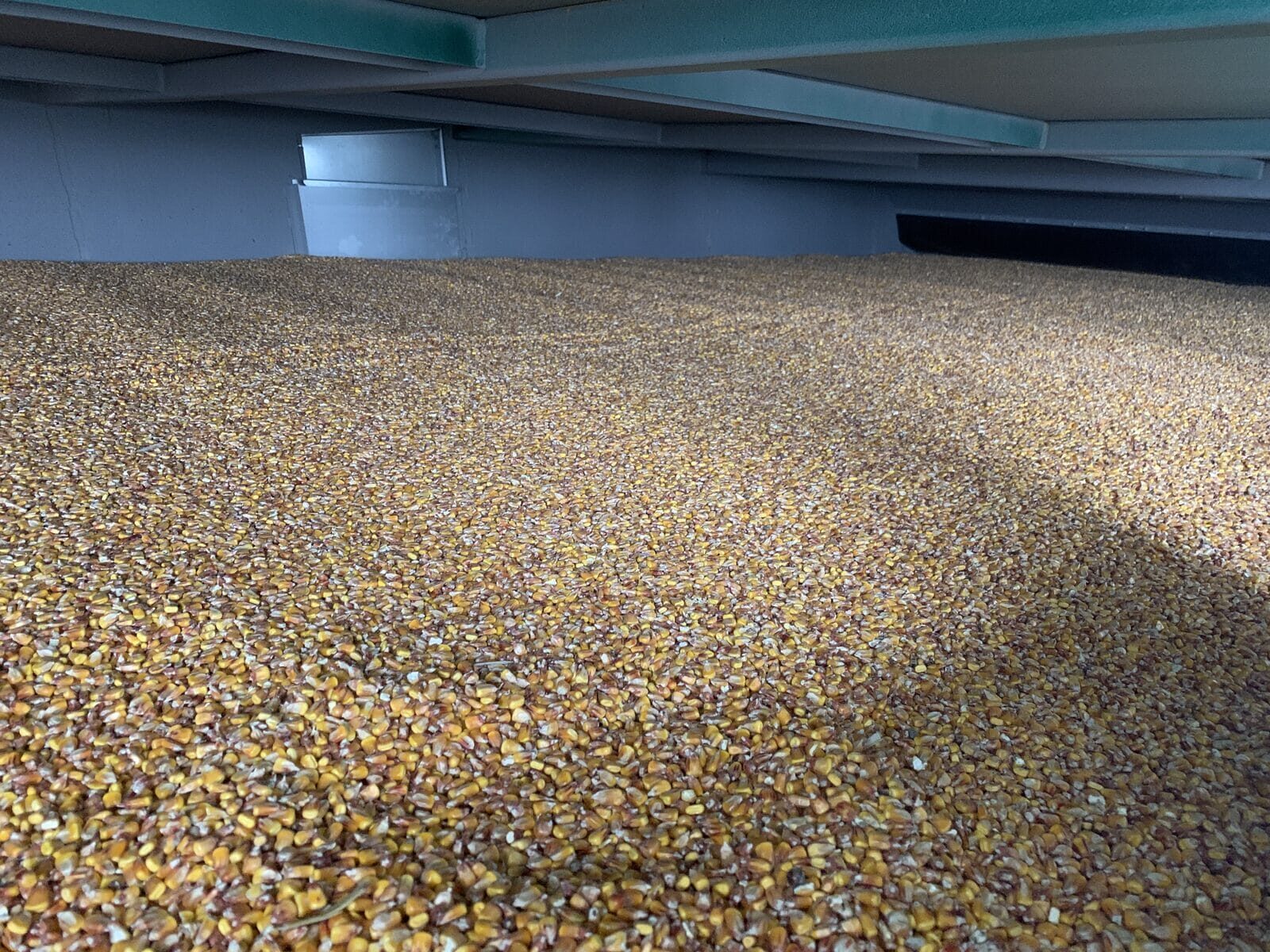
Even heating of the layers and mixing — slot ventilation and transfer between decks give a level final moisture
In a classic cross-flow dryer (typical of most American column and tower models) the hot air passes through the whole grate area in one direction. As a result the layers nearest the grate overheat while the outer ones stay wet. The final grain moisture at the outlet is non-uniform. (And that's if you're lucky and no cold side wind blows.)
On top of this, shaft, column and tower dryers exhibit a wall effect: grain near the column walls moves more slowly than in the middle. So even shaft dryers — considered among the most efficient and giving one of the most uniform final moistures of the vertical designs — still retain drying non-uniformity.
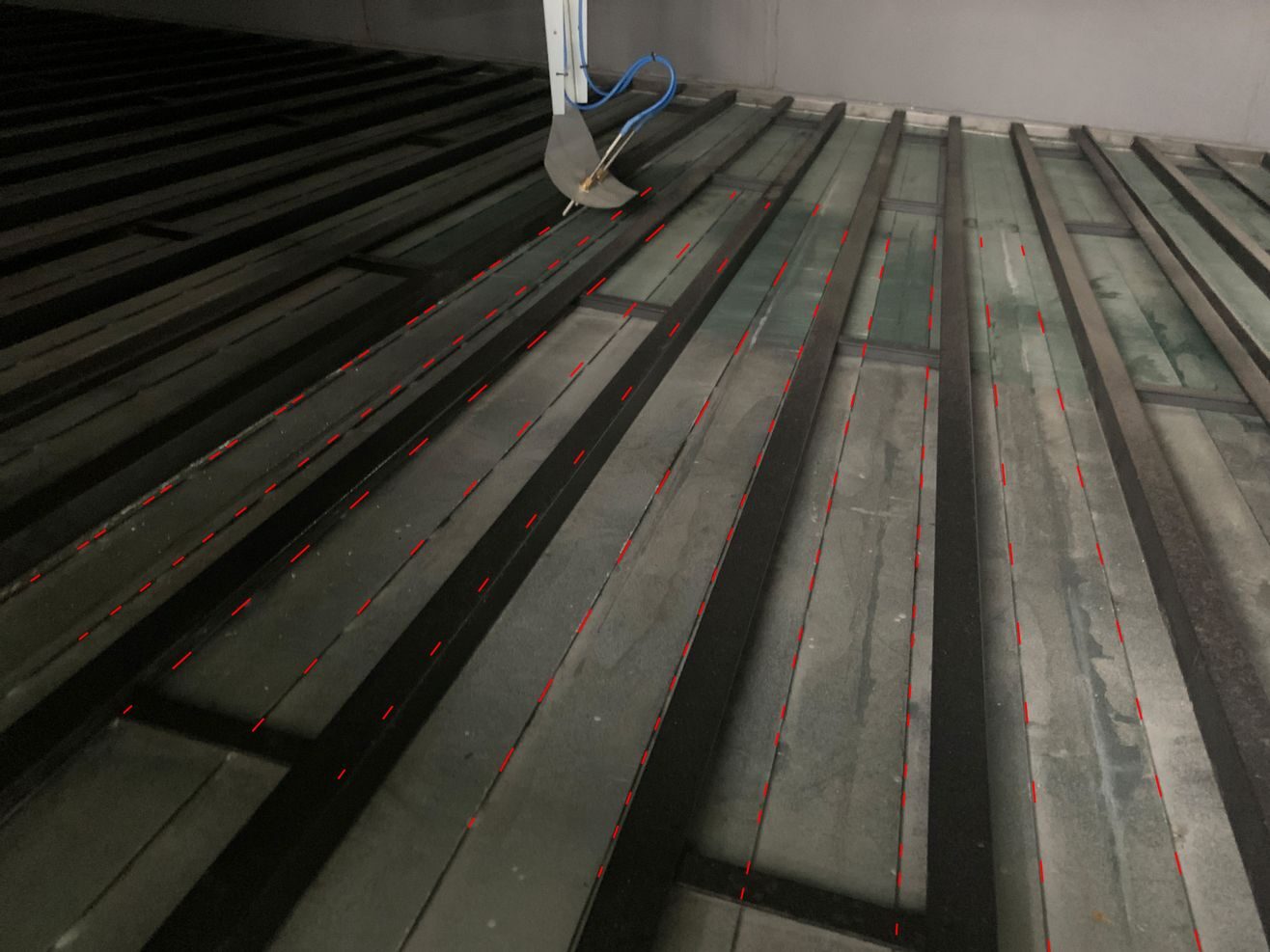
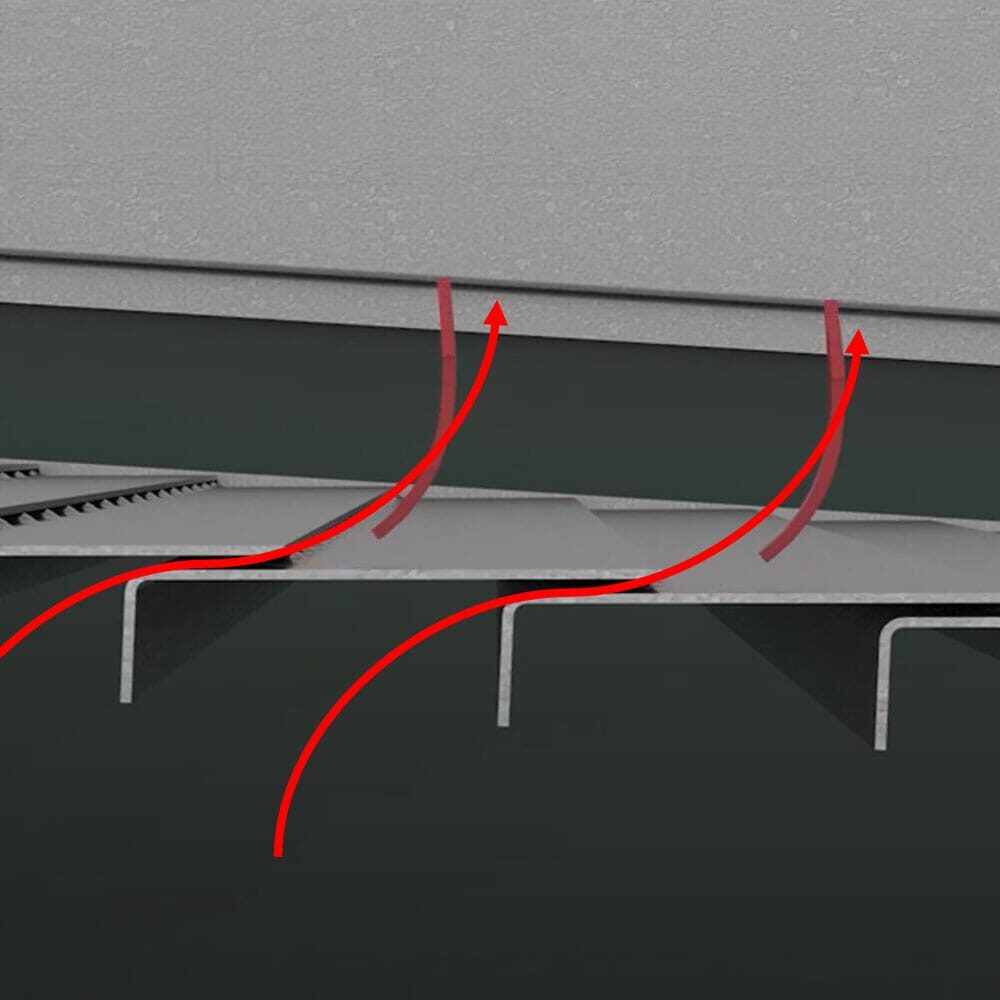
In Alvan Blanch the air passes through slots in the conveyor bed spaced at regular intervals. The lower grain layers are blown periodically and "rest" in between, which makes overheating of the bottom grains impossible. At the transfer from the upper to the lower conveyor the product is fully mixed. The duration of the mixing process also provides a tempering effect and evens out internal stresses in the grain. A thin 20–50 cm layer and a constant travel speed across the full bed width give a substantially more even final moisture.
Heat recovery and recirculation — two heat-saving mechanisms, proven at no less than 30% fuel savings
Alvan Blanch provides two heat-saving mechanisms: recovery — returns warm air from the cooling zone to the hot-air fans; recirculation — returns part of the dry spent hot air back into the drying process. Both can be switched off when drying oilseeds and other fire-prone crops.
On corn, in typical conditions, the recovery system alone gives fuel savings of around 15–20% versus dryers without such systems. Our own tests have proven the efficiency of the Alvan Blanch dryer at no less than 30% (with heat recovery and recirculation engaged). Some sources indicate the combined efficiency of heat recovery and recirculation can reach 40% (www.ontario.ca). Actual savings depend on the crop, moisture, ambient temperature, heat source and operating mode.
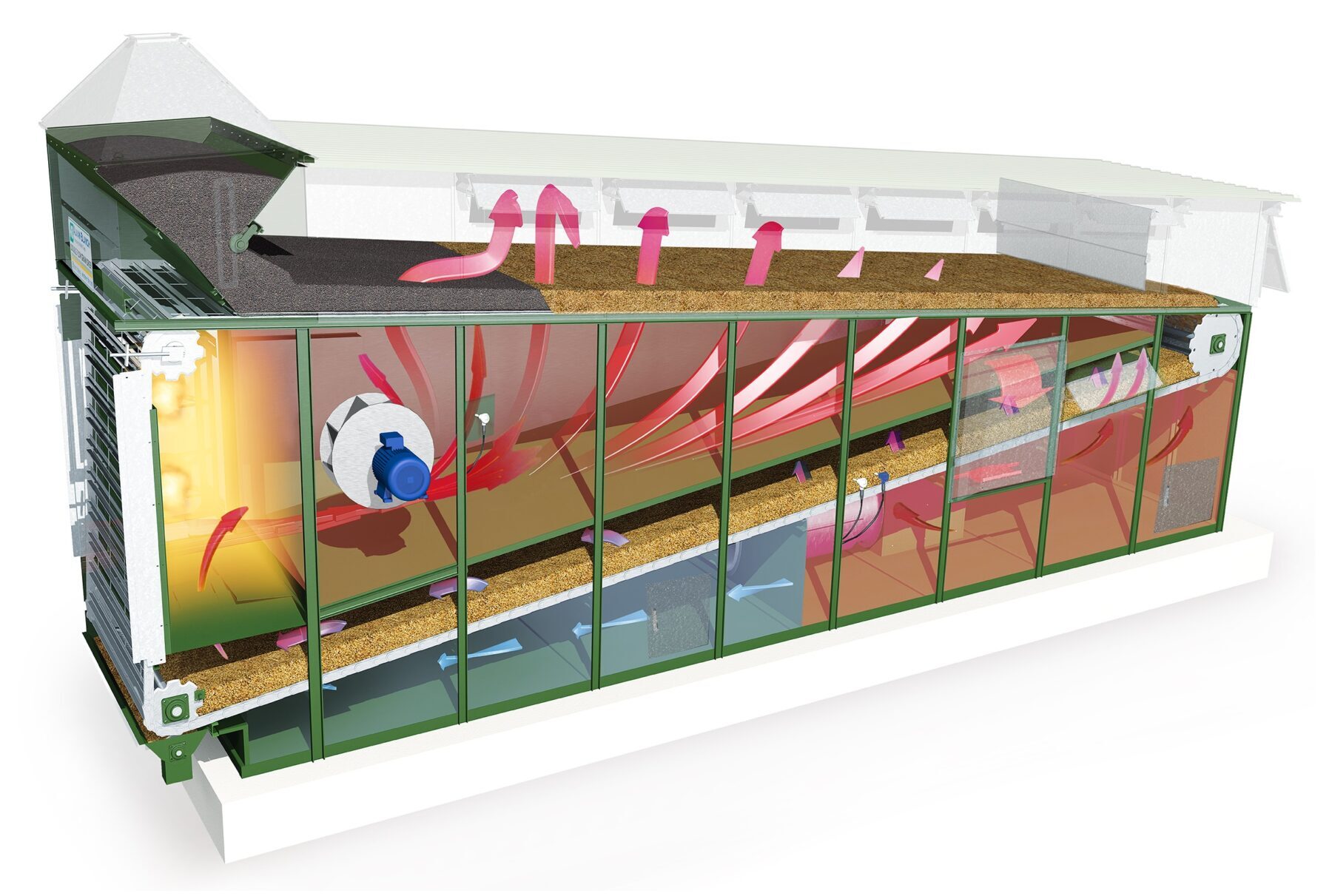
Centrifugal fans — a pressure reserve for any fuel and heat exchangers
As standard, Alvan Blanch uses centrifugal fans — an engineering choice that costs more than a simple axial fan but provides a fundamentally different static-pressure reserve.
A centrifugal fan operates confidently at significantly higher air-path resistance than an axial one. In practice this is critical when working with heat exchangers, solid-fuel heat generators and air-cleaning systems — that is, in any scenario where additional equipment with resistance stands between the heat source and the grain. The centrifugal fan maintains a more stable airflow through the grain, and therefore sustains drying throughput and efficiency.
The drop in throughput of conventional dryers when switched to alternative fuels is something suppliers often keep quiet about. Centrifugal main fans, plus the ability to switch heat recovery and recirculation off without losing airflow through the grain, let Alvan Blanch run on solid or alternative fuels with minimal risk of airflow and throughput loss compared with systems whose fan is not designed for elevated air-path resistance.
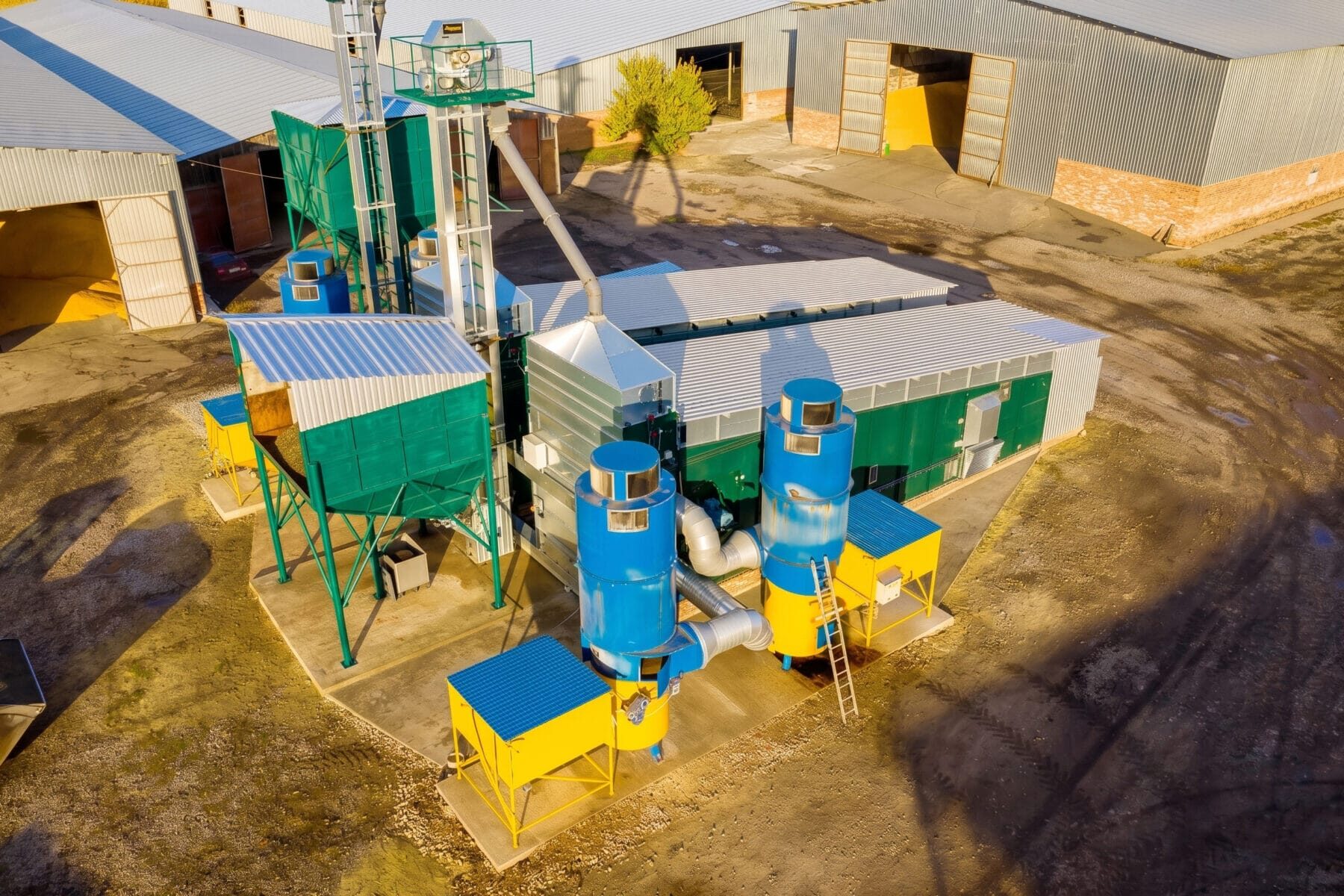
What Alvan Blanch brings to the project economics
The cost of a grain-drying complex is determined by more than the price of the dryer itself. Here are three factors in which Alvan Blanch affects the project budget:
Lower capital cost
The low height of Alvan Blanch reduces the demands on the foundation, elevators, gravity chutes and high-level installation. Compared with a shaft dryer of comparable throughput, the saving on civil works (foundation, elevator tower, design, permits) can run to tens of thousands of US dollars or pounds sterling. The exact figure depends on the layout of the specific site.
Lower fuel consumption
On corn, the heat recovery and recirculation systems can reduce fuel consumption by 25–35% relative to dryers without such systems. On cereals and oilseeds the effect is smaller but still present. Every percent of fuel saved is direct profit for your operation.
Payback versus selling wet grain
When you dry your own harvest and sell dry grain instead of wet (or instead of drying at a third-party elevator), a grain-drying complex based on Alvan Blanch pays back in 2–3 seasons. The exact figures depend on harvest volume, the wet/dry price gap, fuel availability and electricity cost. We calculate payback individually for your project — it is part of our commercial proposal.
WhatsApp: +90 (536) 452-1184 Calculate the economics for your site
Alvan Blanch installations
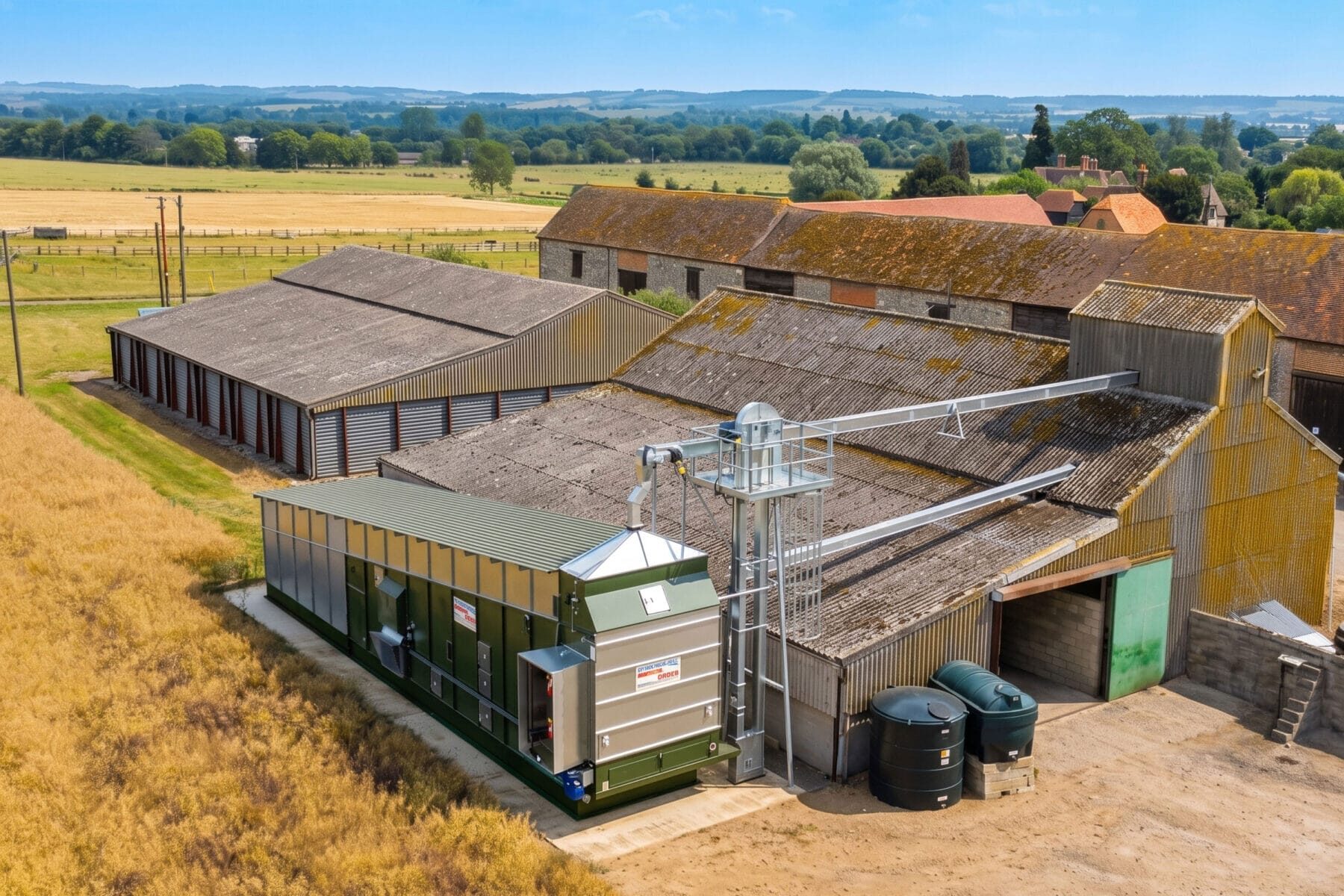
A range of working installations is available to visit by prior arrangement before you decide.
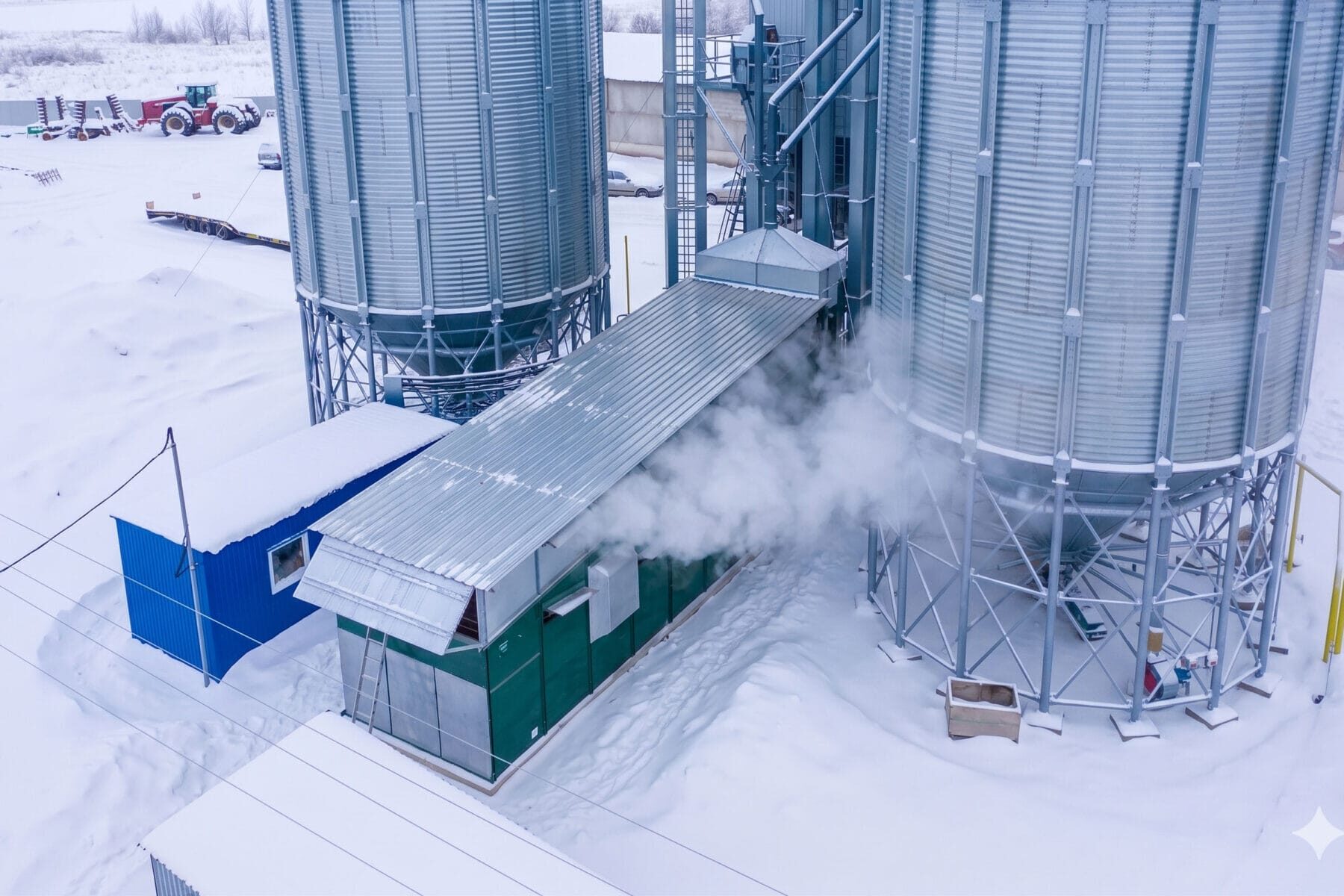
All of the sites below run Alvan Blanch Double Flow DF-series grain dryers.
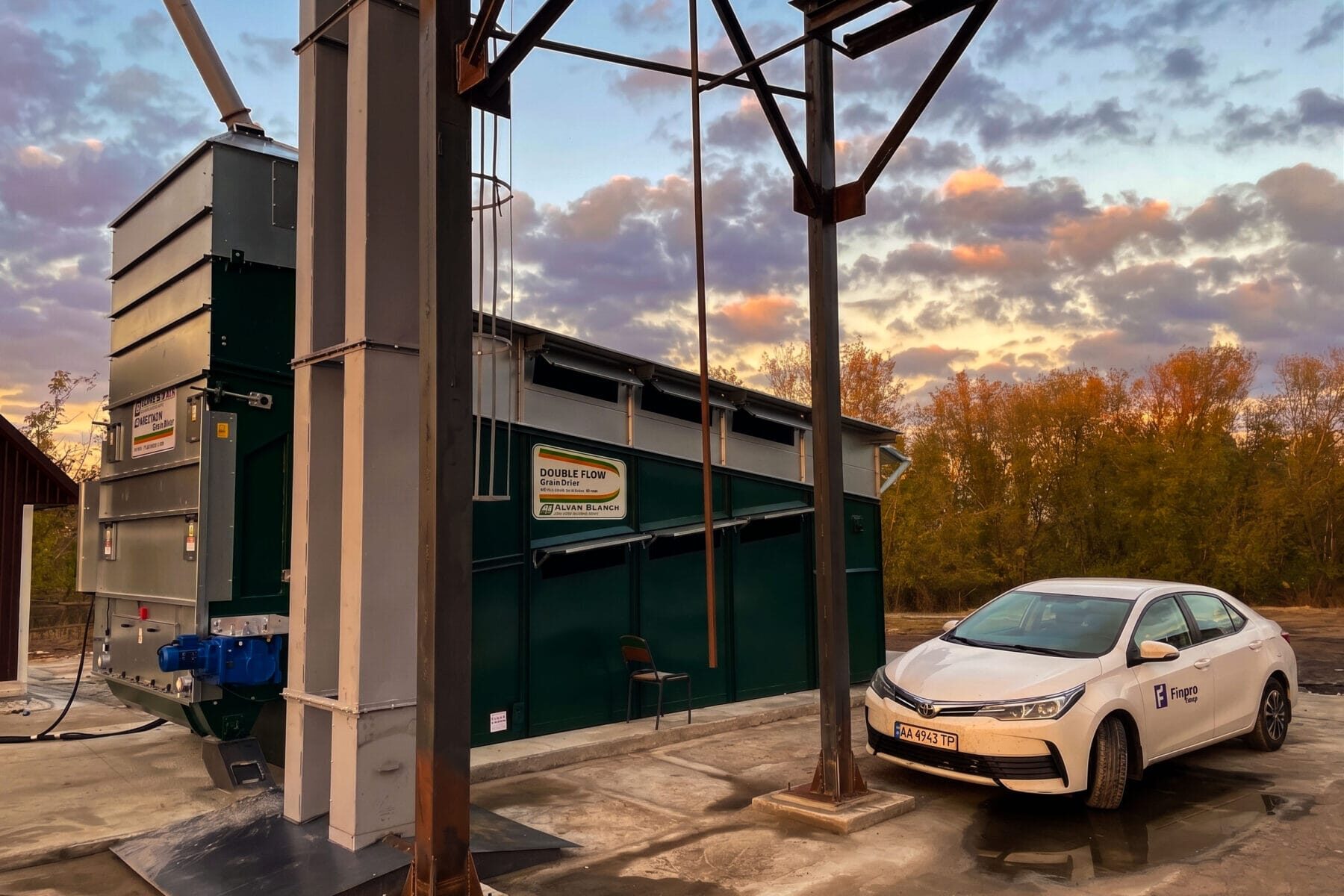
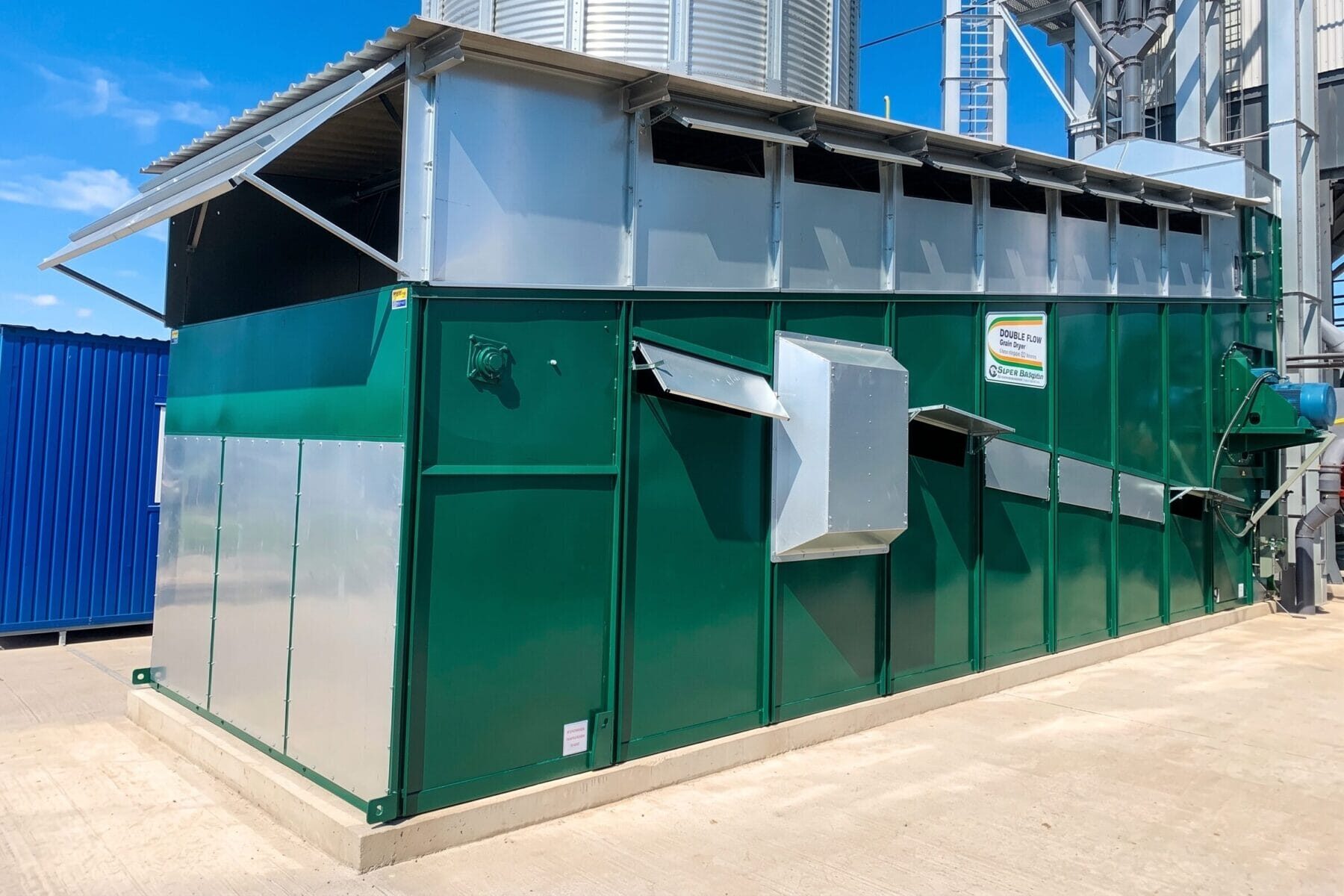
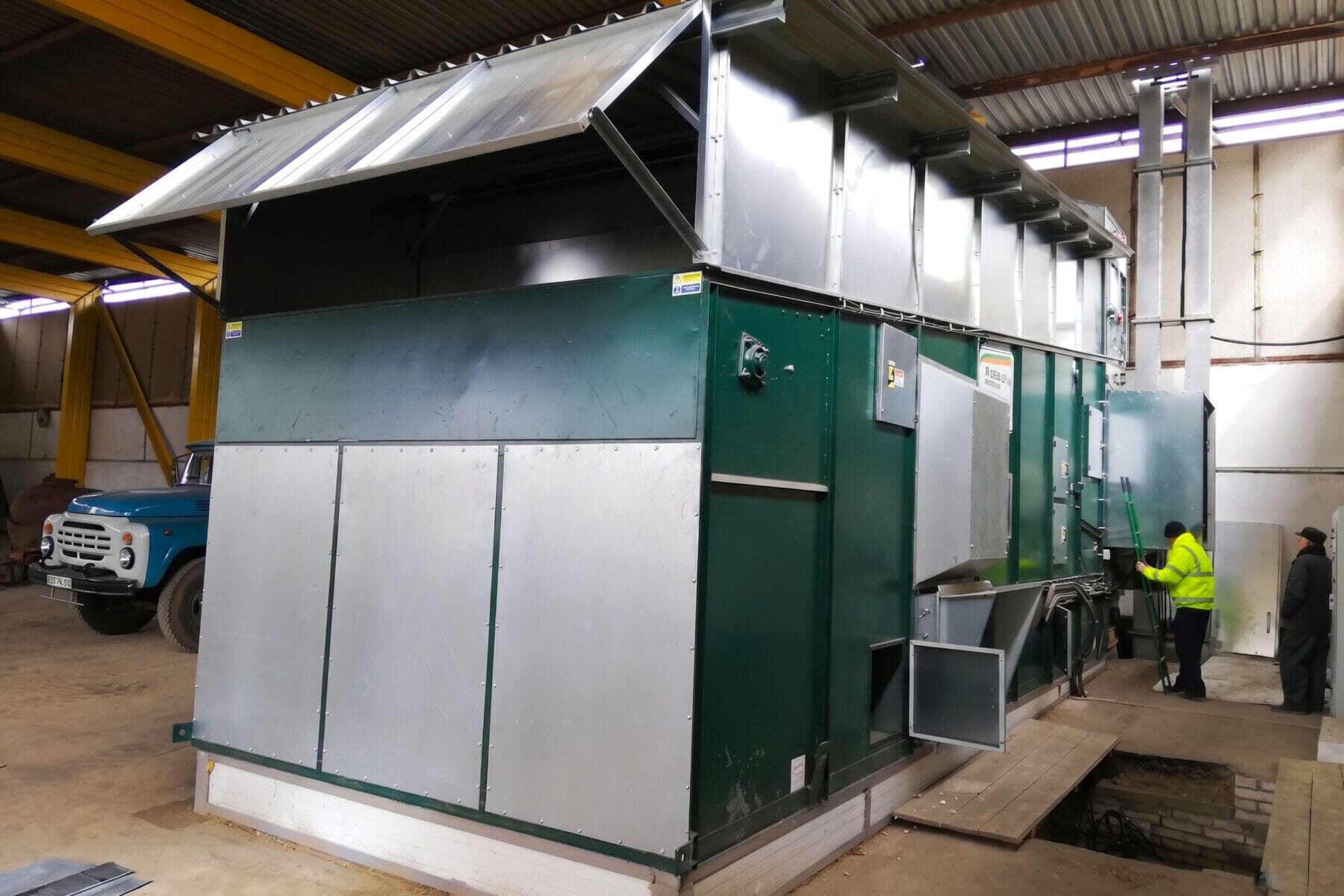
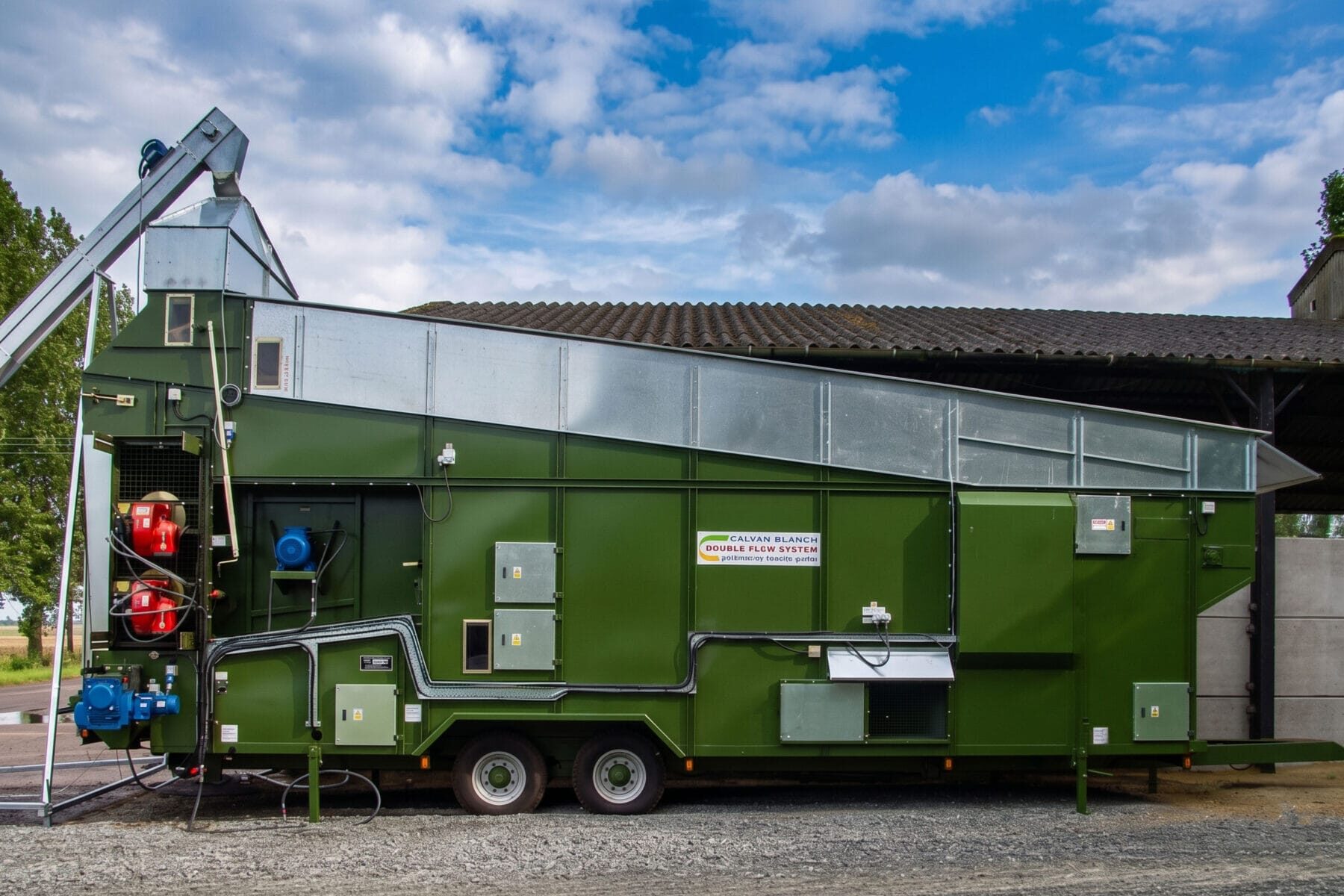
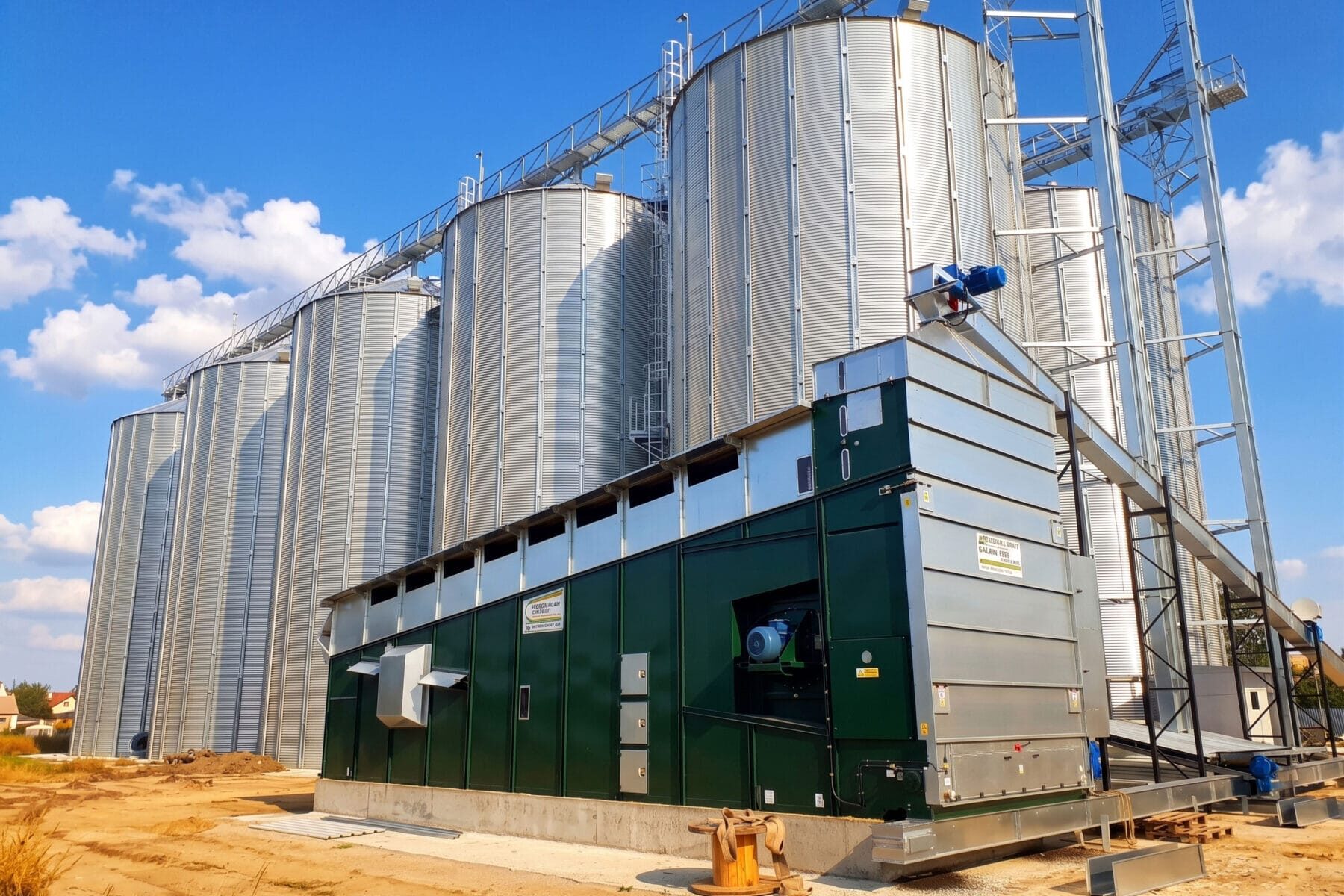
The grain mixing and tempering zone in Alvan Blanch
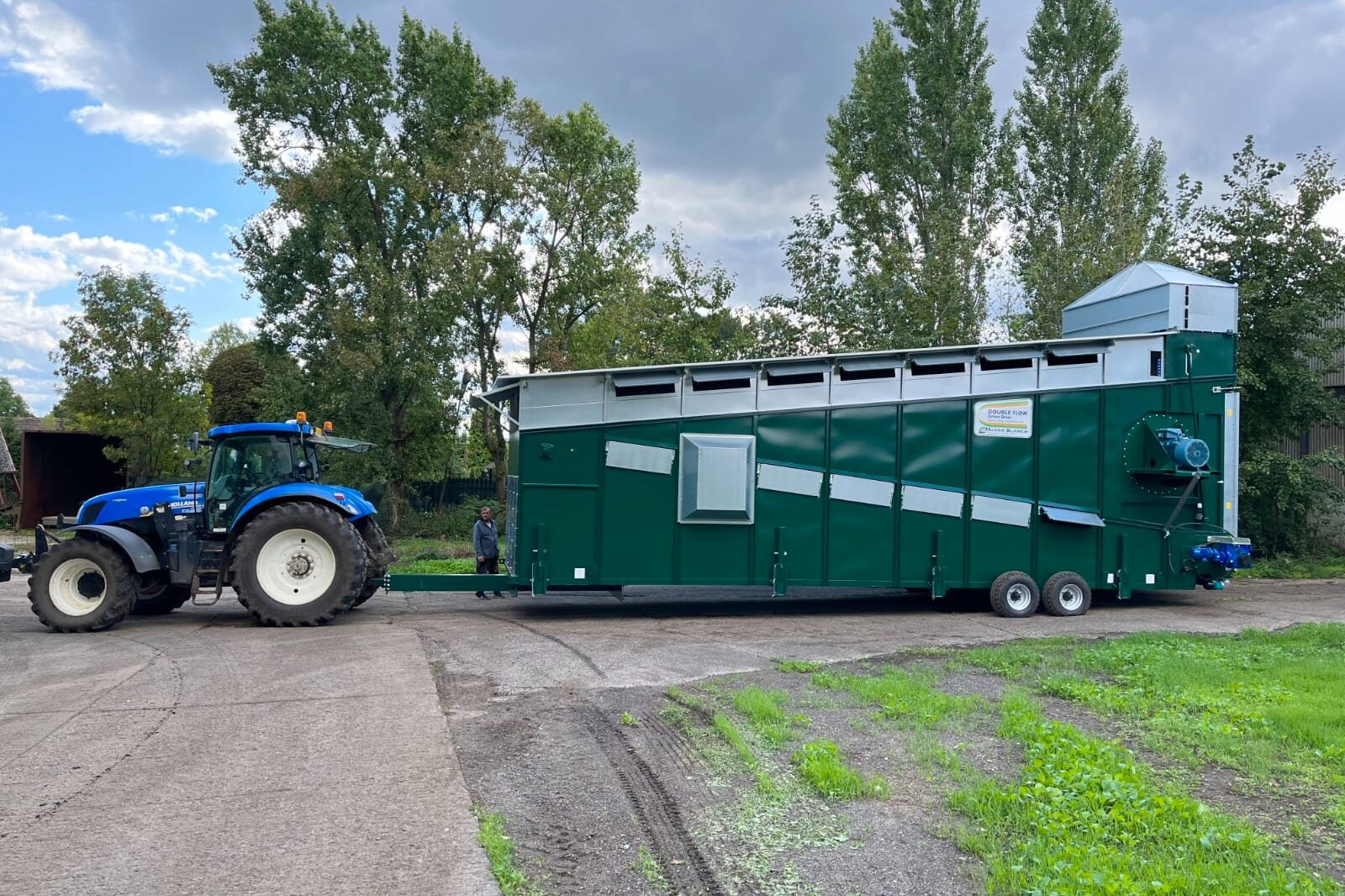
Transporting an Alvan Blanch grain dryer
WhatsApp: +90 (536) 452-1184 Arrange a visit to a working site
The DF6000–DF95700 model range
A model is selected by more than throughput in t/h. The crop, the initial and final moisture, the ambient temperature, the available fuel, the seasonal volume and the specifics of integration into the complex are all taken into account. Don't choose a model from the table — send us your inputs and we'll select it.
| Model | Corn 25→15%, t/h | Wheat 20→15%, t/h | Rapeseed 13→9%, t/h | Barley 20→15%, t/h | Length, mm | Width, mm | Height, mm |
|---|---|---|---|---|---|---|---|
| DF6000 | 3 | 7 | 5 | 6 | 6,800 | 4,300 | 4,200 |
| DF9000 | 4 | 10 | 7 | 9 | 9,200 | 4,300 | 4,200 |
| DF10500 | 6 | 12 | 9 | 11 | 8,740 | 4,300 | 5,050 |
| DF12800 | 7 | 15 | 11 | 14 | 10,000 | 4,800 | 5,450 |
| DF15200 | 8 | 18 | 13 | 16 | 11,200 | 4,500 | 5,600 |
| DF15900 | 8.5 | 19 | 14 | 17 | 12,500 | 4,550 | 5,750 |
| DF17655 | 9 | 21 | 15 | 19 | 12,500 | 4,700 | 5,750 |
| DF19000 | 10 | 23 | 17 | 21 | 11,200 | 5,000 | 5,750 |
| DF22000 | 11 | 26 | 19 | 24 | 12,500 | 5,000 | 5,900 |
| DF25000 | 13 | 30 | 21 | 28 | 13,650 | 5,200 | 6,000 |
| DF26500 | 15 | 32 | 23 | 29 | 12,500 | 5,100 | 6,000 |
| DF30000 | 16 | 36 | 26 | 33 | 13,650 | 5,100 | 6,150 |
| DF33500 | 18 | 40.5 | 29 | 37 | 15,000 | 5,100 | 6,300 |
| DF37000 | 20 | 45 | 33 | 41 | 16,200 | 5,600 | 6,450 |
| DF48000 | 26 | 58 | 42 | 53 | 19,900 | 5,700 | 7,280 |
| DF62400 | 33 | 75 | 52 | 67 | 22,370 | 8,400 | 9,300 |
| DF95700 | 51 | 115 | 83 | 105 | 33,500 | 8,400 | 11,300 |
Throughputs and dimensions are indicative. Actual values depend on the crop, the initial and final moisture, the air temperature and the dryer settings. A detailed specification for a particular model is available on request.
WhatsApp: +90 (536) 452-1184 Select a model for your project
Fuel and integration options
The DF series is not tied to a single heat source. This matters wherever the availability and price of gas is a variable.
Solid / biomass fuel
A burner-free version for connection to an external heat generator running on biomass such as wood chips, pellets or straw. Thermal output from ~500 kW for the DF6000 up to ~10 MW for the DF95700.
Natural gas or LPG
The standard configuration with an Italian Riello, Ecoflam or equivalent burner. Suitable for most sites, with or without a mains gas connection.
Diesel
An alternative to gas for remote operations without a gas pipeline. A combined diesel/gas burner can also be used where dual-fuel capability is required.
Steam or water (heat exchanger)
Connection to an existing steam supply or a hot-water source through a heat exchanger.
Mobile version
A dryer on a wheeled chassis for moving between sites. For contractors and distributed operations. A version for travelling longer distances on public roads is also available.
Open site / shed
Standard — an all-weather kit for installation outdoors. Alternatively — installation under a canopy or in a shed with a minimal ceiling height.
Centrifugal fans and switchable heat recovery make Alvan Blanch especially convenient for moving from gas to diesel, biomass or another alternative — without losing airflow through the grain.
Key options
The base configuration of Alvan Blanch includes everything needed to work with cereals. These options are worth considering in addition — for your crop, climate and operating mode.
SMART moisture control
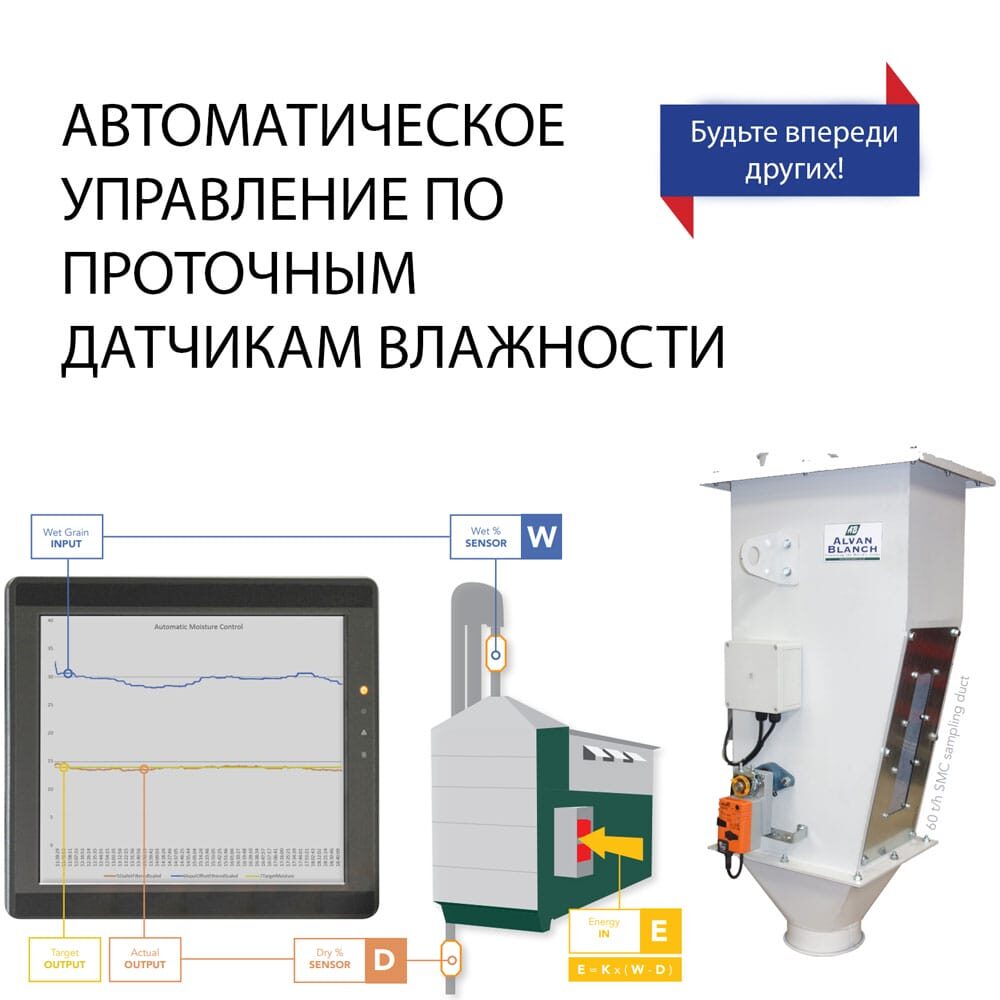
Two in-line moisture sensors — at the inlet and the outlet of the dryer. The dryer automatically calculates the required heat and adjusts the grain travel speed. Full process automation.
Louvred bed technology
A louvred conveyor bed — the Alvan Blanch standard. Self-cleaning, available in a heavy-duty version and in stainless steel for aggressive products (when drying more than grain).
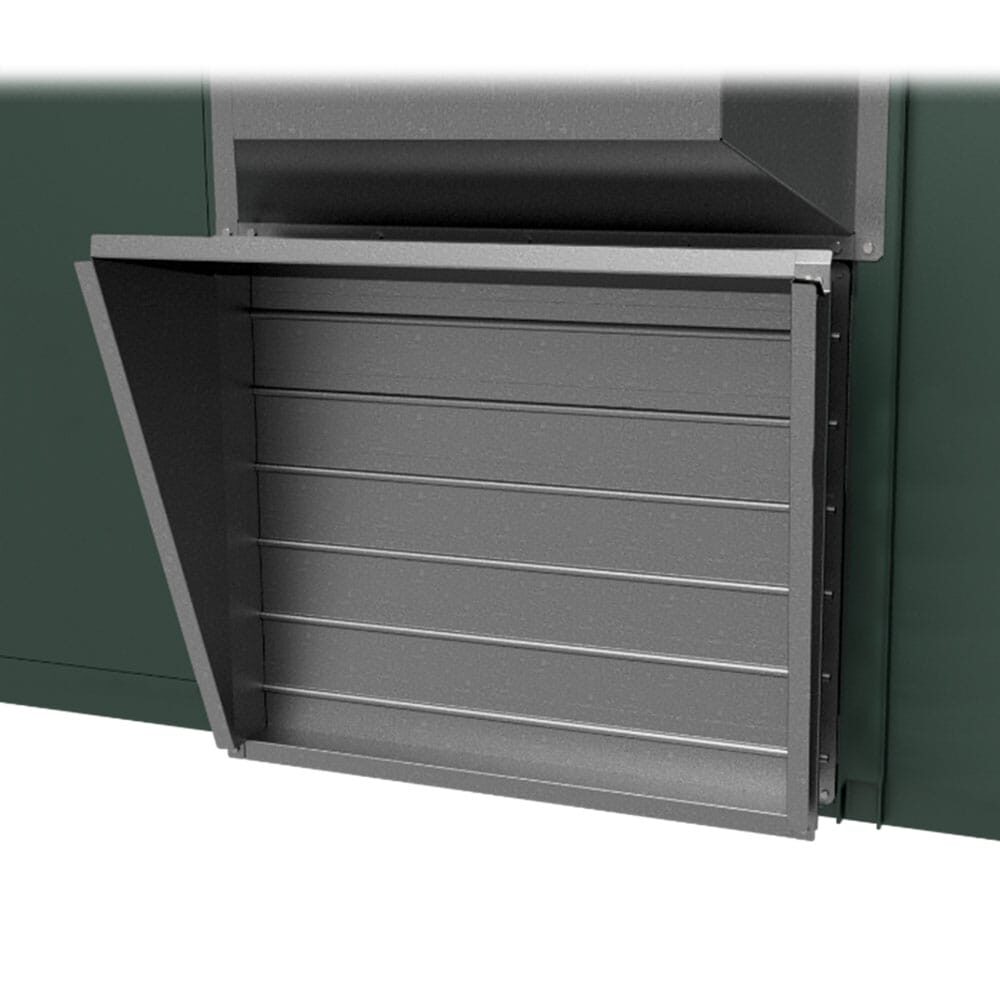
Heat and sound insulation
Insulation with mineral-wool sandwich panels reduces heat losses in winter. Important when drying with expensive fuels. The dryer is also fitted with noise-suppression systems — important near populated areas.
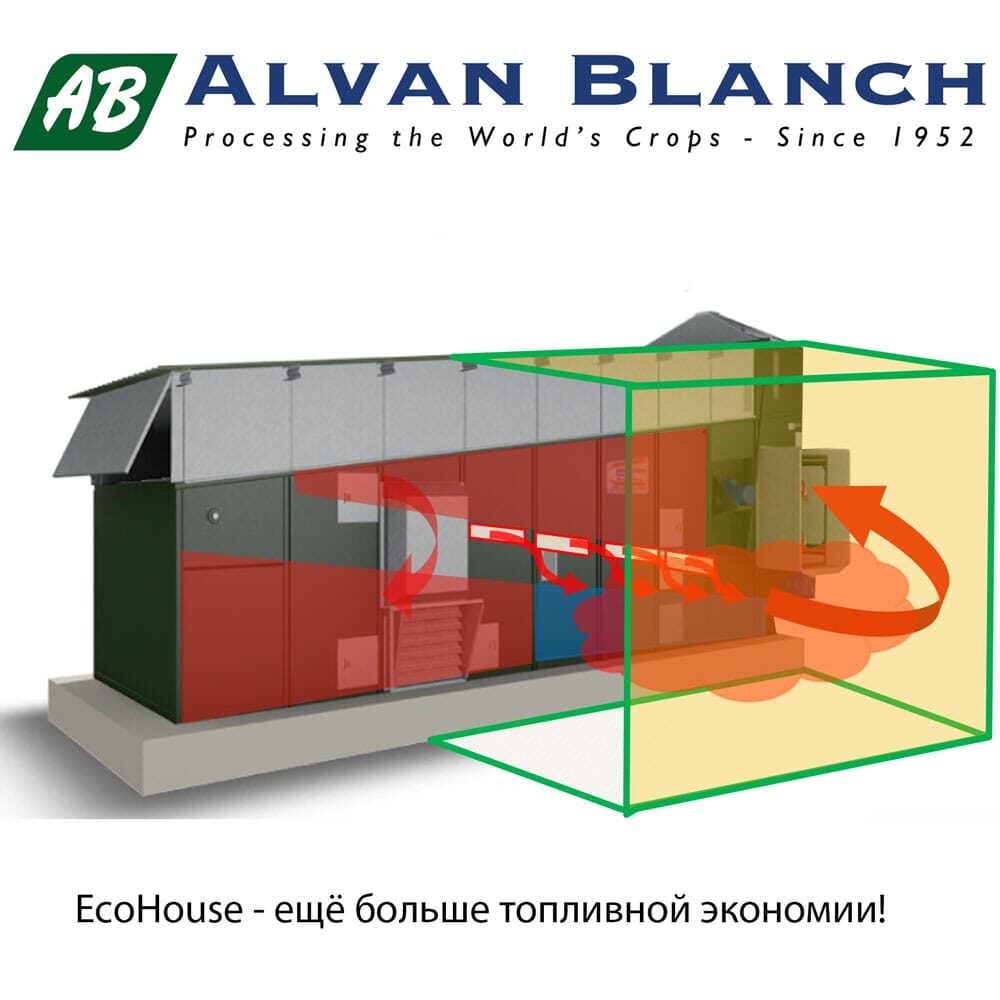
EcoHouse — recovery enclosure
An additional enclosure around the dryer to return even more warm air from its body. Extra fuel savings on top of the standard recovery and recirculation.
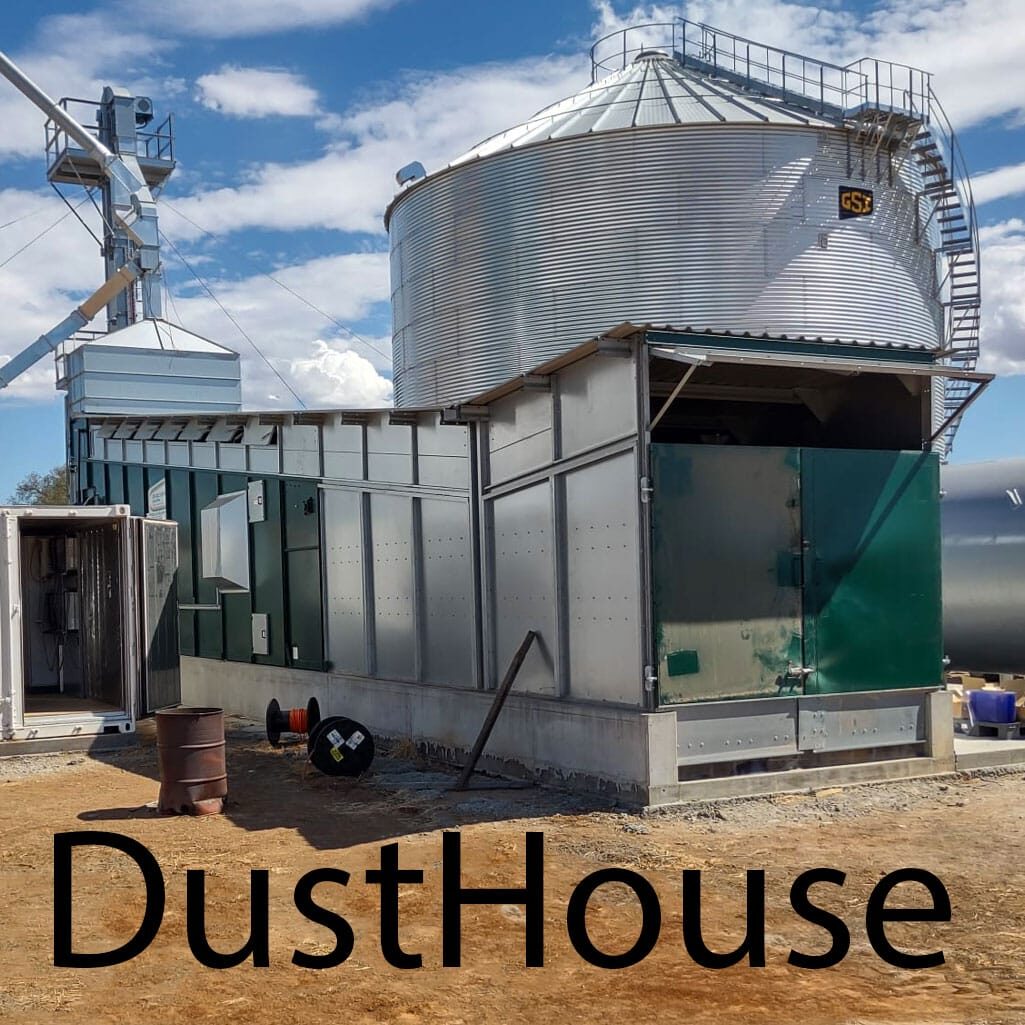
Dust House — dust collector
A dust-collection chamber at the rear of the dryer. Not essential for most sites, but critical where there are strict environmental requirements on dust emissions.
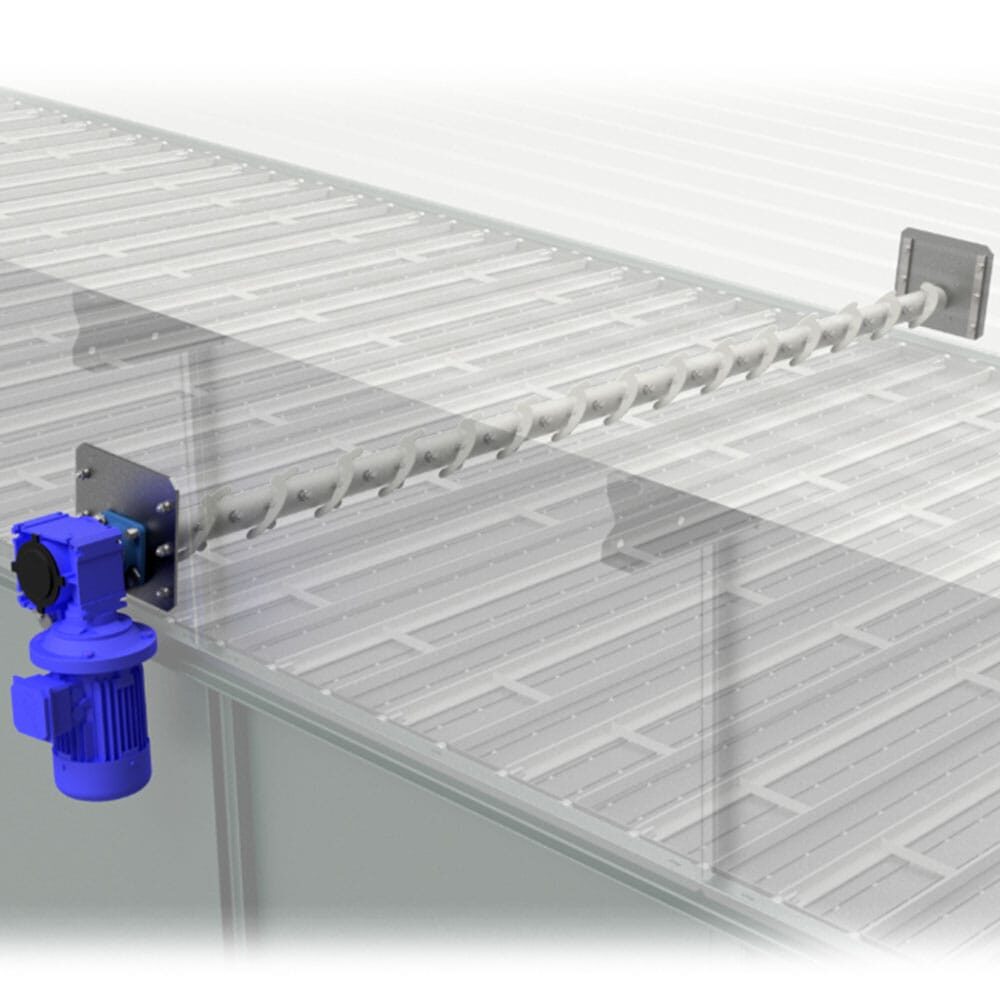
Grain mixer
An additional mixing mechanism on the upper and/or the lower conveyor. Improves the uniformity of the final moisture on difficult products.
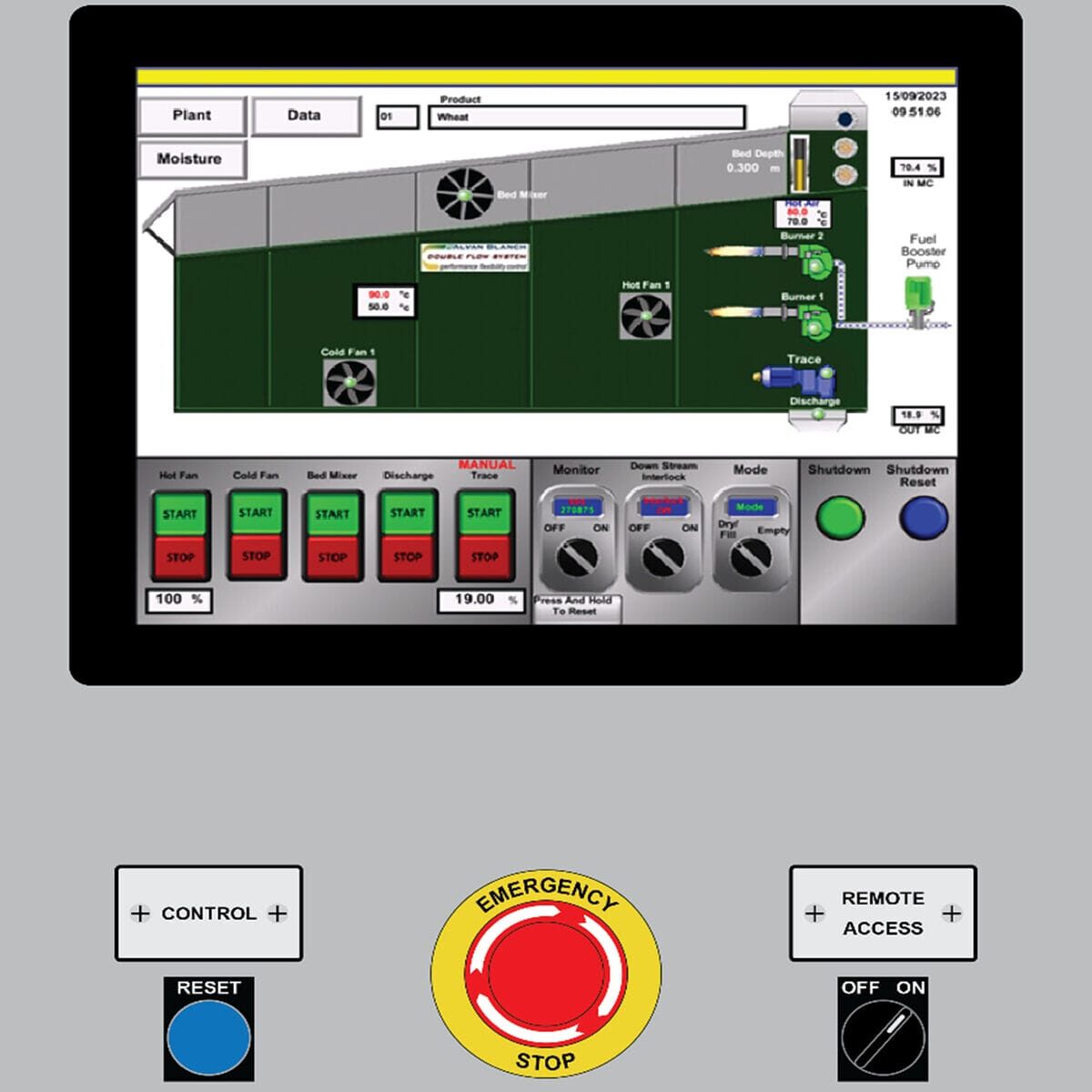
15" touch control panel
Control of all parameters from a colour touchscreen. Process logging and remote monitoring.
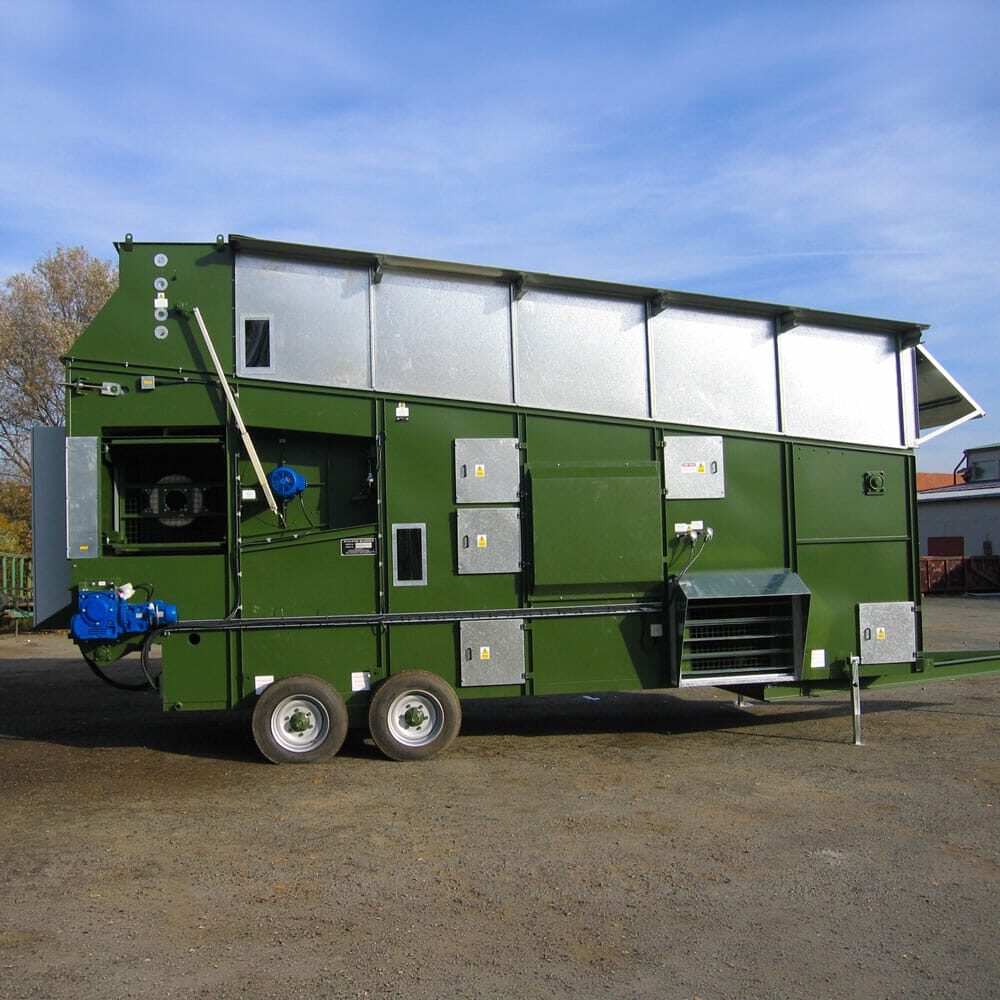
Mobility
All Alvan Blanch DF models can be supplied in a mobile version — on a wheeled chassis for moving between sites. The mobile execution is available up to the DF25000 (throughput up to 312 tonnes of corn per day). Suitable for contractors, distributed operations and seasonal hire.
British manufacturer + Finpro Engineering supply and service
The Alvan Blanch technology is British, proven in more than 100 countries. Supply, installation, commissioning and service are handled by Finpro Engineering.
Alvan Blanch — the manufacturer
- A British engineering company since 1952
- Specialises in the drying and post-harvest processing of grain and other products
- Manufacturing in Chelworth (Wiltshire, UK) at its own factory with CNC equipment
- Exports to more than 100 countries; around 80–85% of output goes to export
- The Double Flow (DF) series is the most popular continuous-flow conveyor grain dryer in the UK
- An in-house engineering office and test laboratory to configure the dryer for the customer's product
- Contracts in pounds sterling for customers who prefer it
Finpro Engineering — supply and service
- Engineering, design, supply, installation and service of grain-drying equipment since 2000
- Experience in installation supervision, commissioning and servicing of Alvan Blanch, as well as Bonfanti, Ravaro, Scolari, Agrex, Mepu, Ozsu and other manufacturers
- Working installations you can visit before making a decision
- Help integrating the dryer into an existing grain-handling plant, shed or elevator complex
- Spare parts supply and technical support
Frequently asked questions
How do Alvan Blanch conveyor grain dryers differ from other dryer types?
Shaft, column and tower dryers are vertical structures through which grain moves top-down under gravity. Alvan Blanch DF-series grain dryers have a horizontal design with two sequential conveyor beds. This gives a lower overall complex, less mechanical impact on the grain, drying safety (no hang-ups possible) and a built-in heat recovery system for fuel savings.
Can uncleaned grain be dried in an Alvan Blanch dryer?
Yes, it can. This is the only grain dryer in which trash content cannot cause the grain to hang up. More on this in the next question.
Why is a conveyor dryer safer when drying oilseeds?
In vertical dryers, oilseeds can hang up in the corners of the column and form stagnant zones that overheat and are a classic cause of fires. In Alvan Blanch the grain moves continuously in a thin layer along the conveyor and forms no static accumulations. When drying with an open flame, the heat recovery system is additionally switched off. In addition, when running on expensive fuels we recommend insulating the dryer (an option).
How does Alvan Blanch save fuel?
There are two main mechanisms. Recovery returns warm air from the cooling zone to the hot-air fans. Recirculation returns part of the dry spent hot air back into the drying process. On corn, in typical conditions, this gives fuel savings of around 25–35% compared with dryers without such systems.
Can solid fuel be used?
Yes. Alvan Blanch is available in a burner-free execution — for connection to an external heat generator running on biomass such as wood chips, pellets or straw. The thermal output depends on the model — roughly from 500 kW for the DF6000 up to 10 MW for the DF95700. The standard centrifugal fans of Alvan Blanch operate confidently at high air-path resistance, which allows the dryer to be switched to solid fuel with a lower risk of airflow and throughput loss.
How is an Alvan Blanch model selected?
Selection is done for the specific complex. The minimum data: crops, planned seasonal volume in tonnes, initial and final moisture, available fuel. From these inputs we select the model and prepare a commercial proposal.
Is Alvan Blanch suitable for an existing grain-handling plant or shed?
Most often — yes. The low horizontal design lets Alvan Blanch be integrated into existing complexes without significant additional cost. Finpro Engineering helps with the project of integrating into existing grain-handling and grain-cleaning equipment.
Can the working installations be visited?
A significant number of operating installations are ready to host a visit by a prospective buyer by prior arrangement. Tell us your approximate region and we'll suggest the nearest site.
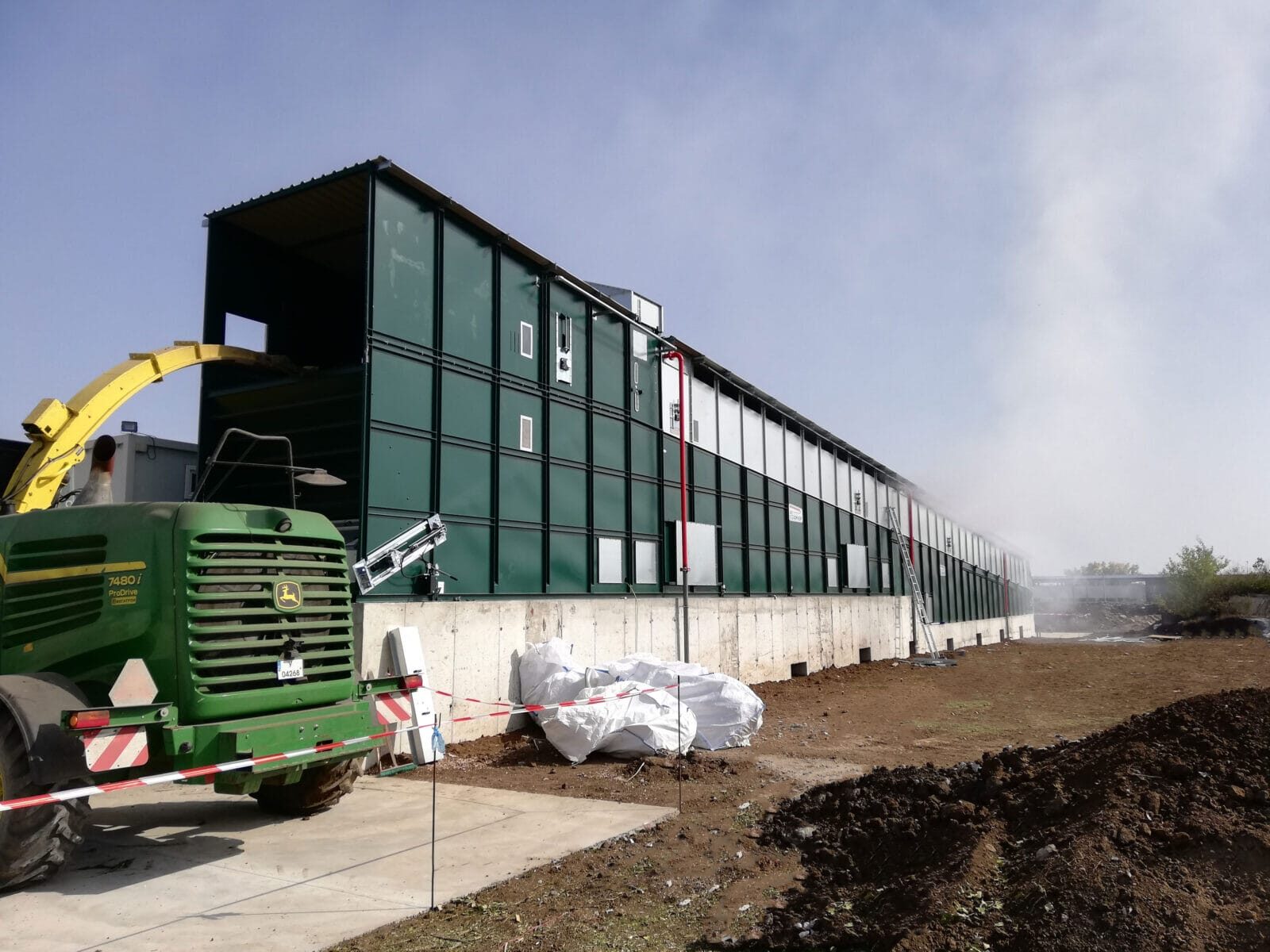
Alvan Blanch manufactures not only grain dryers but also dryers for many other agricultural and industrial products. More: "Alvan Blanch CD-series conveyor dryers".
Download materials
The full technical materials for the Alvan Blanch range — to print, send to colleagues or study at leisure. No mandatory forms to fill in.
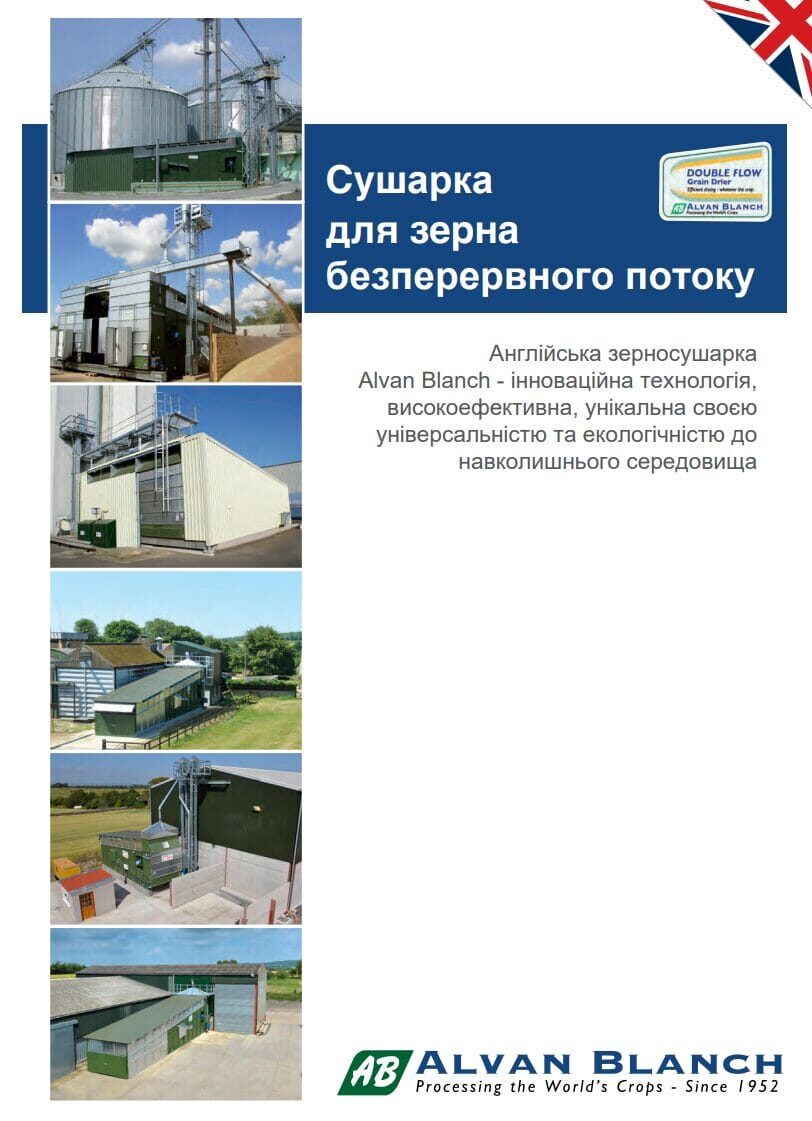
Alvan Blanch DF Range brochure
The full DF6000–DF95700 model range, technical characteristics, options and specifications.
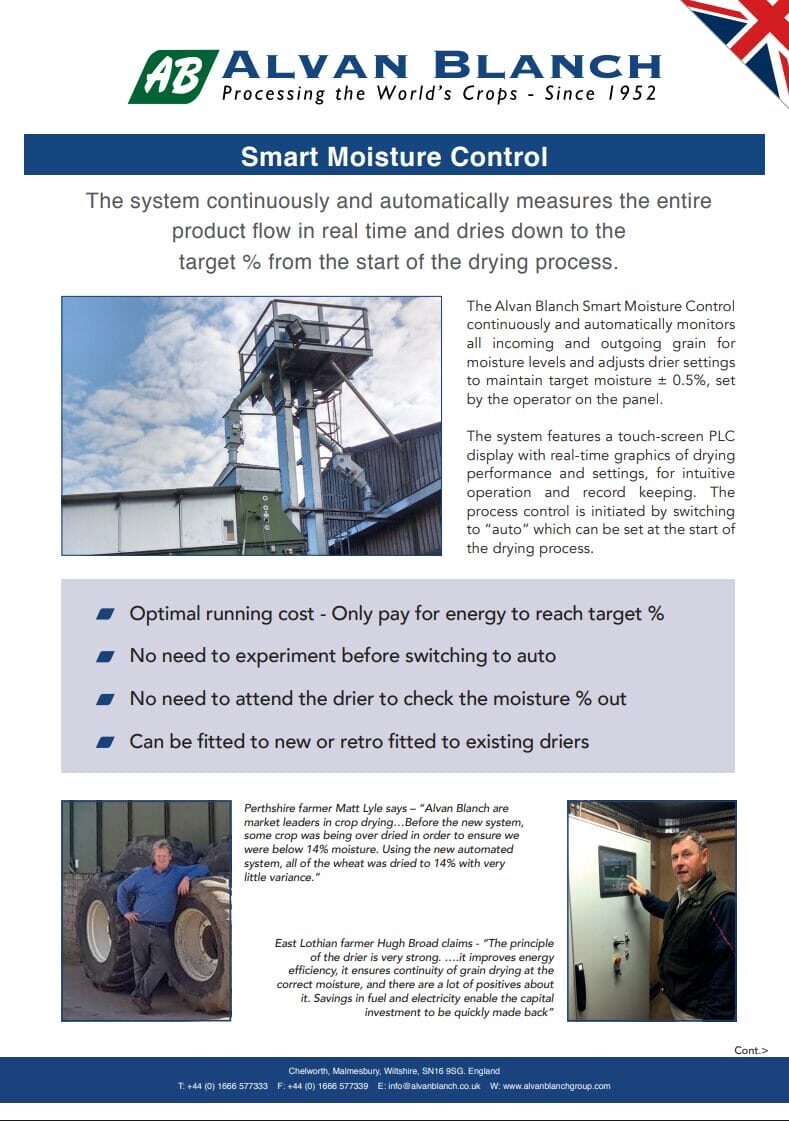
Alvan Blanch moisture control system
A brochure on the in-line moisture sensors (optional) and the automatic control of the drying process.
Ready to discuss your project?
Describe the crop, the planned seasonal volume, the available fuel and the siting conditions — and we'll select an Alvan Blanch model and an integration scheme for your complex. Fill in the form below or get in touch directly.
Contact Us
If you are interested in purchasing any of our products, need a price quotation, or have any questions, comments, or suggestions, please do not hesitate to contact us via our contact form, by phone, or by email.
- WhatsApp: +90 (536) 452-1184
- E-mail: write to us
Our phones:
- Kazakhstan: +7 (747) 095-1626
- Moldova: +373 (22) 011-214
- Romania: +40 (31) 229-8484
- Türkiye: +90 (536) 452-1184 (English)
- Ukraine: +380 (67) 111-6668