
Corn Drying on Industrial Grain Dryers
Corn (maize) is one of the most demanding grain crops for post-harvest drying. It frequently arrives at the elevator with high moisture content, requires large amounts of heat, and must be dried quickly during the harvest season. At the same time, an incorrect drying regime can lead to cracking, breakage, over-drying, excessive fuel consumption, or loss of grain quality for processing.
The most common question sounds simple: at what temperature should corn be dried? But the question, as phrased, is incomplete. For corn, what matters is not only the temperature of the hot air, but the amount of heat actually delivered to the grain. That amount depends on the airflow rate, the air temperature, the grain moisture, the dryer design, and the specific way in which air passes through the grain mass.
As a result, in one grain dryer 110 °C may already be the limiting regime, while in another 120–140 °C of hot air may be a normal working temperature. Comparing such figures without knowing the dryer type is meaningless.
Brief conclusion: the correct drying temperature for corn depends on the dryer type, airflow rate, uniformity of air distribution, initial moisture content, intended use of the grain, and the maximum permissible grain temperature.
Quick Answer
Commercial corn is dried in tower/shaft mixed-flow grain dryers, continuous-flow dryers, mobile dryers, and batch recirculating dryers. For large volumes, tower dryers and two-zone dryers are generally the most effective, because they allow heat to be delivered uniformly to the grain mass, operate at high throughput, and reduce specific fuel consumption.
There is no universal drying temperature for corn. It is necessary to distinguish between:
- the temperature of the hot air or drying agent;
- the amount of heat transferred to the grain;
- the temperature of the grain itself;
- the dryer type and the direction of airflow through the grain bed;
- the intended use of the corn: commercial, feed, seed, or processing.
In tower/shaft mixed-flow grain dryers, the air temperature for commercial corn may be higher than in modular or column cross-flow dryers. The reason is not that corn "prefers" higher temperatures, but that grain is heated and mixed differently in such dryers.
Our Grain Dryers for Corn
Corn is one of the primary grain crops, so virtually all of our grain dryers designed for cereals are suitable for drying it: tower/shaft dryers, continuous-flow dryers, batch recirculating dryers, and mobile solutions. What will differ is not the applicability as such, but the throughput calculation, temperature regime, thermal scheme, automation, airflow rate, and grain quality requirements.
For cereals, legumes, and oilseeds, this approach can be used as a baseline: a general block of "grain dryers for the crop" is presented first, with further specification by dryer type provided in the body of the article.
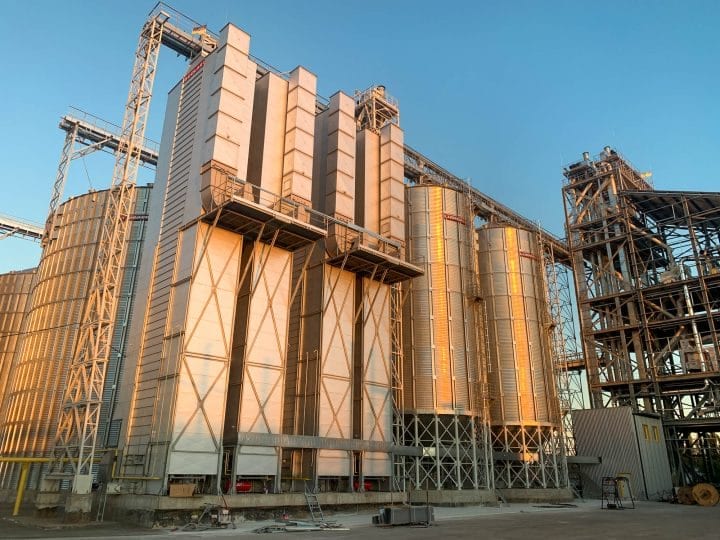
Scolari Grain Dryers
Italian mixed flow grain dryers equipped with full heat recovery and heat recirculation systems offer the most economical solutions for drying corn, which requires high drying temperatures.
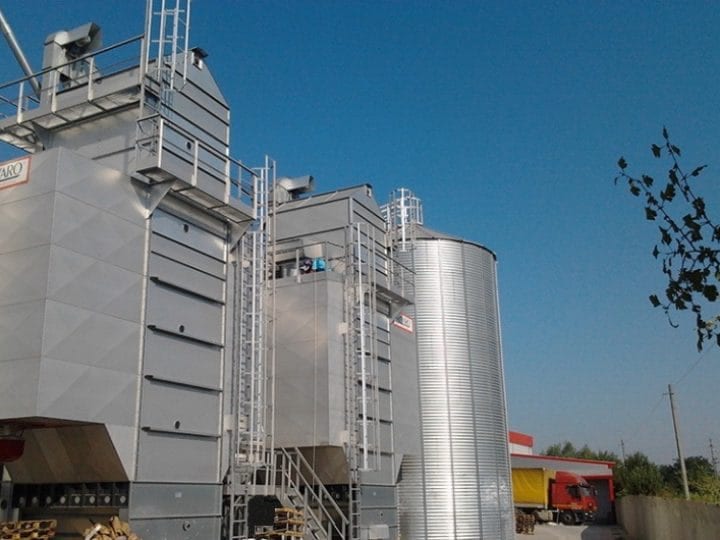
Ravaro Batch Grain Dryers
Italian mixed-flow batch grain dryers, suitable for medium-sized farms or tailored for special products like paddy rice that require a resting period.
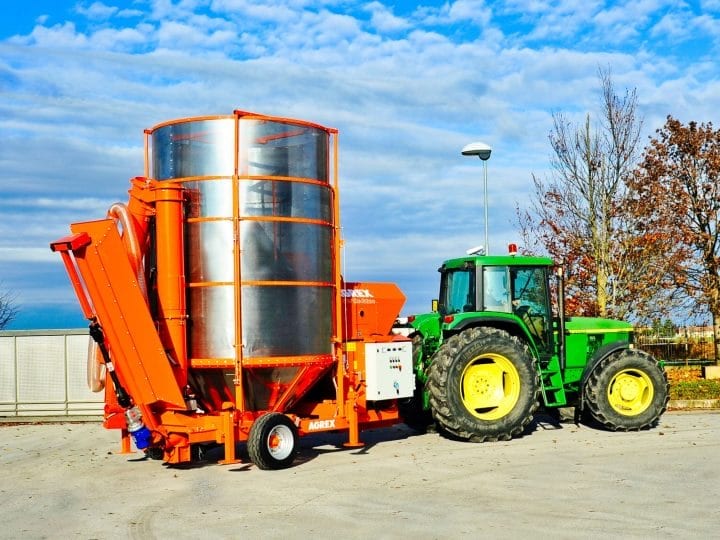
Agrex Mobile Grain Dryers
Italian mobile batch grain dryers for small and medium-sized farmers do not require construction work, are completely autonomous in operation, and can run on any type of fuel.
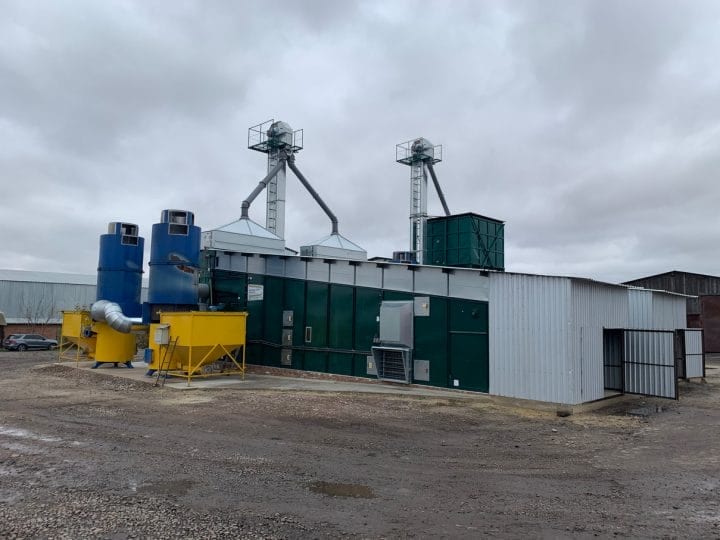
Alvan Blanch Grain Dryers
Horizontal grain dryers from Great Britain. The short height allows to minimize total capital investments. Conveyor belt technology ensures gentle grain drying.
Why Corn Is Challenging to Dry

High Initial Moisture Content
Corn frequently arrives for drying at 25–30 % moisture and above. The more water that needs to be removed, the more heat is required for evaporation, and the greater the load on the dryer, burner, fans, cleaning system, grain-handling equipment, and logistics.
Drying Falls in a Demanding Season
In many regions corn is harvested late, when outdoor air is already cold and humid. This increases fuel consumption and makes the energy efficiency of the grain dryer especially important.
Corn Is Sensitive to Non-Uniform Drying
If part of the grain overheats while another part remains under-dried, the batch will have non-uniform final moisture content. This impairs storage and increases the risk of breakage during subsequent handling.
Regime Errors Quickly Become Costly
For corn, excessive fuel consumption, reduced throughput, or quality loss are especially noticeable because volumes are large, the season is short, and moisture removal is often substantial.
Why corn is dried
For safe storage. Corn is dried to reduce moisture to a level at which the grain can be safely stored without self-heating, mould, and accelerated microbial growth. For long-term storage of commercial corn, the target is typically around 13–14 % moisture, but the exact value depends on the storage duration, temperature, buyer requirements, and elevator technology.
For sale and export. A batch of corn with normal moisture content, uniform drying, and minimal breakage commands a higher commercial value. Over-dried corn loses mass and is more prone to cracking, while under-dried corn creates risks during storage and transportation.
For processing. Corn may be used for animal feed, groats, starch, ethanol production, and other applications. For such scenarios it is important not only to remove moisture, but also to avoid damaging the grain through overheating, cracking, or excessively rapid moisture changes.
For seed material. Seed corn is a separate scenario. It cannot be dried using the same regimes as commercial or feed corn. The primary criterion here is preserving germination, so regimes must be significantly gentler, and in some technologies seed corn is dried on the cob.
The Core Principle: What Matters Is Not Temperature Alone, But the Amount of Heat
When discussing corn drying, air temperature is usually cited: 95, 110, 120, 135, or 140 °C. But the temperature on its own does not indicate how quickly the grain will be heated.
The amount of heat the grain receives depends on at least three factors:
- Air temperature. The hotter the air, the greater its thermal potential.
- Airflow rate. The more air passes through the grain, the more heat can be delivered at the same temperature.
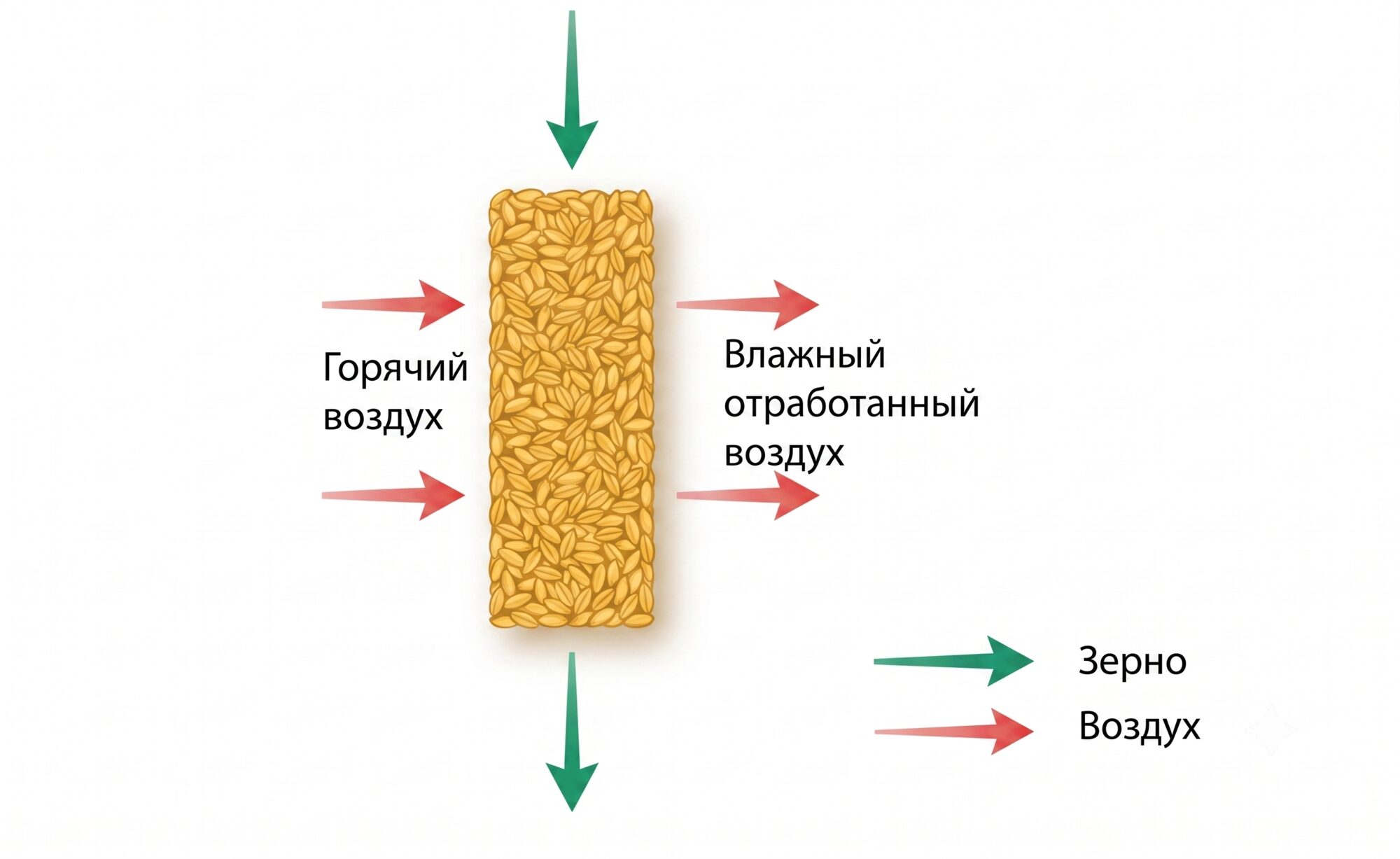
- The way air passes through the grain bed. What matters is whether heat is distributed uniformly across the grain mass or whether part of the grain remains constantly near a hot wall.
As a result, two dryers with the same air temperature can have completely different effects on corn. Conversely, a dryer with a higher air temperature may operate more gently if it delivers a lower air volume, distributes the airflow better, and continuously mixes the grain.
In depth: why it is not valid to compare air temperature alone
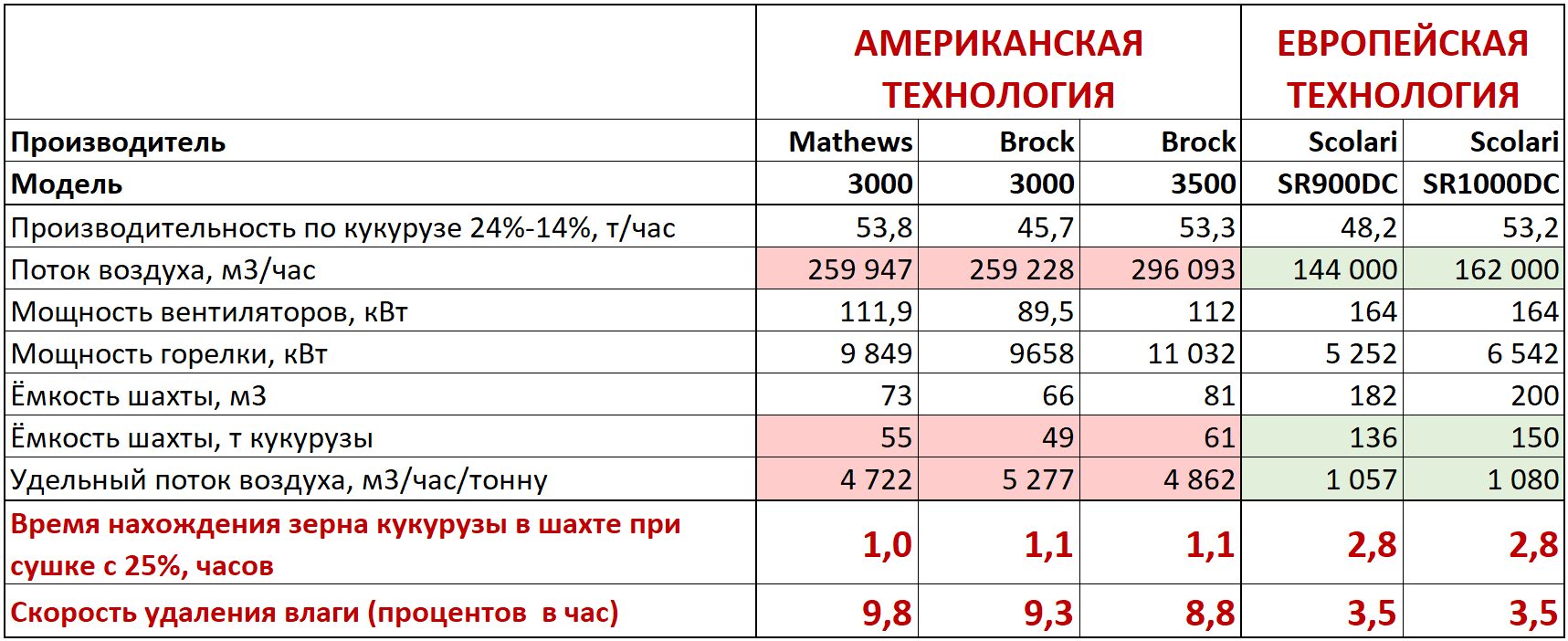
In our earlier article, this point is stated very precisely: different dryers supply different specific air volumes to the shaft. European tower/shaft mixed-flow dryers may supply roughly 1,000–2,000 m³ of air per tonne of corn per hour, while North American cross-flow dryers supply approximately 4,500–5,500 m³/t·h.
If a comparable amount of heat needs to be delivered to the grain, a higher airflow rate requires the air temperature to be limited. Otherwise the grain, especially near the hot-air inlet zone, will receive an excessively high thermal load.
This is precisely why air temperature in different dryer types is not a direct indicator of a "gentle" or "intensive" regime. It is more appropriate to evaluate the thermal load on the grain: temperature, airflow rate, contact time, uniformity of flow through the grain bed, and grain mixing.
How the Dryer Type Affects the Permissible Temperature
Modular and Column Cross-Flow Dryers
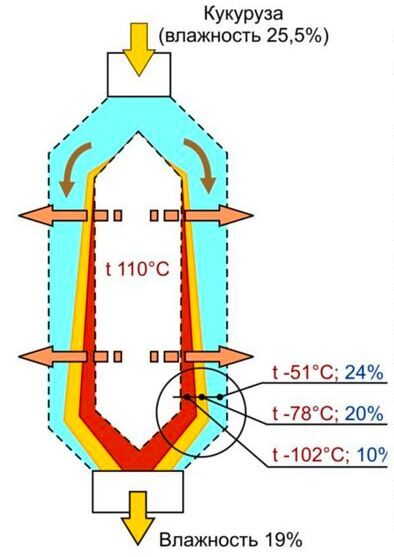
In modular or column cross-flow dryers, hot air passes through the grain bed perpendicularly to the direction of corn movement. Grain near the inner hot wall receives the hottest air and faces an elevated risk of overheating. As the air passes through the bed it cools and becomes saturated with moisture, so grain farther from the hot wall is dried under different conditions.
As a result, different temperature zones exist simultaneously within a single grain column. Some grain may receive excessively intense heating while another portion receives insufficient heat. For this reason, in such dryers the hot-air temperature must be restricted, even if the manufacturer or operator would prefer to raise it for the sake of throughput.
For these dryers, a range of approximately 105–110 °C of air temperature is often regarded as the upper limit for commercial corn. This is not a universal physical limit of corn; it is a constraint of the specific airflow-through-bed technology.
Tower/Shaft Mixed-Flow Grain Dryers
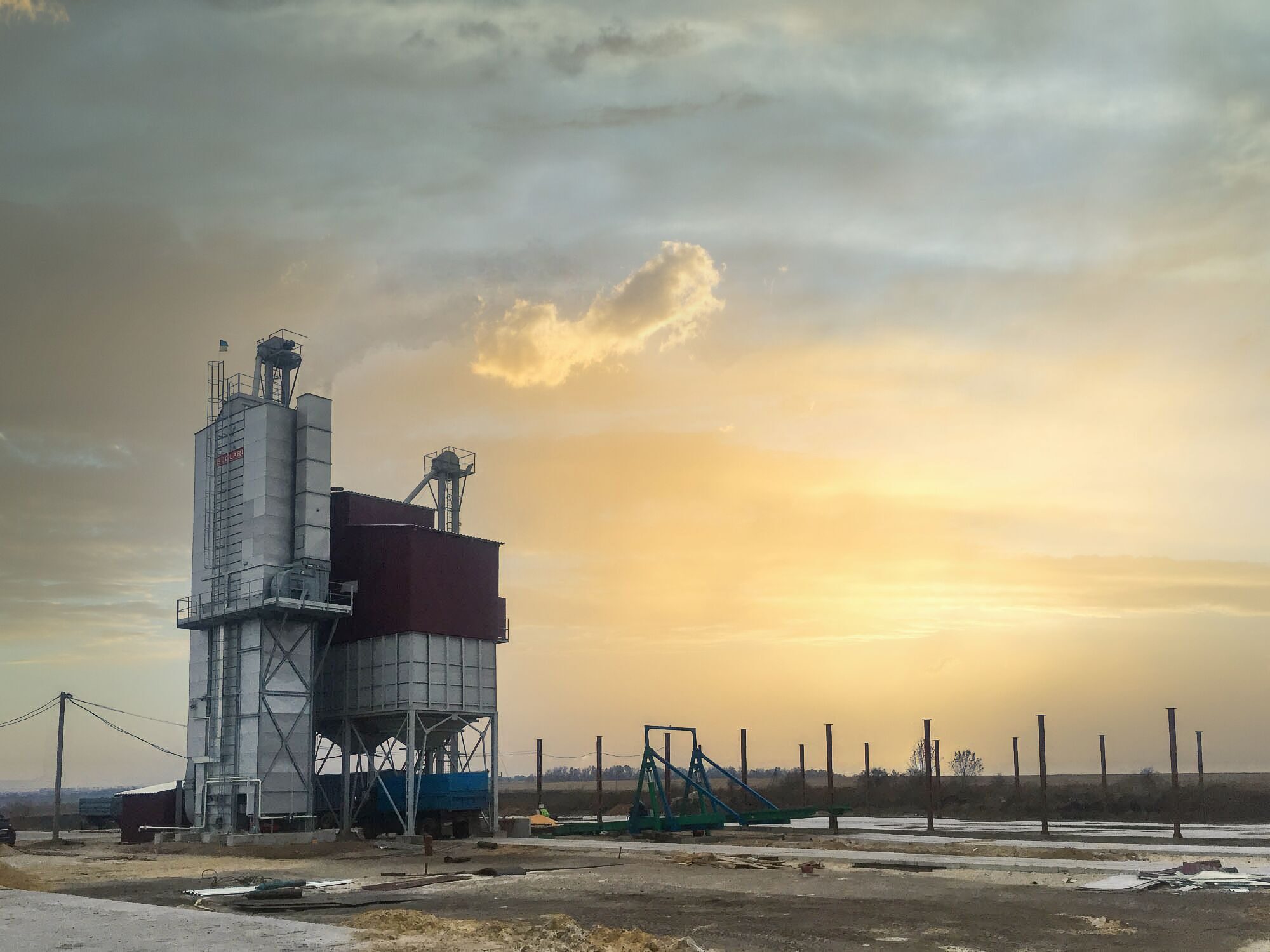
In tower/shaft mixed-flow dryers, air passes through the grain mass more uniformly. In addition, as the grain moves and the discharge system operates, the layers continuously change position: individual kernels do not travel the entire path in the same "hot" or "cold" zone.
This reduces the risk of localised overheating and helps achieve more uniform final moisture content across the entire batch. For this reason, in tower/shaft mixed-flow dryers, higher hot-air temperatures — for example 120–140 °C — may be used for commercial corn, provided this is supported by the dryer design, automation, and operating regime.
Important: this does not mean the grain itself must be heated to 120–140 °C. This refers to the temperature of the drying agent, not the temperature of the corn.
Older Drum and DSP-Type Dryers
Higher temperatures — 150–160 °C and above — have also been encountered in practice. However, such regimes cannot be applied to modern hybrids and current quality requirements without analysing the dryer design, the intended use of the grain, and the actual outcome.
For a new article, such examples should be used not as a recommendation, but as an explanation of why there is such a wide divergence of opinion in the industry about corn drying temperature.
Why a Two-Zone Dryer Is Especially Well-Suited for Corn
Corn in the upper section of the dryer is typically still very wet. When heated, it actively evaporates water, and the evaporation process absorbs a large amount of energy. For this reason, wet grain does not heat up as rapidly as dry grain would at the same air temperature.
In the lower zone of the dryer, the corn is already drier. There is less moisture in the grain, evaporation is weaker, and the grain therefore responds more quickly to heating. If the same high temperature is applied throughout the full height of the dryer, the risk of overheating in the lower section will be higher.
This is precisely why a two-zone dryer closely matches the physics of the process:
- in the upper zone, where the grain is wet and actively evaporating water, more intensive heat can be supplied;
- in the lower zone, where the grain is already drier, the regime must be gentler;
- in the cooling zone, the grain needs to be stabilised before storage.
In depth: why wet corn heats up more slowly than dry corn
When wet corn receives heat, a significant portion of the energy goes not towards raising the grain temperature but towards evaporating water. Evaporation is an energy-intensive process: water must be heated and converted into vapour. While evaporation is proceeding actively, it effectively "cools" the grain and restrains the rise in its temperature.
For this reason, wet corn at the start of drying can tolerate a higher drying-agent temperature than nearly dry corn at the end of the process. But this only holds true with a correctly designed dryer, uniform air distribution, and controlled operating regime.
Practical conclusion: in the upper zone of the dryer more heat is needed because the grain is wet and actively evaporating water; in the lower zone heat must be applied more carefully because the grain is already drier and heats up more quickly.
Air Temperature, Grain Temperature, and the Intended Use of Corn
To select the correct regime, three questions must be separated:
- What air temperature is supplied to the dryer? This is a matter of equipment configuration and thermal scheme.
- What temperature does the grain actually reach? This is the quality-risk indicator.
- What is the corn intended for? Commercial, feed, seed, and food/processing grain cannot be dried according to the same logic.
| Scenario | What Matters | Comment on Temperature |
|---|---|---|
| Commercial corn | throughput, storage moisture, minimal breakage | air temperature is selected according to dryer type and grain quality |
| Feed corn | throughput and cost-efficiency | a more intensive regime is permissible, but overheating and breakage are still undesirable |
| Corn for processing | endosperm, starch, and fat quality | controlling grain temperature and drying uniformity is more important |
| Seed corn | germination | a separate gentle regime is required; drying on the cob is often used |
Indicative Corn Drying Regimes
This table is not a universal guide. It illustrates why the same question — "what temperature should corn be dried at?" — has different answers.
| Parameter | Value / Range | Context |
|---|---|---|
| Air temperature in tower/shaft mixed-flow dryers | 120–140 °C | commercial corn, with uniform airflow and a correct thermal scheme |
| Air temperature in modular / column cross-flow dryers | up to 105–110 °C | the limit is related to the risk of grain overheating near the hot wall |
| Air temperature in a two-zone dryer | upper zone can be hotter, lower zone gentler | wet grain in the upper zone actively evaporates water and heats up more slowly |
| Storage moisture | approx. 13–14 % | guideline for commercial corn; depends on storage duration and conditions |
| Seed corn | gentle regime, grain temperature controlled | primary criterion — preserving germination |
Important: why "dry corn at 35–50 °C" should not be stated without context
Some sources cite low corn drying temperatures — for example 35–50 °C or 40–60 °C. Such figures may refer to low-temperature drying, seed material, drying on the cob, chamber dryers, or the temperature of the grain itself — not to the hot-air temperature in an industrial tower grain dryer.
If this context is not stated, these values cannot be used as a universal recommendation for commercial corn. Otherwise the reader will come away with the mistaken impression that an industrial dryer for wet commercial corn must operate at the same temperatures as gentle drying of seed material.
Which Grain Dryers Are Suitable for Corn
Tower/Shaft Mixed-Flow Grain Dryers
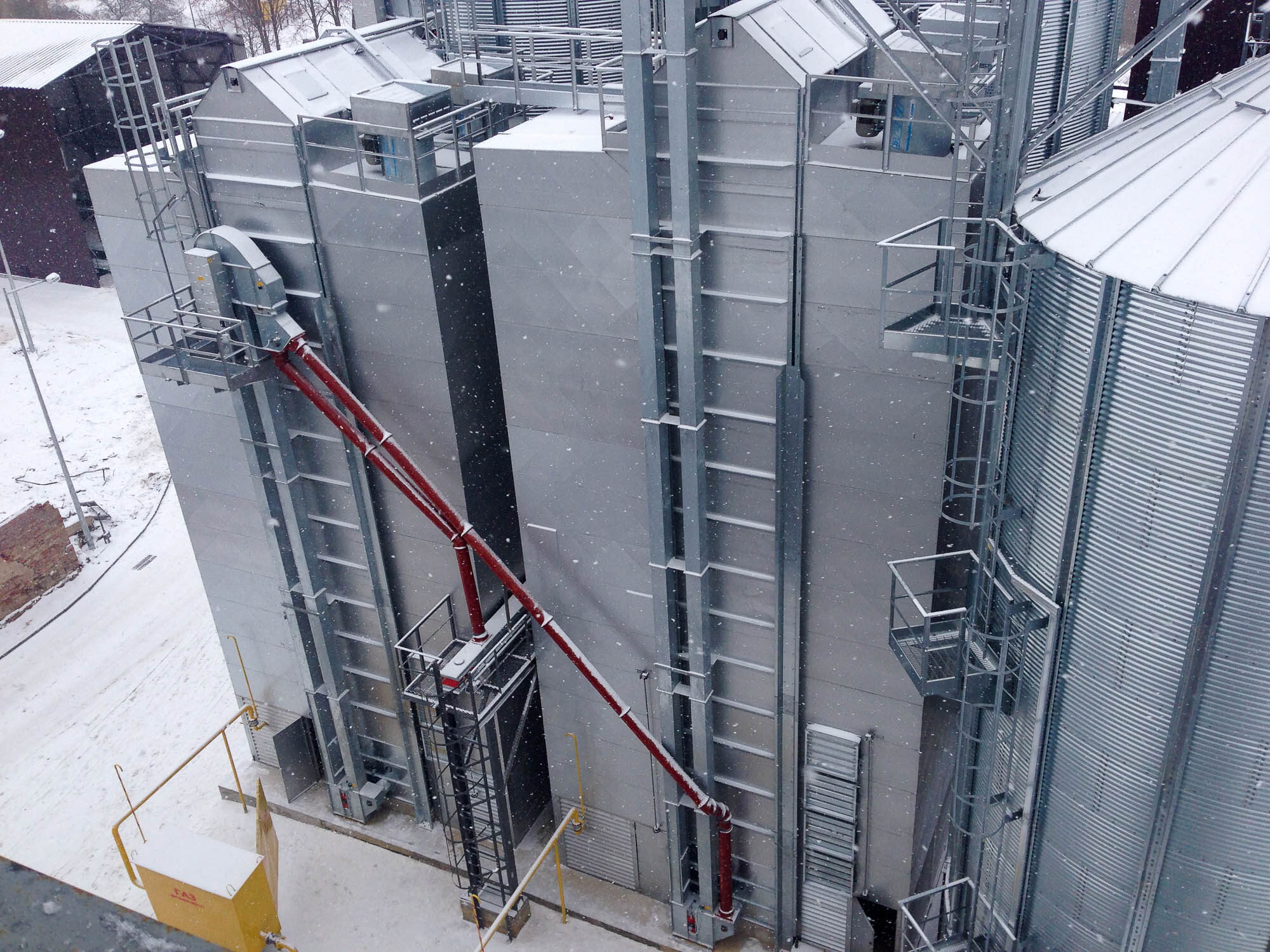
This is one of the primary options for commercial corn at elevators and large farms. Their strength lies in uniform air distribution, grain mixing, and the ability to operate at high throughput without the localised overheating that is characteristic of cross-flow technology.
Suitable when:
- large volumes of corn need to be dried;
- uniform final moisture content is important;
- reducing specific fuel consumption is required;
- there is a stationary elevator infrastructure;
- integration with cleaning, conveying, and storage is needed.
Two-Zone Dryers
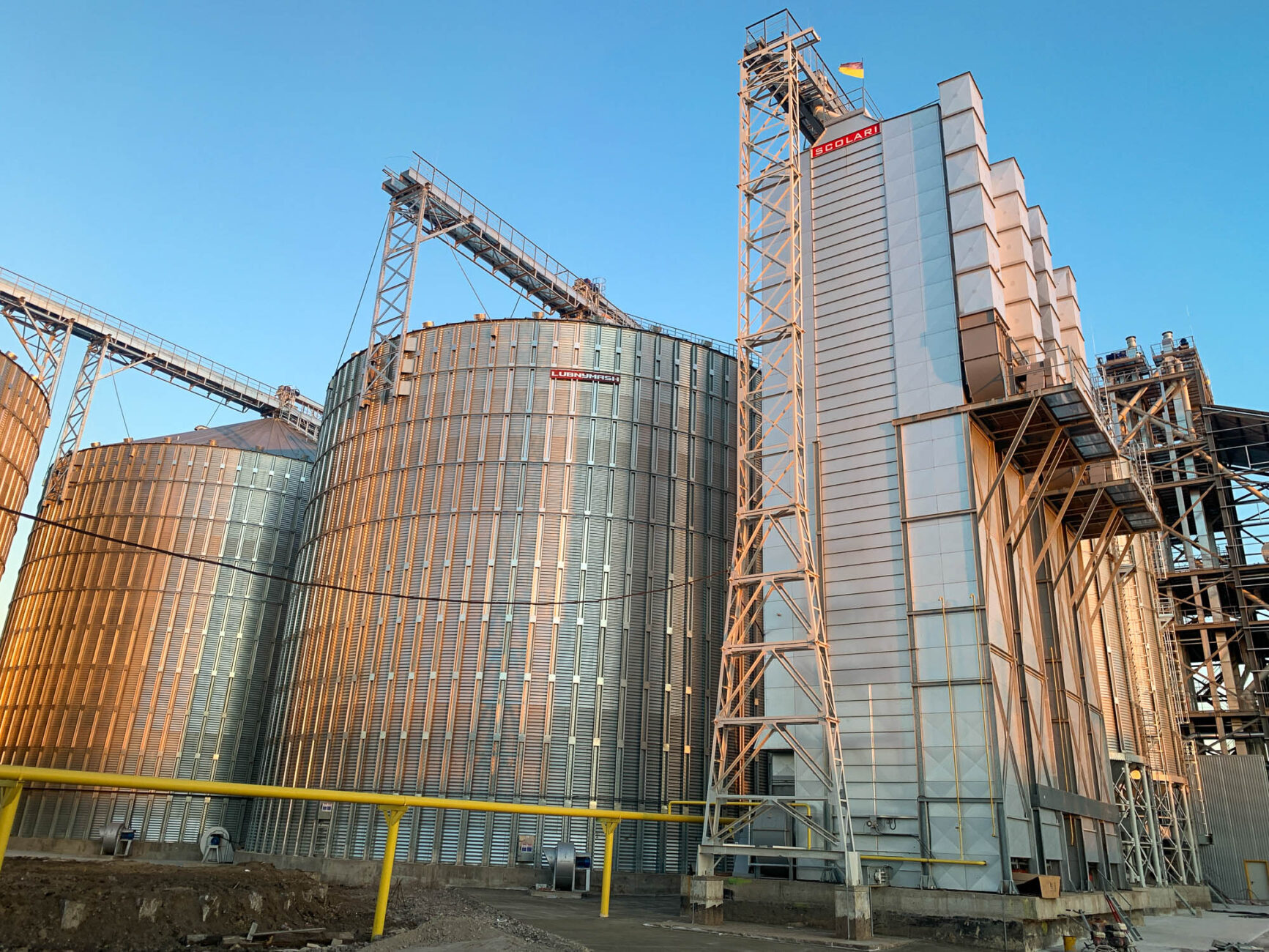
A two-zone dryer is especially well-suited for corn because the drying process in the upper and lower sections of the shaft is physically different. At the top, the grain is wet and actively evaporating water; at the bottom, the grain is already drier and heats up more quickly.
Advantages:
- heat can be distributed more precisely along the dryer height;
- higher throughput while maintaining quality;
- reduced risk of overheating in the lower zone;
- better potential for fuel savings.
Dryers with Heat Recovery and Recirculation
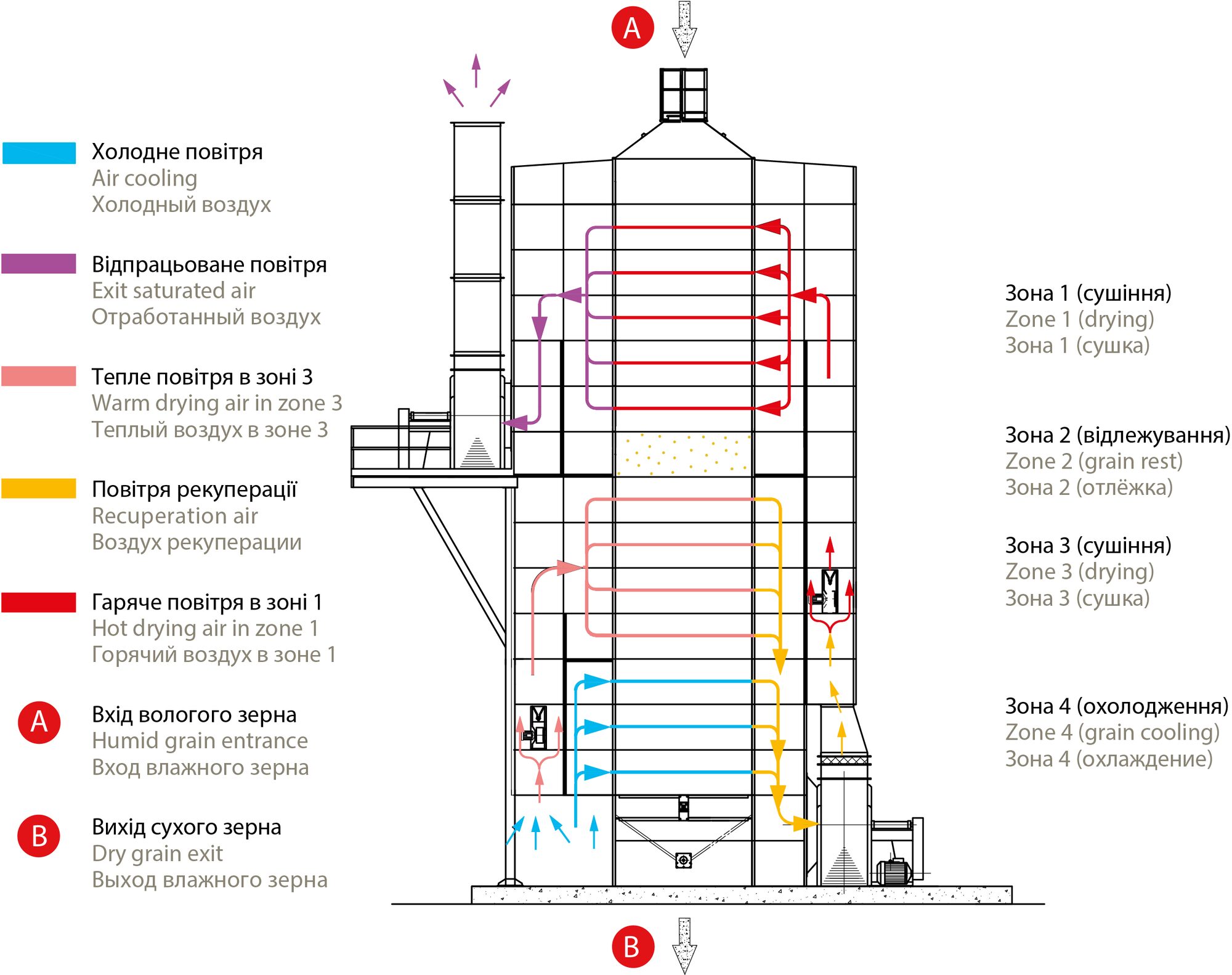
For corn, this is one of the key elements of cost-efficiency. A great deal of moisture is evaporated during drying, so every percentage point of fuel savings quickly translates into meaningful money.
Heat recovery uses the warm dry air from the cooling zone. As dry grain cools it heats the air, and that air can be returned to the process.
Heat recirculation uses air from the lower drying zones, where the grain is already sufficiently dry and releases less moisture, while the air remains hot.
Important: for dryers running on alternative fuel with a heat exchanger, such a scheme is not always necessary or implemented in the same way as in gas-fired dryers. This must be taken into account when selecting a specific thermal scheme.
Batch Recirculating Dryers
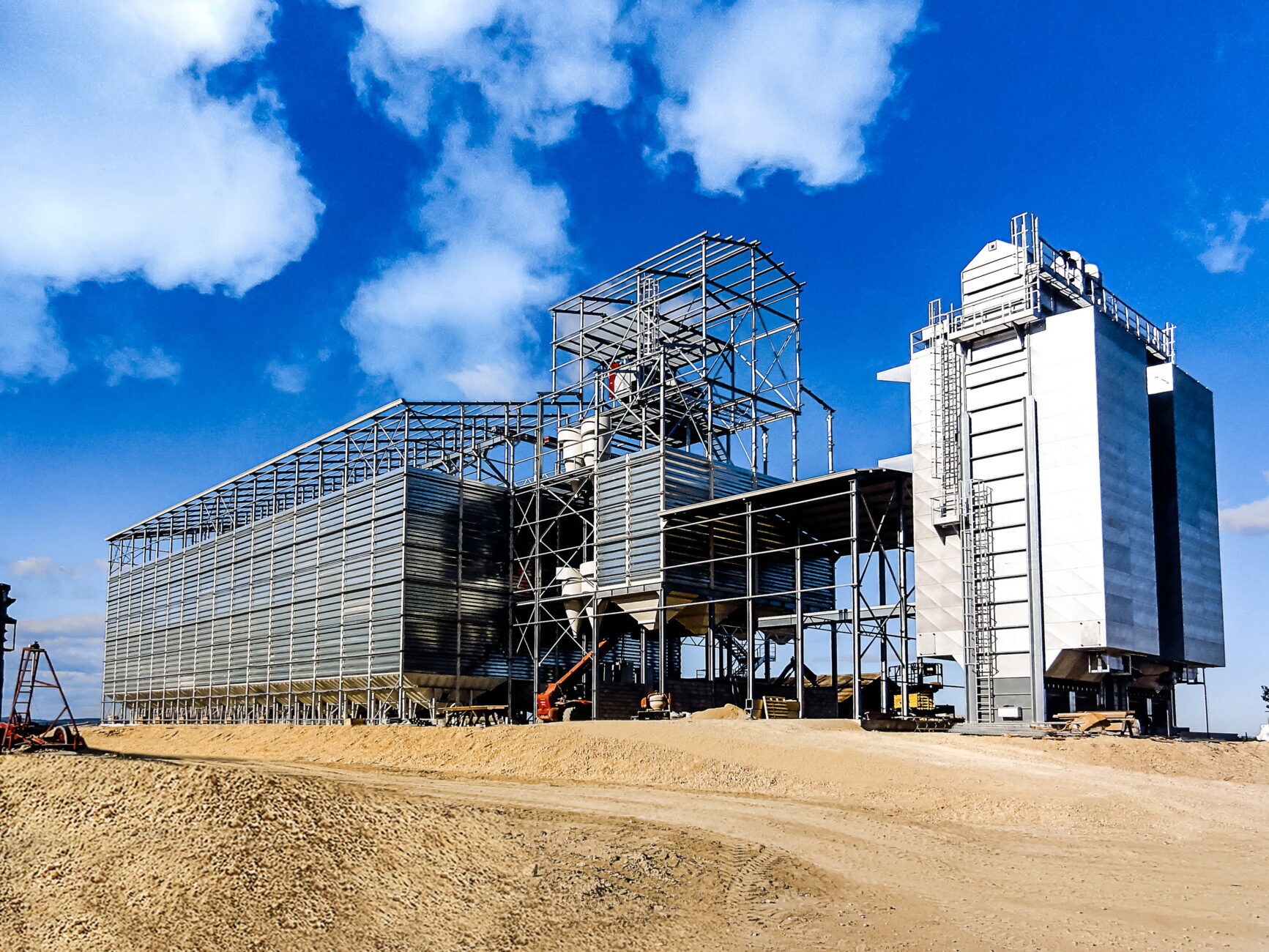
Batch dryers are suitable for small and mid-sized farms where a continuous-flow tower line requires too large an additional investment in intake, conveying, buffers, and storage.
Their advantages:
- simpler process organisation;
- lower capital outlay;
- can work in batches;
- recirculation and tempering help equalise moisture;
- the solution may achieve a faster return on investment for a farm operation.
Mobile Grain Dryers
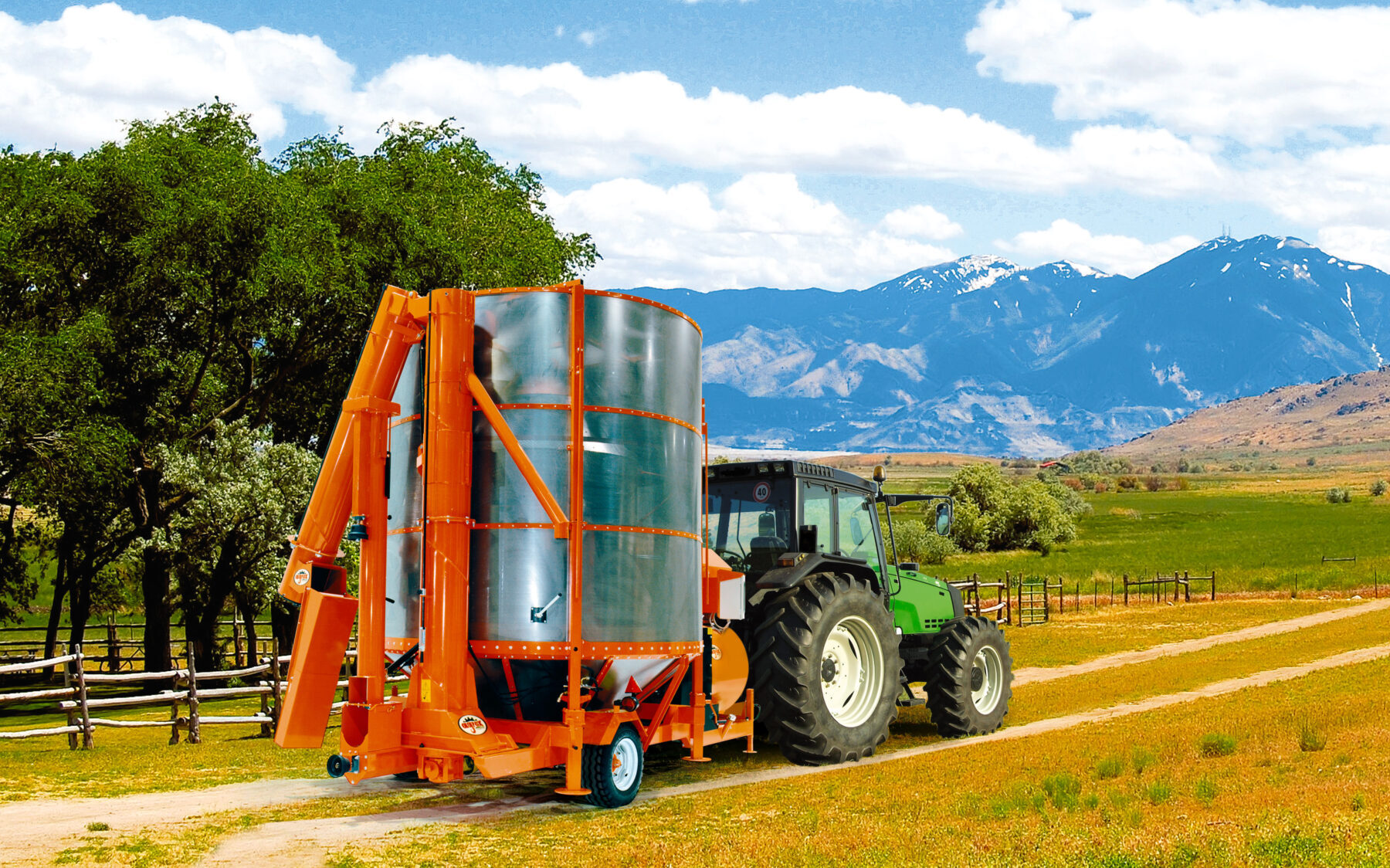
Mobile dryers are attractive to farms that need an autonomous solution without constructing a full elevator complex. They are suitable for small and medium volumes, seasonal operation, and situations where flexibility of placement is important.
Chamber and Specialised Dryers for Seed Corn
Seed corn must be treated separately. The primary objective here is not maximum moisture removal per hour, but preserving the viability of the embryo. Gentle regimes are therefore applied, and in a number of technologies corn is dried on the cob.
Comparison of Technologies for Corn Drying
| Dryer Type | When Suitable | Advantages | Limitations |
|---|---|---|---|
| Tower/shaft mixed-flow | elevators, large volumes of commercial corn | uniformity, high throughput, ability to use higher air temperatures | requires stationary infrastructure |
| Two-zone tower/shaft | wet corn, high seasonal load | optimal heat distribution, fuel savings, quality control | more complex and more costly than a simple single-zone design |
| Column / modular cross-flow | farms accustomed to this technology | compact footprint, widespread availability | risk of non-uniformity, temperature limitation, higher risk of localised overheating |
| Batch recirculating | farmers, mid-sized farms | simpler operation, less infrastructure, tempering and recirculation | lower continuous throughput compared with a large tower line |
| Mobile | farms without a capital elevator | autonomous operation, rapid installation, flexibility | limited volume and line automation |
| Chamber / specialised for seed | seed corn, cob drying | gentle drying, preserved germination | not a universal solution for commercial-scale throughput |
Corn Quality and the Risks of Incorrect Drying
Grain Overheating
Overheating can lead to cracking, breakage, deterioration of processing quality, and reduced germination in seed corn. Localised overheating is particularly dangerous — when part of the grain remains constantly near a hot wall or in a zone of excessively intense airflow.
Over-Drying
Over-dried corn represents direct financial losses. The operation wastes fuel, loses product mass, and ends up with more brittle grain that is more prone to cracking during handling.
Under-Drying
Under-dried corn stores poorly. It can self-heat, develop mould, and create risks for the entire batch in the silo or storage building.
Non-Uniform Final Moisture Content
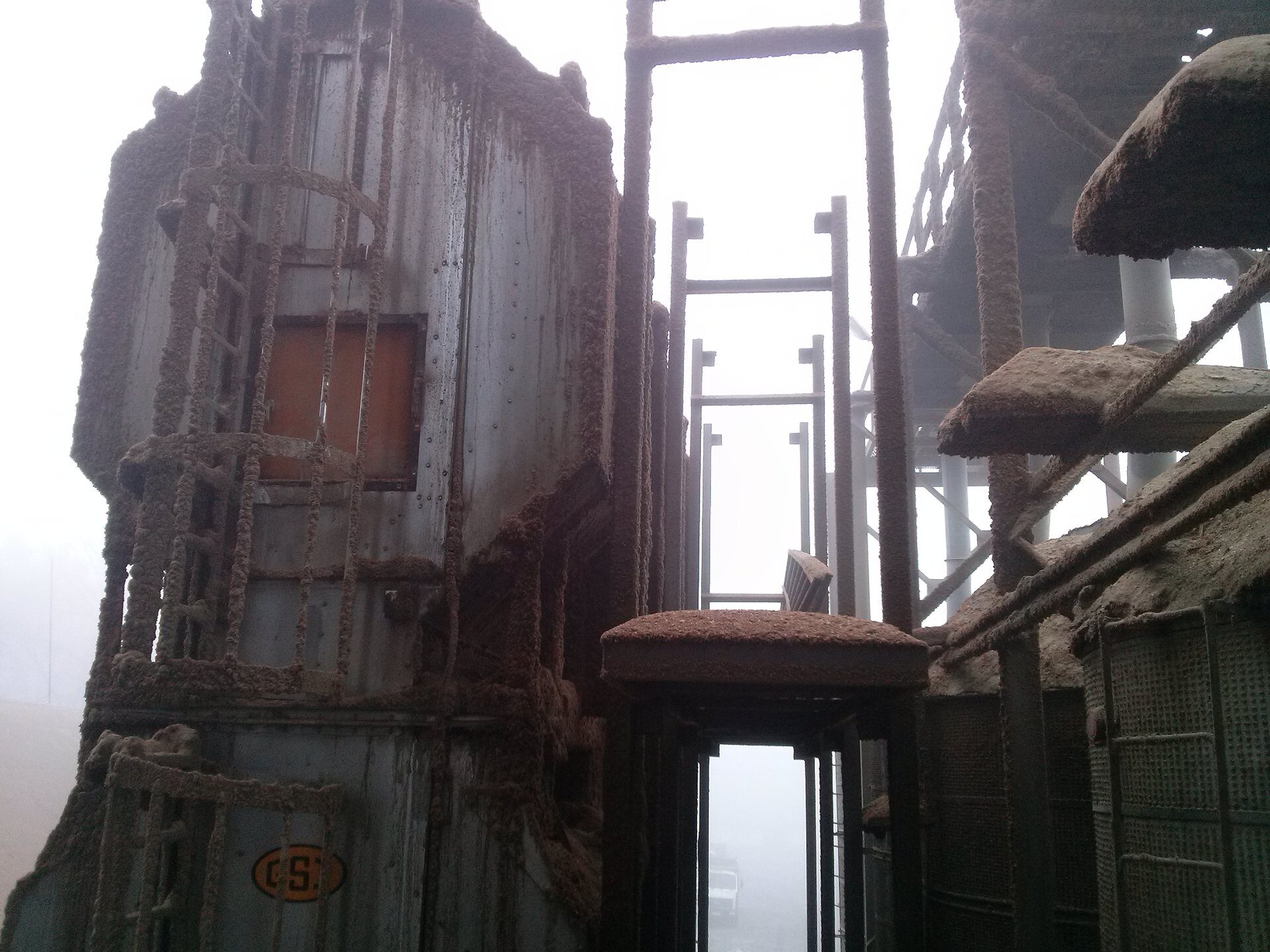
If part of the grain is over-dried and part is under-dried, the average batch moisture may appear acceptable, but such a batch will store more poorly. This is precisely why not only the average outlet moisture but also the uniformity of drying is important.
Rapid Changes in Moisture and Temperature
Cracking is often associated not only with high temperature, but also with rapid changes in moisture within the grain, internal stresses, and incorrect cooling.
In depth: why corn cracks
A corn kernel is not homogeneous: the pericarp, aleurone layer, endosperm, and germ differ in structure and moisture content. During intensive drying, the outer layers may lose moisture faster than the interior of the kernel. Internal stresses develop.
If the grain is then rapidly cooled or continues to lose moisture quickly, these stresses can cause micro-cracks. Later, during transportation, transfer, or processing, such kernels are more prone to cracking.
The quality of drying is therefore determined not only by "the temperature at which it was dried", but also by the rate of moisture removal, the uniformity of heating, the tempering time, and the cooling regime.
The Economics of Corn Drying
Corn is a fuel-intensive crop. If an operation is removing, for example, 10–15 percentage points of moisture from large volumes, even a small difference in specific gas or other fuel consumption becomes significant.
A high drying-agent temperature can increase throughput and reduce specific fuel consumption. But this only works in a dryer where such a temperature does not cause grain overheating. For this reason, the question of savings cannot be resolved simply by raising the temperature.
What actually affects economics:
- the correct dryer type;
- airflow rate and distribution;
- two-zone thermal scheme;
- heat recovery from the cooling zone;
- recirculation of hot air from the lower drying zones;
- quality of pre-cleaning;
- uniform shaft loading;
- correct operation of the automation;
- proper cooling before storage.
In depth: why a higher temperature can reduce fuel consumption
If the dryer allows the drying-agent temperature to be safely increased, the moisture evaporation process accelerates and the actual throughput of the dryer rises. At the same time, part of the heat losses is distributed over a larger volume of dried grain.
Therefore, in a correct thermal scheme, a higher temperature can reduce fuel consumption per tonne-percentage point. But this is not a universal rule for every dryer. In a cross-flow dryer, raising the temperature can cause overheating of the layer near the hot wall. In a tower/shaft mixed-flow dryer, the same temperature level may be permissible thanks to more uniform airflow and grain mixing.
Conclusion: efficiency is achieved not by "maximum temperature", but by the right combination of temperature, airflow rate, thermal scheme, uniform airflow distribution, and grain quality monitoring.
What You Need to Know to Select a Grain Dryer for Corn
For equipment sizing, it is not sufficient to say "we need a dryer for corn." The following input data must be gathered:
- Initial corn moisture, %.
- Required final moisture, %.
- Throughput: tonnes per hour or tonnes per day.
- Intended use: commercial, feed, seed, food / starch processing.
- Available fuel: natural gas, diesel, LPG / liquefied petroleum gas, biomass, solid-fuel heat generator.
- Outdoor air temperature during the harvest season.
- Availability of pre-cleaning.
- Intake, buffering, conveying, and storage layout.
- Constraints on construction, electrical capacity, and automation.
- Quality requirements: breakage, cracking, moisture uniformity, germination preservation.
Based on this data, it is possible to determine the dryer type, thermal scheme, number of zones, required fan capacity, target operating regime, and indicative fuel consumption.
Practical Recommendations
If Large Volumes of Commercial Corn Need to Be Dried
Consider a tower/shaft mixed-flow grain dryer, preferably with a two-zone thermal scheme, heat recovery, and heat recirculation.
If the Main Concern Is Gas Consumption
Evaluate not only the dryer price, but also the thermal scheme: heat recovery, recirculation, air distribution, insulation, automation, and the ability to operate at the optimal temperature without sacrificing quality.
If the Farm Is Small
Consider a batch recirculating or mobile dryer. Even if it does not incorporate all the fuel-saving systems of a large tower dryer, the overall project economics may be better due to lower capital expenditure.
If the Corn Is Seed Corn
Do not apply commercial corn regimes. A separate calculation is required, along with gentle drying and grain temperature monitoring.
If a Modular / Column Cross-Flow Dryer Is Being Considered
It is important to account for the risk of non-uniform bed heating. The presence of mixing augers or differential discharge helps, but does not make such technology fully equivalent to mixed-flow.
Frequently Asked Questions about Corn Drying
At what temperature should corn be dried?
There is no universal value. For commercial corn in tower/shaft mixed-flow dryers, air temperatures of 120–140 °C may be applied. In modular or column cross-flow dryers, the temperature is often limited to approximately 105–110 °C due to the risk of grain overheating near the hot wall. For seed corn, the regime must be significantly gentler and is calculated separately.
Why does air temperature alone not tell the whole story?
Because what acts on the grain is not a temperature figure in isolation, but the amount of heat transferred to the grain mass. This depends on air temperature, airflow rate, contact time, grain moisture, and the uniformity with which air passes through the grain bed.
Why can mixed-flow dryers operate at a higher temperature?
Because the grain is mixed with every discharged portion, and air is distributed through the grain mass more uniformly. As a result, the risk that part of the grain will be continuously overheated near a hot wall is reduced.
Why must the temperature be limited in modular dryers?
In cross-flow dryers, the grain near the inner wall receives the hottest air. While the outer layers are still being dried, the inner layer may overheat. Raising the temperature in such technology therefore more rapidly creates a risk of grain damage.
To what moisture should corn be dried for storage?
For long-term storage of commercial corn, the usual target is approximately 13–14 % moisture. The exact value depends on storage duration, temperature, buyer requirements, and the storage technology used.
Why does corn crack after drying?
One cause is excessively rapid changes in moisture and temperature within the kernel. The outer layers dry faster than the interior, stresses develop, and then micro-cracks form. The risk is increased by overheating, over-drying, non-uniform drying, and incorrect cooling.
Which dryer is best for corn?
For large volumes of commercial corn, tower/shaft mixed-flow dryers and two-zone solutions with heat recovery and recirculation are generally the most rational choice. For small farms, mobile or batch recirculating dryers may be more cost-effective. For seed corn, specialised gentle regimes are required.
Can corn be dried at 140 °C?
Not in all dryers and not for every intended use of the grain. In tower/shaft mixed-flow dryers, this air temperature can be a normal working temperature for commercial corn. In modular cross-flow dryers, 140 °C may cause overheating of the inner grain layer. It is important to monitor not only air temperature, but also the actual condition of the grain.
How can fuel consumption be reduced when drying corn?
The dryer and thermal scheme must be selected carefully: mixed-flow technology, two-zone design, heat recovery from the cooling zone, hot-air recirculation, correct airflow rate, pre-cleaning, uniform loading, and properly configured automation.
Ready to Discuss Drying Your Corn?
Tell us your initial and final moisture content, volumes, available fuel, intended use of the grain, and storage conditions — we will select the grain dryer type, temperature regime, thermal scheme, and indicative throughput for your application. Contact us through any convenient channel.
Still Have Questions? Contact Us!
By Phone
WhatsApp: +90 (536) 452-1184By Email
Our address: info@finpro.engineering
Related products

Our Products
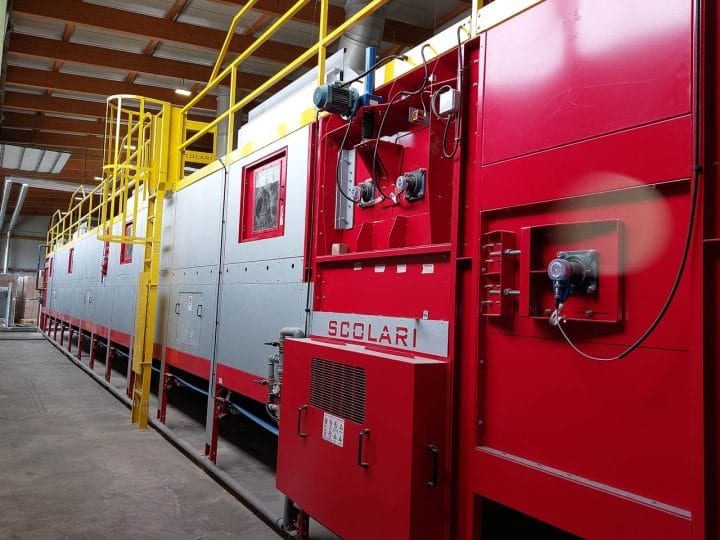
Universal Dryers
These dryers can be customized to dry any industrial or agricultural product you may require. Depending on the specific product and its moisture content, the dryers can be equipped with mixers, movable floors, vibrating floors, and other advanced technologies.
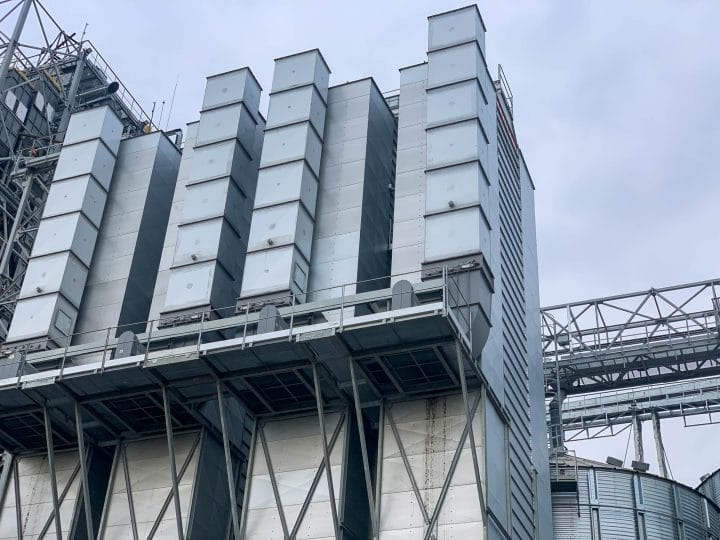
Grain Dryers
Authorized representative for top European grain dryer manufacturers like Alvan Blanch, FAO, and Agrex. Offering a full range of advanced drying solutions for agriculture.
Contact Us
If you are interested in purchasing any of our products, need a price quotation, or have any questions, comments, or suggestions, please do not hesitate to contact us via our contact form, by phone, or by email.
- WhatsApp: +90 (536) 452-1184
- E-mail: write to us
Our phones:
- Kazakhstan: +7 (747) 095-1626
- Moldova: +373 (22) 011-214
- Romania: +40 (31) 229-8484
- Türkiye: +90 (536) 452-1184 (English)
- Ukraine: +380 (67) 111-6668