
Drying Sorghum in Industrial Grain Dryers
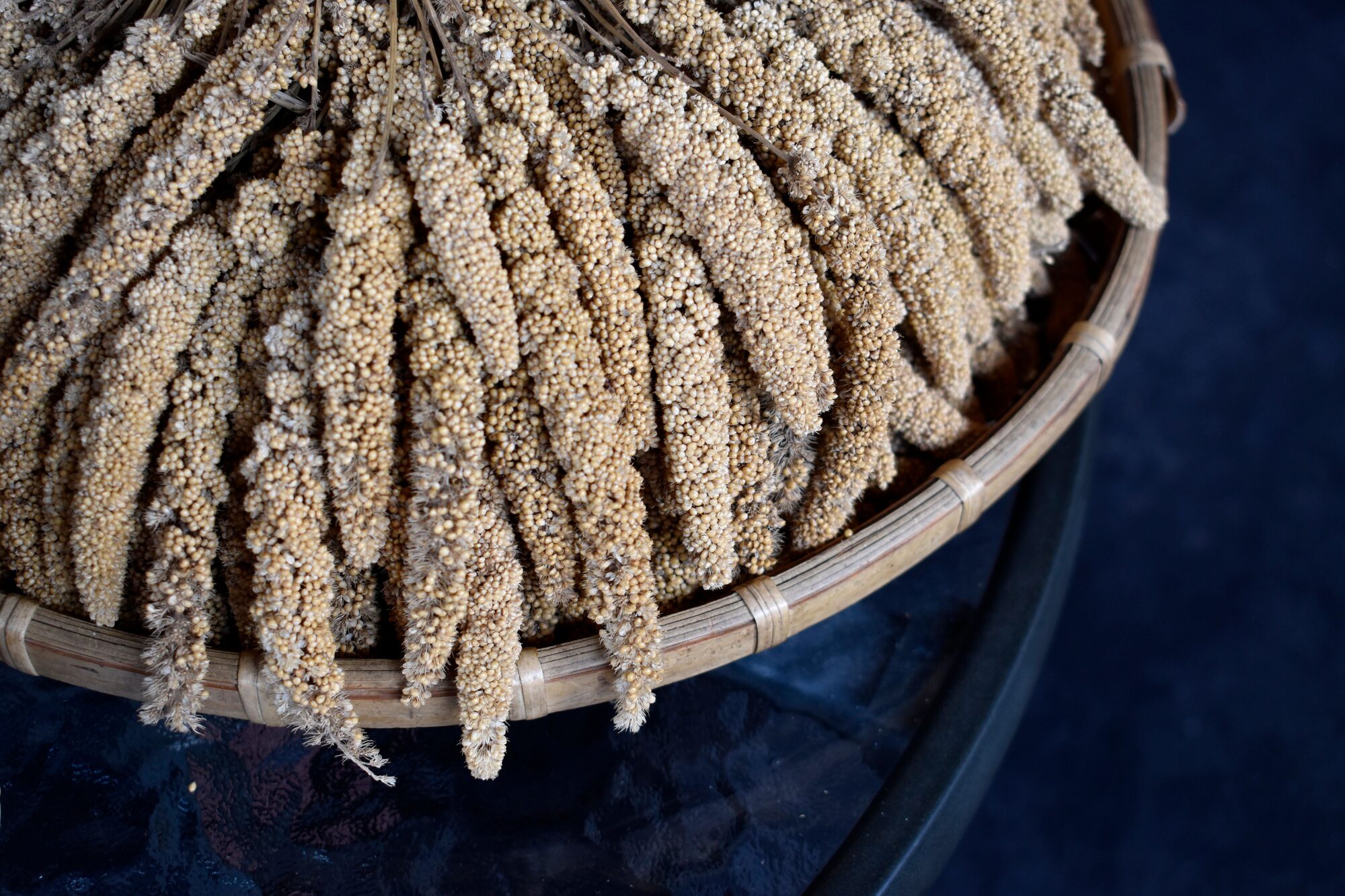
Sorghum is often treated as "just another grain crop" that can be dried by the same rules as wheat or corn. That is not entirely accurate. In terms of end use, grain sorghum does belong to the cereal grains, but in terms of how it behaves in a dryer and in storage it has one important characteristic: the small, round kernels pack more densely and offer significantly greater resistance to airflow.
For sorghum, therefore, hot-air temperature alone is not the only thing that matters. What matters more is understanding how much heat actually reaches the grain, how air moves through the bed, what airflow the fan can deliver, and what the batch is being dried for: feed, food grain, milling, or seed material.
Key takeaway: sorghum is not dried to a "universal temperature" — the right regime depends on the intended use of the grain and the type of dryer. The defining characteristic of this crop is its dense packing and high airflow resistance, which makes bed depth, actual airflow through the mass, and drying uniformity the critical parameters.
Quick Answer
Grain sorghum is dried in continuous-flow, batch, mobile, and recirculating grain dryers designed to handle small-kernel grain. Sorghum is dried down to a safe storage moisture content — typically around 13–13.5 %, and for long-term storage or seed lots the target is often stricter, around 12 %. The exact final moisture depends on storage duration, temperature, cleaning quality, aeration system, and buyer requirements.
Drying temperature depends on the intended use of the grain:
- for seed sorghum a gentle regime is required because germination is critical;
- for food-grade sorghum and grain for milling, overheating that degrades quality must be avoided;
- for feed sorghum more aggressive regimes are acceptable provided the dryer delivers sufficient airflow and uniformity;
- for commercial grain the regime is chosen as a balance between quality, throughput, and fuel consumption.
The key difference from corn: sorghum passes air through the bed less readily. In bin or tower drying, therefore, airflow dynamics, bed depth, resistance, fan capacity, and uniformity of air distribution all require careful attention.
There is no universal drying temperature for sorghum. It is necessary to distinguish between:
- the temperature of the hot air or drying agent;
- the amount of heat transferred to the grain;
- the actual grain temperature;
- the type of dryer and the direction of airflow through the bed;
- the intended use of the grain: feed, food, milling, or seed material.
Why no single universal temperature can be quoted for sorghum
Published sources cite a very wide range of figures: around 40–43 °C for seed sorghum, around 60 °C for cautious artificial drying, up to 90 °C in some European guidelines, and 82–93 °C hot-air temperatures for feed sorghum in American high-airflow dryers.
This is not necessarily contradictory. Different quantities are typically being mixed:
- the temperature of the air or drying agent;
- the actual grain temperature;
- the intended use — seed, food, milling, feed;
- the dryer type and airflow rate;
- the bed depth and resistance to airflow.
The right question, therefore, is not "what is the drying temperature for sorghum?" but rather "what regime is safe for this particular sorghum batch in this dryer, at a given airflow rate, for a given end use?"
Our Grain Dryers for Sorghum
Sorghum is a cereal grain, so our grain dryers are suitable for drying it — provided they are capable of handling small-kernel grain correctly and delivering sufficient airflow through a dense bed. What will differ is not whether the dryer is applicable, but the throughput calculation, bed depth, temperature regime, fan capacity, and grain quality requirements.
The series we consider first for sorghum drying are Ravaro RR/RC, Agrex AGD/AGD-F, and Alvan Blanch DF/BD. The specific series and regime are selected individually based on intended grain use, volumes, moisture content, and quality requirements.
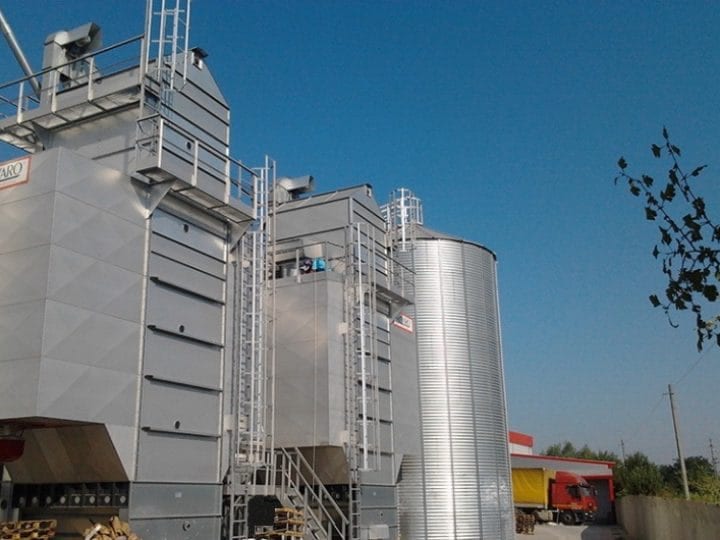
Ravaro Batch Grain Dryers
Italian mixed-flow batch grain dryers, suitable for medium-sized farms or tailored for special products like paddy rice that require a resting period.
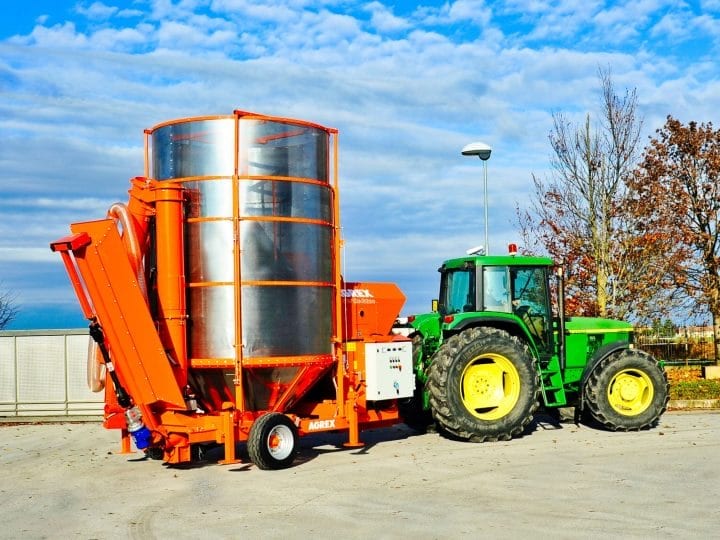
Agrex Mobile Grain Dryers
Italian mobile batch grain dryers for small and medium-sized farmers do not require construction work, are completely autonomous in operation, and can run on any type of fuel.
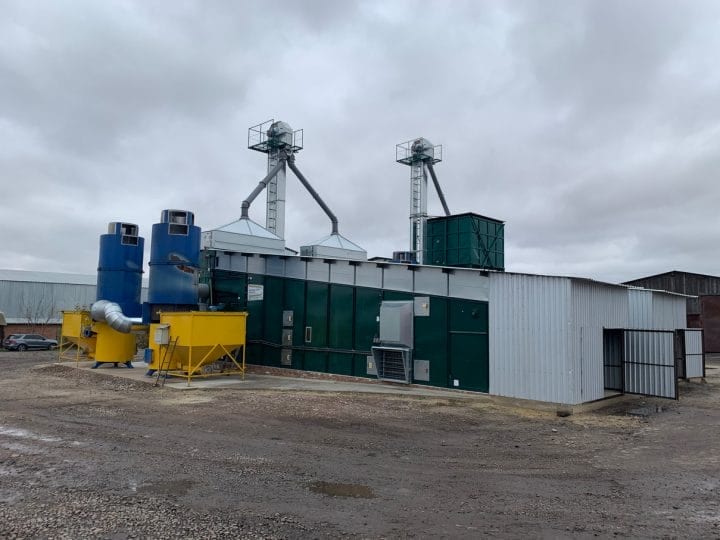
Alvan Blanch Grain Dryers
Horizontal grain dryers from Great Britain. The short height allows to minimize total capital investments. Conveyor belt technology ensures gentle grain drying.
What We Mean by Sorghum in This Article
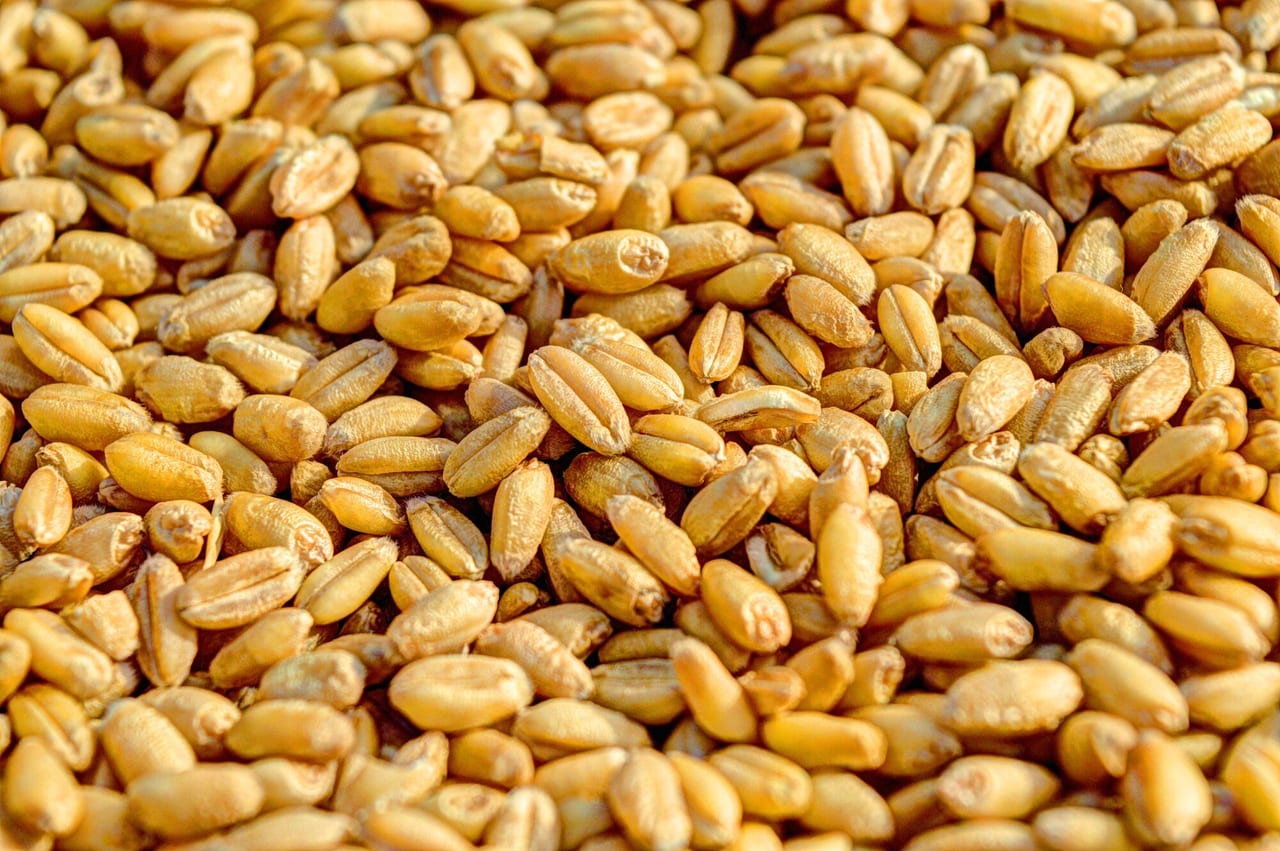
This article deals with grain sorghum (grain sorghum, milo). This is a small-kernel grain used for animal feed, food products, milling, gluten-free flour, groats, export, and further processing.
It should not be confused with other products:
- sweet sorghum is grown for the sugar in its stalks;
- Sudan grass and forage sorghum grown for green mass are dried as a grass or biomass crop;
- silage sorghum follows a completely different processing logic;
- raw material for beverages and fermentation may have its own processor requirements.
For Finpro pages, the correct focus is grain sorghum kernels passing through a grain dryer.
Why grain sorghum must be distinguished from sweet and forage sorghum
Sweet and forage sorghum may appear similar in name, but from a processing standpoint they are different products.
Grain sorghum is dried as a grain: the parameters that matter are moisture content, flowability, grain temperature, bed resistance, self-heating risk, mould, germination, and food or feed quality.
Forage sorghum grown for green mass is dried as plant biomass: what matters there is the chopped mass, material bed depth, ventilation, green-mass moisture content, mould risk, and the type of grass or biomass dryer. Drying regimes for stalks, press cake, or biomass cannot be transferred to grain.
Why Sorghum Is Dried
To preserve grain after harvest
Wet sorghum creates storage problems quickly. If grain arrives after a rainy harvest, at high mass temperatures, or without aeration, it can self-heat, develop mould, and sprout. This is particularly important for sorghum because the kernels pack more densely and air passes through the bed less readily than through a corn bed. Even if the moisture content appears moderate, a deep pile without adequate aeration can become problematic very quickly.
To bring grain to storage and market requirements
For commercial sorghum the target is a safe storage moisture of around 13–13.5 %. For long-term storage a lower level is often required — around 12 %. If moisture is higher, the buyer may apply discounts and the elevator may impose additional conditioning requirements.
To prevent mould and mycotoxins
Wet grain, especially when drying is delayed, creates conditions for mould growth and bacterial activity. For food-grade and feed-grade sorghum this is not only a question of bulk weight and appearance but also of batch safety.
To preserve the quality of food-grade and seed sorghum
Food-grade sorghum may be used for flour, groats, and gluten-free products. Seed sorghum must retain its germination capacity. In these cases it is not acceptable to optimise solely for maximum dryer throughput: a gentler and more controlled regime is required.
The Key Characteristic of Sorghum: Small Kernels and High Airflow Resistance
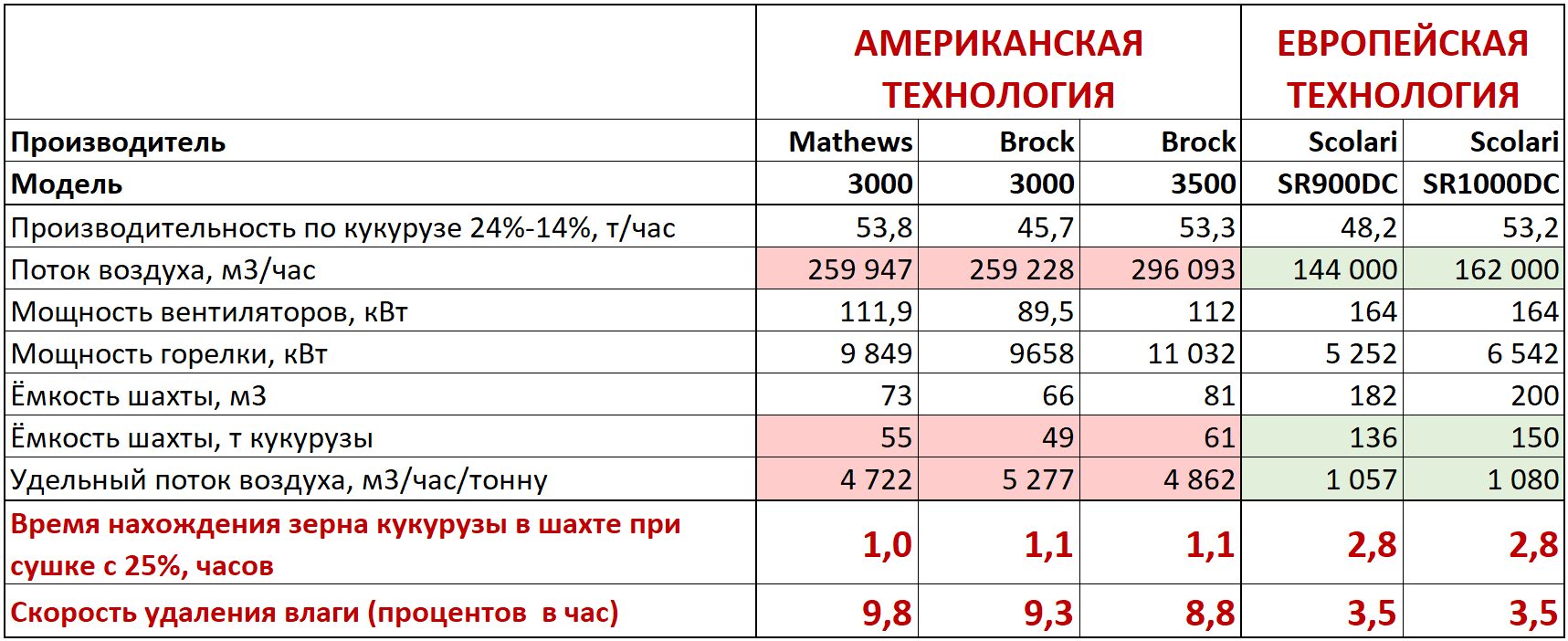
Sorghum is smaller than corn, fills space more densely, and forms a bed with higher aerodynamic resistance. This means that with the same fan and the same bed depth, less air will pass through a sorghum bed than through a corn bed.
In practice this affects everything:
- the bed depth in a bin dryer may need to be reduced;
- the fan must deliver sufficient static pressure;
- drying in a deep bed proceeds more slowly;
- the risk of non-uniform moisture increases;
- wet grain cannot be left without aeration for long;
- at the design stage, airflow rate matters as much as temperature.
Engineering explanation: why small-kernel grain is harder to aerate
Air passes through a grain bed via the free channels between kernels. In large-kernel grain these channels are larger. In small, round-kernelled grain the void spaces are smaller, the bed is denser, and the resistance to airflow is higher.
If a dryer is designed for corn, that does not mean it will automatically deliver the same airflow through sorghum at the same bed depth. The fan may be running, the air temperature may be correct, but less heat will actually reach the grain because insufficient air is passing through the bed.
For sorghum it is therefore not sufficient to assess the regime solely by burner temperature or air temperature. Airflow rate, bed resistance, and final moisture uniformity must all be taken into account.
Sorghum Drying Temperature: How to Read Recommendations Correctly
Guidelines for sorghum cite a wide range of temperatures. This is normal once the context is understood. The table below is not a universal operator instruction — it shows why the same question has different answers.
| Scenario | Regime guideline | What matters |
|---|---|---|
| Seed sorghum | gentle regime, air temperature guideline approx. 40–43 °C / low-temperature drying | preserve germination |
| Food-grade sorghum / for milling | moderate regime, more cautious than for feed | do not impair food quality |
| Commercial grain | regime selected according to moisture content, dryer type, and storage requirements | balance of quality and throughput |
| Feed sorghum | higher air temperatures acceptable in high-airflow dryers (guideline up to approx. 82–93 °C hot-air temperature) | do not impair feed value or produce non-uniformity |
| Bin drying / deep bed | lower temperature, shallower bed, fan static pressure is critical | sorghum resists airflow more than corn |
Important: these figures cannot be transferred mechanically between dryers. A high air temperature in one dryer may be safe with high airflow and short contact time, but dangerous in another dryer where part of the grain overheats or air distribution is uneven.
Air temperature, grain temperature, and heat quantity — what is the difference
Air temperature is only one parameter. It shows how hot the air supplied to the dryer is, but does not show how much heat has actually been transferred to the grain.
The amount of heat transferred depends on air temperature, airflow rate, grain moisture content, contact time, bed depth and resistance, dryer design, mixing, recirculation, and tempering.
For sorghum this is especially important because of the high bed resistance. Temperature can be increased, but if air passes poorly through the mass, part of the grain will remain wet while another part may overheat. Correct dryer setup is therefore not just about degrees, but about the combination of temperature, airflow, and time.
Sorghum Moisture: Harvest, Drying, and Storage
Sorghum may reach physiological maturity at high moisture content. It gradually dries down in the field, but waiting too long is not always advantageous: losses can occur from shattering, lodging, birds, rain, uneven moisture, and late harvest. For practical regime selection it is useful to distinguish three moisture levels.
| Stage | Guideline | Comment |
|---|---|---|
| Maturation / early harvest | approx. 20–30 % | may require artificial drying |
| Commercial storage | approx. 13–13.5 % | typical safe storage target |
| Long-term storage / seed | approx. 12 % or lower | higher batch stability requirements |
If sorghum is harvested wet, drying or active aeration must be organised promptly. Wet sorghum must not be left for any length of time in a pile, transport, receiving hopper, or silo without air movement.
Why wet sorghum must not be delayed before drying
Wet grain continues to respire. This releases heat, and in the dense sorghum mass air passes less readily than through larger-kernel grain. If the grain is warm and wet, the temperature inside the pile can rise rapidly.
Consequences of delay:
- self-heating;
- mould;
- sprouting;
- increased dry-matter losses;
- deterioration of food and feed quality;
- mycotoxin risk under adverse conditions.
For wet sorghum, logistics organisation is therefore critical: intake, cleaning, temporary storage, aeration, and feeding into the dryer must all work without bottlenecks.
Feed Sorghum, Food-Grade Sorghum, and Seed Sorghum — These Are Different Regimes
Feed Sorghum
Allows more intensive regimes: the goal is to bring the grain to safe moisture quickly while preserving feed value. Higher air temperatures are possible if the dryer delivers sufficient airflow and moves the drying agent uniformly through the bed. Even here, however, design matters: with uneven air distribution part of the grain will overheat while part remains wet.
Food-Grade Sorghum
Used for groats, flour, gluten-free products, and processing. The regime is more cautious: overheating impairs colour, flavour, functional properties, and nutritional quality. Variety matters too — tannin and tannin-free sorghum differ in nutritional value, bitterness, bird resistance, and processability.
Seed Sorghum
Dried gently: the primary objective is not maximum throughput but preservation of germination capacity and germination energy. Control is required not only over the air but also over the actual grain temperature, the rate of moisture removal, and the uniformity of the batch.
Tannin sorghum: does it affect drying?
Tannins are compounds that can impart bitterness to the grain and reduce palatability for birds. This is why certain varieties are called bird-resistant. As the grain matures, tannin content may decrease.
For the drying regime, tannin content is not normally the primary parameter in the way that moisture content or intended use is. For food-grade sorghum, however, it is an important quality factor: the processor may need to know whether the sorghum is high-tannin or tannin-free, what the kernel colour is, and how suitable it is for flour or groats production.
The temperature regime in this article is not built around tannins alone. However, the intended use of the grain and the processor's requirements can be covered in an equipment selection questionnaire.
Which Grain Dryers Are Suitable for Sorghum
Sorghum requires grain dryers that can handle small-kernel grain, deliver sufficient airflow, control temperature, and allow the regime to be matched to the intended use of the batch. The series we consider as relevant solutions are Ravaro RR/RC, Agrex AGD/AGD-F, and Alvan Blanch DF/BD. Exact temperature regimes for sorghum are determined individually rather than taken as a nameplate standard.
Ravaro RR — Batch Drying with Recirculation and Tempering
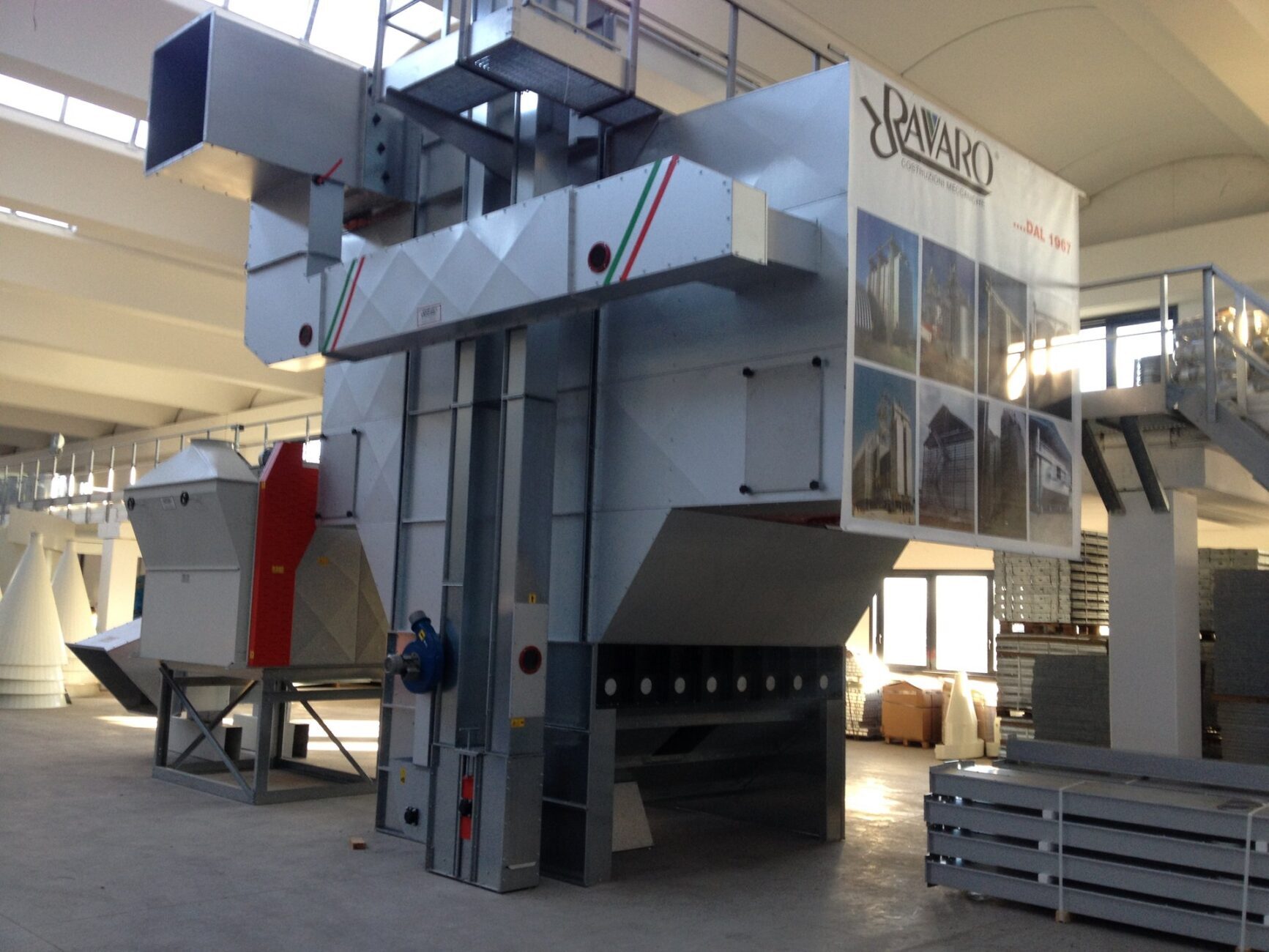
The Ravaro RR is suited to farms that need flexibility across crops and batch sizes. For sorghum, the recirculation and tempering capability is particularly valuable: the grain has time to equalise moisture within the batch, and the regime can be run more gently than in a purely continuous-flow line.
This logic is especially attractive for farm-scale operations, seed lots, and situations where different crops need to be dried within the same season.
Ravaro RC — Continuous-Flow Drying for High Volumes
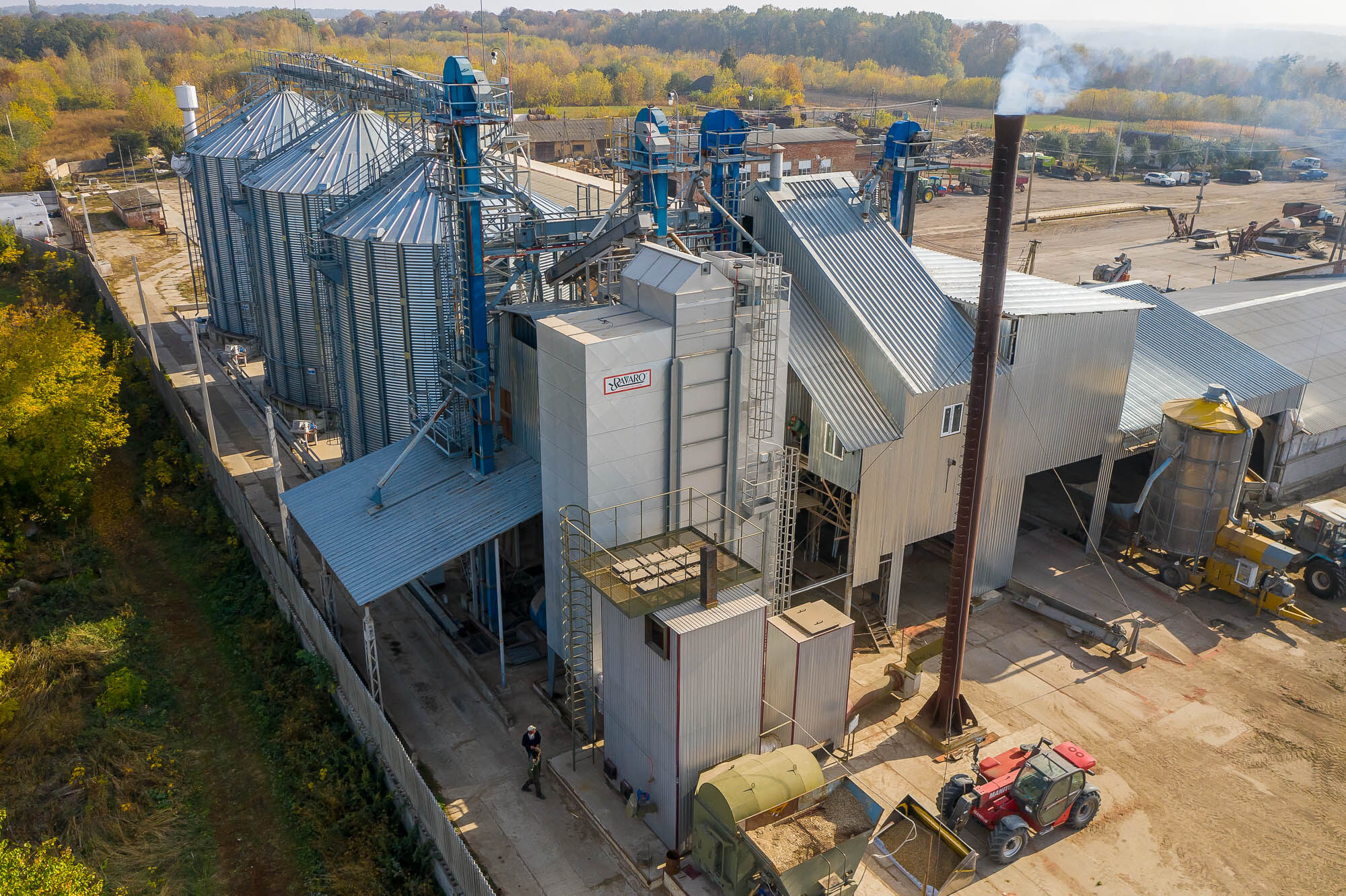
The Ravaro RC is the more logical choice for commercial and feed sorghum where throughput and continuous operation are the priorities. In a continuous-flow dryer, airflow rate, temperature, and discharge must be configured with particular care because sorghum packs more densely and is harder to aerate.
Agrex AGD / AGD-F — Mobile and Stationary Mixed-Flow/Recirculating Solutions
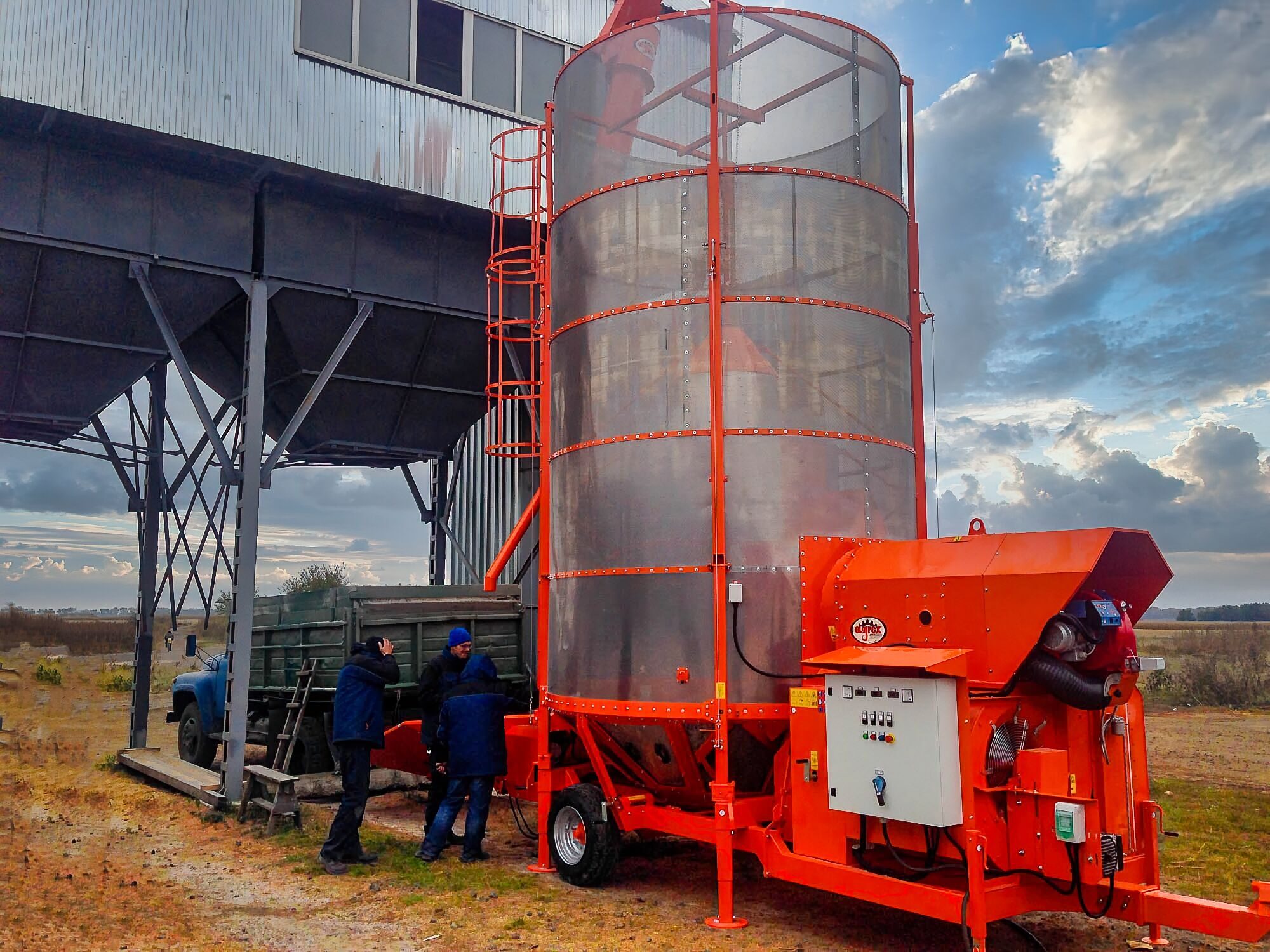
The Agrex AGD and AGD-F can be considered for farms that need a self-contained or compact grain dryer. For sorghum it is important to verify the specific model, loading volume, temperature control system, fans, and the ability to configure the dryer for small-kernel grain.
Agrex AGD and AGD-F grain dryers are designed to handle sorghum among other crops. The specific temperature regime for your batch is determined individually — based on moisture content, intended grain use, and the model selected — to achieve the required throughput without overheating or non-uniformity.
Alvan Blanch DF — Double-Flow Continuous-Flow Dryer
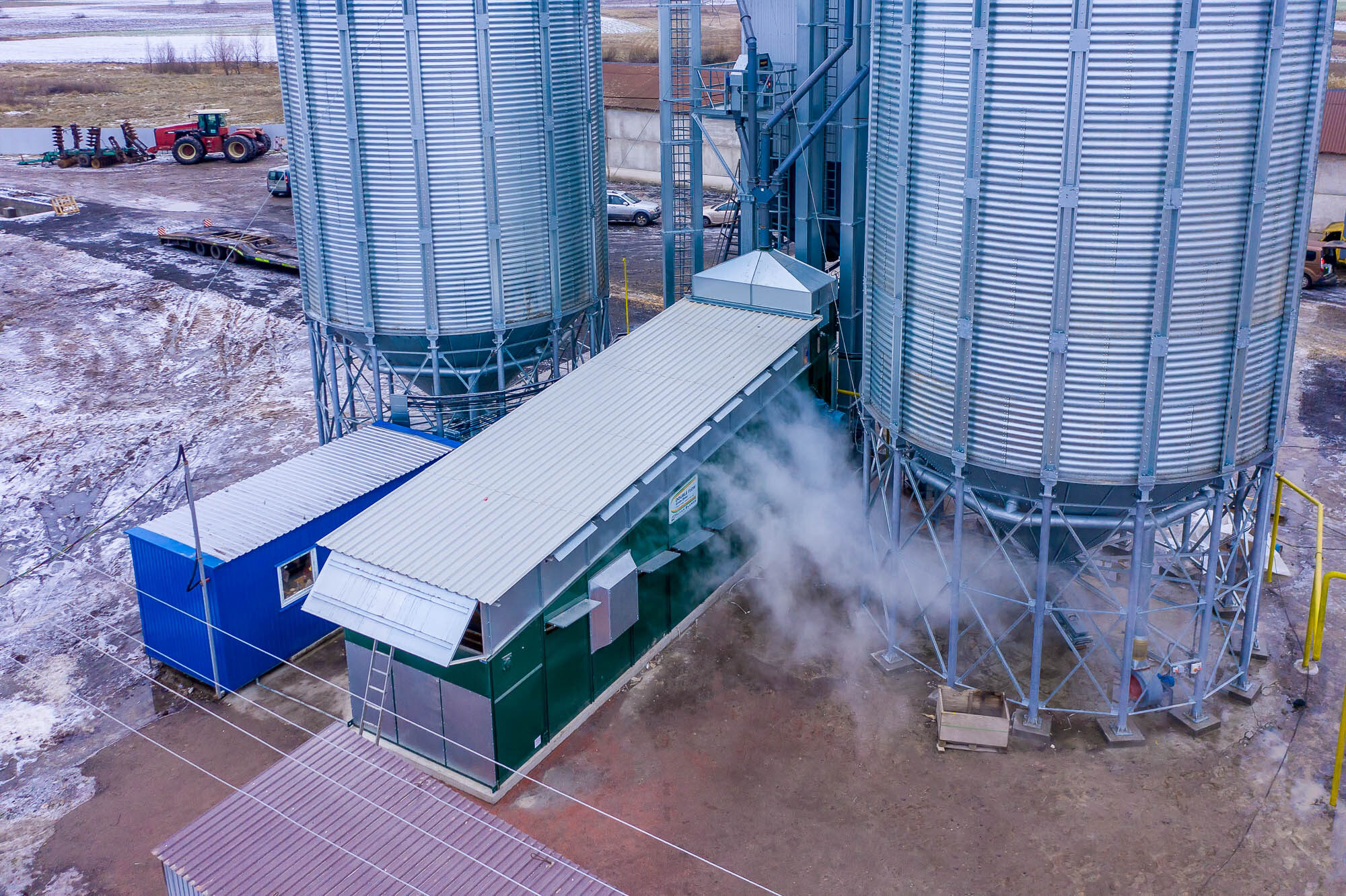
The Alvan Blanch DF is attractive for sorghum thanks to its double-flow principle, grain mixing, and more uniform drying compared with simple cross-flow. For small-kernel grain this matters: uniform air distribution and bed inversion reduce the risk of one portion of the batch being over-dried while another remains wet.
The Alvan Blanch DF handles sorghum alongside other cereal crops. The exact temperature regime for a specific sorghum batch is set individually, taking into account the intended grain use and its sensitivity to overheating.
Alvan Blanch BD / BD-RA — Batch and Low-Temperature Logic
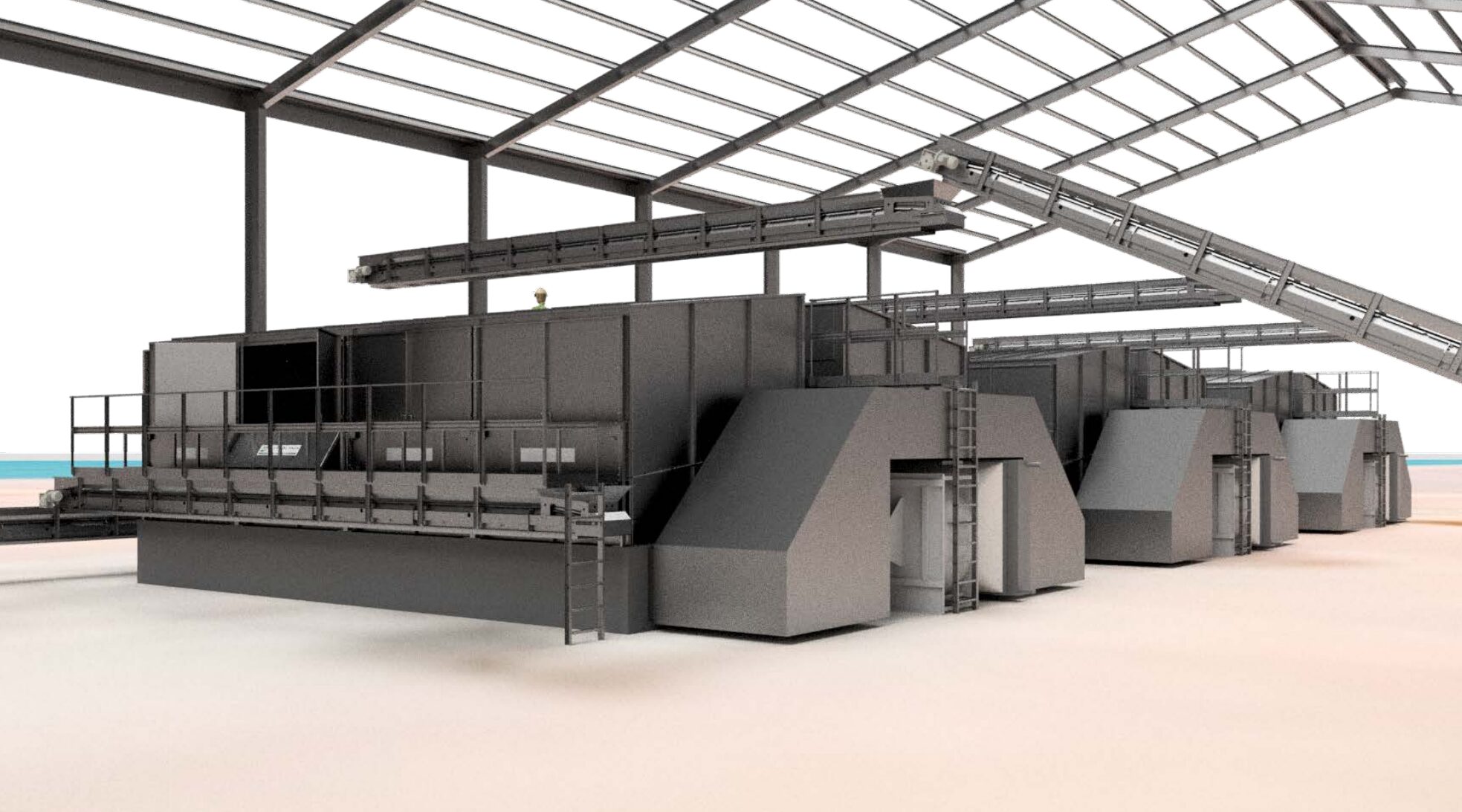
The Alvan Blanch BD is suited to batch grain drying. Variants operating at gentler regimes can be attractive for high-value crops, food-grade sorghum, and seed sorghum. For seed lots, low temperature, uniformity, and monitoring of actual grain heating are especially important.
Why tempering, mixing, and uniformity are especially important for sorghum
Sorghum is small, dense, and can create uneven airflow resistance. If air finds a path of least resistance, part of the bed may receive more heat while another part receives less. This produces a spread of exit moisture content.
Tempering and recirculation help equalise moisture within individual kernels and across the batch. Mixed flow, bed inversion, or repeated passes through the drying zone reduce the risk of localised overheating and under-drying.
For food-grade and seed sorghum this is especially important: simply "applying more temperature" for the sake of throughput is not acceptable.
Comparison of Suitable Solutions
| Solution | When to choose | Advantages for sorghum | Limitations / what to verify |
|---|---|---|---|
| Ravaro RR | batch drying, farm-scale and mid-scale operations | recirculation, tempering, crop flexibility, gentle handling of small-kernel grain | lower continuous throughput compared with large continuous-flow lines |
| Ravaro RC | continuous-flow drying of commercial and feed sorghum | stable throughput, higher capacity | requires careful airflow configuration for the dense sorghum bed |
| Agrex AGD / AGD-F | mobile or compact stationary drying | self-contained operation, ease of deployment, handles multiple crops | verify sorghum regime by model; check configuration for small-kernel grain |
| Alvan Blanch DF | continuous-flow drying of various cereals | uniform double flow, grain mixing | verify sorghum regime against specification rather than transferring settings from wheat/corn |
| Alvan Blanch BD / BD-RA | batch and low-temperature drying of high-value grain | gentle regime, heat control, suitable for food-grade and seed sorghum | lower throughput compared with continuous-flow lines |
Why Sorghum Cannot Be Dried on Temperature Alone
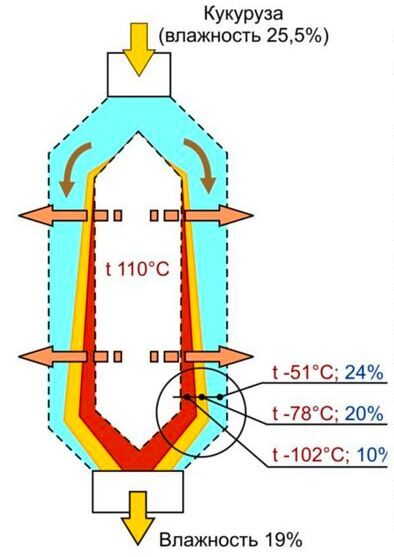
For sorghum, air temperature alone can be misleading. For example, a relatively moderate temperature can be set, but if the bed is too deep and the fan cannot deliver the required airflow, the process will be slow and non-uniform. Conversely, a higher temperature may be acceptable in a high-airflow dryer for feed grain, if the airflow is sufficient, the contact time is short, and the grain temperature does not exceed the safe limit.
The sorghum regime is therefore best described by four parameters:
- air temperature;
- airflow rate and static pressure;
- grain temperature / batch quality;
- intended use of the grain.
Why high air temperature does not always mean overheated grain
Wet grain uses most of the heat it receives to evaporate water. While evaporation is active, the grain heats up more slowly than dry material. This is especially important at the start of the process.
But as moisture content falls, the grain begins to heat up more quickly. The risk of overheating is therefore highest at the end of drying, particularly if the dryer does not have separate zones, does not monitor grain temperature, and lacks proper cooling.
For sorghum this logic operates alongside the aerodynamics of the bed: if airflow is insufficient, evaporation is slower and heat distribution becomes less uniform.
Bin Drying and Aeration of Sorghum
Bin drying and aeration are possible, but sorghum has a constraint: the bed must be shallower than for corn, and the fan must have sufficient static pressure. If sorghum is loaded to the same depth as corn, the air may not pass through the mass in the required volume.
Practical conclusions:
- do not use the corn bed depth as a direct norm for sorghum;
- verify bed resistance and actual airflow;
- do not leave wet sorghum without aeration;
- clean grain of dust and foreign matter;
- monitor the temperature of the mass in the silo;
- for long-term storage, dry to a lower moisture content.
Risks of Incorrect Sorghum Drying
Self-Heating
The primary risk with wet sorghum is rapid temperature rise within the mass when drying is delayed or aeration is inadequate. Because of the dense kernel packing, heat and moisture are removed from the bed less readily.
Mould and Mycotoxins
If wet grain is stored without sufficient ventilation, the risk of mould growth and batch safety deterioration increases. For food and feed applications this is critical.
Sprouting
At high moisture content and with drying delays, the grain may begin to sprout. This impairs commercial quality and reduces the value of the batch.
Loss of Seed Germination
Seed sorghum must not be dried as feed sorghum. Overheating damages the embryo and reduces germination capacity even when the kernel appears normal on the outside.
Non-Uniform Moisture
When air passes non-uniformly through the bed, part of the grain exits over-dried while part remains wet. Zones of elevated moisture and self-heating develop in the silo.
Why cleaning sorghum before drying matters
Sorghum can contain dust, fine impurities, panicle particles, leaves, and damaged kernels. These impurities impede airflow and increase the risk of non-uniform drying.
Pre-drying cleaning helps to:
- reduce bed resistance;
- improve airflow uniformity;
- reduce dust in the dryer and aspiration system;
- lower the risk of self-heating hotspots;
- achieve more consistent final moisture content.
Economics of Sorghum Drying
Sorghum is generally less fuel-intensive than very wet corn, but it can be more demanding to dry in terms of logistics because of its dense packing and airflow resistance. If the dryer cannot deliver the required airflow, the process is prolonged, energy consumption rises, and quality becomes less consistent.
The economics depend on initial and final moisture content, bed depth, dryer type, airflow rate, fuel, the need for cooling, cleaning quality, and food-grade or seed-grade quality requirements.
For gas-fired dryers, heat recovery and recirculation can reduce fuel consumption. For sorghum, however, a dryer should not be chosen solely on the basis of gas savings: first it must be confirmed that it delivers uniform airflow for small-kernel grain.
What You Need to Know to Select a Grain Dryer for Sorghum
Saying "I need a dryer for sorghum" is not sufficient for a preliminary equipment calculation. The following data must be collected:
| Question | Why it matters |
|---|---|
| What is the initial moisture content of the sorghum? | determines the volume of water to be removed |
| What final moisture content is required? | storage, sale, processing, and seed all require different targets |
| What is the intended use of the grain? | feed, food, milling, and seed all require different temperature limits |
| What throughput is required, t/h? | determines dryer type and thermal capacity |
| What type of storage follows drying? | silo, flat store, storage duration, aeration |
| Is there pre-drying cleaning? | impurities impair airflow and uniformity |
| What fuel is available? | gas, diesel, biomass, heat generator, heat exchanger |
| Are there processor requirements? | food-grade sorghum, tannin content, colour, moisture, cleanliness |
| Is this a seed lot? | requires a gentle regime and germination monitoring |
With this data it is possible to select not an abstract "sorghum dryer" but a specific configuration — mobile, batch, or continuous-flow — taking into account the aerodynamics of small-kernel grain.
Frequently Asked Questions About Sorghum Drying
At what temperature should sorghum be dried?
There is no single universal temperature. Seed sorghum requires a gentle low-temperature regime. Food-grade sorghum and grain for milling must be dried cautiously. Feed sorghum permits higher air temperatures if the dryer delivers sufficient airflow and uniformity.
To what moisture content is sorghum dried for storage?
The typical target is 13–13.5 % for commercial storage. For long-term storage and seed lots, approximately 12 % or lower is often required. The exact level depends on storage duration, temperature, aeration, and buyer requirements.
Why does sorghum need to be stored drier than corn?
Sorghum is smaller and packs more densely. Air passes through the bed less readily, so wet zones within the mass are harder to cool and finish-dry. This makes sorghum more sensitive to inadequate aeration.
How does drying sorghum differ from drying corn?
The key difference is bed aerodynamics. Sorghum is denser than corn, offers greater resistance to airflow, and requires more careful fan sizing, bed depth calculation, and drying time determination.
How quickly must drying of wet sorghum begin?
If sorghum has been harvested wet, drying or active aeration must begin as quickly as possible. Wet, warm sorghum must not be left without air movement because it can self-heat, develop mould, and sprout.
Can sorghum be dried in an ordinary grain dryer?
Yes, provided the dryer is designed for small-kernel grain, delivers sufficient airflow, and allows a gentle or intensive regime to be set according to the intended use of the batch. The corn regime cannot simply be applied without verifying airflow and final moisture content.
Which grain dryers are suitable for sorghum?
Ravaro RR/RC, Agrex AGD/AGD-F, and Alvan Blanch DF/BD can all be considered for sorghum. For seed and food-grade sorghum, gentler regimes, tempering, recirculation, and precise temperature control are preferred.
Do tannins affect the sorghum drying regime?
Tannins are important for food and feed quality, but are not normally the primary dryer setting parameter. The temperature regime depends first of all on the intended use of the grain, moisture content, dryer type, and quality requirements.
Can seed sorghum be dried at high temperature?
No. Seed sorghum requires gentle drying. Overheating can reduce germination capacity and germination energy even when the kernel appears normal on the outside.
Ready to Discuss Drying Your Sorghum?
Describe the intended grain use, initial and final moisture content, volumes, quality requirements, available fuel, and storage arrangement — and we will select the dryer type, temperature regime, thermal configuration, and indicative throughput for your application. Contact us in the way most convenient for you.
Still Have Questions? Contact Us!
By Phone
WhatsApp: +90 (536) 452-1184By E-mail
Our address: info@finpro.engineering
Related products
Our Products
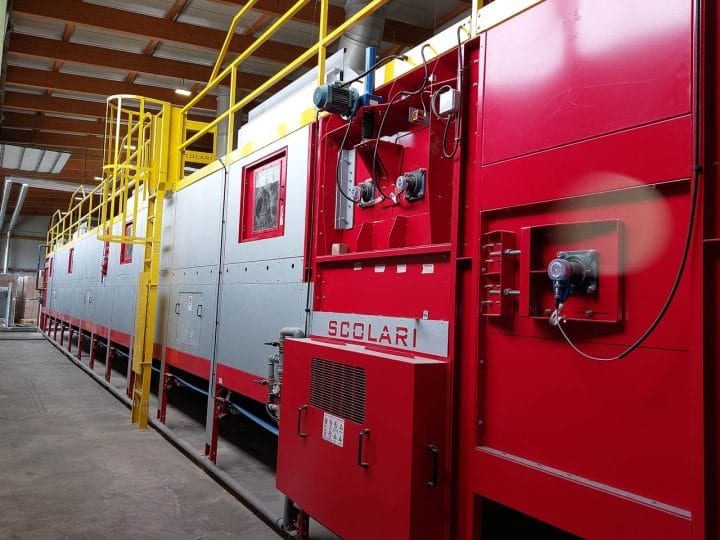
Universal Dryers
These dryers can be customized to dry any industrial or agricultural product you may require. Depending on the specific product and its moisture content, the dryers can be equipped with mixers, movable floors, vibrating floors, and other advanced technologies.
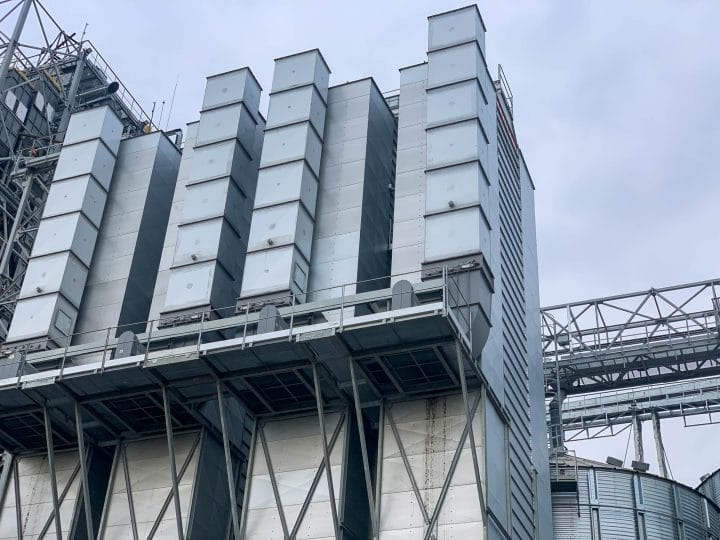
Grain Dryers
Authorized representative for top European grain dryer manufacturers like Alvan Blanch, FAO, and Agrex. Offering a full range of advanced drying solutions for agriculture.
Contact Us
If you are interested in purchasing any of our products, need a price quotation, or have any questions, comments, or suggestions, please do not hesitate to contact us via our contact form, by phone, or by email.
- WhatsApp: +90 (536) 452-1184
- E-mail: write to us
Our phones:
- Kazakhstan: +7 (747) 095-1626
- Moldova: +373 (22) 011-214
- Romania: +40 (31) 229-8484
- Türkiye: +90 (536) 452-1184 (English)
- Ukraine: +380 (67) 111-6668