
Drying Vetch: Green Mass, Hay and Seed

Vetch is a forage legume crop, but "drying vetch" can mean three different tasks. In one case, the green mass or vetch-oat mixture is dried for hay. In another, vetch seeds are dried for sowing. In a third, vetch grain is dried as a protein feed. These scenarios cannot be conflated: they involve different moisture levels, different risks, and different dryers.
The main practical topic for the forage direction is the vetch-cereal mixture. Vetch is often grown together with oats, barley, or another support crop because its stems are climbing, lodging, and tend to tangle. At drying time this creates a problem: the cereal may already be ready for baling while the vetch remains green and moist. Waiting for the vetch means the cereal overdries and sheds its leaf. Focusing only on the cereal means wet vetch ends up in the bale — a risk of self-heating and mould.
Key takeaway: "Drying vetch" covers three distinct products. Vetch-cereal hay is dried gently, to a moisture content of around 12–20 % (lower for dense bales), preserving the leaf and protein. Seed vetch is brought down more carefully, to below 9 % moisture, to preserve germination. Feed grain is dried as a legume grain crop.
Quick Answer
Vetch for hay is dried as a legume forage: gently, preserving the leaf, protein, and carotene. For hay, the target moisture is roughly 12–20 % depending on bale type and storage conditions; for dense bales it is advisable to keep moisture lower. Seed vetch is dried separately and considerably more carefully: the storage benchmark is below 9 % moisture, and the regime must preserve germination. Vetch feed grain is dried as a legume grain crop, not as green mass.
Our Dryers for Vetch
Vetch can be green mass or vetch-cereal hay, seeds for sowing, or feed grain. For green mass and hay, conveyor dryers with gentle stirring and container or stationary forage solutions are suitable, and drum dryers for large volumes. Seeds and feed grain require separate regimes described below. The differences lie not in basic applicability but in temperature regime, mechanical gentleness, and target moisture.
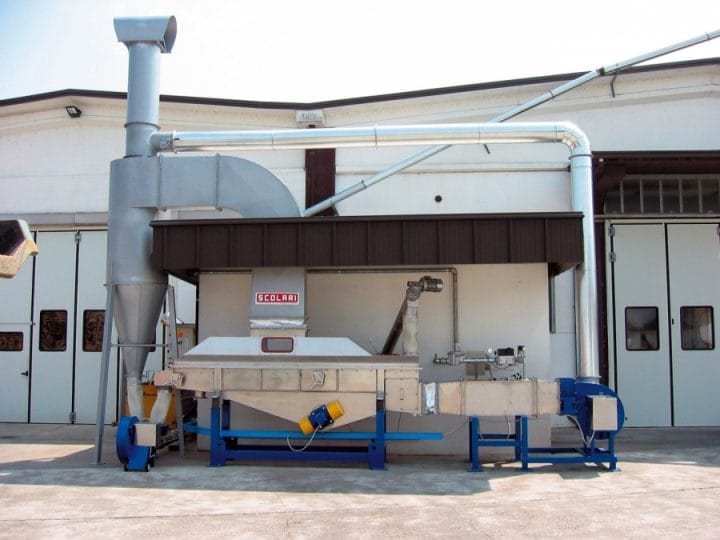
Scolari Vibratory Dryers
Italian Scolari vibratory dryers create an artificial boiling layer of the material being dried, which allows it to be blown through from all sides and effectively remove surface moisture. Suitable for materials with surface moisture, granulated products, or flowing powders.
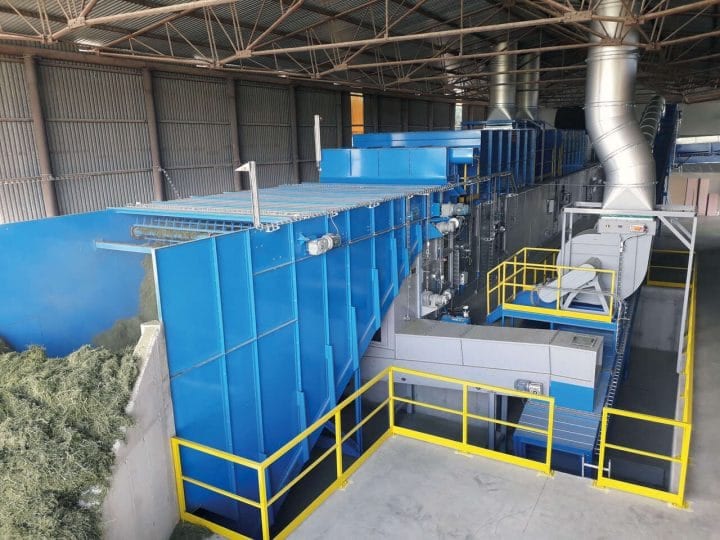
Scolari Dryer With Movable Conveyor Belt
Horizontal dryers feature perforated steel or plastic movable floors designed for drying various materials. Airflow can be configured from top to bottom or vice versa.
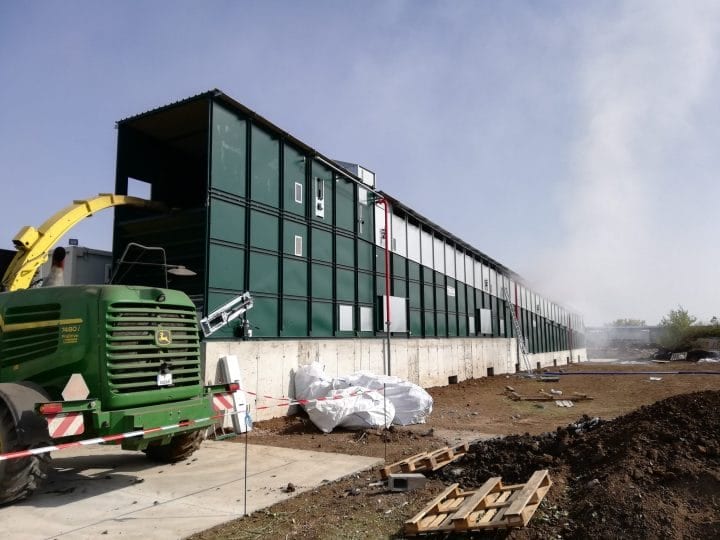
Alvan Blanch Conveyor Dryer
British universal conveyor dryers for non-grain agricultural and industrial products. Thanks to their horizontal design, built-in distribution and stirring systems, they can dry a wide range of materials.
Identifying What Needs to Be Dried
Before choosing a regime, the product must be identified. For vetch this is especially important.
Vetch-oat or vetch-cereal hay — the main forage scenario. The entire green mass is dried: stems, leaves, and the cereal component. The goal is mould-free feed with good palatability and preserved protein.
Seed vetch — sowing material. Here the key criterion is germination. Temperature, mechanical handling, and final moisture must all be gentle. Feed-drying regimes cannot be applied here.
Vetch feed grain — grain as a protein feed. This is closer to drying legume crops: gentle mechanics, moderate heat, no over-drying, and no damage to the seed coat.
Why a single temperature table cannot cover all vetch products
A single figure would be misleading. Vetch-oat hay is a moist forage mass with leaves and stems. Seed vetch is live sowing material where overheating can destroy germination. Feed grain is a legume crop destined for storage and feed. The scenario must be chosen first; only then can the temperature, moisture target, and dryer type be determined.
Vetch-Oat Hay: The Main Challenge
Vetch is rarely dried on its own. It is most commonly a mixture with a cereal, and it is precisely the mixture that creates a technological conflict. The cereal supports the upright mass, makes harvesting easier, and increases total feed yield, but it does not dry at the same rate as vetch.
Vetch stems dry more slowly than leaves. Over-drying causes the leaf to shatter, and with it a significant portion of the feed value is lost. Under-drying means wet vetch in the bale begins to self-heat, develop mould, and deteriorate. In addition, vetch climbs, tangles, and can clump together under rough agitation.
In practice, this means that for vetch-oat hay it is not enough to look only at the appearance of the windrow. The moisture of the legume component must be checked specifically, and the uniformity of drying across the mixture must be understood.
Target Moisture for Vetch Hay
For hay from vetch and vetch-cereal mixtures, the general target range is approximately 12–20 % moisture. The upper limit depends on bale type and storage conditions. The larger and denser the bale, the lower the moisture should be at pressing, because a large bale dissipates heat and moisture more slowly.
The following practical framework can be applied:
| Product | Moisture target | Notes |
|---|---|---|
| Vetch-cereal hay in small bales | up to 18–20 % | acceptable only with good storage conditions and heat monitoring |
| Large round or big square bales | lower, often around 15–18 % | the denser the bale, the more conservative the upper limit |
| Long-term storage and dense packaging | around 12–15 % | lower risk of mould and self-heating |
| Vetch seeds | below 9 % | a different product requiring a different regime |
If hay moisture remains high, micro-organisms can develop inside the bale, temperature rises, and mould and off-odours appear. In severe cases, dangerous self-heating is possible.
Why Drying Speed Matters
Immediately after cutting, the green mass continues to respire. While moisture is high, losses of sugars and nutrients continue. The goal of field drying and finish-drying is therefore to pass through the wettest stage as quickly as possible without over-drying the leaf.
For legume forages this is always a compromise: dry the stem faster without breaking the leaf. Vetch makes the task more complex because its stems climb, tangle, and in a mixture with cereal dry unevenly.
What happens when vetch is over-dried or under-dried
When over-dried, the leaf becomes brittle and shatters. Loss of leaf means loss of protein and feed value. When under-dried, the hay feels heavy, the bale self-heats, mould and off-odours develop. For the vetch-cereal mixture the most hazardous situation is when the cereal in the windrow is already dry while the vetch inside is still wet.
Drying Temperature for Vetch Hay
There is no single universal temperature for vetch hay. Everything depends on the technology.
In field drying, temperature is not set by equipment. What matters is cutting timing, windrow width, number of tedding passes, weather, and uniformity of drying across the mixture.
In bale or wilted-mass finish-drying with air, a gentle regime is used. In several practices, bales with elevated moisture are finish-dried with warm air at around 30–40 °C, bringing the mass down to a safe storage moisture. This is not aggressive drying but careful aeration.
In conveyor drying of green mass, the forage paradigm applies: gentle regime, careful mixing, preservation of leaf and protein. Conveyor dryers for forage crops operate significantly more gently than drum dryers and are better suited where colour and feed value must be retained.
In drum drying, the heat carrier temperature is much higher. This technology may be justified for grass meal or low-cost bulk feed, but for quality legume hay it is harsher: the risk of colour loss, leaf loss, and nutrient degradation is greater.
Important: the air temperature inside the dryer is not the same as the product temperature. Wet mass is protected by evaporative cooling, but if over-dried or handled roughly the leaf and fine plant parts quickly lose quality.
Seed Vetch: A Separate Regime
Seed vetch is not hay. The goal here is to preserve germination and seed viability. For vetch seeds, gentle post-harvest drying, good ventilation, and a low final moisture are essential. The benchmark for seed storage is below 9 % moisture, and the regime must preserve germination.
Vetch has one additional characteristic — hard seed coat (hardseededness). This is a condition in which the dense seed coat restricts water absorption. Drying, degree of maturity, and subsequent storage can all affect seed dormancy and germination. Seed vetch must therefore not be dried aggressively, and its regime cannot be merged with that of feed grain or hay.
Gentle solutions are appropriate for seed vetch: chamber, cabinet, batch, or belt dryers with a mild regime and good ventilation. What matters is not speed at any cost, but preservation of germination.
Why the moisture target for vetch seeds is lower than for hay
Hay is a forage mass where permissible moisture depends on bale type and storage. Seeds are live sowing material. If left too moist, they can lose germination, self-heat, and store poorly. Seeds therefore require a lower and more stable moisture level than ordinary hay.
Vetch Feed Grain
Vetch grain is used as a protein feed. From a drying perspective it is no longer green forage mass but a legume crop. The logic is closer to drying peas, beans, chickpeas, and other legumes: gentle mechanics, moderate heat, no over-drying, and no damage to the seed coat.
Batch, continuous-flow, and gentle grain dryers configured correctly for a legume crop may be suitable for vetch feed grain. But this is a separate scenario. The regime for vetch-oat hay cannot be applied to grain, and vice versa.
Which Dryers Are Suitable for Vetch
For vetch-oat hay and green mass, the main direction is conveyor and belt dryers with gentle agitation:
- Scolari A — conveyor dryer with a stirrer for hay, straw, and forage;
- Scolari 2T / 3T — multi-level conveyor solutions with heat recovery for high volumes;
- Alvan Blanch CD — conveyor dryer for grasses, alfalfa, straw, and other biomass;
- Herbas container / stationary — solutions for grasses and forage biomass;
- Starmax drum dryer — drum alternative for bulk grass meal, but with more intensive thermal and mechanical impact.
For seed vetch, gentler solutions are required:
- Scolari C — chamber/cabinet type for sensitive batches and seed material;
- Scolari A — with a gentle regime and correct settings;
- Alvan Blanch BD / BD-RA — batch solutions for valuable and sensitive crops.
For vetch feed grain, grain and legume dryers can be considered:
- Ravaro RR / RC;
- Agrex AGD / AGD-F;
- Alvan Blanch DF / BD.
Dual-zone grain dryers are not highlighted in this article: they are not the primary recommendation for vetch.
What Matters in a Dryer for Vetch-Cereal Hay
Gentle agitation. Vetch tangles and can clump, so aggressive mixing worsens the structure of the mass and increases leaf losses.
Uniform airflow. It is important that air passes through the layer not only via open channels but also through denser zones where vetch has compacted into a mass.
Temperature control. The goal is to finish-dry, not to scorch. A gentle regime is better for feed quality.
Tolerance for long fibre. The less the product is chopped, the better the chances of preserving leaf and protein.
Heat recovery. For high-volume forage mass, energy consumption matters, especially in industrial finish-drying and where fuel costs are significant.
Common Mistakes When Drying Vetch
The first mistake is assuming that a vetch-oat mixture dries like ordinary cereal hay. Vetch can remain wet when the cereal is already dry.
The second mistake is baling by windrow appearance alone. Wet zones can remain inside the mass, especially where vetch has tangled.
The third mistake is over-drying to a brittle state. This eliminates the moisture risk but increases leaf and protein losses.
The fourth mistake is drying seeds on a forage regime. For seed vetch, germination is paramount, so the regime must be gentle.
The fifth mistake is treating feed grain and green mass as the same product in one technical calculation. They are different products requiring different dryers.
What You Need to Know for Equipment Selection
To size a dryer for vetch, several questions need to be answered:
- What is being dried: vetch-cereal hay, seeds, or feed grain?
- What is the proportion of vetch in the mixture and which cereal component is used?
- What are the initial and target moisture levels?
- Is the product loose green mass, a bale, chopped, seed, or grain?
- What volume needs to be dried per day or per hour?
- What is the priority: maximum protein quality, preservation of germination, or simply stable storage?
- What fuel is available and is heat recovery required?
Frequently Asked Questions About Vetch Drying
To what moisture level should vetch be dried?
It depends on the product. Vetch-cereal hay is typically dried to around 12–20 % depending on bale type and storage. Vetch seeds for storage require significantly lower moisture — the benchmark is below 9 %. Feed grain is treated separately, as a legume crop.
Why does vetch-oat hay dry unevenly?
Because vetch and the cereal have different structures. The cereal may reach baling condition quickly while vetch in the same mass remains wet. In addition, vetch climbs and clumps, which worsens drying uniformity.
What is the correct drying temperature for vetch?
For hay it is more accurate to speak of technology rather than a single temperature. Conveyor and ventilation solutions work gently and are suited to preserving feed quality. Drum dryers work more intensively and can reduce colour and nutritional value. For seed vetch an even gentler regime is needed.
Can vetch be dried in a grain dryer?
If the subject is vetch feed grain — yes, it can be treated as a legume crop. If the subject is vetch-oat hay or green mass — no, this is forage biomass and requires conveyor, belt, ventilation, or drum forage solutions. If the subject is seeds for sowing — a gentle seed regime is needed.
Why does vetch shed its leaf?
The leaf dries faster than the stem. If the mass is over-dried or agitated roughly, the leaf becomes brittle and shatters. For legume forage this is especially harmful because the leaf contains a significant portion of the protein and nutrients.
What is hard seed coat (hardseededness) in vetch?
It is a condition in which the seed coat absorbs water poorly. Such seeds may store well for a long time but germinate less uniformly. For seed vetch, maturity, drying, storage conditions, and possible seed preparation all need to be taken into account.
Conclusion
Vetch is a complex crop from a drying perspective because a single name covers three distinct products. Vetch-oat hay is dried as a legume forage: gently, preserving the leaf and protein. Seed vetch is dried even more carefully to preserve germination and bring moisture down to a safe storage level. Vetch feed grain is dried as a legume grain crop.
For green mass and vetch-cereal hay, the primary recommendation is conveyor and belt dryers with gentle agitation and temperature control. For seeds — chamber, batch, or gentle dryers. For feed grain — legume grain dryers. The right choice starts not with the temperature but with the question: exactly what form of vetch needs to be dried?
Select a Dryer for Vetch
Describe the product: vetch-cereal hay, seeds, or feed grain; provide the moisture content, volume, product form, and quality requirements. We will match the drying technology and equipment to your application.
Still Have Questions? Contact Us!
By Phone
WhatsApp: +90 (536) 452-1184By E-mail
Our address: info@finpro.engineering
Related products
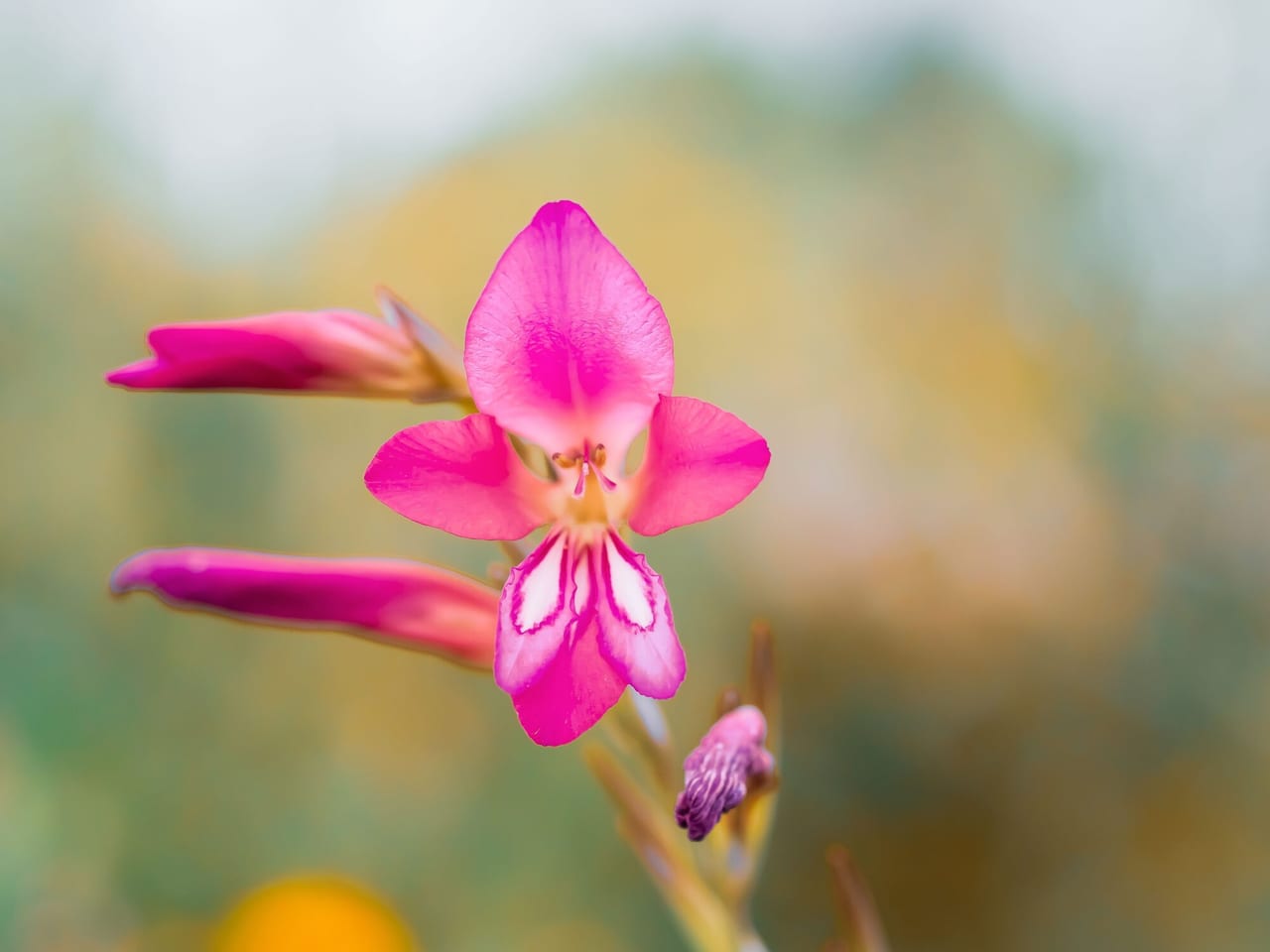
Sainfoin
A valuable forage crop of arid regions; it is important to preserve the leaf and quality.
Sudan grass / sorghum-sudangrass hybrid
A high-yield forage crop; overlaps with green mass and haylage.
Timothy grass
A cereal forage grass yielding export-quality hay; uniform, gentle drying.
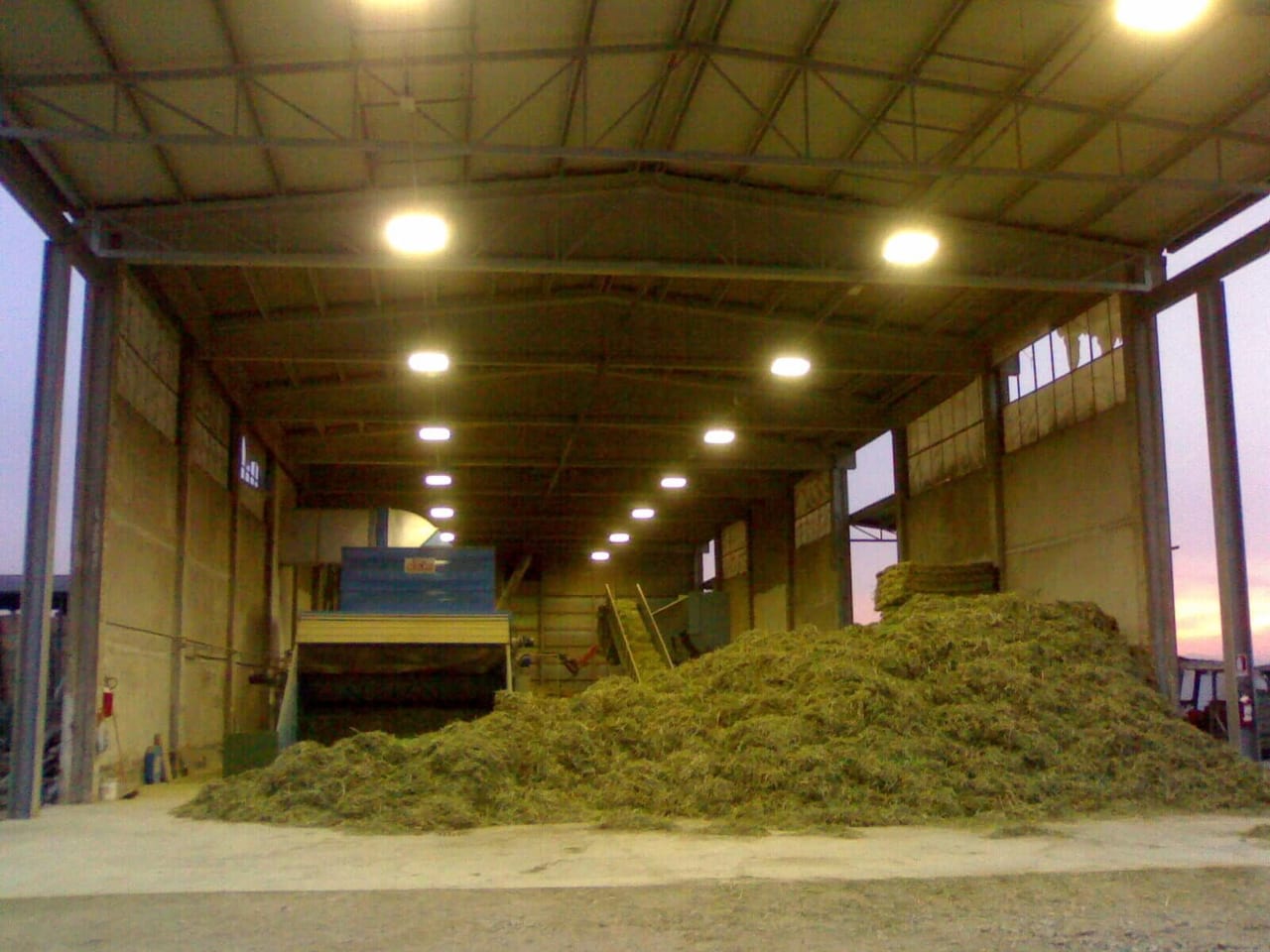
Alfalfa / lucerne
A standalone commercial niche. Gentle drying (60-120 °C) preserves protein, colour and leaf mass - losses of around 2% versus 10-15% on drum dryers.
Our Products
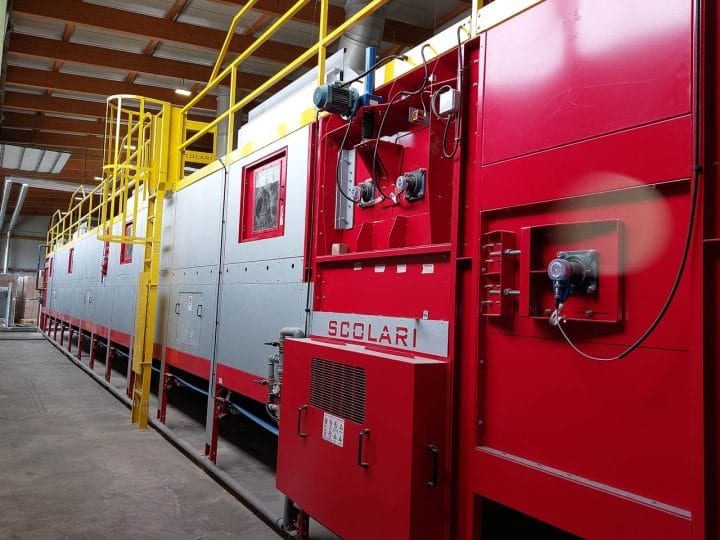
Universal Dryers
These dryers can be customized to dry any industrial or agricultural product you may require. Depending on the specific product and its moisture content, the dryers can be equipped with mixers, movable floors, vibrating floors, and other advanced technologies.
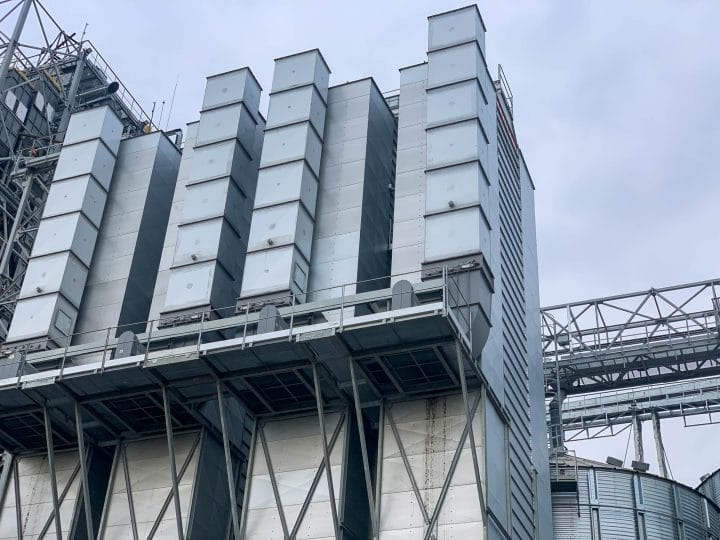
Grain Dryers
Authorized representative for top European grain dryer manufacturers like Alvan Blanch, FAO, and Agrex. Offering a full range of advanced drying solutions for agriculture.
Contact Us
If you are interested in purchasing any of our products, need a price quotation, or have any questions, comments, or suggestions, please do not hesitate to contact us via our contact form, by phone, or by email.
- WhatsApp: +90 (536) 452-1184
- E-mail: write to us
Our phones:
- Kazakhstan: +7 (747) 095-1626
- Moldova: +373 (22) 011-214
- Romania: +40 (31) 229-8484
- Türkiye: +90 (536) 452-1184 (English)
- Ukraine: +380 (67) 111-6668