
Drying Clover: Hay, Dehydrate and Forage Quality
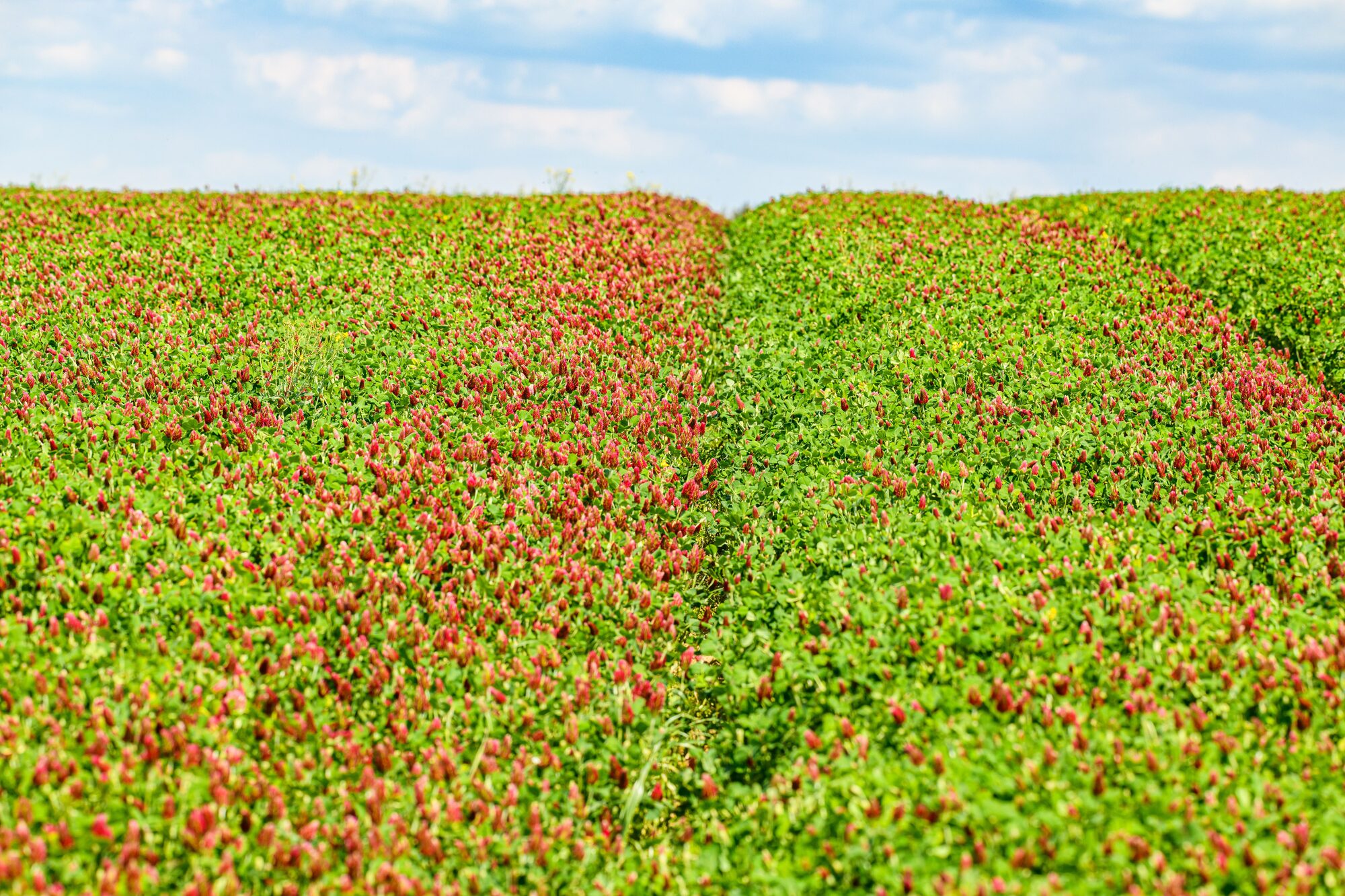
Clover is dried differently from grain — it is a forage green crop where the value lies not in the seed but in the leaf. Leaves account for the majority of the protein, carotene, minerals, and nutritional value. Proper clover drying is therefore not merely moisture removal; it is about preserving the leaf, colour, aroma, and nutritional quality.
Clover follows a drying logic similar to alfalfa, but with one important distinction: the clover leaf dries out and shatters while the stem is still wet. Rough tedding, excessive field drying time, or too-high temperatures can therefore cause loss not only of bulk but of the most nutritious part of the crop.
Across international markets, clover is valued as a source of high-protein roughage, green mass for grass meal, pellets and briquettes, and as a key ingredient in dairy and beef livestock feed.
Key takeaway: clover drying quality is determined not by a single "universal temperature" but by leaf retention. Hay is dried to approximately 15 % moisture without over-drying the leaf; for grass meal and pellets the choice is between gentle conveyor drying and faster drum drying; seeds are dried separately — gently and at low temperature.
Quick Answer
Clover hay is dried to stable storage conditions: the target is approximately 85 % dry matter, i.e. around 15 % moisture. The key is to avoid over-drying the leaf and losing it during tedding.
Two distinct technologies are used for industrial drying of green mass:
| Technology | Typical purpose | Temperature approach | Feed quality |
|---|---|---|---|
| Conveyor / belt drying | gentle drying of quality feed, grass meal, chopped material, pellets | typically up to 120 °C air temperature; regime adjusted by product | better preservation of leaf, colour, protein, and carotene |
| Drum drying | rapid high-temperature dehydration of large volumes | 250–300 °C and above (heat carrier temperature) | lower cost and simpler, but higher risk of colour and quality loss |
When the goal is high-quality feed rather than simply "dried mass," conveyor dryers with gentle agitation and temperature control are generally preferred.
Our Dryers for Clover and Forage Grasses
Clover is a forage green crop, so the appropriate equipment is not grain dryers but solutions designed for grasses, fodder, and biomass: conveyor dryers with a gentle agitator, container and stationary grass dryers, and — for large-volume lower-specification dehydration — drum dryers. The difference between options lies not in basic suitability but in temperature regime, mechanical gentleness, chop length, and requirements for leaf, colour, and protein retention.
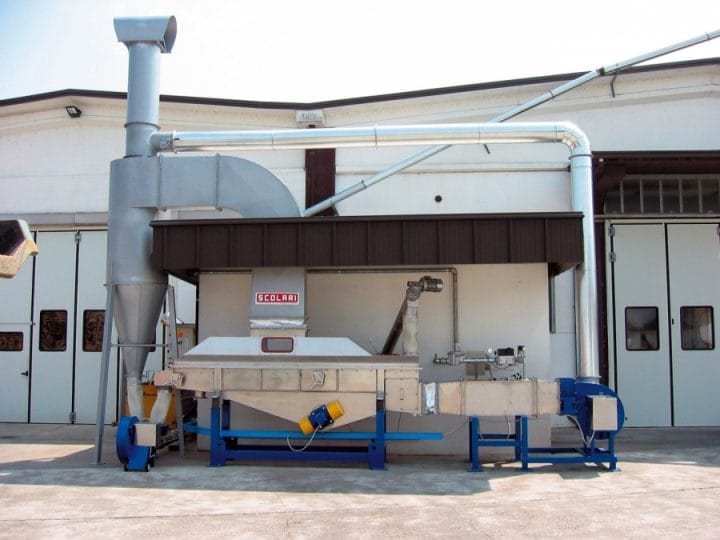
Scolari Vibratory Dryers
Italian Scolari vibratory dryers create an artificial boiling layer of the material being dried, which allows it to be blown through from all sides and effectively remove surface moisture. Suitable for materials with surface moisture, granulated products, or flowing powders.
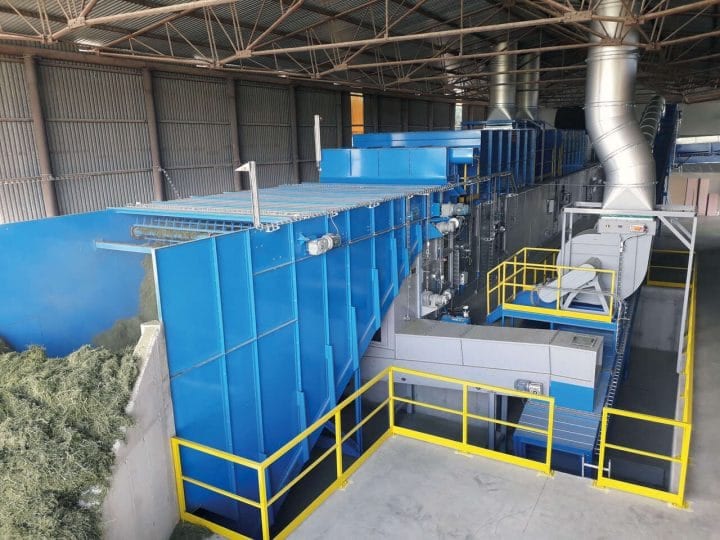
Scolari Dryer With Movable Conveyor Belt
Horizontal dryers feature perforated steel or plastic movable floors designed for drying various materials. Airflow can be configured from top to bottom or vice versa.
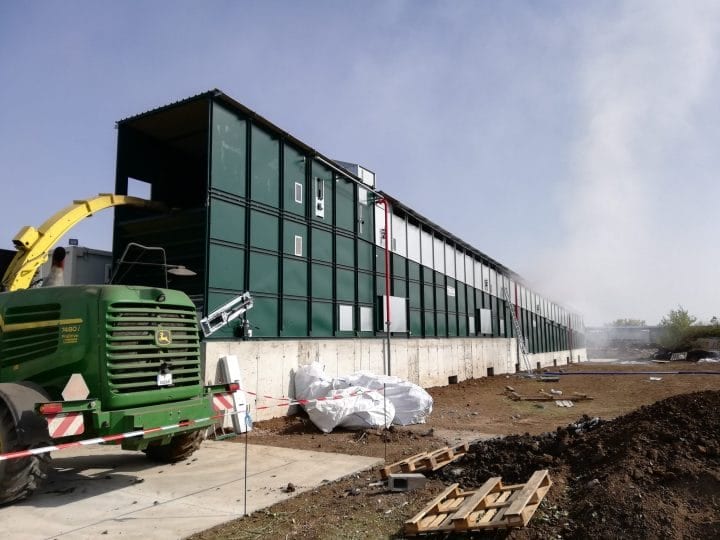
Alvan Blanch Conveyor Dryer
British universal conveyor dryers for non-grain agricultural and industrial products. Thanks to their horizontal design, built-in distribution and stirring systems, they can dry a wide range of materials.
What Exactly Is Being Dried: Green Mass, Hay, Grass Meal, or Seeds
"Drying clover" can refer to several different products. They cannot all be dried using the same regime.
Clover for Hay
This is the classic scenario: green mass is cut, wilted in the field, then brought down to a safe moisture content for baling and storage. The main risk is leaf loss through over-drying and rough handling.
Clover for Grass Meal, Chop, Pellets, and Briquettes
This is industrial drying of green mass. The goal is to remove moisture quickly while retaining nutritional value. Clover can be dried on its own or as part of a grass mixture. After drying, the material can be milled into meal, pelleted, briquetted, or used as chopped feed.
Clover for Haylage or Silage
This is not full drying but a different preservation method. The mass is wilted and packed under anaerobic conditions. In wet climates this can be a practical alternative to hay drying, but it is a fundamentally different process.
Clover Seeds
Seeds are a separate product where germination is the critical value. Seeds require a gentle regime, low temperature, and careful mechanical handling. Green-mass drying parameters cannot be applied to seed material.
Why Clover Is Difficult to Dry
Clover may look like a simple crop, but it is technically a challenging forage material.
The Leaf Dries Faster Than the Stem
In legume forage crops, leaves dry faster than stems. The leaf becomes brittle while the stem may still be wet. During tedding, windrowing, and transport, an over-dried leaf shatters easily.
This is especially significant for clover: field drying data indicate that clover can lose leaf even more readily than alfalfa. And leaf loss is not a cosmetic problem — it is a direct loss of protein, carotene, and nutritional value.
The Leaf Carries the Most Valuable Part of the Feed
Leaves contain the greater part of digestible nutrients. If the dryer or field method preserves the stem but loses the leaf, the bulk of the hay may remain while the feed quality falls sharply.
Green Mass Has Very High Initial Moisture
Freshly cut clover contains a large amount of water. Field drying can therefore take a long time, especially in cool or humid conditions. The longer the mass lies in the field, the greater the risk of nutrient loss, rain rewetting, mould, and contamination.
Clover Is Easily Damaged by Rough Handling
Excessive chopping, abrupt agitation, late tedding, and over-drying all increase leaf losses. For industrial drying, the mechanics of material movement matter as much as temperature and throughput.
The Goal: Not Just Removing Water, but Preserving Feed Value
Good clover hay or dried clover mass should be:
- green, with no signs of overheating;
- aromatic, with no mould smell;
- free from dust and decay;
- with maximum leaf retention;
- with high protein content;
- stable in storage.
If clover is over-dried in the field, the leaf has shattered and the stems remain coarse, nutritional value falls. If clover is baled or stored too wet, self-heating begins, followed by mould and quality deterioration.
Clover Moisture Targets
For hay, targets are set not only in terms of moisture but also dry matter content.
| Product | Dry matter target | Moisture target | Notes |
|---|---|---|---|
| Silage | approx. 45 % DM | approx. 55 % moisture | preservation method, not drying |
| Haylage / wrapped bale | approx. 60 % DM | approx. 40 % moisture | wilting + anaerobic storage |
| Hay | approx. 85 % DM | approx. 15 % moisture | stable storage without mould |
| Grass meal / pellets | depends on line | typically lower than for hay | adjusted for pelleting and storage |
For finishing with forced-air ventilation, clover is typically loaded when the field mass is already partially wilted — in various systems this may be around 30–50 % moisture. Ambient or gently heated air then brings the mass to a safe final moisture level.
Drying Temperatures for Clover
There is no single "correct temperature" for clover. It depends on what is being dried: hay, green mass for meal, pellets, or seeds.
| Scenario | Temperature approach | Key consideration |
|---|---|---|
| Field hay drying | no artificial heat | minimise mechanical operations, preserve leaf |
| Finishing with forced-air ventilation | ambient or gently heated air | reduce weather risk without over-drying the leaf |
| Conveyor drying of green mass | gentle regime, typically up to 120 °C air temperature | retain protein, colour, carotene |
| Alvan Blanch CD (comparable legume forage) | approximate reference around 70 °C | regime refined to actual moisture and product |
| Scolari Series A | adjustable range 38–140 °C | regime selected for the specific material |
| Drum drying | 250–300 °C and above (heat carrier temperature) | fast, but higher risk of quality loss |
| Clover seeds | low-temperature gentle regime | preserve germination rate |
For quality feed, temperature must serve nutritional preservation, not just drying speed. High temperatures can remove moisture quickly but will degrade colour, aroma, carotene, and protein value.
Field Drying and Forced-Air Ventilation
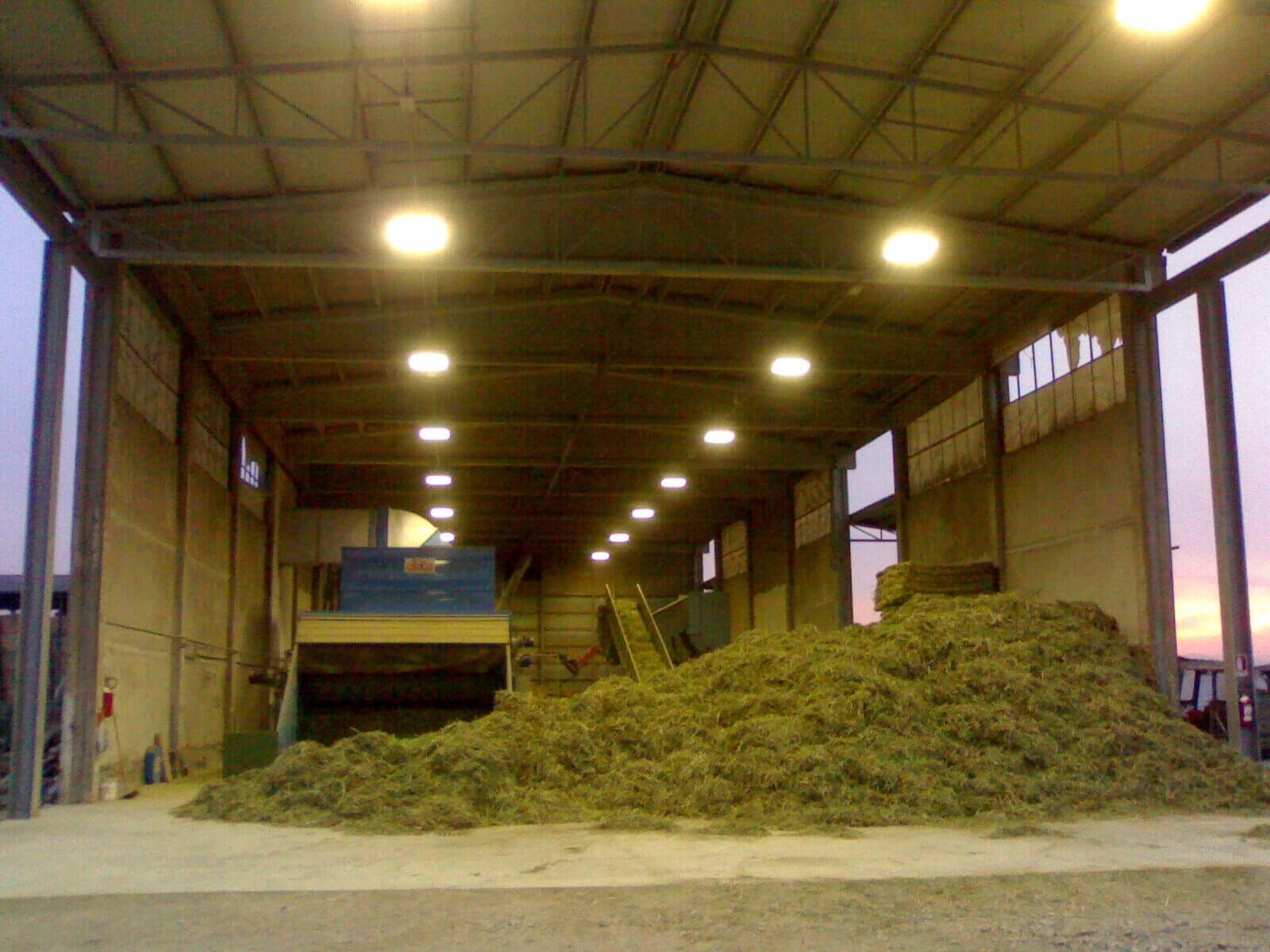
Field drying of clover is widely used but weather-dependent. In good sunshine and wind the mass dries quickly. In humid conditions clover can remain wet for a long time, leaving the operation facing two risks: leaving the mass in the field and losing quality to rain, or harvesting early and finishing drying mechanically.
Forced-air ventilation resolves this problem. Clover can be picked up earlier, when the leaf has not yet over-dried and shatters less, then finished with air in a stack, barn, under a shelter, or in a dedicated ventilation system.
Advantages of air finishing:
- less weather dependency;
- lower leaf losses;
- reduced risk of rain rewetting;
- better hay colour and aroma;
- less mould at the correct final moisture.
The drawback is the infrastructure required: fans, air distribution, sometimes air heating and humidity control.
Conveyor Drying of Clover
A conveyor or belt dryer is suited to producing quality dried feed, grass meal, chop, pellets, and briquettes. Material travels in a layer on a belt, warm air passes through it, and a gentle agitator opens the layer to promote uniform drying.
This is especially important for clover: the leaf is fragile, so the dryer must move material gently rather than beating it.
Why Conveyor Drying Better Preserves Quality
Conveyor drying operates at a milder temperature than drum drying. Material can be dried with a longer chop length, with less fragmentation and less leaf damage. The result is better retention of:
- green colour;
- leaf fraction;
- protein;
- carotene;
- aroma;
- feed structure.
For producing feed with high market value, this typically matters more than minimising the cost of water evaporation.
Drum Drying of Clover
A drum dryer is a more aggressive, high-temperature technology. It may be appropriate when the primary task is rapid drying of large volumes of green mass with lower requirements for colour, carotene, and visual quality.
Advantages of drum drying:
- high throughput;
- relatively simple technology;
- familiar format for grass meal production;
- capacity for large volumes.
Limitations:
- high heat-carrier temperature;
- greater risk of colour change;
- greater risk of carotene and nutritional value loss;
- typically requires finer chop;
- stronger mechanical action on the material.
Where the goal is maximum feed quality, conveyor technology is generally preferable. Where the priority is high-throughput, budget dehydration, a drum dryer can be considered — but with a clear acknowledgement of the quality trade-off.
Clover for Grass Meal, Pellets, and Briquettes
Grass or clover meal is the product of artificially drying green mass. After drying, the material is milled and may be pelleted or briquetted.
The key objective is to preserve nutrients. This requires:
- cutting at the right growth stage;
- not delaying the drying process;
- not overheating the mass;
- not milling the leaf to dust;
- maintaining uniform final moisture;
- rapidly cooling the product before storage.
For feed production, what matters is not only moisture percentages but also colour, aroma, protein, carotene, pellet stability, and absence of mould.
Clover Seeds: A Separate Task
Clover seeds cannot be dried like green mass. This is fine seed material where the critical value is germination viability.
For seeds, what matters is:
- gentle temperature;
- no overheating;
- low and stable storage moisture;
- careful mechanical handling;
- protection against rewetting;
- germination testing after drying.
For clover seed, the appropriate equipment is not high-throughput grass dryers but gentle, low-temperature solutions designed for grass seeds and small-seeded crops.
How Clover Differs from Alfalfa in Drying
Clover and alfalfa are similar: both are legume roughage crops, both are valued for protein, and both lose quality when the leaf is lost. Experience with alfalfa drying therefore provides a good basis for understanding clover drying.
There is, however, an important difference: clover can suffer even more severe leaf loss during field drying than alfalfa. For clover, the following are therefore especially important:
- more careful tedding;
- fewer unnecessary mechanical operations;
- pick-up timing before the leaf is over-dried;
- air finishing rather than prolonged field lying;
- a gentle agitator in the industrial dryer.
What Happens When Clover Is Dried Incorrectly
Leaf Loss
This is the primary risk. Visually there may be a large volume of stem, but feed value will be lower because the leaf has been lost.
Mould and Self-Heating
If mass is baled or stored at too-high moisture, heating begins, followed by mould, dust, and a musty smell. Such feed is both less palatable and potentially harmful.
Colour and Carotene Loss
At too-high temperatures, clover darkens, loses its green colour, and some of its biological value.
Excessive Chopping
Very fine chopping makes drying easier but can increase leaf fraction losses and reduce protein. Conveyor dryers have the advantage of tolerating longer chop lengths and gentler handling.
Uneven Final Moisture
If final moisture is non-uniform, part of the mass may be dry while another part is still wet. This leads to localised self-heating and mould.
Which Dryers Are Suitable for Clover
Standard grain dryer recommendations do not apply to clover. As a forage green crop, equipment is selected from solutions designed for grasses, fodder, and biomass.
Scolari Series A
Conveyor dryer with a gentle agitator. Suitable for hay, fodder, grasses, and materials where preserving product structure is important.
Scolari 2T / 3T
Multi-pass conveyor dryers for large volumes of green mass. Of interest for projects where heat recovery and consistent dried-feed quality are priorities.
Alvan Blanch CD
Conveyor dryer for grasses, alfalfa, and other forage materials. A suitable technological reference point for clover, particularly when the goal is quality dried feed or raw material for pelleting.
Herbas
Container and stationary solutions for grasses and forage crops. May be of interest to operations requiring flexibility, moderate throughput, or mobility.
Starmax Drum Dryers
An option for high-temperature drying of green mass. Suitable for large volumes and more budget-oriented drying technology, but inferior to conveyor solutions in gentleness and quality retention.
How to Choose a Technology
| Objective | Logical option |
|---|---|
| Hay with maximum leaf retention | field drying + forced-air ventilation |
| Quality grass / clover meal | conveyor dryer |
| Pellets or briquettes from green mass | conveyor dryer + milling / pelleting |
| High volume with moderate colour requirements | drum dryer |
| Clover seeds | gentle low-temperature seed dryer |
| Wet weather and hay loss risk | haylage or forced-air finishing |
Data Required for Dryer Sizing
To select a dryer for clover, the following information is needed:
- what is being dried: hay, green mass for meal, pellets, briquettes, or seeds;
- initial moisture content;
- target moisture content;
- throughput in wet-mass terms;
- desired throughput in dry-product terms;
- chop length;
- available heat source;
- quality requirements: colour, protein, carotene, export specification, pelleting;
- operating mode: seasonal or year-round;
- finished-product storage conditions.
Practical Recommendations
- Do not dry clover like grain. It is a green forage crop with a fragile leaf.
- Do not focus only on temperature. Mechanics, tedding, chop length, and layer uniformity all matter.
- For quality feed, treat conveyor drying as the primary solution.
- Use drum drying where throughput and budget are the priority, not maximum colour and carotene.
- Do not over-dry the leaf in the field. It is better to pick up the mass earlier and finish with air than to lose the leaf through late tedding.
- For clover seeds, calculate separately — do not carry over green-mass regimes.
- For large-scale projects, plan not only the dryer but also milling, feeding, aspiration, cooling, pelleting, and storage from the outset.
Frequently Asked Questions about Drying Clover
What moisture level should clover hay be dried to?
The target is approximately 15 % moisture, or around 85 % dry matter. The exact figure depends on baling method, bale density, and storage conditions.
Why is leaf preservation so important when drying clover?
Because the leaf is the most nutritious part of the feed. It contains more protein and digestible nutrients than the coarse stem. If the leaf has shattered, feed quality is reduced even if moisture content is correct.
Why is a conveyor dryer better than a drum dryer?
A conveyor dryer operates more gently, tolerates longer chop lengths, causes less leaf damage, and better preserves colour, protein, and carotene. A drum dryer is faster and simpler, but operates at higher temperatures and typically produces lower-quality output.
Can clover be dried in a drum dryer?
Yes, it can. But this is primarily a solution for high-throughput dehydration where colour and carotene quality are not the main priority. For premium feed, conveyor drying is the better choice.
Is it better to dry clover or ensile it as haylage?
It depends on local conditions, the operation, and the required end product. Where achieving stable hay is difficult due to wet weather, haylage can be a practical alternative. However, haylage is not drying — it is a different method of feed preservation.
Can clover seeds be dried in the same dryer as green mass?
Generally no. Clover seeds require a gentle low-temperature regime, careful mechanical handling, and germination monitoring. It is a separate technological task.
What is more important when drying clover: temperature or time?
Both matter, and the right balance is key. Too slow — losses from respiration, rain, mould, and leaf shattering. Too hot — colour, carotene, and quality loss. The technology must remove moisture quickly while handling the leaf gently.
Which dryer type is best for clover meal?
For quality clover meal, conveyor dryers with a gentle agitator are the best fit. If minimum cost and maximum throughput are the overriding priorities, drum drying can be considered — but with a clear understanding of the quality compromise involved.
Conclusion
Drying clover is fundamentally a task of preserving feed value. Unlike grain — where moisture content and temperature are usually the main variables — with clover it is leaf retention that determines the outcome. The leaf carries the bulk of the protein and nutritional quality, and it is the easiest part to lose through incorrect drying.
For hay, the priorities are proper wilting, minimum leaf loss, and a safe final moisture content. For grass meal, pellets, and briquettes, the choice between drum and conveyor drying needs to be made carefully. For seeds, a separate gentle regime focused on germination viability is required.
Where the goal is quality feed with good colour, protein content, and storage stability, conveyor dryers with gentle agitation and temperature control should be the primary technology considered.
Need to Select a Dryer for Clover?
Tell us what you are drying (hay, green mass for meal, pellets, briquettes, or seeds), the initial and target moisture, throughput, and quality requirements — we will recommend the dryer type, temperature regime, and heat scheme suited to your application. Contact us in whatever way is most convenient.
Still Have Questions? Get in Touch!
By Phone
WhatsApp: +90 (536) 452-1184By Email
Our address: info@finpro.engineering
Related products

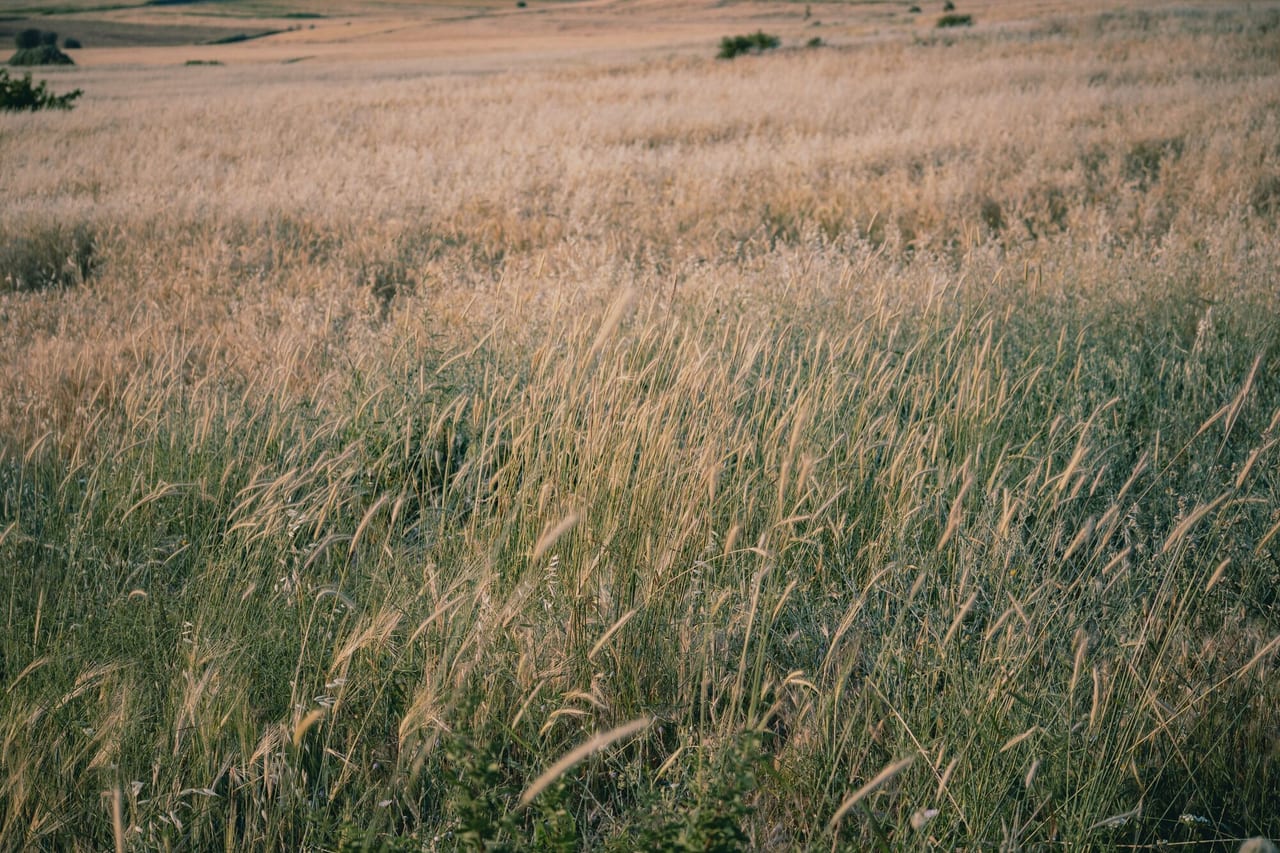
Sainfoin
A valuable forage crop of arid regions; it is important to preserve the leaf and quality.
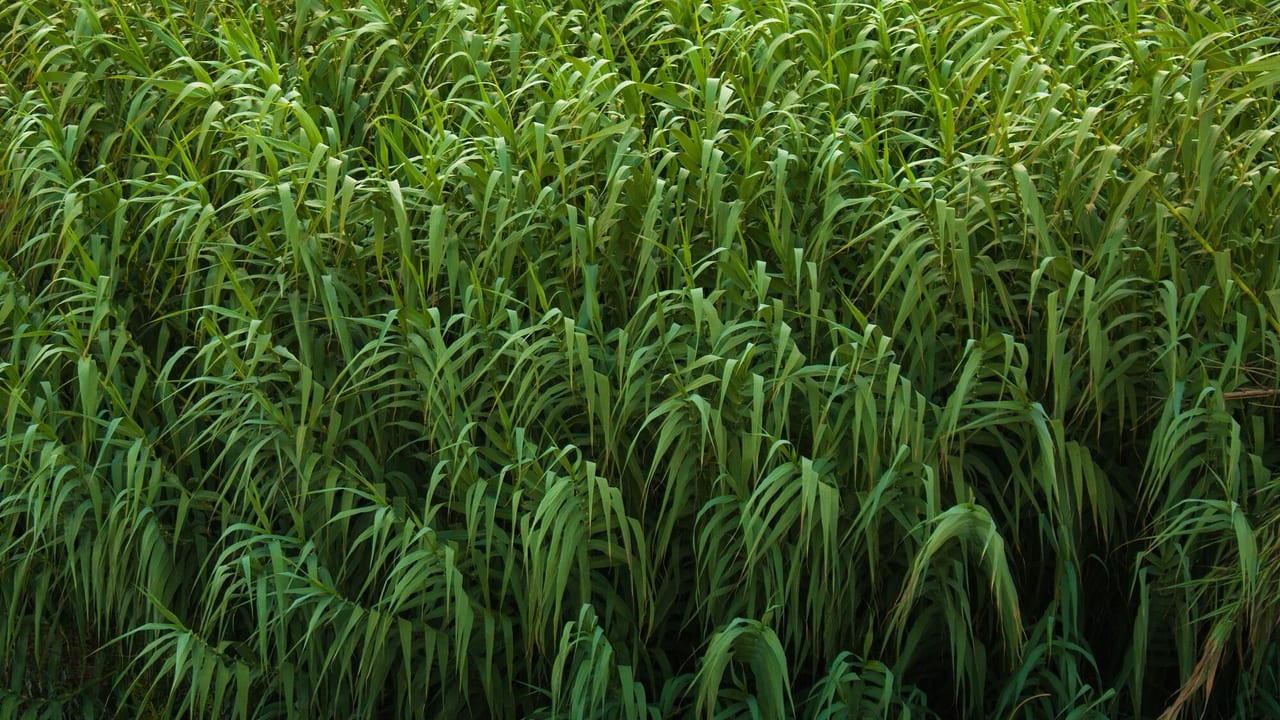
Sudan grass / sorghum-sudangrass hybrid
A high-yield forage crop; overlaps with green mass and haylage.
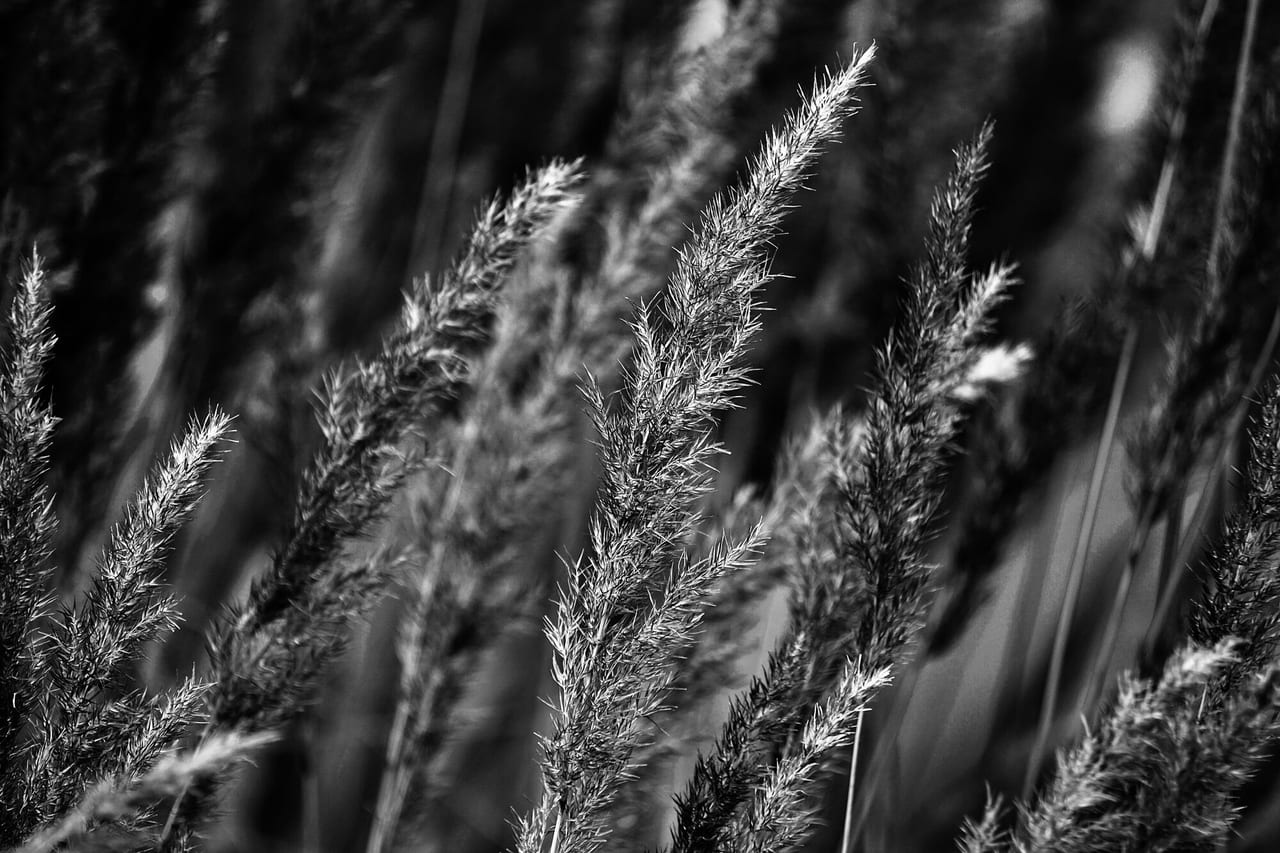
Timothy grass
A cereal forage grass yielding export-quality hay; uniform, gentle drying.

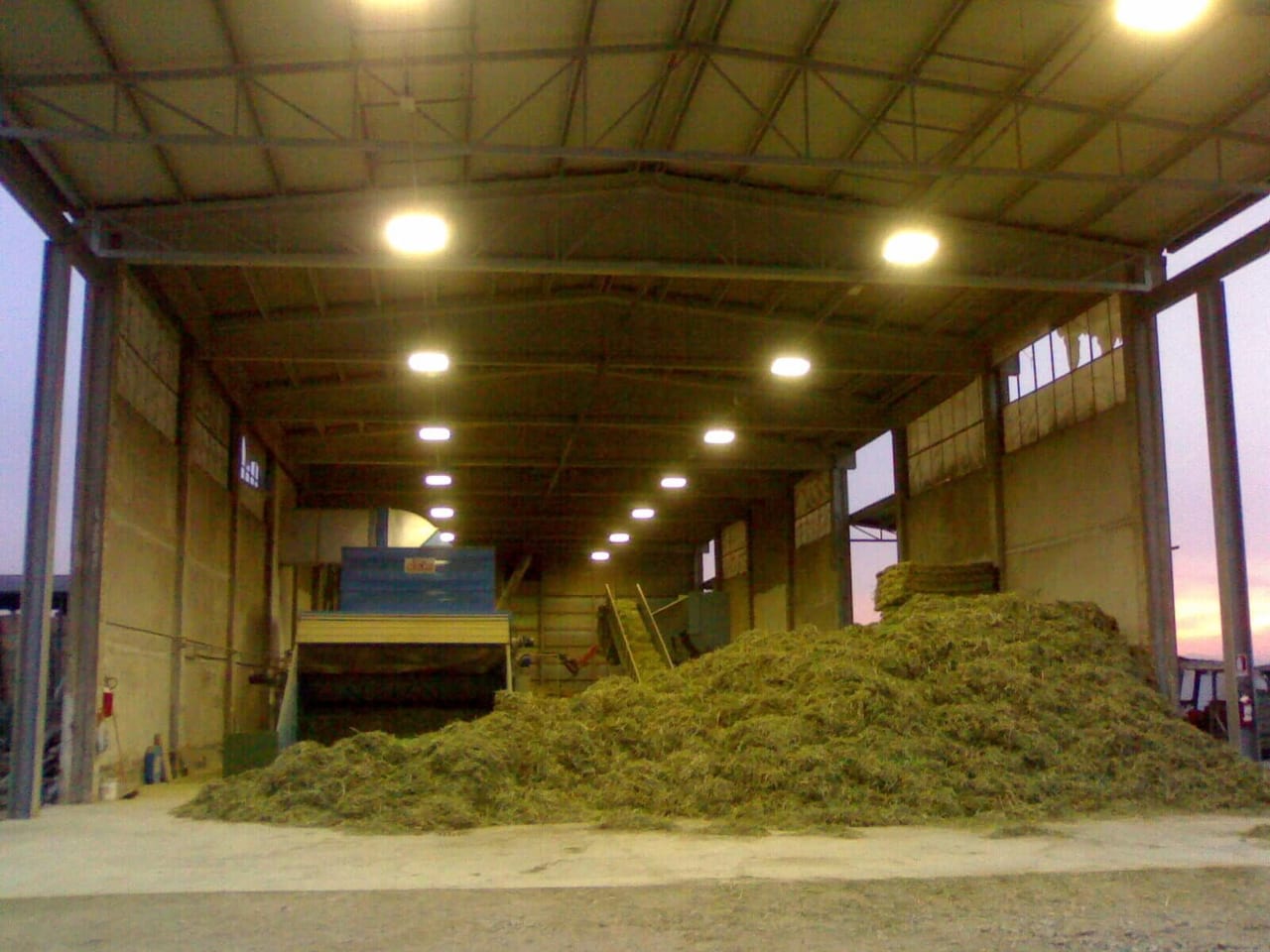
Alfalfa / lucerne
A standalone commercial niche. Gentle drying (60-120 °C) preserves protein, colour and leaf mass - losses of around 2% versus 10-15% on drum dryers.
Our Products
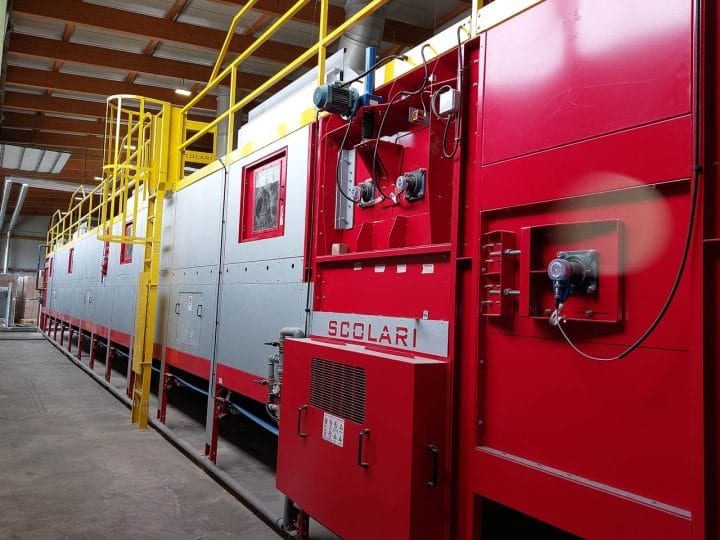
Universal Dryers
These dryers can be customized to dry any industrial or agricultural product you may require. Depending on the specific product and its moisture content, the dryers can be equipped with mixers, movable floors, vibrating floors, and other advanced technologies.
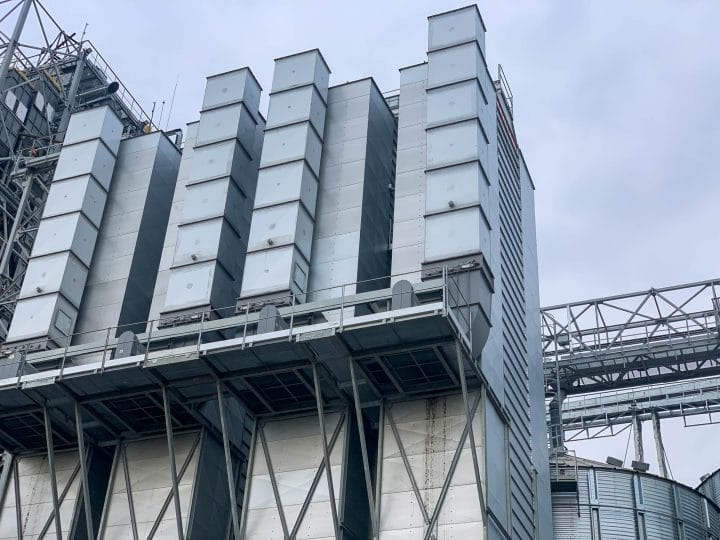
Grain Dryers
Authorized representative for top European grain dryer manufacturers like Alvan Blanch, FAO, and Agrex. Offering a full range of advanced drying solutions for agriculture.
Contact Us
If you are interested in purchasing any of our products, need a price quotation, or have any questions, comments, or suggestions, please do not hesitate to contact us via our contact form, by phone, or by email.
- WhatsApp: +90 (536) 452-1184
- E-mail: write to us
Our phones:
- Kazakhstan: +7 (747) 095-1626
- Moldova: +373 (22) 011-214
- Romania: +40 (31) 229-8484
- Türkiye: +90 (536) 452-1184 (English)
- Ukraine: +380 (67) 111-6668