
Drying Sainfoin: Equipment, Temperature and Moisture Guide
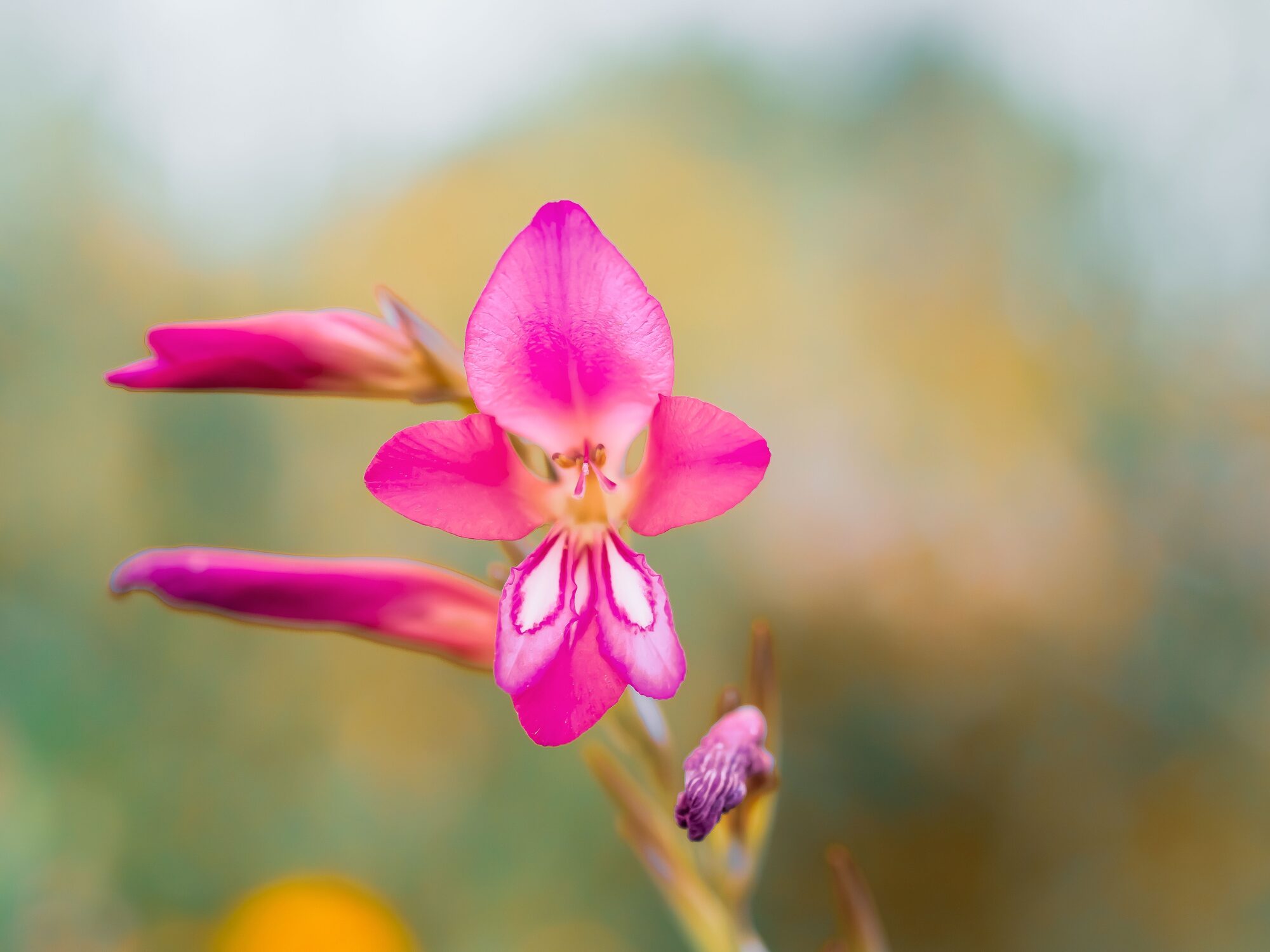
Sainfoin is a legume forage crop prized for its nutritional value, high palatability and the fact that it does not cause bloat in livestock. When drying sainfoin, the product is not the seed but the entire green mass — leaf, stem and inflorescence. The primary goal is therefore not simply to remove moisture but to preserve forage quality: leaf fraction, protein, carotene, colour and condensed tannins.
Sainfoin is often compared to alfalfa. This is a reasonable technological starting point: both crops are legume forages, both are processed into hay, grass meal, pellets and briquettes. However, sainfoin has one distinctive characteristic — condensed tannins. These compounds help reduce the risk of bloat in animals and partially protect rumen-degradable protein from rapid breakdown. For this reason, gentle drying without overheating or aggressive mechanical action is especially important for sainfoin.
Key takeaway: the quality of sainfoin drying is determined not by a single "universal temperature" but by how well leaf fraction and tannins are preserved. Hay is dried to approximately 15 % moisture without over-drying the leaf; for grass meal, pellets and dehydrated product a gentle belt dryer is preferred, while drum dryers suit high-volume, cost-sensitive lines; seed material is dried separately — gently and at low temperature — to a storage moisture of approximately 13 %.
Quick answer
Sainfoin hay is dried to approximately 15 % moisture for safe storage. Baling at slightly higher moisture is sometimes practised, but wetter product significantly increases the risk of mould, self-heating and quality loss.
For industrial drying of green mass, belt or conveyor dryers with gentle turning are preferred. These operate in a softer temperature range — typically up to 120 °C drying-air temperature. Drum dryers can operate at 250–300 °C and above at the heat-carrier level, but this is a more aggressive technology: it dries the material faster yet has a stronger impact on colour, carotene, leaf retention and part of the nutritional value.
For sainfoin seed, a different logic applies: the product being dried is not green mass but seeds in pods. Here the key criterion is germination capacity, so a gentle low-temperature regime is required, with storage moisture of approximately 13 %.
Why a single drying temperature for sainfoin cannot be stated
The temperature depends on what is being dried and for what purpose:
- hay for storage;
- green mass for grass meal, pellets or briquettes;
- high-quality dehydrated product;
- seed material.
It is also important to distinguish between drying-air temperature and the actual product temperature. In a drum dryer the heat carrier can be very hot, but the product spends only a limited time in the airstream and part of the energy is absorbed by moisture evaporation. In a belt dryer the air temperature is lower and the process is gentler and longer. For sainfoin quality, what matters is not only heat intensity but also how carefully the dryer handles the leaf fraction.
Our dryers for sainfoin and forage grasses
Sainfoin is a forage green mass, so the appropriate equipment is not grain dryers but solutions designed for grasses, forage and biomass: belt dryers with gentle turning, container and stationary herb dryers, and — for high-volume, cost-efficient dehydration — drum dryers. The difference lies not in basic suitability but in temperature regime, mechanical gentleness, chop length and requirements for preserving leaf fraction, colour and tannins.
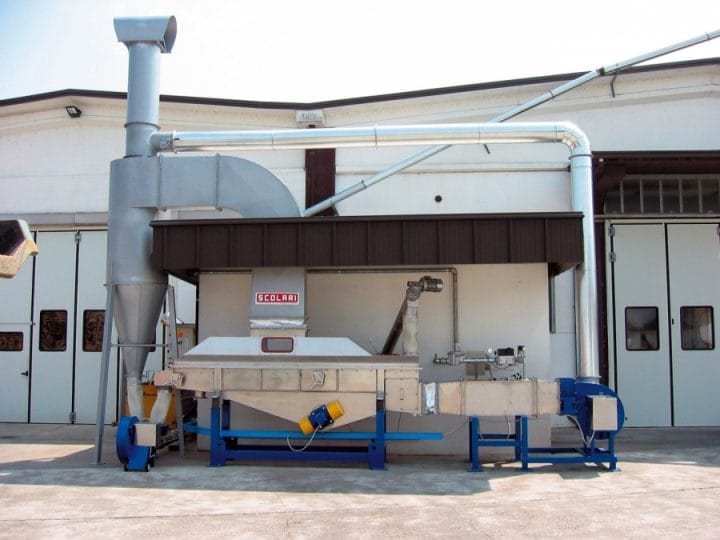
Scolari Vibratory Dryers
Italian Scolari vibratory dryers create an artificial boiling layer of the material being dried, which allows it to be blown through from all sides and effectively remove surface moisture. Suitable for materials with surface moisture, granulated products, or flowing powders.
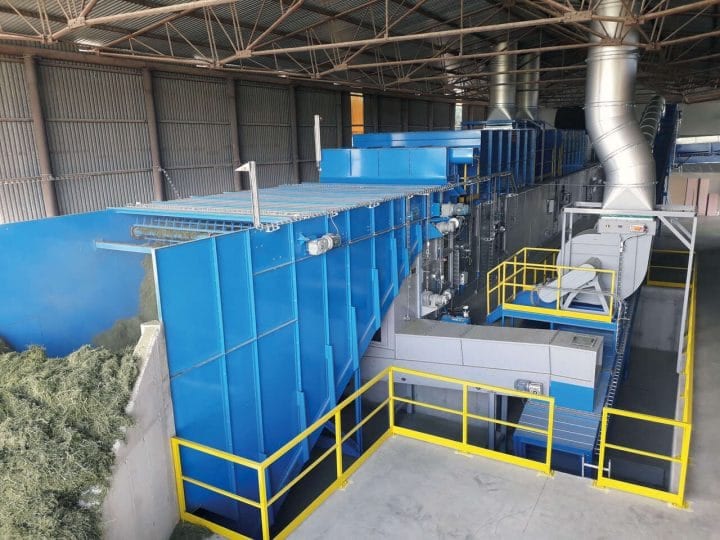
Scolari Dryer With Movable Conveyor Belt
Horizontal dryers feature perforated steel or plastic movable floors designed for drying various materials. Airflow can be configured from top to bottom or vice versa.
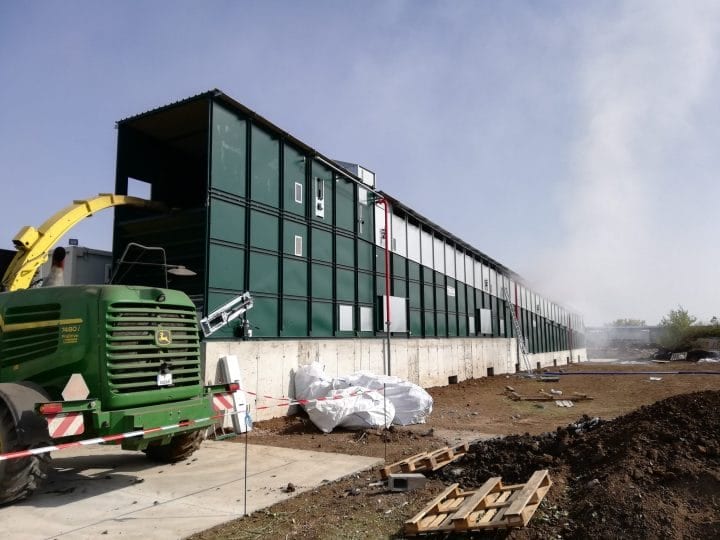
Alvan Blanch Conveyor Dryer
British universal conveyor dryers for non-grain agricultural and industrial products. Thanks to their horizontal design, built-in distribution and stirring systems, they can dry a wide range of materials.
Why sainfoin requires special care compared to ordinary hay
Hay is a broad category. It can be grass-based, legume-based or mixed. Sainfoin belongs to the legume forage crops, and in such crops the bulk of the nutritional value is concentrated in the leaf fraction. If the leaf shatters, the hay may retain its bulk but lose a significant share of its actual feed value.
Sainfoin has several important characteristics:
- The leaf contains a significant share of protein and other valuable compounds. Gentle drying and careful turning therefore matter more than simply maximising the rate of moisture removal.
- The stem is hollow and typically dries more evenly than alfalfa. This makes harvesting easier but does not eliminate the risk of over-drying the leaf.
- Sainfoin contains condensed tannins. This is a valuable forage property, but it requires caution regarding overheating.
- The crop is well suited to dryland and semi-arid conditions. Sainfoin is of particular interest as a forage crop in regions with dry or rain-fed farming environments worldwide.
What is actually being dried
Sainfoin for hay
This is the most straightforward scenario: mown green mass is wilted in the field and then brought down to a safe storage moisture level. Quality hay should remain green and aromatic, free of mould, dust and the smell of overheating.
The storage moisture target is approximately 15 %. Above this level the risk of self-heating, mould and spoilage rises. If the material is over-dried and then handled roughly — turned or transported — the opposite risk emerges: leaf shattering and loss of nutritional value.
Sainfoin for grass meal, pellets and briquettes
For industrial forage production, green mass can be artificially dried and then ground and pressed. Here it is especially important to achieve stable final moisture while preserving colour, protein, carotene and tannins.
Belt dryers with a gentle regime and careful turning are best suited to this scenario. Drum dryers are also an option — particularly when a cost-effective, high-throughput line is required — but this involves a quality trade-off.
Sainfoin dehydrate
Dehydrate is an industrially dried forage product that can be formed into pellets, briquettes or pressed feed forms. In France, sainfoin is used in exactly this way: the green mass is wilted, then finish-dried with hot air and pressed.
For quality dehydrate it is essential not to destroy the biological value of the product. If the goal is a premium feed with good colour, protein and preserved tannins, a gentle belt drying technology is preferable.
Sainfoin seed
Seed material is a separate task. Sainfoin is commonly sown as a pod — the seed remains inside an unopened fruit. At harvest, the result is a mixture of seeds and unthreshed pods, which are then cleaned and processed.
The drying regimes designed for green mass cannot be applied to sainfoin seed. The primary goal here is to preserve germination capacity. Storage moisture for seeds should be low — approximately 13 % — and drying must be gentle.
Why sainfoin seed cannot be dried like green mass
Green mass is dried for forage value. Seeds are dried for germination capacity. Overheating seed material produces a dry but unsowable product.
For seeds, the key requirements are:
- low temperature;
- uniform moisture removal;
- absence of localised overheating;
- gentle mechanical handling;
- proper cleaning after threshing.
For this reason, chamber, cabinet, batch or other low-intensity solutions are used for seed — not the high-throughput forage regimes.
The key value of sainfoin — leaf, protein and tannins
In sainfoin, protein is not the only valuable component. A defining characteristic of the crop is its condensed tannins. These help reduce the risk of bloat in animals, partially protect rumen-degradable protein from rapid breakdown and can improve nitrogen utilisation efficiency.
Tannins are not distributed evenly across the plant: leaves contain a higher concentration than stems. For this reason, preserving the leaf during sainfoin drying requires particular attention. If the leaf has shattered, the losses affect not only mass but the crop's key forage value.
What condensed tannins are in plain terms
Condensed tannins are natural plant compounds. In ruminant nutrition they matter because they bind a portion of protein and slow its breakdown in the rumen, allowing more protein to reach the lower digestive tract.
In sainfoin these compounds are also linked to the crop's well-known property: it does not cause bloat in the way that some other legume forages can. When drying sainfoin, the goal is therefore not simply to produce a dry mass but to preserve the specific properties for which the crop is grown.
Hay or silage: which better preserves sainfoin's properties
Sainfoin can be conserved in several ways, but if the goal is to retain condensed tannins, hay and gentle finish-drying have a clear advantage over ensiling.
Ensiling preserves wet mass through fermentation. This is a useful technology in its own right, but for sainfoin it may preserve extractable tannins less effectively. It is therefore important to distinguish clearly between the two processes:
- drying — removal of moisture to a stable storage level;
- ensiling — fermentation-based preservation of wet mass.
Ensiling can be a practical option in poor weather conditions or as part of a different feeding strategy, but it is not a substitute for quality drying when the objective is to preserve tannins, green colour and the properties of a dry feed product.
Temperature and moisture parameters for drying sainfoin
| Scenario | Reference value | Notes |
|---|---|---|
| Hay for storage | approx. 15 % moisture | Target: stable storage without mould or self-heating. |
| Hay for baling | approx. 17–18 % as the practical upper limit | The wetter the bale, the higher the risk of spoilage. Drier is better for long-term storage. |
| Belt drying of green mass | up to 120 °C drying-air temperature | Gentle regime for forage quality. Exact setpoint depends on incoming moisture, bed depth and dryer design. |
| Alvan Blanch CD for a comparable crop | approx. 70 °C (alfalfa reference) | Not a separate sainfoin standard — a reference point based on a closely related legume forage crop. |
| Drum drying | 250–300 °C and above at the heat-carrier level | High throughput but more aggressive in terms of colour, carotene, leaf retention and organoleptics. |
| Sainfoin seed | storage moisture up to 13 % | Gentle regime required to preserve germination capacity. |
Why the drum dryer temperature is not the same as the product temperature
In a drum dryer, the stated temperature refers to the heat carrier. This can be very high. However, the product spends only a limited time in the airstream and a significant portion of the heat is absorbed by moisture evaporation.
Nevertheless, for sainfoin this remains a more aggressive technology than belt drying. High heat-carrier temperature, impact-type mechanical action and the need for finer chop all increase the risk of colour loss, leaf shattering and degradation of forage quality.
Why gentle drying is especially important for sainfoin
For a low-value commodity forage it may be sufficient simply to remove moisture quickly. But sainfoin is typically grown as a higher-value feed: with good palatability, high protein, carotene and anti-bloat properties.
If this value is lost during drying, any savings on equipment may prove illusory.
Gentle belt drying offers several advantages:
- lower peak temperature;
- less colour change;
- less mechanical destruction of the leaf;
- longer chop length can be fed in;
- easier to hold stable final moisture;
- easier to implement heat recovery on multi-pass lines.
Risks associated with incorrect drying
Leaf loss
The leaf is the most valuable part of the plant. Over-drying, rough turning, aggressive mechanical handling or excessively fine chop all cause leaf shattering. For sainfoin this is particularly undesirable because leaf loss means loss of protein, carotene and a significant share of tannins.
Overheating
Overheating degrades the colour and aroma of the feed. For premium hay and dehydrate this is critical: buyers assess not only moisture content but also visual quality.
Tannin loss or altered tannin activity
Condensed tannins react to heat in complex ways: depending on the regime they may oxidise, change their protein-binding capacity or form more stable complexes. It is therefore not possible to guarantee that high-temperature drying will fully preserve sainfoin's anti-bloat properties.
The commercially sound approach is straightforward: if tannins are part of the product's value, choose a gentle and controlled drying regime.
Mould and self-heating
Under-dried material deteriorates. Above the safe moisture threshold, mould growth, self-heating, aroma loss and feed value degradation set in. For baled product this is particularly hazardous because the problem may only become apparent after the product has been placed in storage.
Confusion with ensiling
Ensiling is not drying. It can be useful on-farm, but if the objective is a dry feed with preserved tannins, hay and gentle finish-drying are generally preferable.
Dryers suitable for sainfoin
Standard grain drying recommendations do not apply to sainfoin. As a forage green mass, equipment must be selected from solutions designed for grasses, forage and biomass.
Scolari Series A
A belt dryer with a gentle turner. Suitable for hay, forage, straw and other forage biomass. For sainfoin this is one of the most logical options: the turner is designed not for aggressive agitation but for uniform, gentle drying.
Scolari 2T / 3T
Multi-pass belt dryers for large volumes of forage biomass. Their key advantage is heat recovery and reuse — important for clients producing dehydrate, pellets or briquettes who wish to reduce fuel consumption.
Alvan Blanch CD
A belt dryer for grasses, alfalfa, straw, biomass and similar materials. Applied to sainfoin by analogy with other legume forage crops. Its key strength is a gentle regime and good colour retention.
Herbas container and stationary dryers
Suitable for herbs, medicinal plants and other delicate green materials where quality, colour and careful drying are the priority.
Starmax drum dryers
Drum dryers can be considered for high-volume, cost-sensitive grass meal or pellet lines. For premium sainfoin, however, this is a trade-off: throughput and cost against colour, leaf retention and a softer preservation of quality.
Scolari C and Alvan Blanch BD / BD-RA for seed material
Sainfoin seed requires separate, gentle solutions. The task here is not to dry green mass but to preserve seed germination capacity.
How to choose the right technology
| Client objective | Preferred technology | Reason |
|---|---|---|
| Quality sainfoin hay | Field drying + gentle finish-drying / belt drying | Preserves leaf, colour, protein and tannins. |
| Dehydrate, pellets, briquettes | Multi-pass belt dryer | Moisture control, quality, heat recovery. |
| Low-cost bulk grass meal | Drum dryer | High throughput, but lower product quality. |
| Sainfoin seed | Chamber, cabinet, batch or gentle belt drying | Preserves germination capacity. |
| Wet weather, no hay window | Haylage / silage as a separate feed strategy | Not drying, but a practical alternative in certain conditions. |
Data needed to specify a dryer
For preliminary equipment selection the following information is required:
- end product: hay, dehydrate, pellets, briquettes or seed;
- incoming moisture of the green mass;
- target output moisture;
- throughput in tonnes of wet material per hour or per day;
- desired chop length;
- quality requirements for colour, protein, carotene and tannins;
- fuel type;
- whether heat recovery is required;
- whether the product is for on-farm use or for sale / export;
- whether there is a separate seed material stream.
Why chop length matters for sainfoin
The finer the material is chopped, the higher the risk of leaf loss and fine-fraction losses. Drum dryers typically require shorter chop because the product must pass through the drum quickly and make uniform contact with the hot airstream.
Belt dryers accommodate longer chop. This helps preserve the leaf — and with it, protein, carotene and tannins.
Can sainfoin be dried together with alfalfa?
Technologically yes — both crops belong to the same group of legume forages. However, the regime must be set according to the actual incoming moisture, chop length, leaf proportion and required quality.
Sainfoin often retains leaf better and has a hollow stem, so it may dry more evenly than alfalfa. But this does not mean it can be run on any regime without analysis. If tannins and colour matter, the regime must be gentle.
Why a drum dryer is not always the best choice
A drum dryer excels where simplicity, throughput and low cost per tonne of evaporated moisture are the priorities. However, it has drawbacks for a valuable forage product:
- high heat-carrier temperature;
- stronger mechanical action;
- need for finer chop;
- higher risk of colour and aroma change;
- more difficult to maintain premium product appearance.
For inexpensive bulk grass meal a drum dryer may be acceptable. For quality sainfoin destined for sale, belt drying technology is usually the more logical choice.
Frequently asked questions about drying sainfoin
To what moisture should sainfoin hay be dried?
For storage, the target is approximately 15 % moisture. For baling, up to approximately 17–18 % is sometimes accepted as the practical upper limit, but the wetter the product the higher the risk of mould and self-heating.
Is sainfoin easier or harder to dry than alfalfa?
Sainfoin has a hollow stem and often better leaf retention, so it may dry more evenly and gently than alfalfa. In the field, however, it can still take a long time to dry — particularly in wet weather — so gentle finish-drying remains beneficial.
Why does sainfoin not cause bloat in animals?
Because of its condensed tannins. These bind a portion of protein and help prevent the formation of stable foam in the rumen. This is precisely why preserving the leaf and avoiding overheating during drying are so important.
Which dryer is best for sainfoin?
For quality hay, dehydrate, pellets and briquettes, belt dryers with gentle turning are preferred: Scolari A, Scolari 2T/3T, Alvan Blanch CD, Herbas. Starmax drum dryers are suitable for higher-volume, cost-sensitive processing, but operate with a more aggressive regime.
Can sainfoin be dried in a drum dryer?
Yes, it can. But this is a trade-off. A drum dryer is faster and simpler for large volumes, but the high-temperature regime has a stronger impact on colour, leaf retention and forage value. For a premium product, belt drying is preferable.
How is drying sainfoin seed different?
Seed material is dried not for protein but for germination capacity. Gentle regimes, low temperatures, careful cleaning and a storage moisture of approximately 13 % are therefore required.
Is hay or silage better for sainfoin?
If the objective is to preserve tannins and produce a dry feed product, hay or gently dried dehydrate is preferable. Ensiling can be useful in poor weather conditions, but it is a different process with a different quality-preservation logic.
Conclusion
Sainfoin is not dried like an ordinary grass — simply until it is dry. It is dried as a valuable legume forage. Its commercial value is tied to leaf fraction, protein, carotene and condensed tannins. The best technology is therefore the one that removes moisture gently, avoids over-drying the leaf, prevents overheating and delivers stable final moisture.
For quality sainfoin hay, dehydrate, pellets and briquettes, belt dryers with a gentle regime and turning mechanism are optimal. Drum dryers remain a viable option for high-volume, cost-sensitive processing, but they are outperformed on product quality by gentle belt drying technology.
Need to select a dryer for sainfoin?
Describe what you are drying (hay, green mass for meal, pellets, briquettes or seed), the incoming and target moisture levels, required throughput and quality requirements — we will recommend the dryer type, temperature regime and heat scheme for your application. Contact us by your preferred method.
Have questions? Get in touch!
By phone
WhatsApp: +90 (536) 452-1184By e-mail
Our address: info@finpro.engineering
Related products
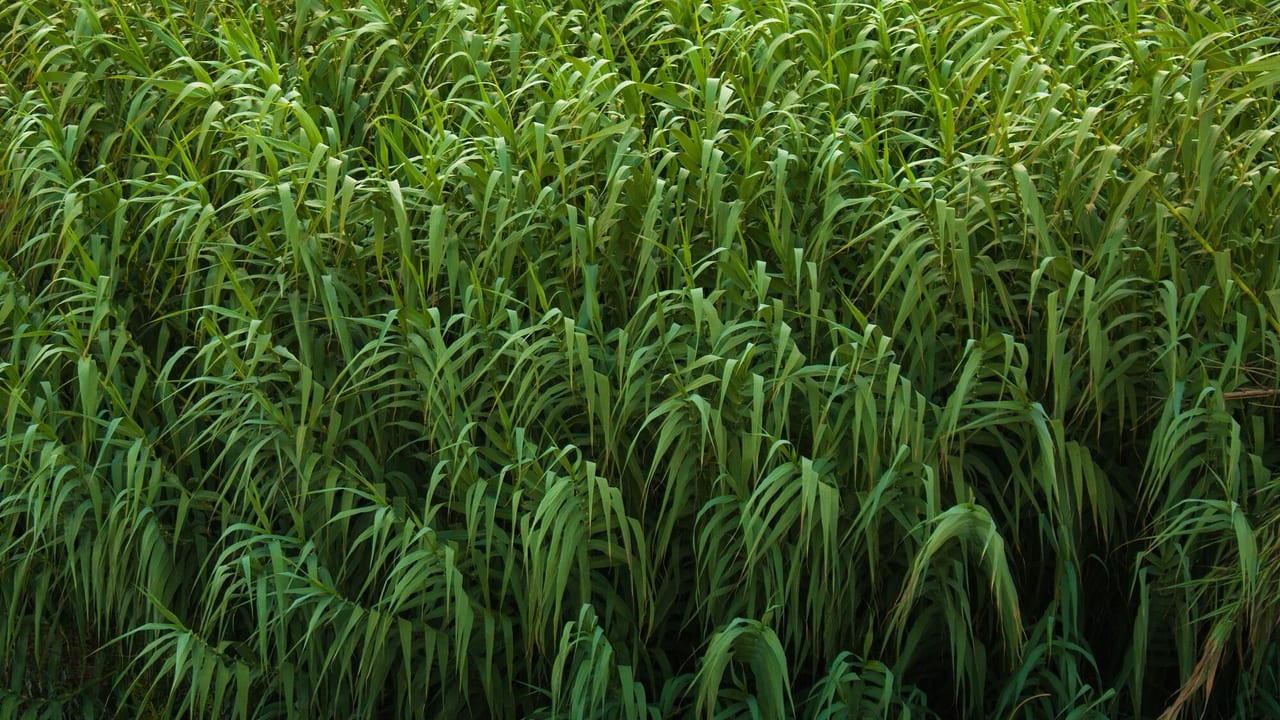
Sudan grass / sorghum-sudangrass hybrid
A high-yield forage crop; overlaps with green mass and haylage.
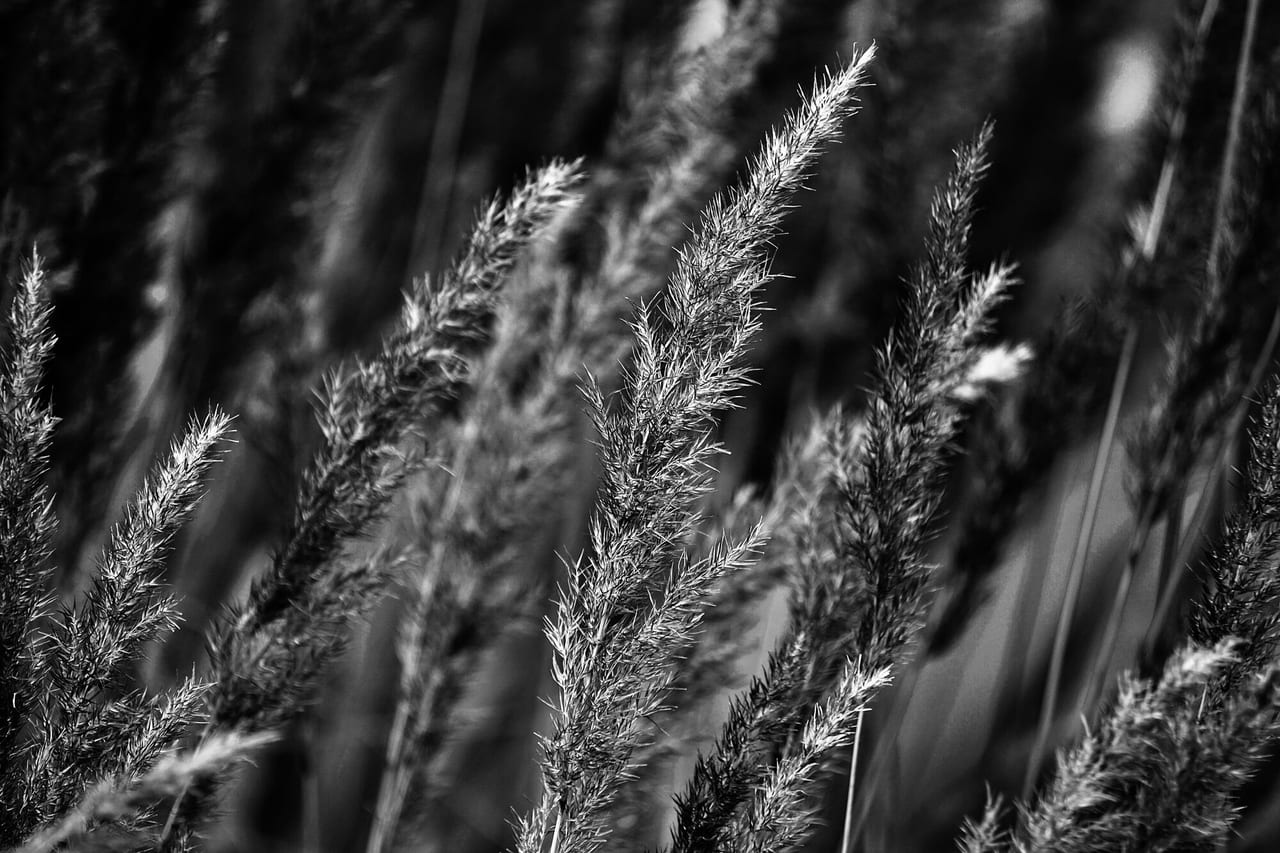
Timothy grass
A cereal forage grass yielding export-quality hay; uniform, gentle drying.
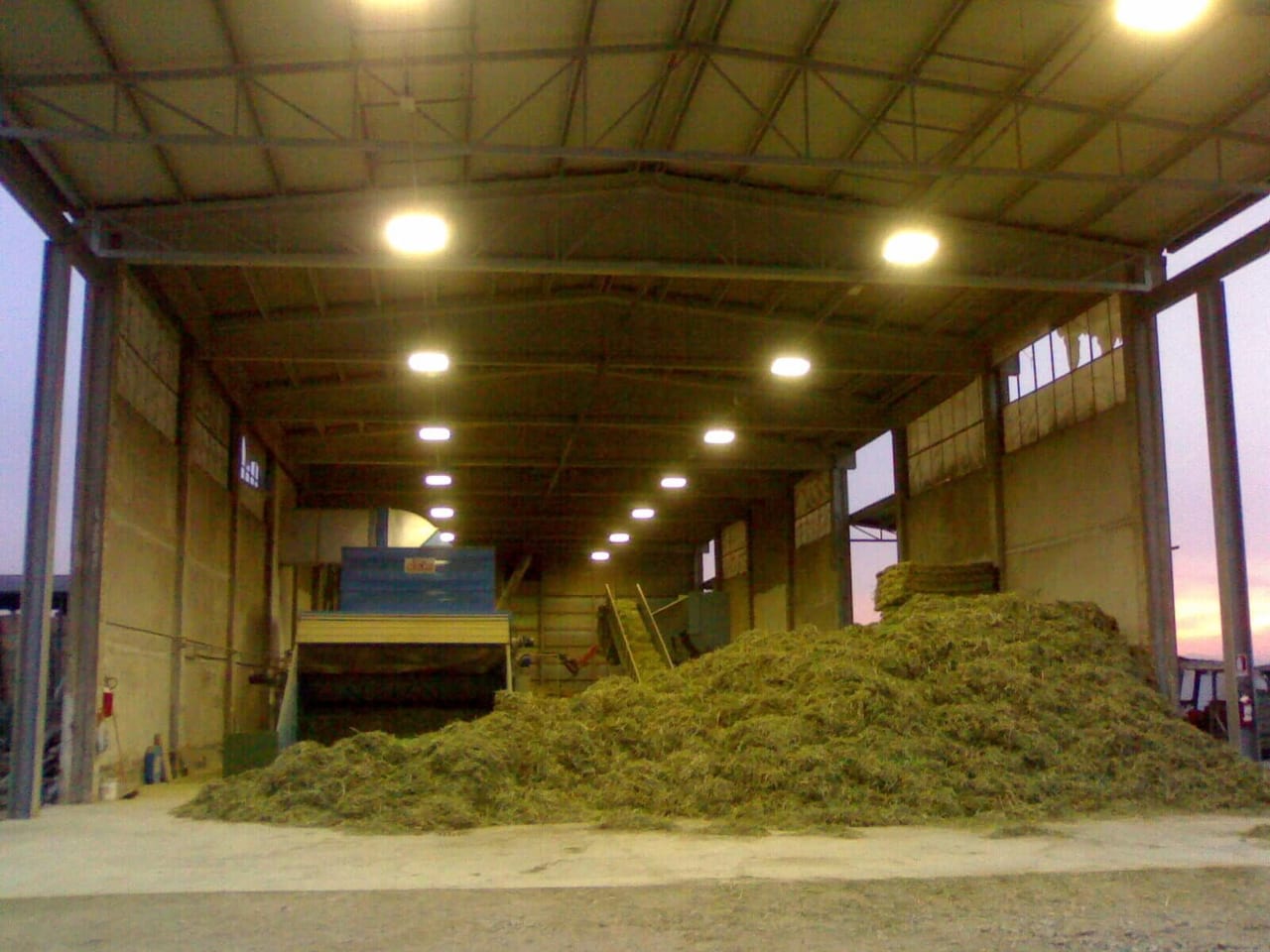
Alfalfa / lucerne
A standalone commercial niche. Gentle drying (60-120 °C) preserves protein, colour and leaf mass - losses of around 2% versus 10-15% on drum dryers.
Our Products
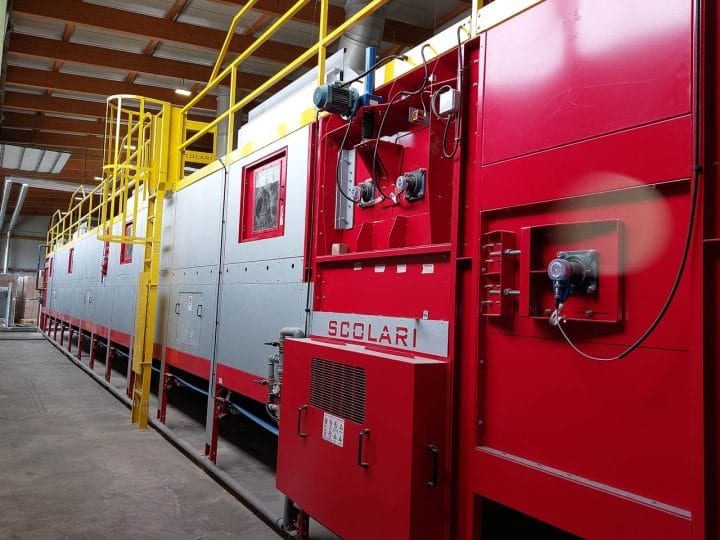
Universal Dryers
These dryers can be customized to dry any industrial or agricultural product you may require. Depending on the specific product and its moisture content, the dryers can be equipped with mixers, movable floors, vibrating floors, and other advanced technologies.
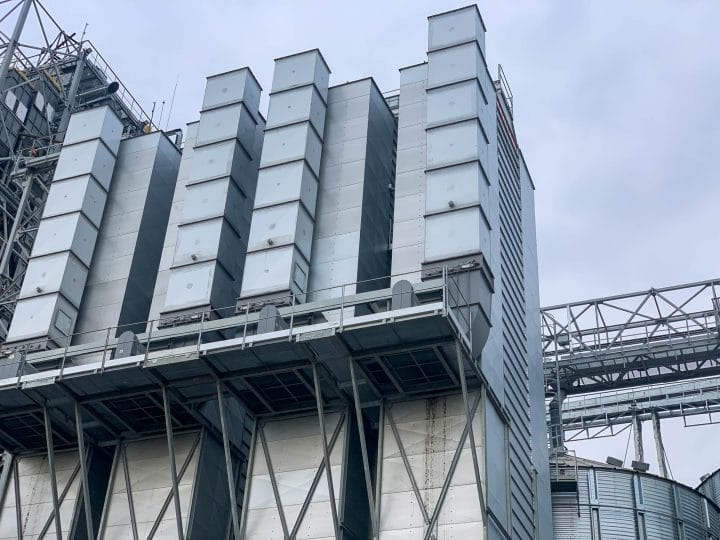
Grain Dryers
Authorized representative for top European grain dryer manufacturers like Alvan Blanch, FAO, and Agrex. Offering a full range of advanced drying solutions for agriculture.
Contact Us
If you are interested in purchasing any of our products, need a price quotation, or have any questions, comments, or suggestions, please do not hesitate to contact us via our contact form, by phone, or by email.
- WhatsApp: +90 (536) 452-1184
- E-mail: write to us
Our phones:
- Kazakhstan: +7 (747) 095-1626
- Moldova: +373 (22) 011-214
- Romania: +40 (31) 229-8484
- Türkiye: +90 (536) 452-1184 (English)
- Ukraine: +380 (67) 111-6668