
Drying Rapeseed and Canola
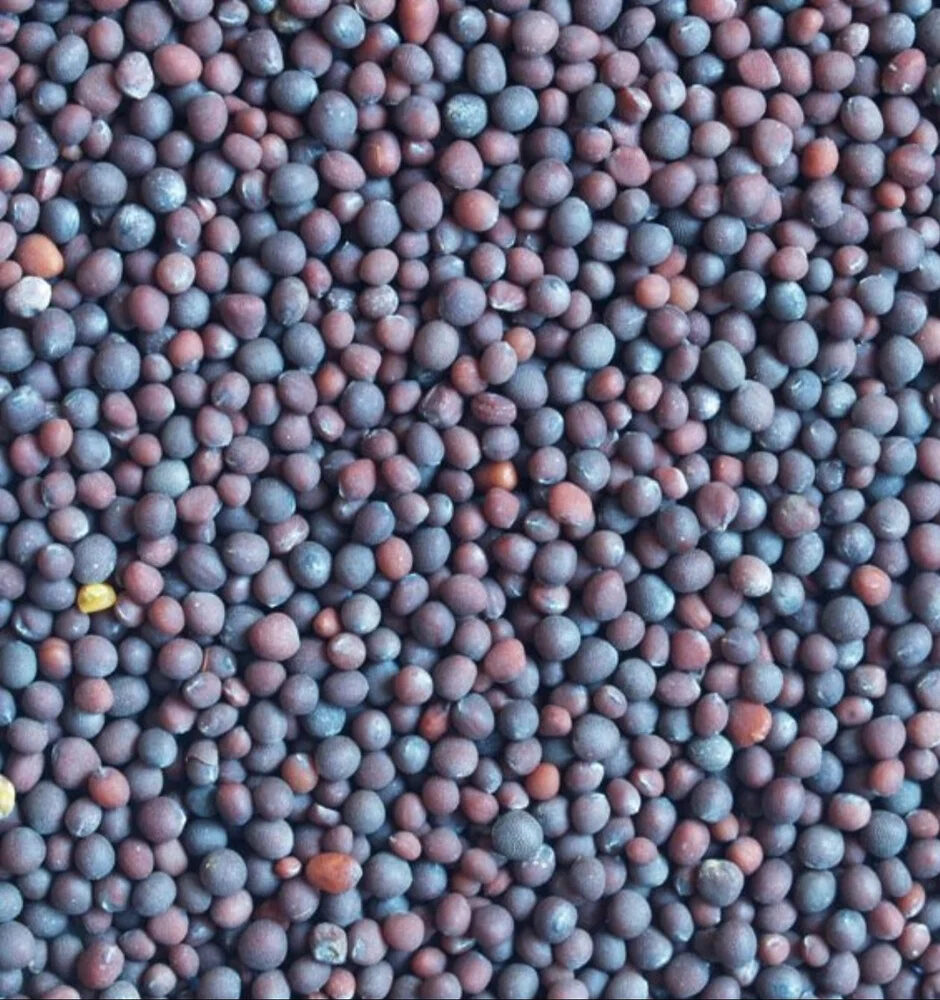
Rapeseed is not a "small grain". It is a small-seeded oilseed crop: around 40–45 % oil in the seed, high sensitivity to self-heating, an elevated fire risk, and special requirements for screens, tract sealing and airflow. The question of what temperature to dry rapeseed at cannot therefore be answered using the logic of wheat or maize.
The main mistake is to look for a single universal temperature. Sources cite figures from roughly 40 to 82 °C for the air, and this is not necessarily a contradiction: they refer to different intended uses of the batch, different initial moisture levels and different dryer designs. Commodity rapeseed for processing tolerates hotter air than seed-grade material — but the seed temperature itself, the fire risk and oil quality must be controlled separately.
In brief: commodity rapeseed is dried to a storage moisture of around 8–9 % (closer to 7 % for long-term storage and for pressing), removing no more than about 5 percentage points of moisture per cycle. For a commodity oil batch, air regimes of 60–82 °C are encountered; our engineering reference with indirect heating is gentler — 55–65 °C. For seed-grade rapeseed the regime is stricter: roughly 40–50 °C for the air, with control of the seed temperature. The two key engineering characteristics of rapeseed are its small seed (which calls for fine mesh and a sealed tract) and its light seed (which calls for an airflow that does not carry the product out of the shaft).
Quick answer
Rapeseed is dried in continuous-flow, batch (recirculating), mobile and shaft grain dryers, and at oil extraction plants — often through a heat exchanger or steam calorifier. The regime is defined not by a single figure but by a combination of parameters: intended use of the batch, initial moisture, dryer type and heat source, whether the seed is agitated, and whether the product temperature is controlled.
| Scenario | What we monitor | Practical reference |
|---|---|---|
| Commodity rapeseed for oil, continuous-flow or recirculating dryer | air temperature + seed heating | approximately 60–82 °C air temperature |
| Gentle regime for an oil extraction plant (indirect heating) | agent temperature | our reference 55–65 °C |
| Seed-grade rapeseed | seed temperature above all | approximately 40–50 °C air temperature |
| Wet rapeseed above 12–13 % | urgency and number of passes | reduce the temperature; if a single pass does not deliver sufficient quality, use two passes or a staged approach, depending on the dryer's capabilities |
| Storage moisture (commodity) | seed moisture | 8–9 %; long-term storage and pressing — around 7 % |
| Moisture removal per cycle | gentleness of the regime | no more than about 5 percentage points |
| Mesh / perforation | mechanics | finer than the standard grain size; for rapeseed — around 1.5 mm instead of 2.5 mm |
Our grain dryers for rapeseed and canola
Rapeseed is well served by grain dryers that can be adapted to a small, light oilseed: Ravaro RR/RC (batch with recirculation and tempering, and continuous-flow), mobile and stationary Agrex AGD/AGD-F, the continuous-flow Alvan Blanch DF and batch BD, and the vertical dryers from FAO. The difference between the solutions is not "dries or does not dry", but throughput, efficiency and safety on a specific batch. For rapeseed we check three things in particular: fine mesh or perforation, adjustable airflow (so the light seed is not carried out of the shaft), and a safe return-air scheme.
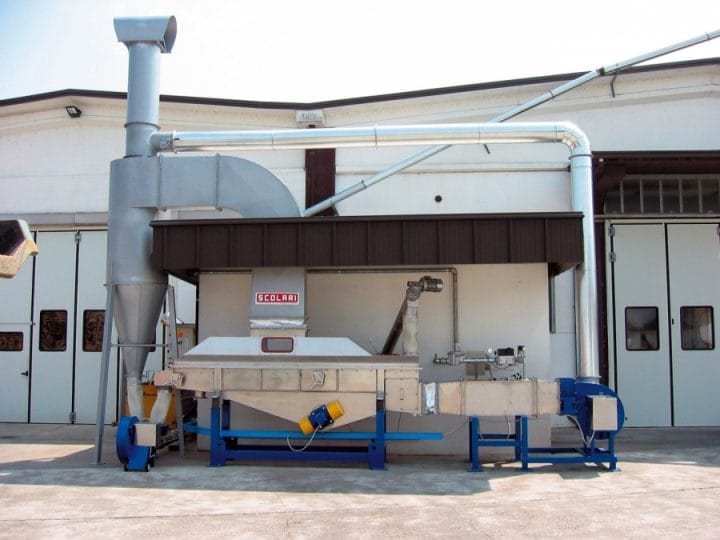
Scolari Vibratory Dryers
Italian Scolari vibratory dryers create an artificial boiling layer of the material being dried, which allows it to be blown through from all sides and effectively remove surface moisture. Suitable for materials with surface moisture, granulated products, or flowing powders.
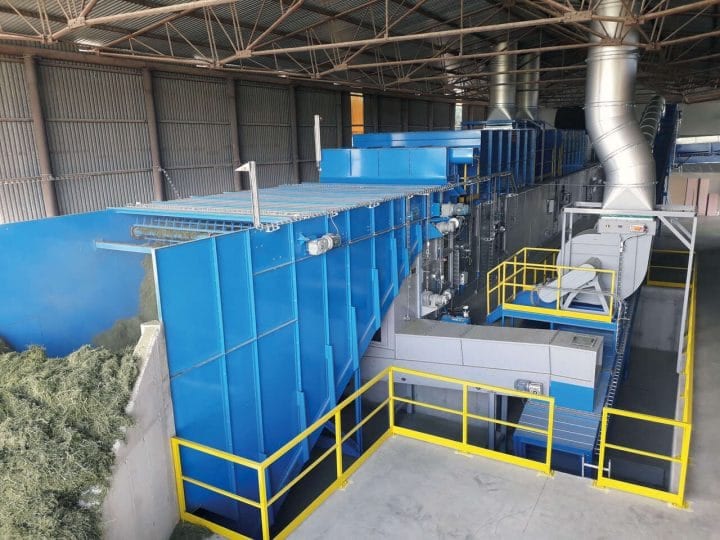
Scolari Dryer With Movable Conveyor Belt
Horizontal dryers feature perforated steel or plastic movable floors designed for drying various materials. Airflow can be configured from top to bottom or vice versa.
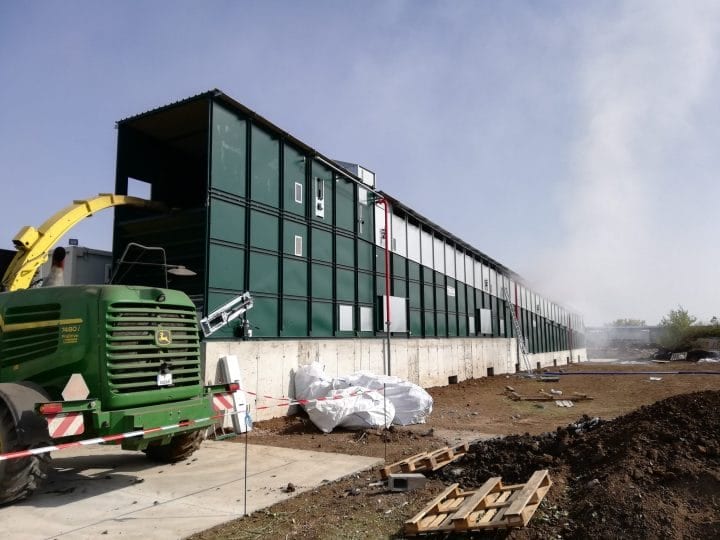
Alvan Blanch Conveyor Dryer
British universal conveyor dryers for non-grain agricultural and industrial products. Thanks to their horizontal design, built-in distribution and stirring systems, they can dry a wide range of materials.
Why there is no single temperature for rapeseed
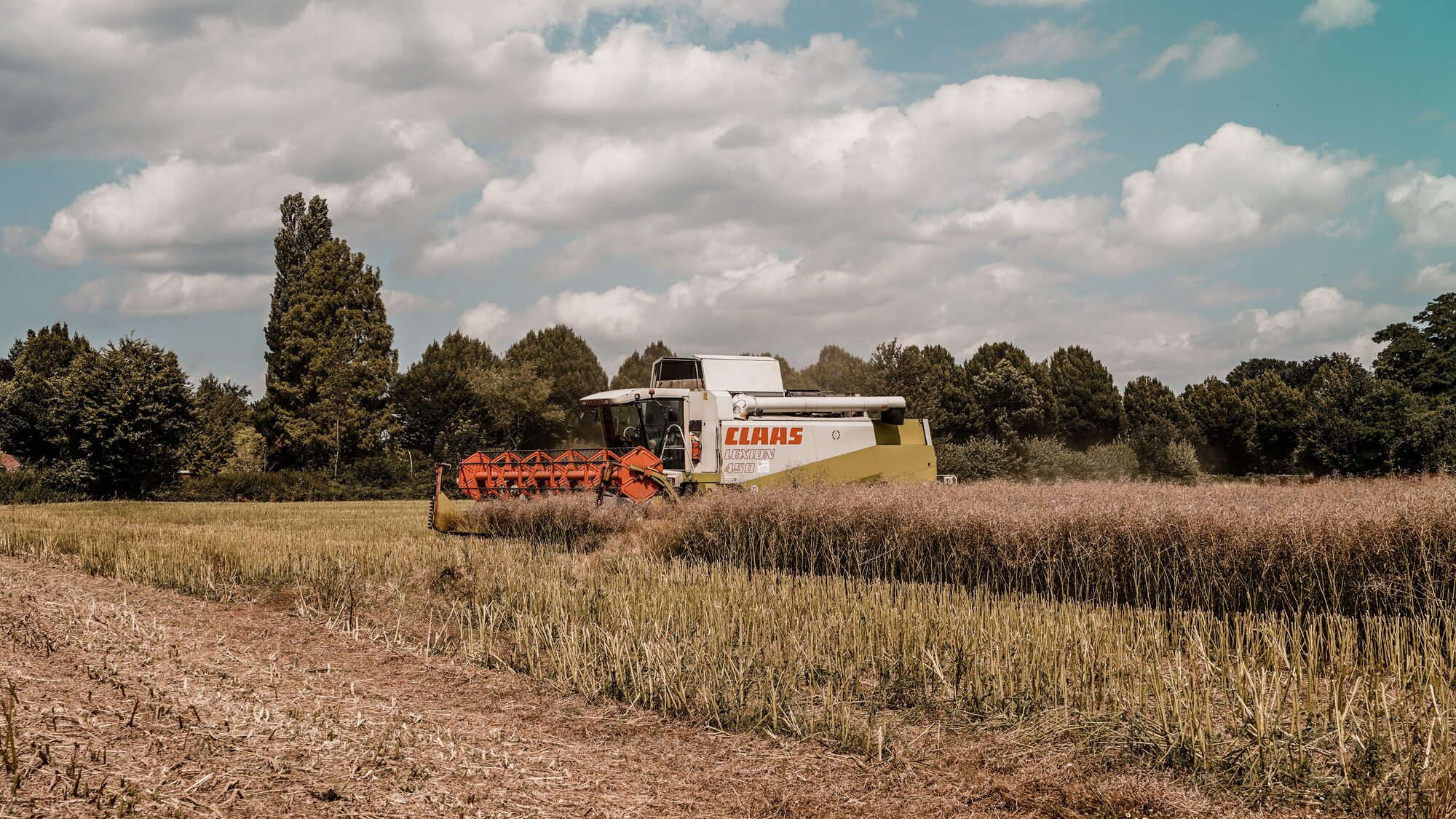
The spread of temperatures in the literature is explained by four factors:
- Intended use of the batch. Commodity rapeseed for pressing and extraction, food-grade canola, seed material and rapeseed for biofuel are all dried differently.
- Initial moisture. The wetter the seed, the lower the temperature should be and the more sensible it is to split drying into stages.
- Dryer design. In a recirculating dryer the seed is agitated and does not sit for long beneath a hot plenum; in a static bed the seed near the plenum can heat almost to the agent temperature.
- What exactly is being measured. Air temperature and seed temperature are different quantities and must not be confused.
For a public recommendation we therefore use not a single figure but a framework:
- seed-grade rapeseed: usually up to 40–50 °C for the drying air, with control of the actual seed heating;
- commodity rapeseed for processing: approximately 60–82 °C air temperature depending on moisture and dryer type;
- wet rapeseed above 12–13 %: reduce the temperature; if a single pass does not deliver sufficient batch quality, the moisture can be removed in two passes or in stages — whether this is necessary and how convenient it is depends on the dryer type;
- oil extraction plant and gentle drying: our practical reference is 55–65 °C with indirect heating and strict product control.
The key professional principle: air temperature can only be discussed together with the intended use of the batch, the initial moisture, the dryer type and the actual heating of the seed itself. The statements "rapeseed is always dried at 80 °C" and "rapeseed must never be dried above 40 °C" are equally wrong without context.
How much cooler the seed is than the air
In a continuous-flow or recirculating dryer, wet seed continuously evaporates moisture and travels through the shaft, so its temperature is noticeably lower than the agent temperature. In a static bed the picture is different: seed near the plenum can heat almost to the air temperature.
For commodity rapeseed quality the reference is a seed heating of around 43 °C, while germination falls markedly above 55 °C. This is precisely why the same air temperature gives different quality results in different dryers.
What we are drying: commodity, food-grade, seed or biofuel rapeseed
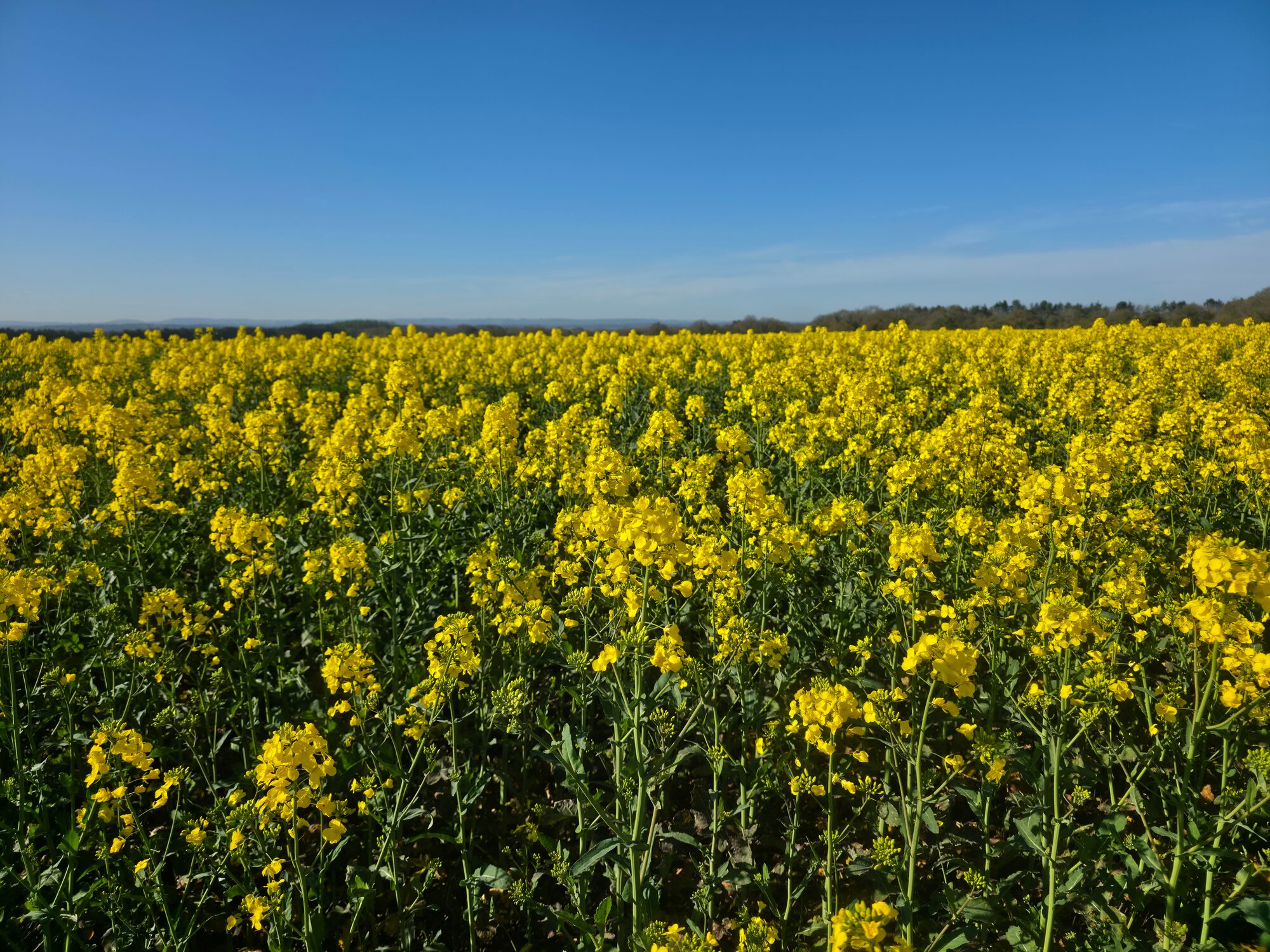
Before choosing a regime, you need to understand where the batch is going. It is one crop, but four different technological tasks.
Commodity rapeseed for oil pressing and extraction is the main commercial scenario. The criteria: storage moisture, the acid value and oxidative stability of the oil, the absence of any signs of self-heating, and safe dryer operation.
Food-grade canola is the same crop with varietal requirements for erucic acid and glucosinolates. It is important to understand: drying neither creates nor "improves" these indicators — they are set by the variety. But overheating and poor storage worsen the oil quality and the sensory profile.
Seed-grade rapeseed and expensive hybrids — here the primary criterion is not oil but germination capacity and germination energy. The regime is gentler, moisture removal per pass is smaller, and the mechanics are more careful.
Rapeseed for cold pressing and biofuel often requires a lower final moisture (of the order of 6.5–7.5 %) and a careful regime: for biofuel the acid value of the oil is critical.
What moisture to dry rapeseed to
For commodity rapeseed the practical reference is 8–9 %. At this moisture, and after cooling, the batch is suitable for normal storage and processing. For long-term storage and for pressing, the reference is lower — around 7 %.
| Batch condition | Practical meaning |
|---|---|
| Around 8–9 % | working reference for storage and processing; above 9 % an oil plant will usually no longer accept it |
| Around 7 % | long-term storage; some cold-pressing schemes (6.5–7.5 %) |
| Below 6–7 % | over-drying: breakage, splitting and handling losses increase |
| 9–11 % | an "average" batch: drying or controlled ventilation required |
| 11–13 % | wet rapeseed: unstable, dry quickly and gently |
| Above 13 % | a raw batch: self-heats in bulk within a day, dry immediately |
The final moisture is agreed with the buyer, the oil plant and the planned storage period. And it is important to remember the flip side: "the drier the better" does not apply to rapeseed. Below approximately 6–7 % the small seed splits more readily, handling losses grow and fuel is wasted.
Why you cannot remove all the moisture in a single harsh pass
Canola practice: no more than about 5 percentage points of moisture are removed per cycle, and for seed material even less. If you try to remove all the water at once, the seed surface dries out before the core, the regime has to be forced, and overheating, non-uniformity and fire risk all increase.
Very wet rapeseed is better passed through the dryer twice on a gentle regime with intermediate cooling than once on a harsh one.
Why wet rapeseed self-heats quickly
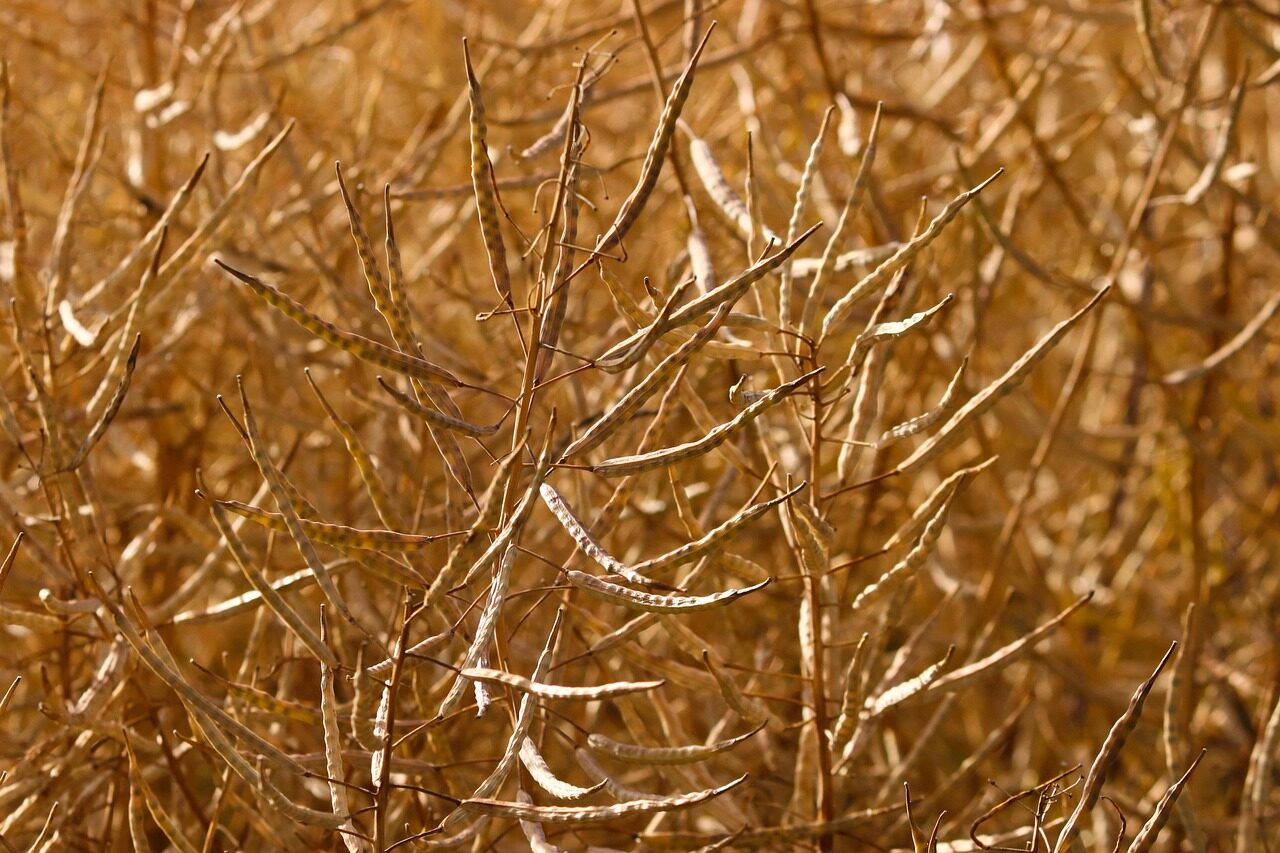
Rapeseed is highly hygroscopic and remains biologically active after harvest. Wet seed and impurities continue to respire, releasing heat and moisture. Because of the small seed size, a bed of rapeseed presents high resistance to airflow, so heat and moisture struggle to leave the bulk, and a local wet patch quickly turns into a hot spot.
At moisture above 13 % the temperature in the bulk can rise by more than 10 °C overnight, and in a large heap respiration drives the heating to very high values, with mass caking and mould. For rapeseed, therefore, it is not only a high drying temperature that is dangerous, but also a delay in drying.
Even a correctly dried batch must not be binned warm. After drying, rapeseed is cooled — a reference of roughly 10–15 °C, and then lower as the outside air cools. In the first weeks of storage the seed still "sweats": moisture redistributes within the batch, so thermometry, aeration and monitoring are needed. It is sensible to aerate with air that is around 7 °C or more colder than the seed — otherwise the mass can be re-moistened.
Practical conclusion. Drying rapeseed does not end at the shaft outlet. A batch is considered stable only after cooling, a repeat moisture measurement and placement in a clean silo with thermometry and aeration.
Small seed: why rapeseed needs a special dryer
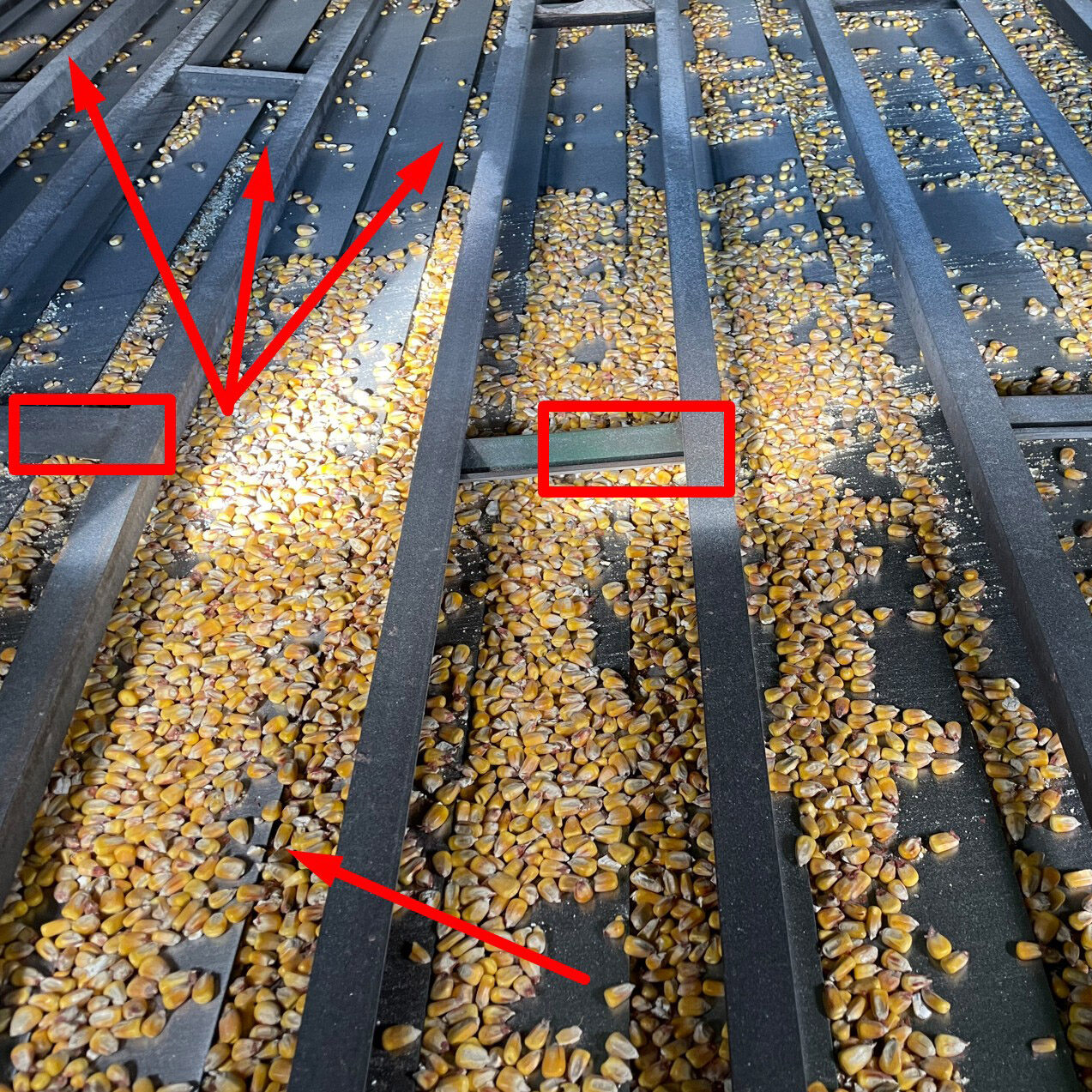
Rapeseed is significantly smaller than wheat, maize and soybean. If a dryer is designed only for large grain, losses arise that no temperature setting can cure:
- the seed sifts through the mesh, perforated floor or louvres;
- the fine fraction reaches the air channels and accumulates near the burner;
- dustiness and fire load increase;
- uniformity of product movement in the shaft declines.
For all dryers with screens and mesh — mobile, modular and tower — rapeseed therefore needs a separate, finer mesh. This is not a minor item of specification but one of the key questions in equipment selection.
A concrete example from our practice: for mobile Agrex grain dryers working with rapeseed and linseed we offer a 1.5 mm mesh instead of the standard grain 2.5 mm — precisely because rapeseed sifts through 2.5 mm. For even smaller crops (for example, mustard) 1.0 mm or 0.8 mm may be required.
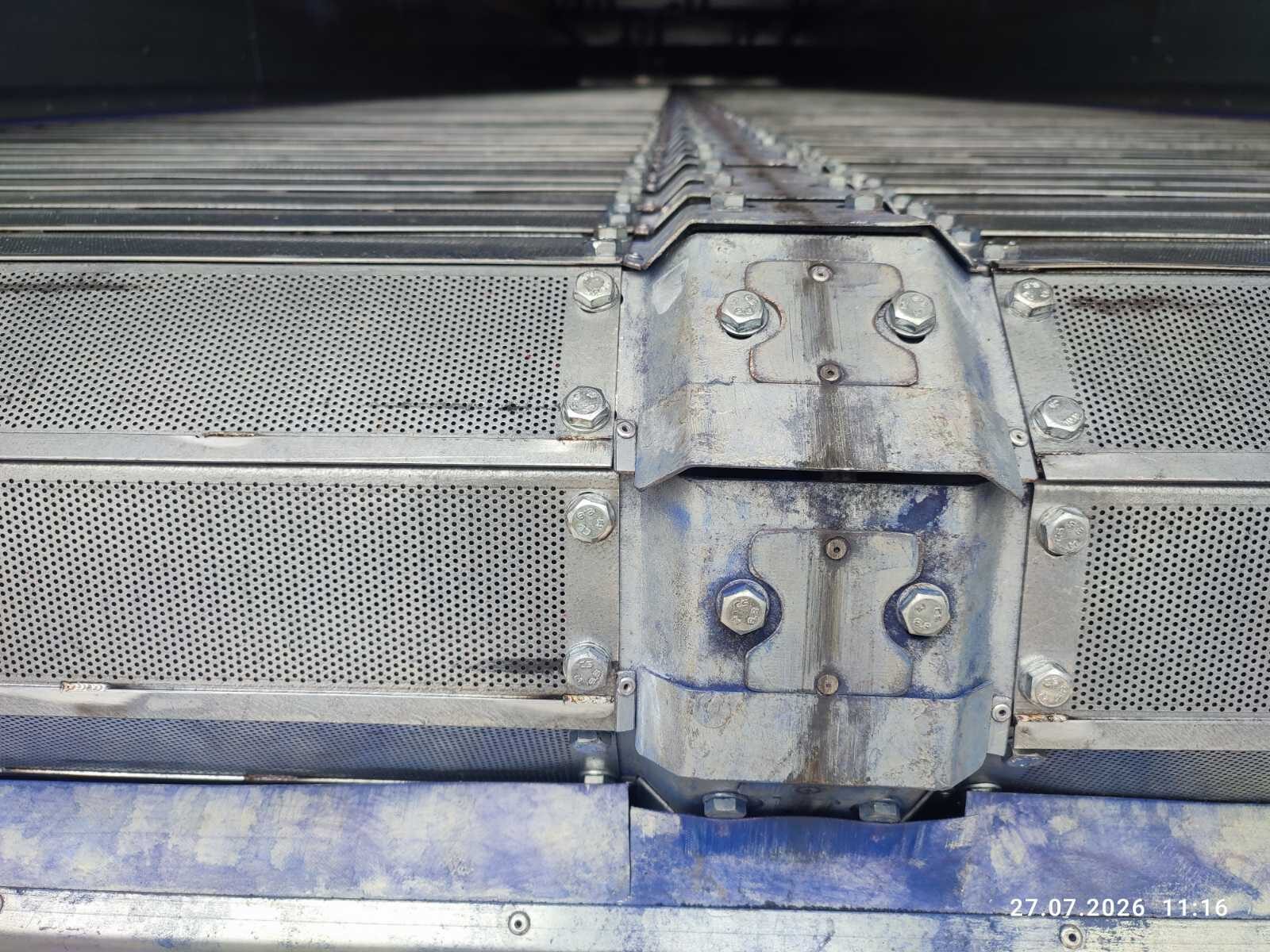
But the mesh is only part of the question, which is why it is more accurate to speak not of a "special mesh" but of a special dryer. For a small seed the entire tract is selected: the perforation of the floor and shaft, the depth and speed of the moving bed, the sealing of joints and hatches, the elevators and conveyors, and access for cleaning. A single mesh change will not save a machine in which the fines flow freely into the air channels.
This is why designs exist that are engineered from the outset for fine and seed material. A characteristic example is dryers with a perforated moving floor (a solution used, among others, by Herbas container dryers): a thin layer of product moves slowly over a fine perforation and is blown through from below. For seed-grade rapeseed, grasses and small oilseeds this is a gentle regime with precise control of drying time — but its throughput is more modest than that of a continuous-flow shaft machine.
The same principle applies beyond the dryer: in modular grain stores and aeration systems the holes and slots must likewise be chosen so that rapeseed neither sifts through nor is blown out.
What to check before buying. The mesh or perforation size for rapeseed; the sealing of the loading and discharge tract; the suitability of elevators, augers and conveyors for small seed; ease of cleaning after a batch. The phrase "the dryer is suitable for cereals" does not yet mean it is suitable for rapeseed without modification.
Light seed: an airflow that does not carry the product out of the shaft
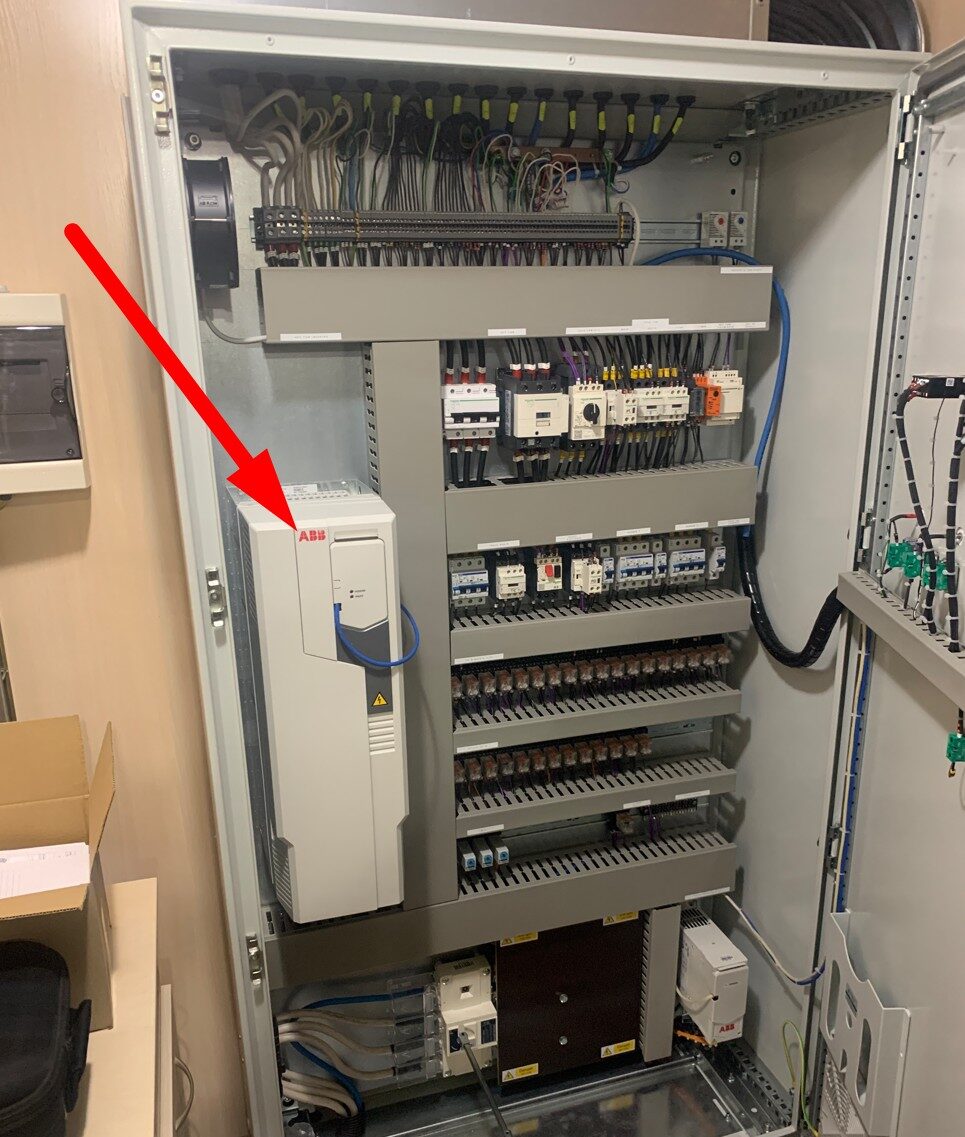
The second characteristic of rapeseed is that it is light. A powerful airflow designed for maize starts to work against us on rapeseed: the fan draws the light seed and grain trash out of the shaft. This is a direct loss of product plus deposits of fines where they should not be.
In maize-oriented dryers, the active heat-recovery fans are therefore fitted with mechanical systems to reduce the airflow through the grain shaft, or with ordinary variable-frequency drives. The ability to reduce the fan speed is exactly "setting up for rapeseed": the dryer can be adapted to the crop, the moisture and the contamination of the batch.
A reference for the airflow magnitude: according to the NDSU Canola Production Field Guide, natural drying of canola uses an airflow of the order of 50–70 m³/h per tonne of grain, and higher values are inefficient because of the high aerodynamic resistance of the bed. The logic is the same for heated drying: rapeseed does not need "maize" air — it needs calm and uniform air.
Why reducing airflow is beneficial specifically for light crops
With too intense an airflow, light fractions are carried out of the dryer more actively: dust, broken seed, fine organic matter and sometimes part of the product. With sunflower this shows up in the husk; with rapeseed, in the seed itself and fine trash.
Adjusting the fan speed makes it possible to select a calmer regime for air passing through the bed. But this must be done only within the limits provided for by the dryer design: too weak an airflow reduces moisture removal and stretches out the drying time. On British Alvan Blanch grain dryers, for example, adjusting the fan via a variable-frequency drive is standard engineering practice.
Cleaning before drying — part of fire safety
Impurities in a rapeseed batch are usually wetter than the main seed and pass air less readily. They create local overheating zones and raise the fire risk. In addition, pods, straw and plant residues can hang up in the shaft and disturb the uniformity of product movement.
The technological chain for rapeseed should therefore include:
- preliminary cleaning of the batch to remove light and coarse impurities;
- drying with control of air and seed temperature;
- cooling;
- a repeat moisture check;
- placement in a clean silo with thermometry and aeration.
For a small seed it is especially important that the grain separator is matched to rapeseed: the sieve apertures and aspiration regime differ from those for cereals.
Fire safety and return air
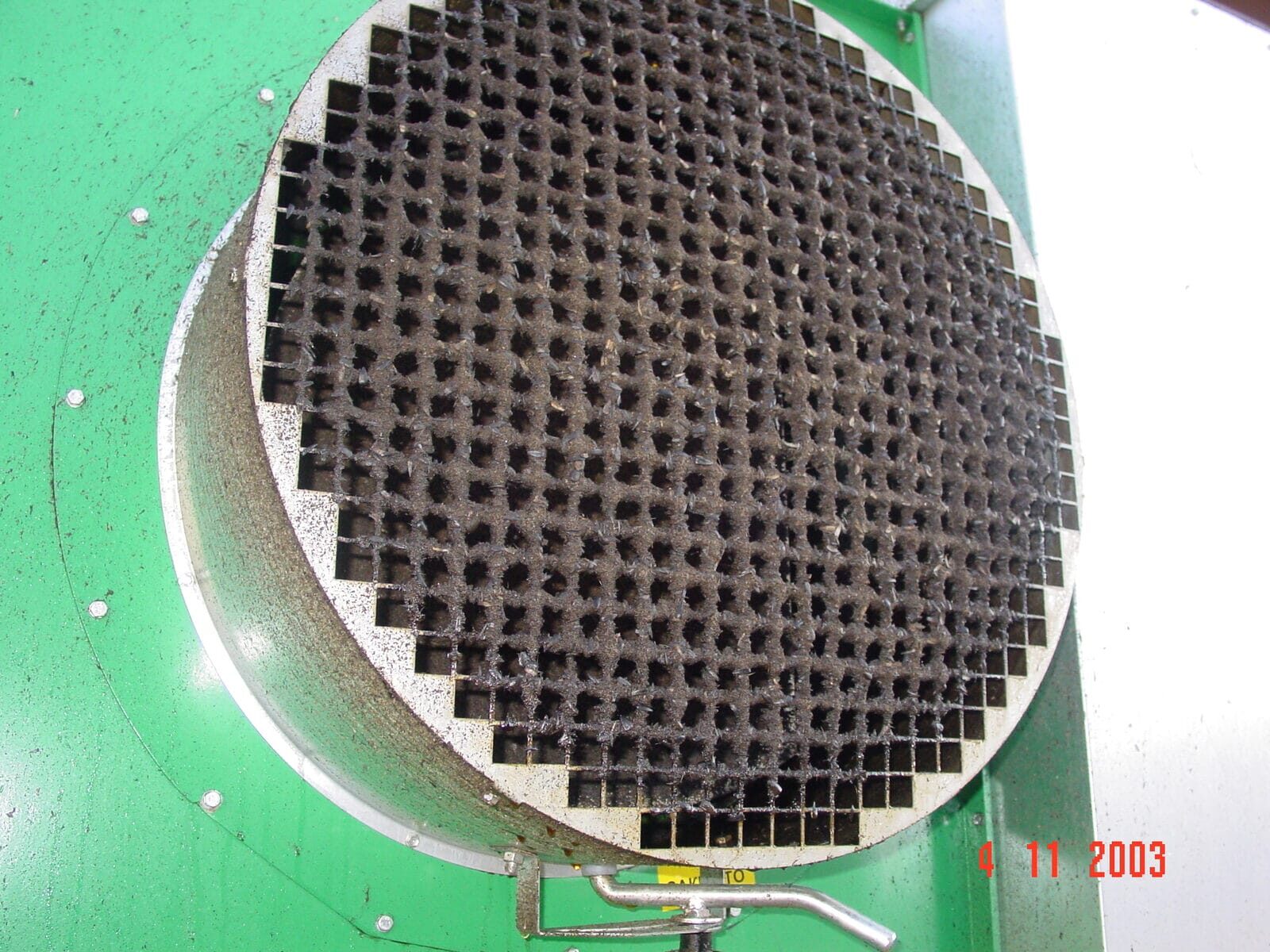
Rapeseed is among the oilseed crops with an elevated fire risk. The danger comes not so much from the oil in the seed as from the combination of fine organic dust, impurities, local blockages and hot air. A separate factor is dust from adjacent equipment: a separator, cyclone, discharge hopper or open conveyors. If it is drawn into the dryer, it can ignite at the burner.
Hence some simple rules: protect the air intake, regularly remove accumulations of dust and plant residues from the air channels, walls and burner zone, prevent product blockages, and clean the dryer thoroughly when changing crops.
For more on the mechanics of ignition and how to avoid it, see the separate article on fires in grain dryers.
Heat recovery and recirculation are not the same thing
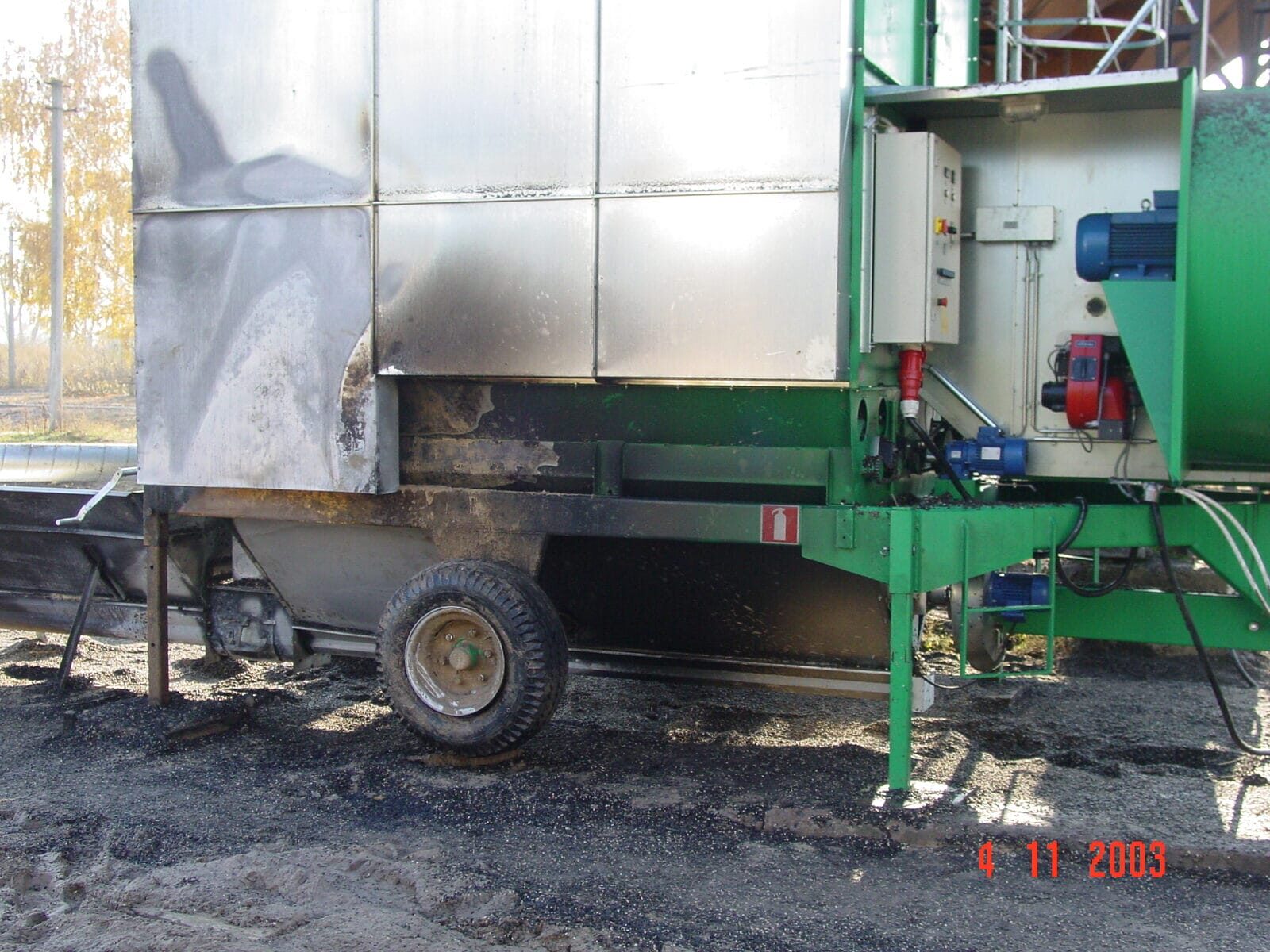
It is important here not to slide into the slogan "when drying rapeseed all heat recovery must be switched off". Two different scenarios need to be distinguished.
The dangerous scenario is the return of dusty exhaust air to a direct burner, or into a zone of possible ignition, without cleaning, control or a confirmed oilseed regime. This is precisely how oilseed dust reaches an ignition source. In dryers where recirculation cannot be switched off (for example, two-zone Bonfanti CE units), we do not recommend this scheme for rapeseed, soybean or sunflower.
The scenario that is acceptable after verification is the recovery of clean air from the cooling zone, an air-to-air heat exchanger, a steam calorifier and other schemes in which dust is not returned to the ignition source. Such solutions can be safe for rapeseed if the system is designed specifically for oilseed crops.
The wording we hold to: the return-air scheme must be designed for oilseeds — with cleaning, temperature control and the ability to disable it safely. This applies equally to any declared heat recovery from the cooling zone: it is not the same as full recirculation of dusty drying air.
Switching crops without cleaning
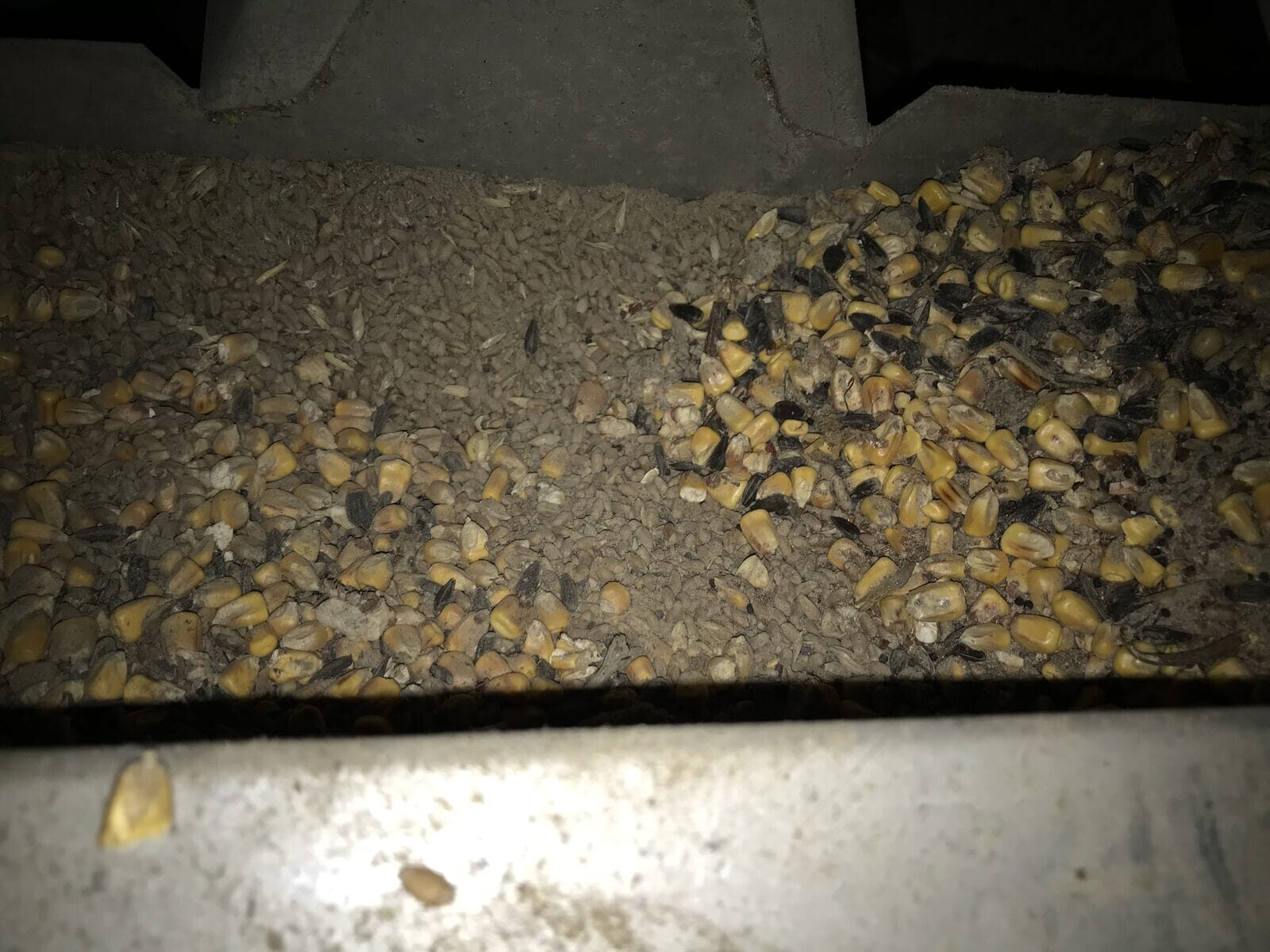
A typical dangerous scenario: rapeseed was dried first, fines and oilseed dust were left in the shaft and channels, and then maize was started at 120–140 °C. Rapeseed residues can ignite in such a situation.
Therefore after rapeseed the dryer must be cleaned thoroughly before switching to a crop with a higher temperature. For a small seed this is especially relevant: rapeseed lodges in gaps and slots from which the standard airflow cannot dislodge it.
Indirect heating: steam and heat exchanger
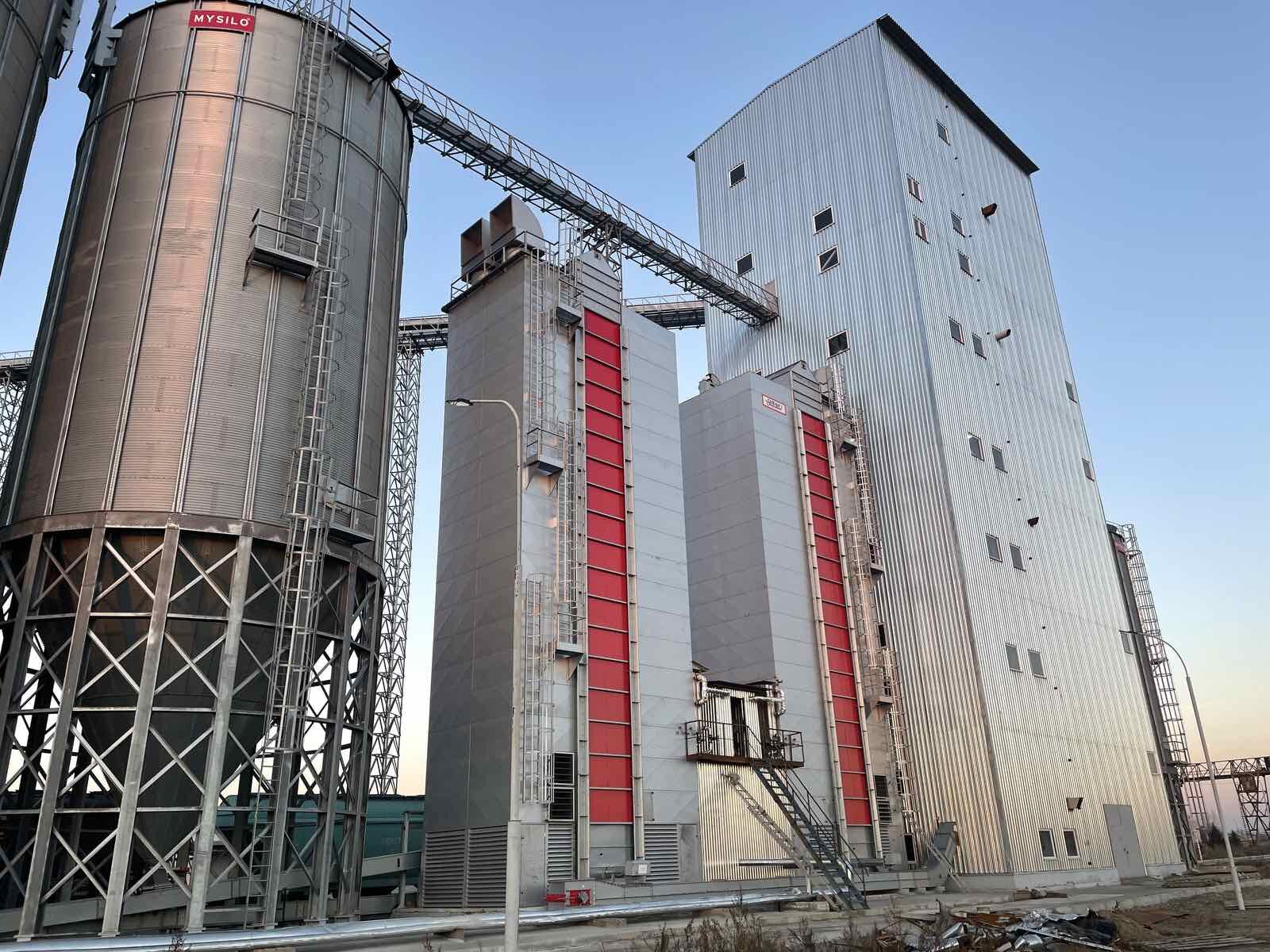
For oil extraction plants and fire-prone crops, indirect heating is the logical choice: clean heated air is fed into the drying section, and combustion products and sparks do not contact the seed. The scheme is especially appropriate where steam is already present in the process. For more, see the article on steam grain drying.
An additional advantage for rapeseed: oilseeds do not need the high temperatures that maize does, so a steam calorifier covers the 55–65 °C working range well. The easiest to convert to steam are vacuum-type dryers, where the heat exchanger is built directly into the shaft wall and heat losses are minimal.
But there is an important caveat that we always spell out at the selection stage: converting a dryer to a heat exchanger or steam becomes substantially more difficult if the machine was originally designed for direct heating and full heat recovery. The more complex the thermal scheme of the original dryer, the more expensive and the less efficient such a conversion turns out to be. This is one reason why, for an oilseed flow, we look from the outset at designs in which indirect heating is provided as standard.
Why the heat exchanger must be easy to clean
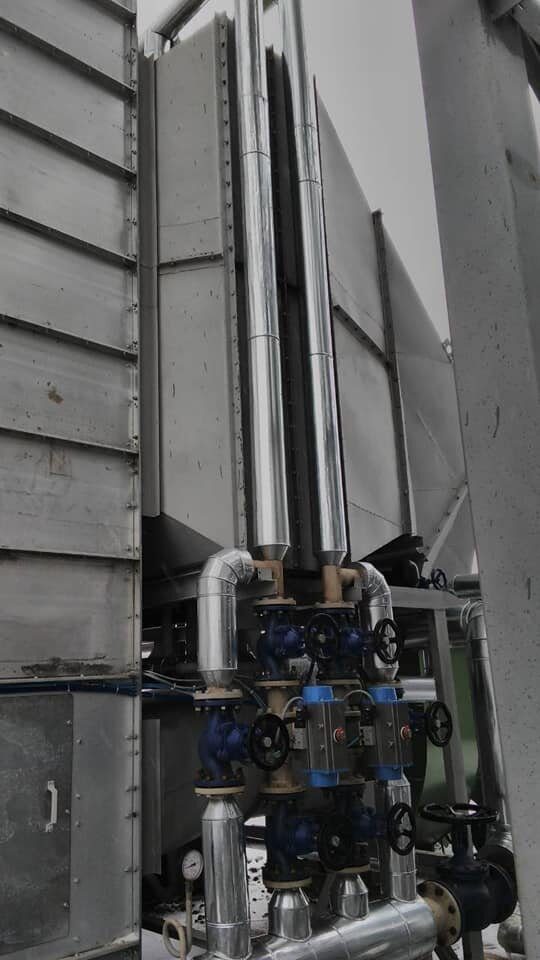
The air around a dryer almost always contains dust and fine particles, and with rapeseed its own fines are added. If a heat exchanger has gaps that are too narrow between tubes or plates, it clogs quickly: heat transfer falls, resistance rises, and contaminated, overheated zones appear.
For oilseeds, therefore, what matters is not the mere fact of a "dryer with a heat exchanger" but the design of the heat exchanger, its location and real access for cleaning.
Which dryers are suitable for rapeseed
Rapeseed is suited not to "any grain dryer" but to those that can be adapted to a small, light oilseed. Below are the solutions we work with.
Ravaro RR — batch drying with recirculation and tempering
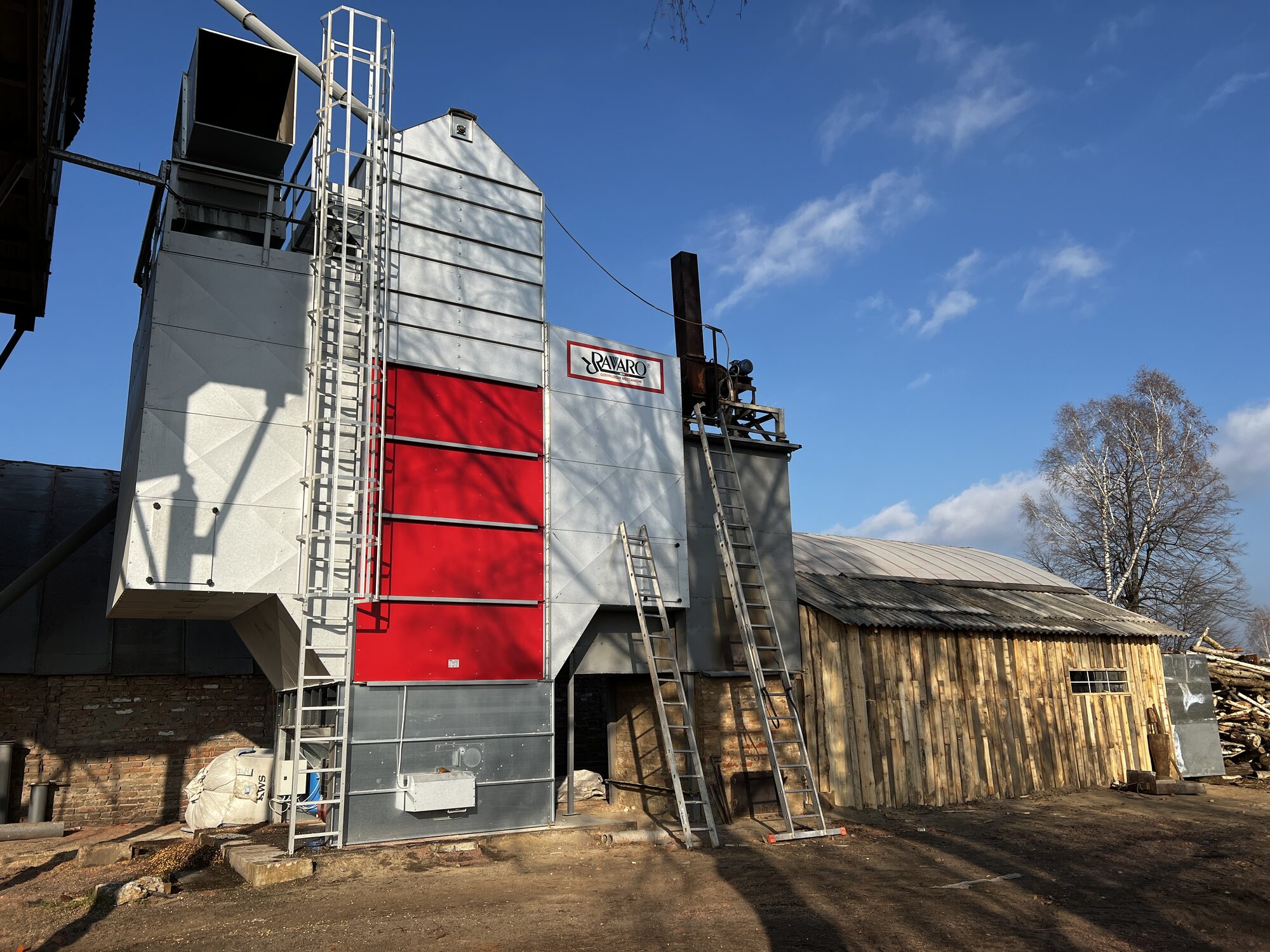
Ravaro explicitly lists rapeseed (colza) among the crops it processes. The batch RR combines product recirculation, agitation and a tempering phase: during tempering, moisture migrates from the centre of the seed to the surface, and the next pass removes it more gently. For a small oilseed this is a marked advantage — less overheating for the same moisture removal.
Ravaro RC — continuous-flow drying for high volumes
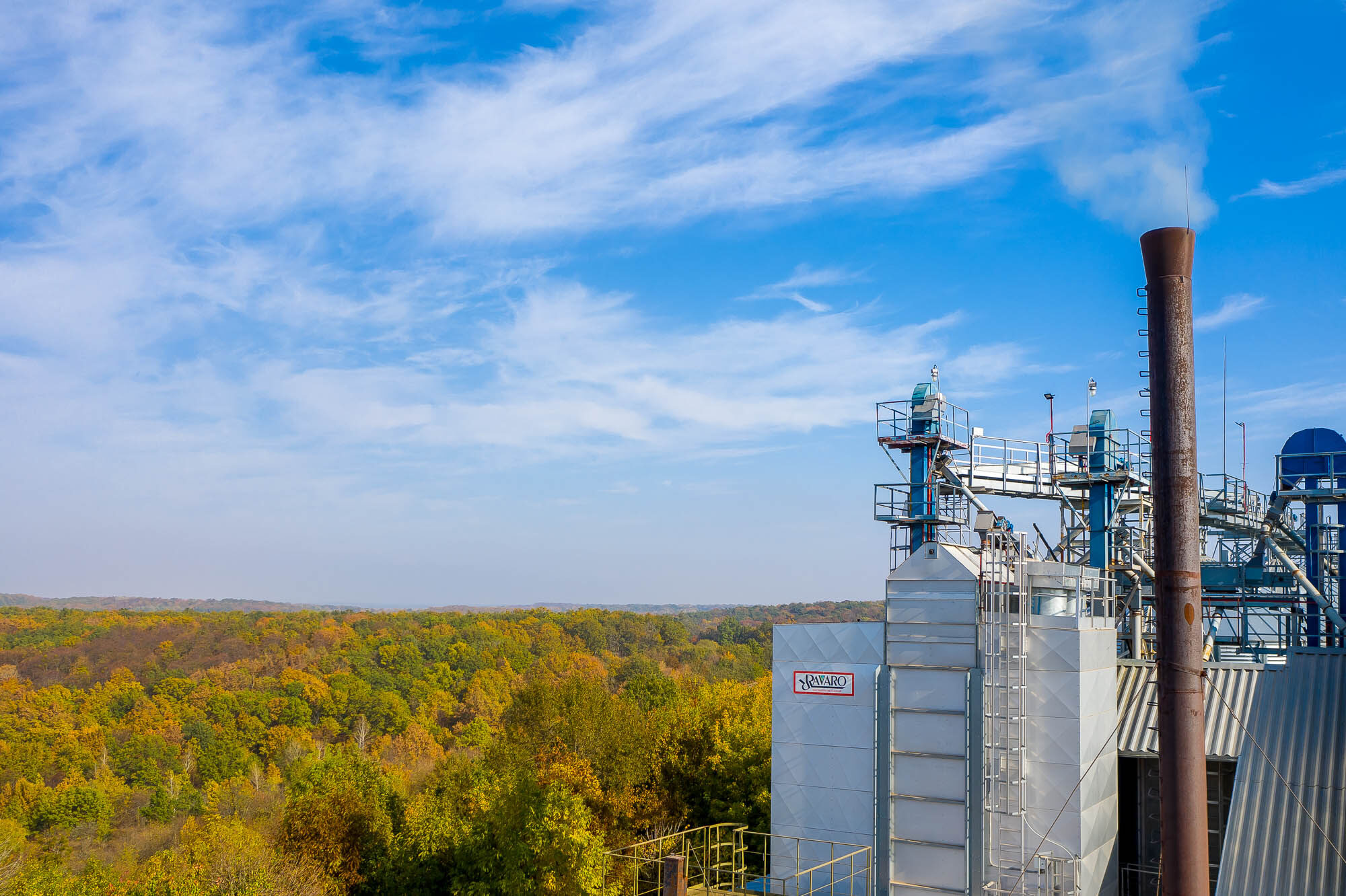
The continuous-flow Ravaro RC suits grain storage operators and processors with a constant raw-material stream. For rapeseed we confirm the perforation, temperature regime, aspiration scheme and safe handling of oilseed dust. Vacuum-type Ravaro models are the easiest to convert to steam for oil extraction plants.
Agrex AGD / AGD-F — mobile and stationary solutions
Agrex suits farms and grain storage operators that need a mobile or compact stationary dryer. Rapeseed is already present in the Agrex throughput tables, but for it not only throughput matters: a 1.5 mm mesh, a sealed tract and a suitable fan regime are needed. We would also note the mechanics: most mobile solutions on the market use recirculation augers, and an auger increases seed breakage and damage. For valuable batches we therefore offer the AGD-F models, in which bucket elevators replace augers — they convey the product more gently.
We do not promise an exact rapeseed throughput without a calculation: it depends on the initial moisture, the required water removal, the temperature and the configuration of the specific model.
Alvan Blanch DF — continuous double-flow dryer
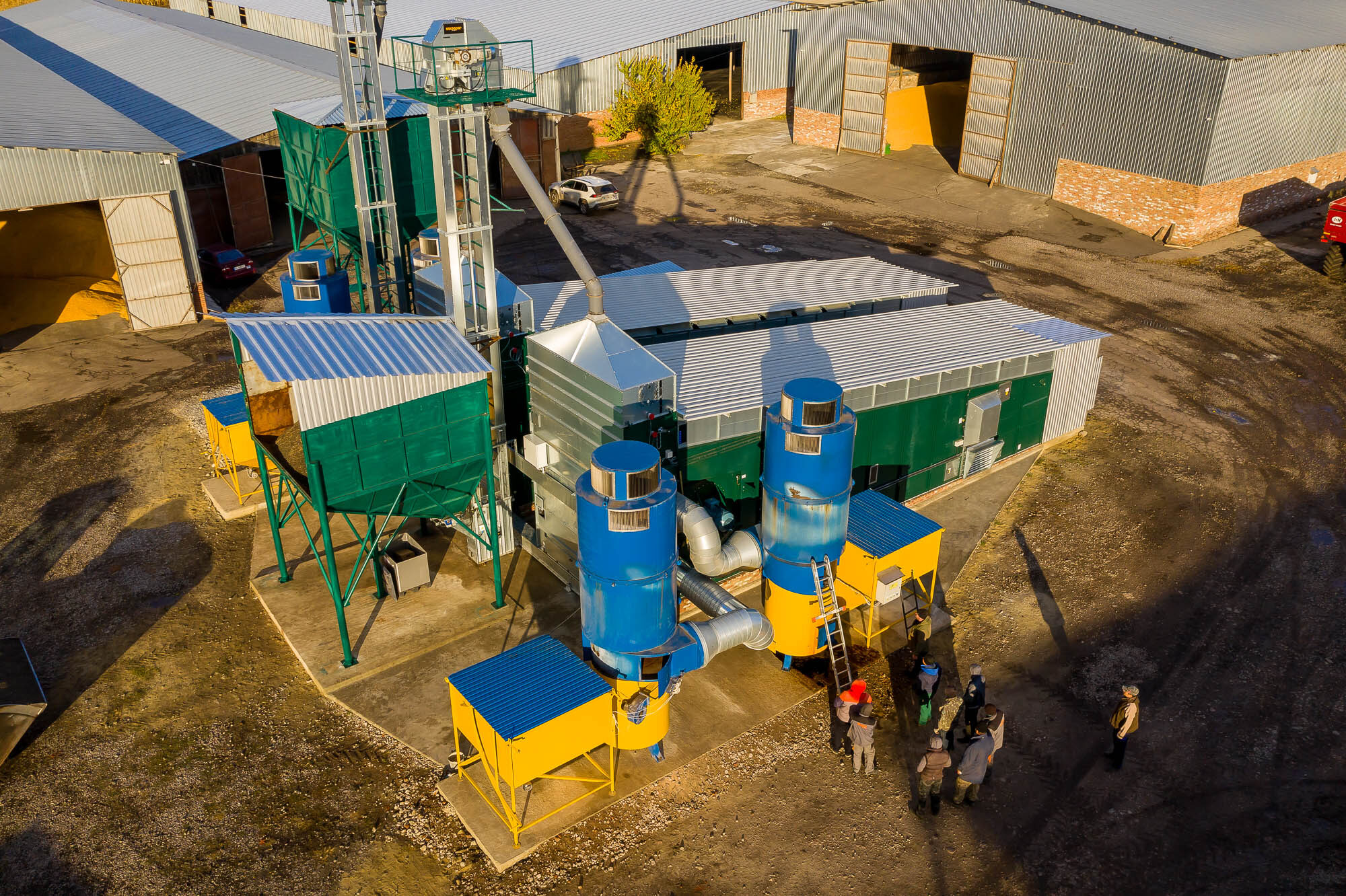
The Alvan Blanch DF is a continuous double-flow dryer with mechanical product movement. The manufacturer lists rapeseed and canola in its throughput table with a rated regime of 13 → 9 % at 80 °C air temperature.
We use this figure only as a rated example for commodity rapeseed. It is not a universal recommendation and certainly not a regime for seed material.
Batch solutions for seed-grade rapeseed
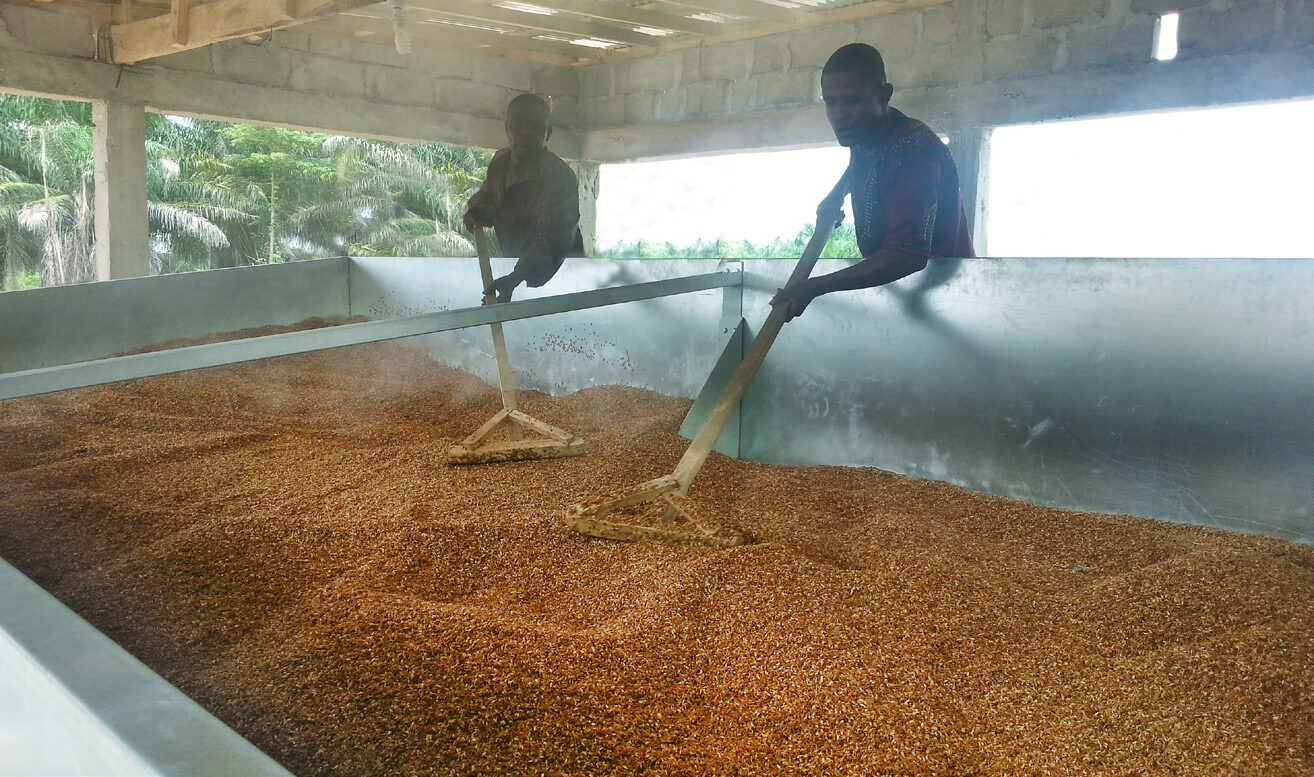
For seed material, machines are preferable in which the temperature can be limited precisely, the product agitated carefully, and a pause introduced to equalise the moisture. These are batch and low-temperature solutions — for example, the Alvan Blanch BD configuration or similar batch dryers.
An important caveat: we settle on a specific model for seed-grade rapeseed only after the manufacturer confirms the perforation, the temperature regime and the drying uniformity for rapeseed. We will not describe such a machine as a "specialised rapeseed dryer" without confirmation.
Two-zone and other dryers: capable, with caveats
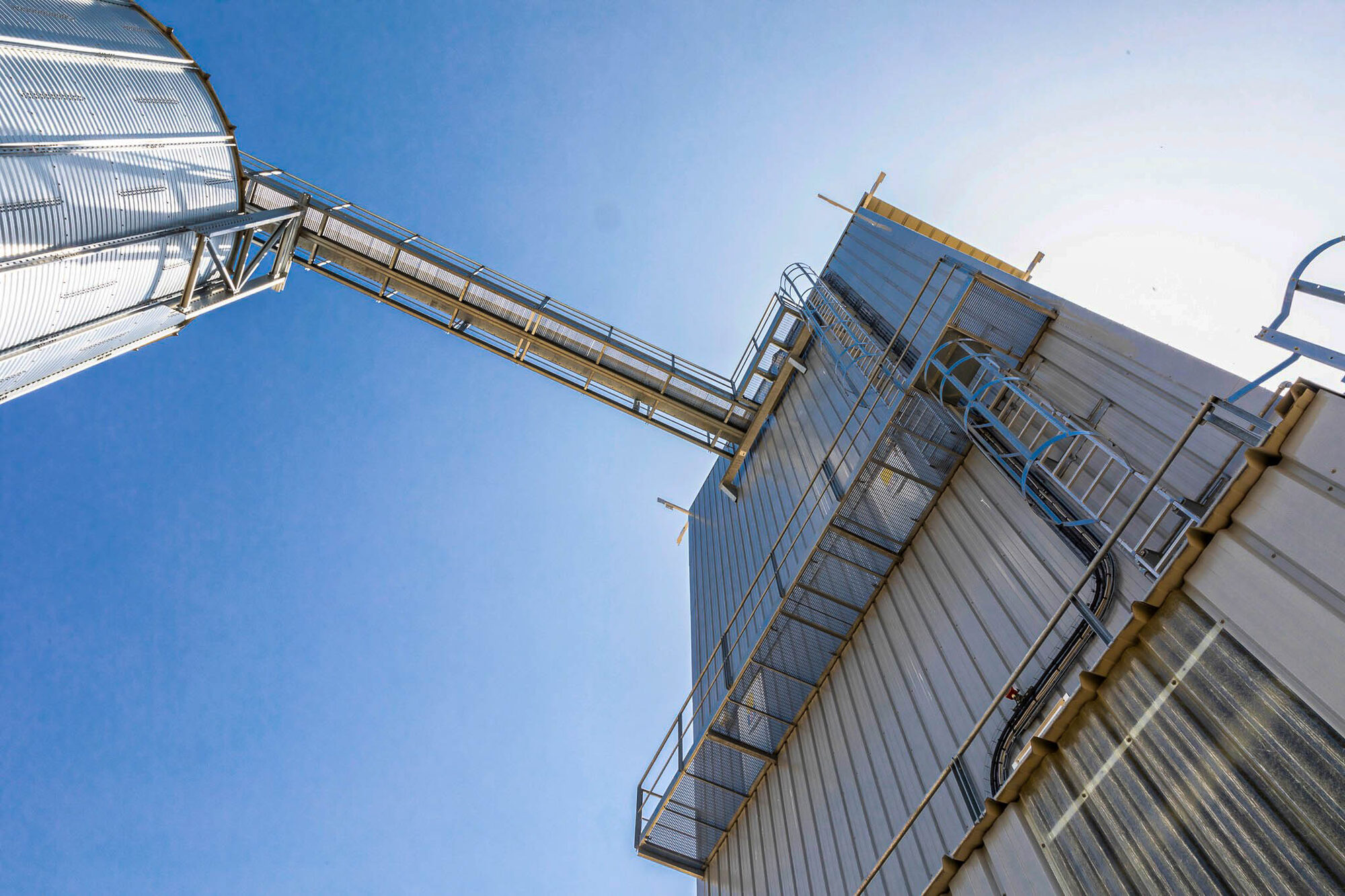
Let us address separately a point that is often put too categorically. Two-zone grain dryers — Bonfanti CE, Scolari SR, Stela Bi-Turbo, FAO E6/E7 and similar — and other "maize" designs can also dry rapeseed. The question is not whether it is possible in principle, but three practical things: throughput, efficiency and safety.
Throughput and efficiency. A two-zone scheme with full heat recovery delivers its greatest gain where a large amount of moisture is removed at high temperature — that is, on maize. For maize such dryers are unbeatable. With rapeseed, moisture removal is smaller and the temperature is lower, so the advantage of such a machine is only partly realised. The economics of a two-zone dryer bought specifically "for rapeseed" usually do not add up: you pay for systems you will not use. In addition, the throughput of such a dryer on rapeseed falls because of the less efficient drying regime for these crops.
Safety. Two-zone dryers are built around heat recovery and recirculation. Oilseeds require a regime in which dusty air is not returned to the burner. On some machines this regime is provided as standard: for example, the two-zone Scolari dryer has a separate safe oilseed-drying mode without heat recovery and recirculation — though this mode lowers throughput. Where the return of heated air to the burner cannot be disabled (for example, Bonfanti ECOS and similar), we do not recommend such dryers for rapeseed.
Conversion to indirect heating. The more complex the thermal scheme, the harder and more expensive it is to fit a heat exchanger or convert to steam. For two-zone solutions this is considerably more difficult than for ordinary continuous-flow or batch dryers.
For rapeseed we therefore consider the FAO vertical dryers in their continuous-flow and batch series. The two-zone series can dry rapeseed, but at lower efficiency and throughput, and are much harder to convert to a steam or heat-exchanger heat source — the choice is about optimality, not about a fundamental "cannot".
Comparison of suitable solutions
| Solution | When to choose | Advantages for rapeseed | What to consider |
|---|---|---|---|
| Ravaro RR | gentle batch drying; farm and mid-scale volumes | recirculation, tempering, uniformity; rapeseed on the manufacturer's crop list | lower throughput than continuous-flow lines |
| Ravaro RC | continuous-flow drying of high volumes; grain storage operators and processors | throughput; vacuum models convert to steam | confirm perforation, aspiration and air regime |
| Agrex AGD / AGD-F | mobile or compact stationary drying | 1.5 mm mesh for rapeseed; AGD-F with elevators is gentler than auger models | tract sealing and fan regime for a light seed |
| Alvan Blanch DF | continuous flow, uniform drying | rated rapeseed regime 13 → 9 % at 80 °C; fan adjusted via variable-frequency drive | the rated regime is for commodity, not seed material |
| Batch / low-temperature (Alvan Blanch BD and similar) | seed-grade rapeseed, hybrids, small valuable batches | precise temperature limiting, small moisture removal per pass | we list a model only after the manufacturer confirms the regime |
| FAO (continuous-flow and batch series) | high volumes and automation | throughput and regime control | two-zone series can dry rapeseed but at lower efficiency and throughput — single-zone series preferred |
Which dryer features matter for rapeseed
- Fine mesh or perforation — around 1.5 mm for rapeseed instead of the standard grain 2.5 mm.
- A sealed tract — loading, discharge, elevators and conveyors without gaps through which the small seed escapes.
- Adjustable airflow — mechanical flow reduction or a variable-frequency drive, so the light seed is not carried out of the shaft.
- A safe return-air scheme — recovery of clean air is acceptable; returning a dusty stream to the burner is not.
- Indirect heating — a heat exchanger or steam calorifier, preferably with real access for cleaning.
- Control of air and seed temperature — the display shows the agent, but quality is determined by the product heating.
- A two-stage regime and tempering — for wet batches and seed material.
- A cooling zone — rapeseed is dried gently, so a minimal zone is usually sufficient, but it is mandatory.
- Convenient cleaning — especially when changing crops after rapeseed.
What we need to know to select a dryer for rapeseed
For a preliminary calculation we need the following data:
- intended use of the batch: commodity rapeseed, food-grade canola, seed material, or raw material for cold pressing and biofuel;
- initial and target moisture;
- throughput in tonnes per hour or a daily volume;
- proportion of impurities and availability of pre-cleaning;
- available heat source: gas, diesel, steam, hot water, alternative fuel with a heat exchanger;
- quality requirements: germination, oil acid value, oil-plant requirements;
- the permissible heating temperature of the seed itself;
- planned storage period and the availability of cooling and aeration;
- existing elevators, conveyors and silos and their suitability for a small seed;
- explosion- and fire-safety requirements and emission limits.
On the basis of these data we select the dryer type, mesh, thermal scheme and safe regime specifically for your rapeseed, not "as for grain in general".
Common mistakes when drying rapeseed
| Mistake | Consequence |
|---|---|
| Searching for a single universal rapeseed drying temperature | wrong regime: intended use, air temperature and seed temperature are conflated |
| Applying the commodity 80 °C regime to seed-grade rapeseed | loss of germination and germination energy |
| Putting rapeseed in a dryer with a standard grain mesh | seed sifts through, channels clog, fire load grows |
| Leaving a "maize" airflow | light seed and trash carried out of the shaft, direct losses |
| Returning dusty exhaust air to a direct burner | oilseed dust reaches an ignition source |
| Drying without pre-cleaning | blockages, local overheating, fire risk |
| Removing all the moisture in a single harsh pass | overheating, non-uniformity, deterioration of oil quality |
| Delaying the drying of a batch wetter than 13 % | self-heating in the bulk, mould, oil acidification |
| Binning a warm batch without cooling and monitoring | self-heating pockets in the first weeks of storage |
| Over-drying below 6–7 % | breakage and splitting during handling, wasted fuel |
| Starting maize at 120–140 °C immediately after rapeseed | residual oilseed fines in the shaft can ignite |
Related crops and connected materials
Rapeseed is usefully compared with neighbouring crops: each has its own limiting factor.
- Sunflower — an oilseed crop where the limit is set by the fire hazard of husk and dust;
- mustard — an even smaller seed, where a 1.0–0.8 mm mesh is needed;
- soybean — an oilseed crop with a large seed and a different primary risk: cracking and splitting;
- all oilseed crops — the common logic of gentle drying;
- steam grain drying — indirect heating and clean drying air;
- fires in grain dryers — causes of ignition, dust, blockages, maintenance.
Sources and primary references
View source list
Below are the reference materials on temperature, moisture, airflow and fire safety in rapeseed and canola drying (external links open in a new tab):
- Canola Council of Canada — Storage, Canola Encyclopedia (safe temperatures by intended use and dryer type: seed rapeseed 45–50 °C, commodity for oil up to 82 °C; no more than 5 percentage points of moisture per cycle; fire and sifting risk);
- Canola Council of Canada — Tips for drying tough and damp canola (continuous-flow and recirculating dryers preferred; reduce the temperature for wet canola; two passes; fine screens; cooling after drying);
- NDSU Extension — Canola Production, Storage and Drying (small free-flowing seed and sealing requirements; "sweat" of up to six weeks; monitoring even at 8.5–10 %; a limit of 110 °F / 43 °C to preserve quality);
- NDSU — Canola Production Field Guide (airflow for natural drying of canola 0.75–1.0 cfm/bu, around 50–70 m³/h per tonne; high aerodynamic resistance of the bed);
- Terres Inovia — Stockage du colza à la ferme (moisture around 8 %; below 6–7 % breakage, above 9 % heating and oil deterioration; cooling to 10 °C; the elevated resistance of rapeseed to airflow);
- Terres Inovia — Stockage du colza: rappel des bonnes pratiques (8–9 % for storage, rapid drying of batches above 15 %, an example of hot air at 75 °C, staged cooling and temperature control);
- Penn State Extension — Cleaning and Storage of Oilseed (small canola seed falls through standard floors and screens; requirements for cleaning, aeration and pressing moisture);
- TFZ Bayern — Rapssaat und Vorbehandlung (6.5–7.5 % for pressing, cooling below 12–15 °C, the effect of overheating on acid value and oxidative stability);
- T/HBLS 0012-2023 — a regional Chinese technical standard for rapeseed drying and storage (commodity rapeseed up to 70 °C, seed up to 60 °C, long-term storage below 8 %);
- China Meteorological Administration — rapeseed harvest and storage (hygroscopicity and the danger of rapid self-heating in a wet batch);
- Ravaro — Essiccatoi (rapeseed / colza on the crop list; RR with product recirculation and a tempering phase, RC for continuous drying);
- Alvan Blanch — Continuous Double Flow Grain Dryer (rated rapeseed and canola regime 13 → 9 % at 80 °C; uniform product movement);
- Agrex — mobile and stationary grain dryers (AGD / AGD-F range; rapeseed in the throughput tables);
- Finpro Engineering — internal materials: a 1.5 mm mesh for rapeseed and linseed instead of the standard 2.5 mm (Agrex), airflow control for light crops, safe operation with heat recovery and recirculation on oilseeds, steam drying and fires in grain dryers.
Frequently asked questions about drying rapeseed
At what temperature should rapeseed be dried?
There is no single universal figure. For seed-grade rapeseed the air is usually kept to around 40–50 °C. For commodity rapeseed for oil, regimes of roughly 60–82 °C are encountered in continuous-flow and recirculating dryers. The higher the initial moisture and the less the seed is agitated, the gentler the regime must be.
Are air temperature and seed temperature the same thing?
No. The air can be considerably hotter than the seed. But in a static bed near the plenum the seed can approach the air temperature. For commodity rapeseed quality the reference is a seed heating of around 43 °C, while germination falls markedly above 55 °C. The dryer is therefore selected by design and the product temperature itself is controlled.
To what moisture is rapeseed dried for storage?
Most often to 8–9 %. For long-term storage and for pressing — around 7 % (for biofuel, 6.5–7.5 % is encountered). Below 6–7 % seed breakage during handling grows, so "the drier the better" does not apply here.
Why does rapeseed need a special fine mesh?
Rapeseed is considerably smaller than wheat and maize and sifts through standard grain perforation. For dryers with screens — mobile, modular and tower — a mesh of around 1.5 mm is selected for rapeseed instead of the standard 2.5 mm. For even smaller crops, such as mustard, 1.0 mm or 0.8 mm is needed.
Why does airflow matter for rapeseed?
Rapeseed is light, so a powerful "maize" airflow carries the seed and grain trash out of the shaft. For light crops the flow is reduced with mechanical systems or a variable-frequency drive. For natural drying of canola the airflow reference is of the order of 50–70 m³/h per tonne; higher values are inefficient because of the high resistance of the bed.
Must heat recovery be disabled when drying rapeseed?
The answer cannot be the same for all systems. What is dangerous is returning dusty exhaust air to a direct burner. Recovery of clean air from the cooling zone, an air-to-air heat exchanger or a steam calorifier can be acceptable. The specific scheme must be designed and confirmed for oilseed crops, with the ability to disable it safely.
Can rapeseed be dried in a two-zone grain dryer?
Technically yes. But the two-zone scheme — Bonfanti CE, Scolari SR, Stela Bi-Turbo, FAO E6/E7 and similar — shines on maize, where a lot of moisture is removed at high temperature. On rapeseed the gain is only partly realised, so the question is more about throughput and economics. A safe oilseed regime without returning dusty air to the burner is also required, and converting such a machine to a heat exchanger or steam is considerably harder than for an ordinary continuous-flow or batch dryer.
Which dryer suits very wet rapeseed?
Continuous-flow or recirculating-batch dryers with agitation and precise temperature control are preferable. A very wet batch is better dried in two passes on a gentle regime, removing no more than about 5 percentage points of moisture per cycle, with intermediate cooling.
Can rapeseed be over-dried?
Yes. Over-drying below approximately 6–7 % increases brittleness and breakage, reduces the marketable mass and raises energy consumption. This is a distinct and quite real mistake, not a "safety margin".
How does drying seed-grade rapeseed differ from commodity?
For seed material the primary criterion is germination. The temperature is therefore lower, moisture removal per pass is smaller, the mechanics are gentler, and uniformity and control of seed heating are stricter. The rated commodity regime must not be transferred to a seed batch.
Does drying change the varietal indicators of canola?
No. Erucic acid and glucosinolates are set by the variety, and drying neither creates nor corrects them. But overheating and poor storage worsen the oil quality: the acid value rises and oxidative stability falls.
Ready to select a dryer for rapeseed?
Tell us the intended use of the batch (commodity rapeseed, food-grade canola, seed material, or raw material for pressing), the initial and target moisture, the required throughput and the heat available. We will select the dryer type, the mesh for the small seed, the air regime, the thermal scheme and a safe temperature regime for your rapeseed flow. Contact us in whichever way suits you best.
Still have questions? Get in touch!
By phone
WhatsApp: +90 (536) 452-1184By email
Our address: info@finpro.engineering
Related products
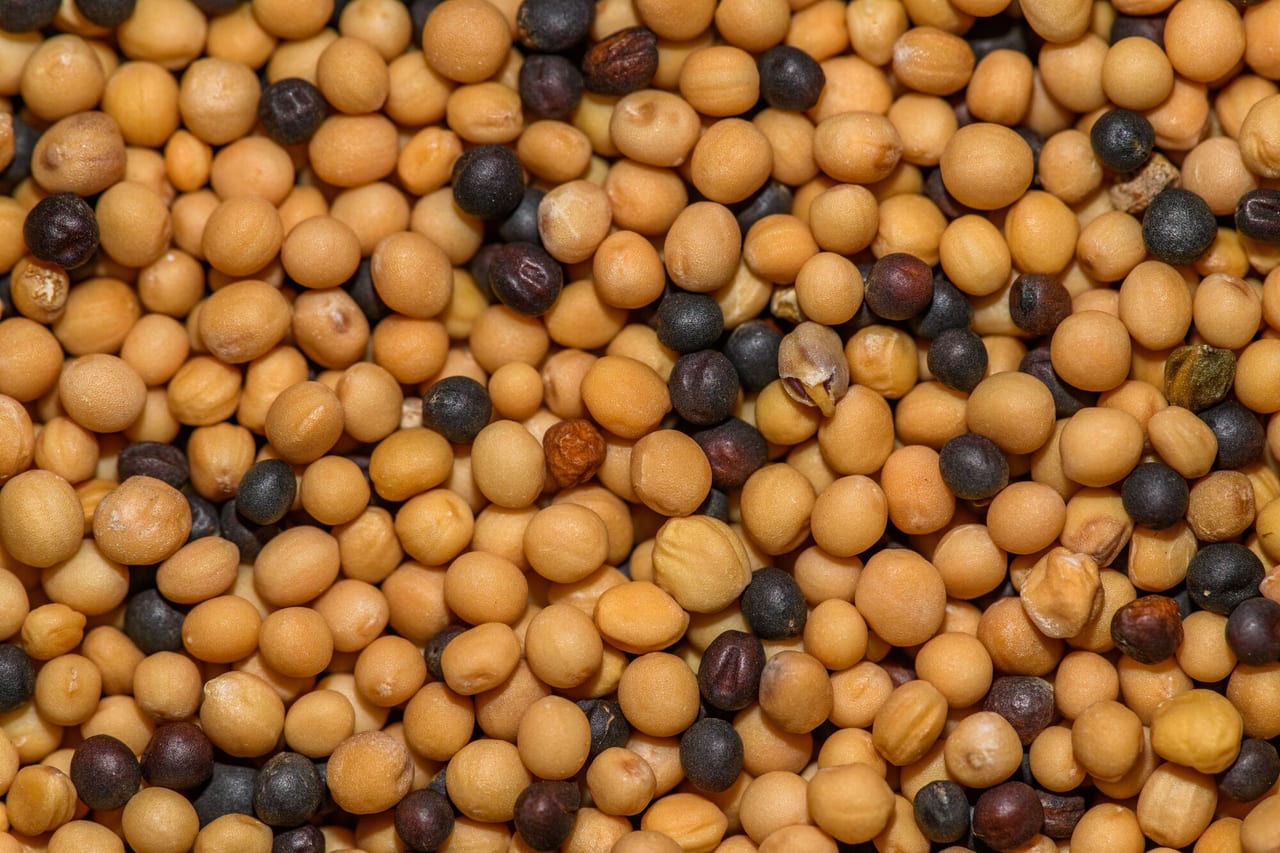
Mustard
A small-seeded oilseed crop of major importance (white, brown and black mustard). It is dried gently with temperature control to preserve oil quality, pungency and germination; the small seed requires a sealed flow path and a precise screen.
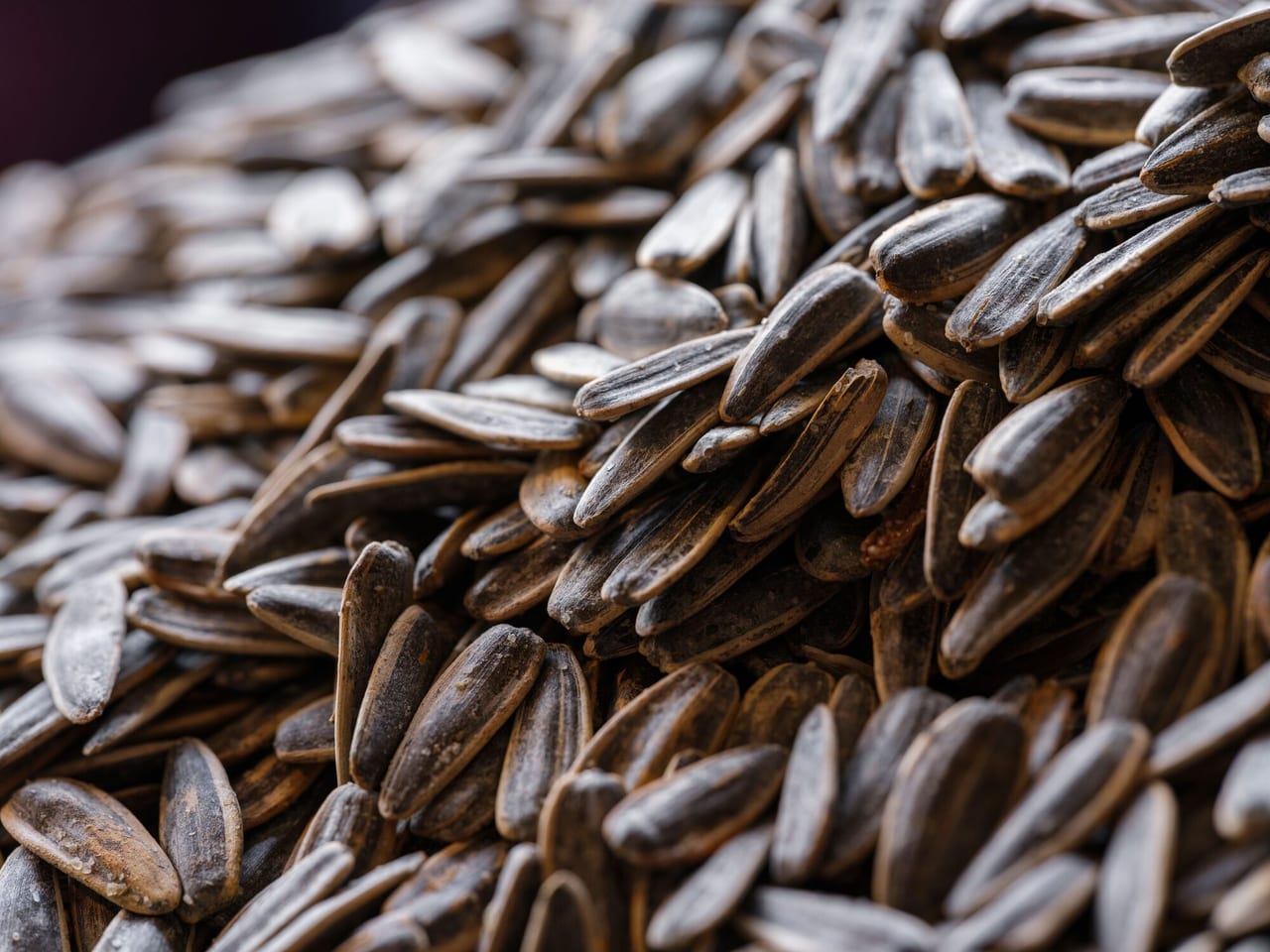
Sunflower
Sunflower is a fire hazard and prone to self-heating. It needs temperature control, cleaning of husk and dust, and a careful thermal scheme.
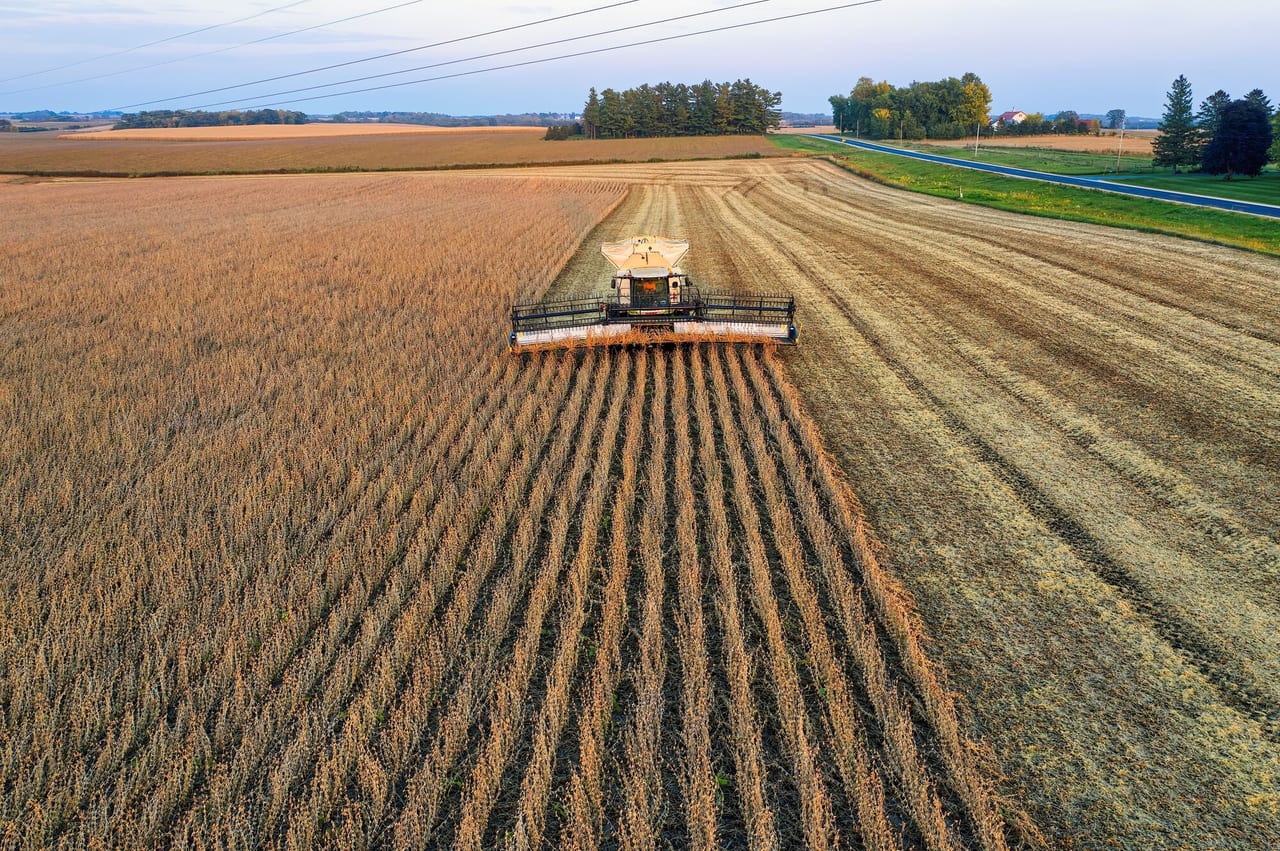
Soybean
Soybean is prone to coat cracking and breakage under an aggressive regime; gentle drying without augers is needed.
Our Products
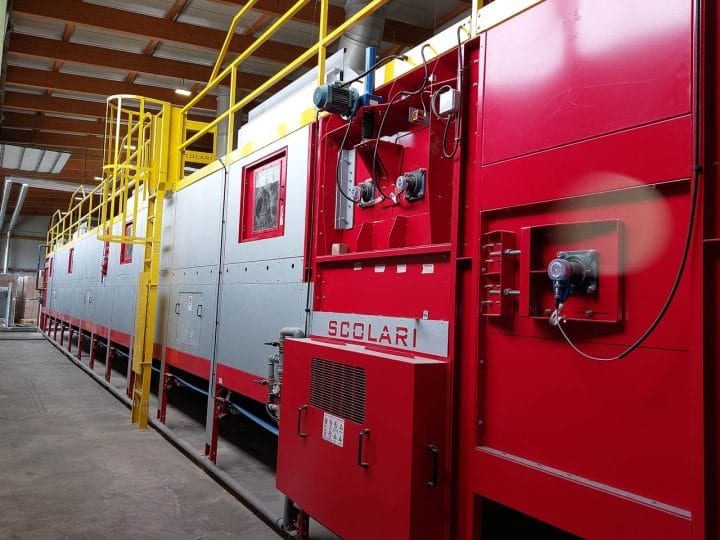
Universal Dryers
These dryers can be customized to dry any industrial or agricultural product you may require. Depending on the specific product and its moisture content, the dryers can be equipped with mixers, movable floors, vibrating floors, and other advanced technologies.
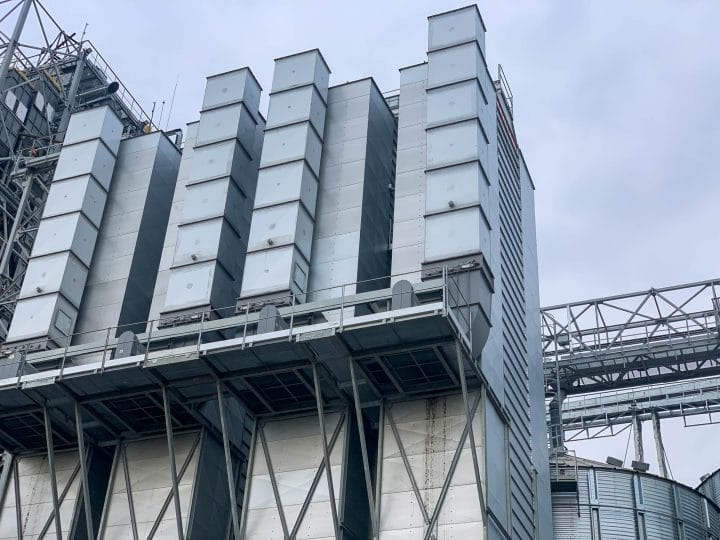
Grain Dryers
Authorized representative for top European grain dryer manufacturers like Alvan Blanch, FAO, and Agrex. Offering a full range of advanced drying solutions for agriculture.
Contact Us
If you are interested in purchasing any of our products, need a price quotation, or have any questions, comments, or suggestions, please do not hesitate to contact us via our contact form, by phone, or by email.
- WhatsApp: +90 (536) 452-1184
- E-mail: write to us
Our phones:
- Kazakhstan: +7 (747) 095-1626
- Moldova: +373 (22) 011-214
- Romania: +40 (31) 229-8484
- Türkiye: +90 (536) 452-1184 (English)
- Ukraine: +380 (67) 111-6668