
Drying Seed and Planting Material
Introduction: Why Seed Material Needs a Dedicated Dryer
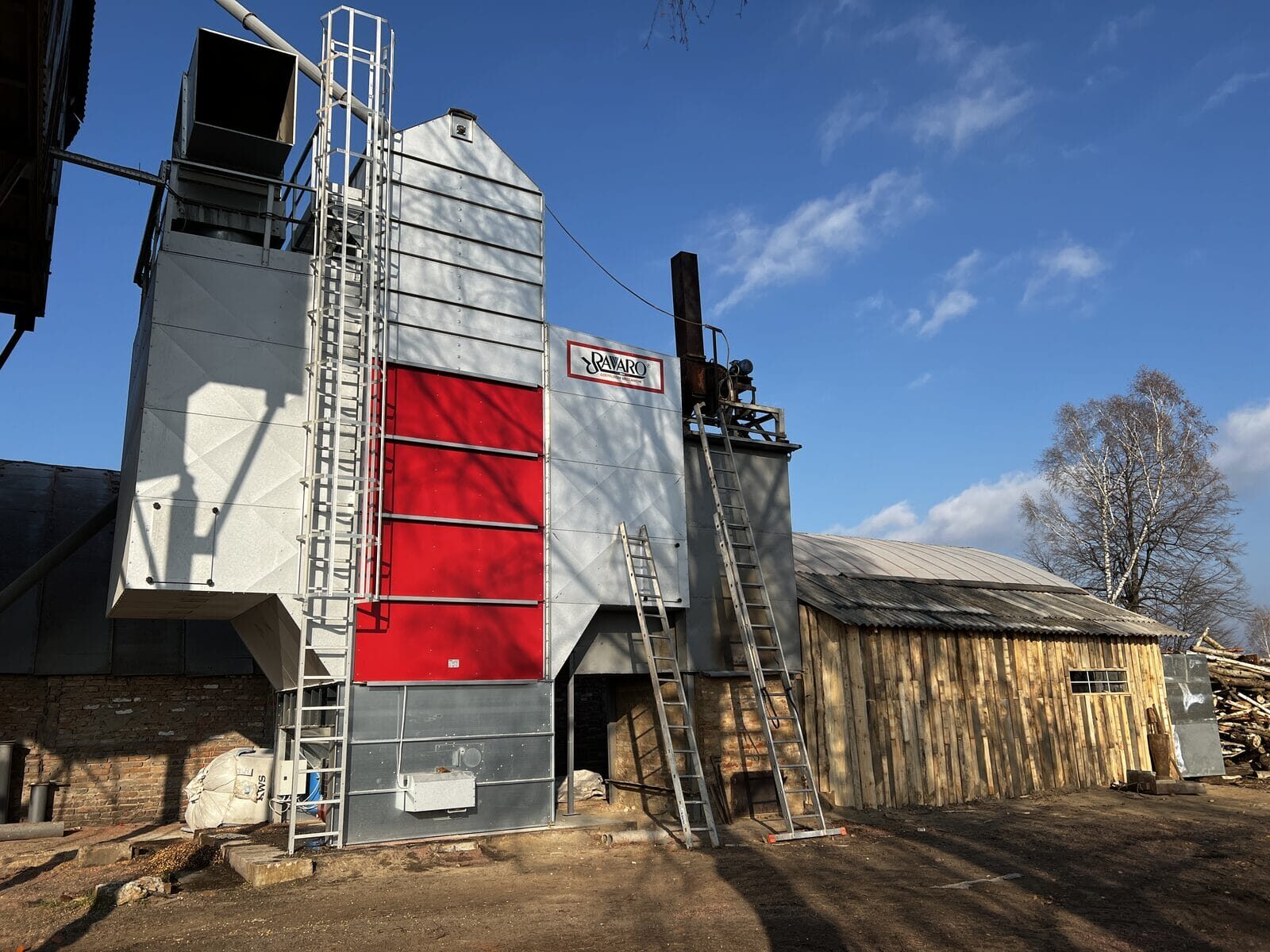
Post-harvest drying of planting material requires specialised equipment — a standard grain dryer cannot deliver the quality that seeds demand. A dedicated seed dryer accounts for the elevated quality requirements: it provides uniform drying at reduced temperatures and a gentle regime — no overheating, no mechanical damage. Using such a dryer preserves high germination rates and protects the genetic potential of the seed lot.
How Drying Quality Affects the Future Crop
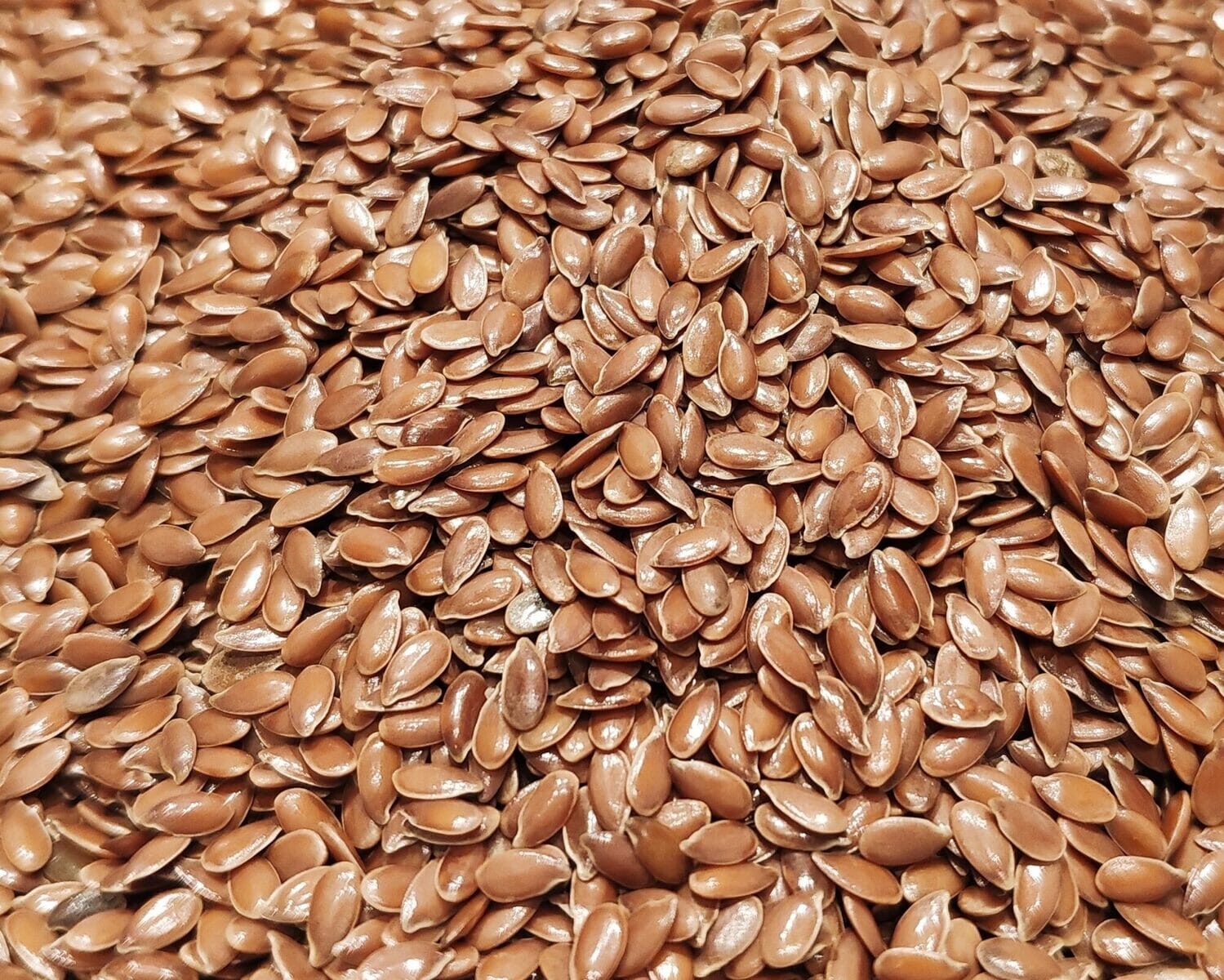
Correct seed drying is the key condition for achieving uniform, healthy emergence. If seeds are insufficiently dried after harvest, excess moisture leads to self-heating, mould development and death of the embryo. Conversely, over-drying causes thermal damage that sharply reduces germination rates. It is therefore critically important to bring seeds to their optimal moisture content without thermal damage. Gentle and uniform drying preserves maximum seed viability.
It is equally important to minimise mechanical damage during drying and handling — any injury to the seed coat also impairs germination and yield potential.
Drying Temperature for Seeds
To preserve germination capacity, seeds must be dried at very low temperatures. This inevitably extends drying time, but that is the only way to guarantee seed quality. If material is being dried for feed or industrial use rather than sowing, other drying regimes may apply — but for planting stock, temperature control is non-negotiable.
Main Dryer Types for Seed Material
Several dryer types are well suited to seed material. We recommend considering three key options: conveyor dryers, floor dryers, and shaft dryers. All three accomplish the task effectively, though they differ in design and operating characteristics.
1) Shaft (Column) Dryers
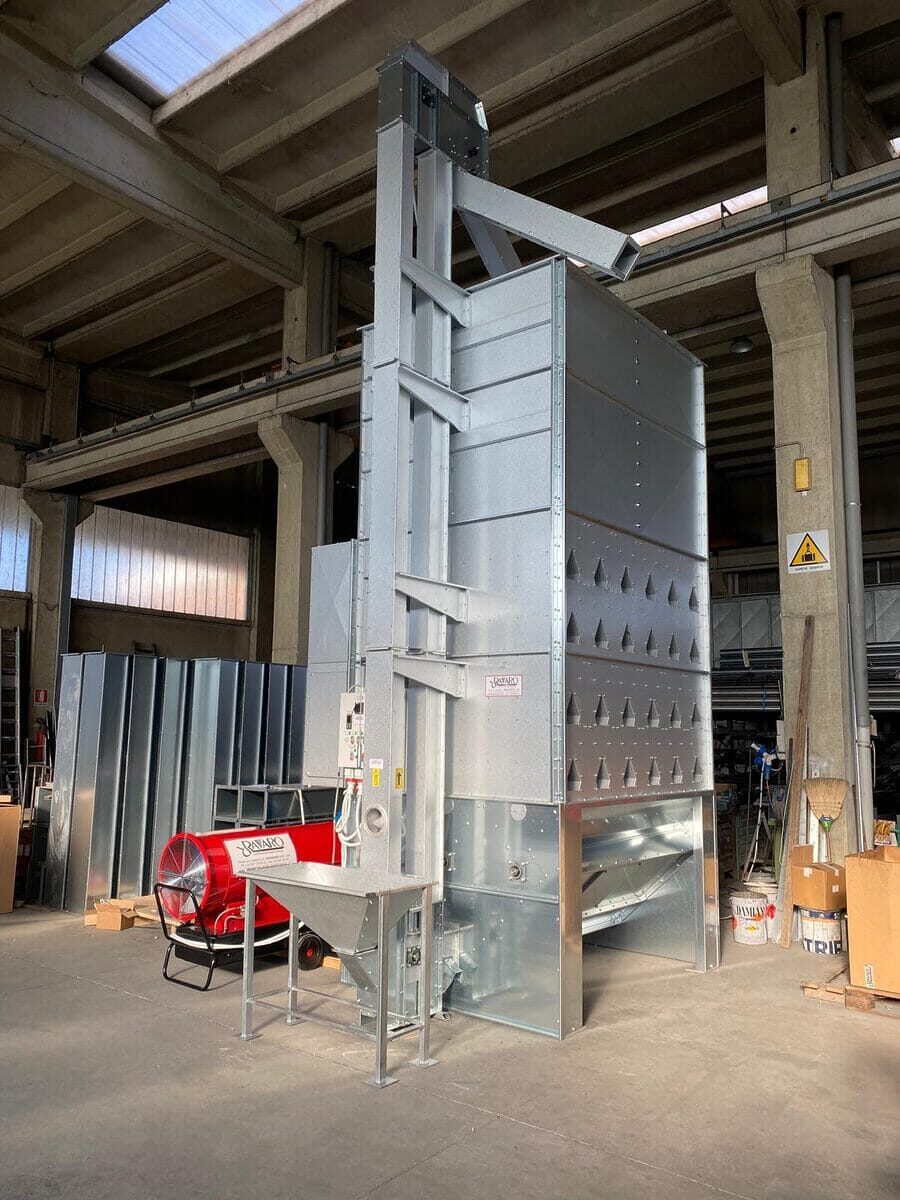
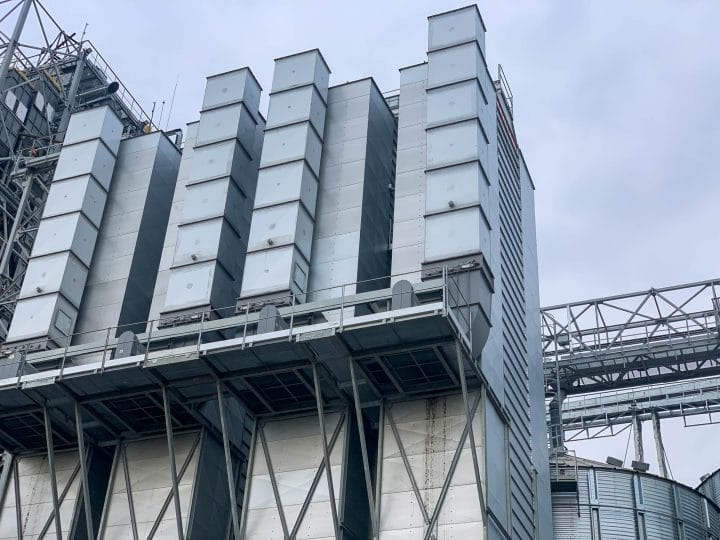
Shaft dryers are a proven solution for uniform, gentle heating of seed material. Thanks to a mixed-flow air system, seeds are heated with maximum uniformity — a key factor for germination performance.
Batch shaft dryers (Ravaro): ideal for operations with lower throughput volumes. They are an optimal choice for seed producers who need precise moisture control over each batch, delivering the most uniform final moisture content. Importantly, Ravaro batch dryers are equipped with low-speed bucket elevators that minimise seed breakage.
Continuous-batch shaft dryers (Ravaro): indispensable when large seed lots must be processed without interruption. They deliver stable output under high-volume conditions, reach operating temperature quickly, and integrate smoothly into any post-harvest complex. The unit combines the advantages of two modes:
- Continuous (flow) mode delivers high throughput for seed lots with low initial moisture.
- Batch mode offers greater control and flexibility — for small lots, high-moisture seeds, tempering-rest cycles, or any special multi-stage temperature profiles.
2) Conveyor Dryers
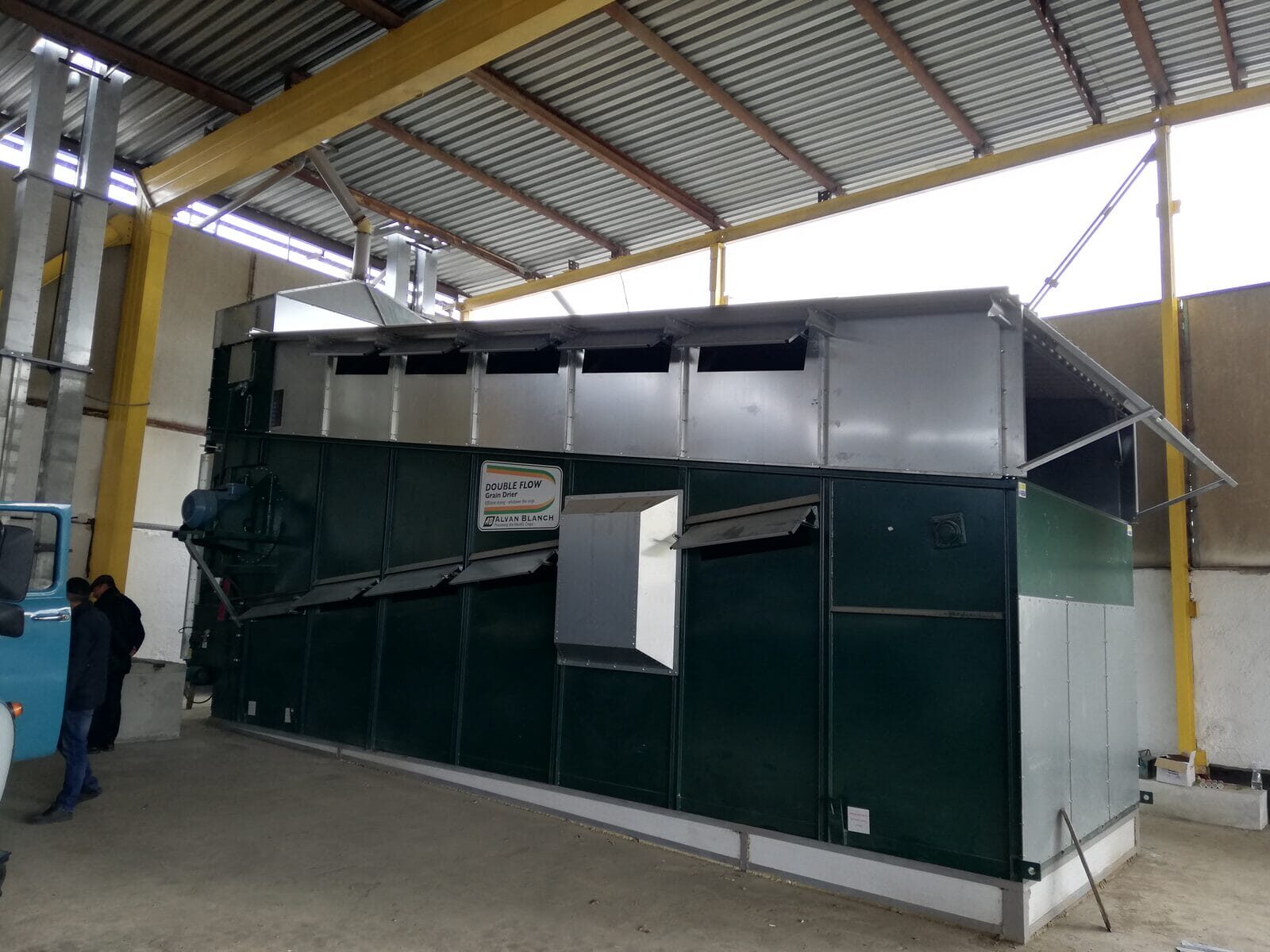
A conveyor seed dryer is a horizontal unit in which the material moves in a thin layer across a belt or bed. This principle ensures even heating and a gentle temperature regime. British Alvan Blanch conveyor dryers, for example, are renowned for their drying quality: the product heats gradually, without sharp temperature swings, delivering gentle seed drying without embryo damage. Mechanical stress is minimal — no high drops, no intense friction — which significantly reduces seed injury. Because of this careful product handling, conveyor dryers are considered the optimal choice for seed material.
Conveyor dryers are not a budget solution, but their use allows the most careful drying and preservation of valuable seed stock and its quality characteristics — ultimately yielding a premium return from higher seed quality and germination rates. An additional benefit: the low profile of the dryer reduces construction costs (elevator legs, tower height, etc.).
Fire safety note: conveyor (horizontal) dryers are generally safer than vertical alternatives. Because seeds move continuously across an open bed, blockages cannot form — this substantially reduces the risk of fire and other hazards associated with product accumulation.
3) Floor (Flat-Bed) Dryers
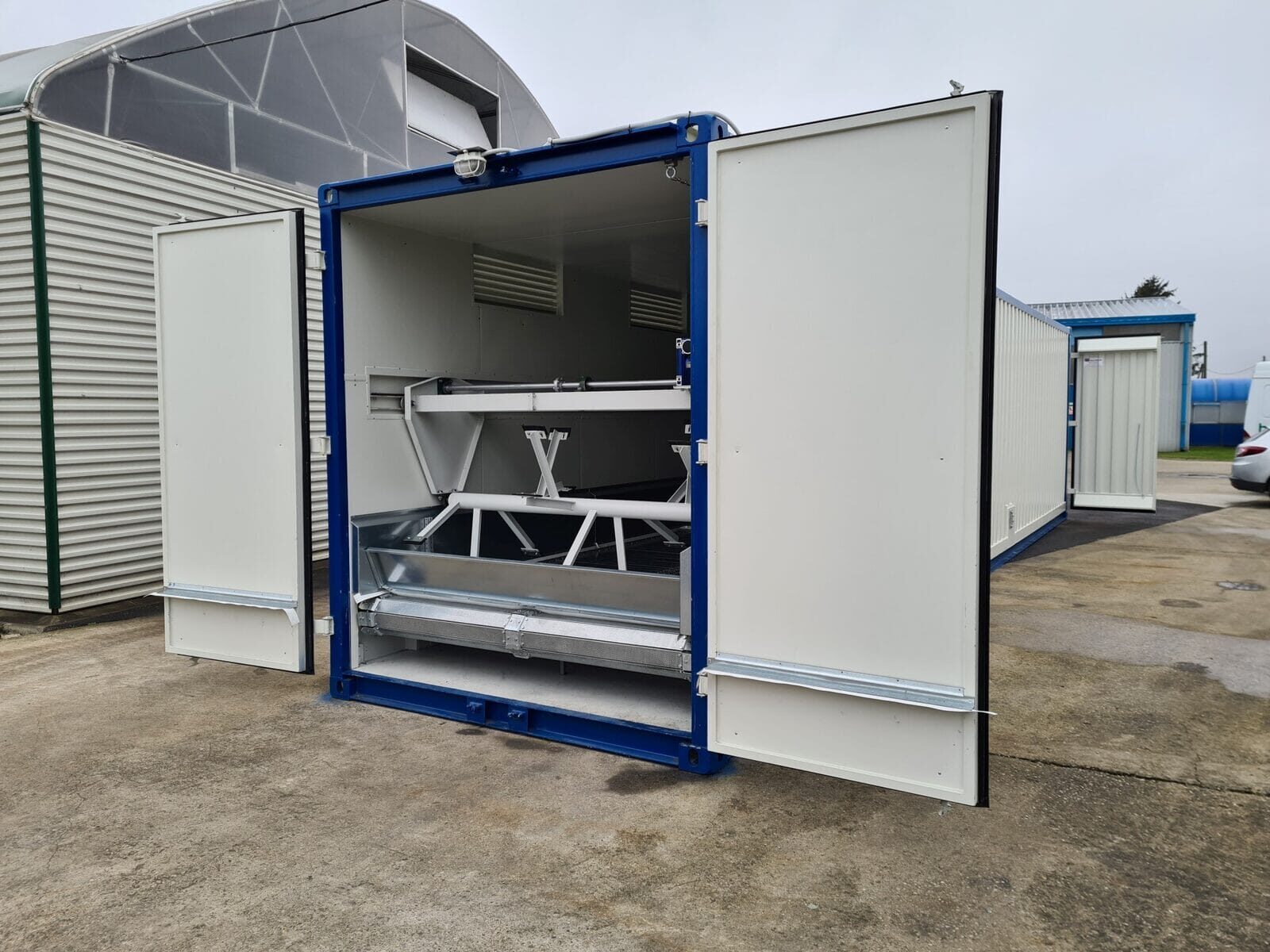
A floor dryer works on the same principle as a conveyor dryer, with one difference: the grain rests stationary on the perforated floor rather than moving along a belt.
While a conveyor dryer can operate in continuous (flow) mode, floor dryers work exclusively in batch mode — load a batch, dry it, cool it, discharge it.
We offer high-quality Croatian Herbas universal dryers. Loading and unloading can be handled via a moving floor. The built-in stirrer ensures uniform moisture removal and allows effective processing of challenging seed materials (such as pumpkin seeds). Two important features of these dryers:
- They are fitted with an integrated solid-fuel heat generator with a heat exchanger.
- They incorporate a unique heat recirculation system that regulates warm air feedback depending on the drying stage (moisture content and air temperature).
Fire Safety and Heat Recovery Considerations
Seeds are inherently flammable, which makes fire safety a key selection criterion. When evaluating dryers, always check for advanced fire detection systems that alert operators to potential hazards before they escalate. Product blockages — a common root cause of fires — are eliminated in horizontal conveyor and floor designs, since the seed bed is open and accessible.
Heat recovery systems are generally not used for seed drying, because their effectiveness is greatly reduced at the low temperatures that seed drying requires. Given the additional capital cost of heat recovery equipment, it is not economically justified for seed programmes — unless the same dryer also handles feed grain or other high-temperature applications.
Dryers Not Recommended for Seed Material
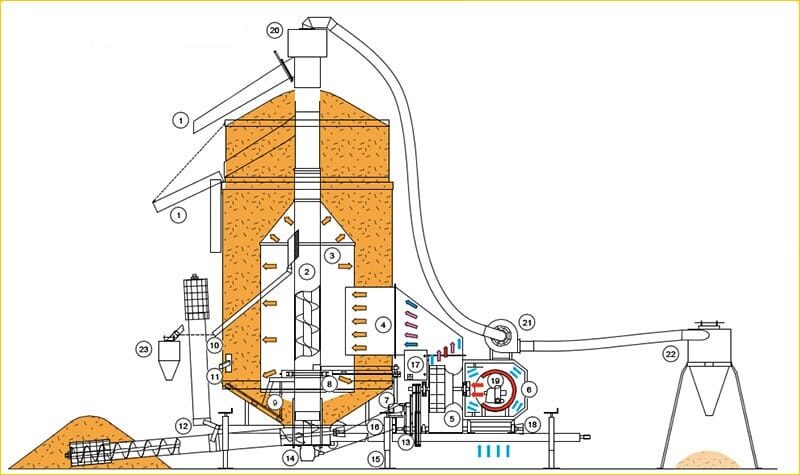
This category covers batch mobile (drum-type) dryers. These are among the most affordable options and are popular with smaller farms due to their portability and ease of use. However, their use for seed material is not always justified.
The primary reason is the high auger rotation speed, which causes mechanical damage to some seeds. The vertical internal auger — which lifts grain upward inside the drum — is particularly problematic. Depending on initial moisture content, seeds may pass through the augers multiple times, increasing the damage rate and making it difficult to maintain planting-stock quality.
A small percentage of damaged feed maize is not a serious commercial problem. Losing expensive seed material and reducing its germination rate, however, can significantly affect your return.
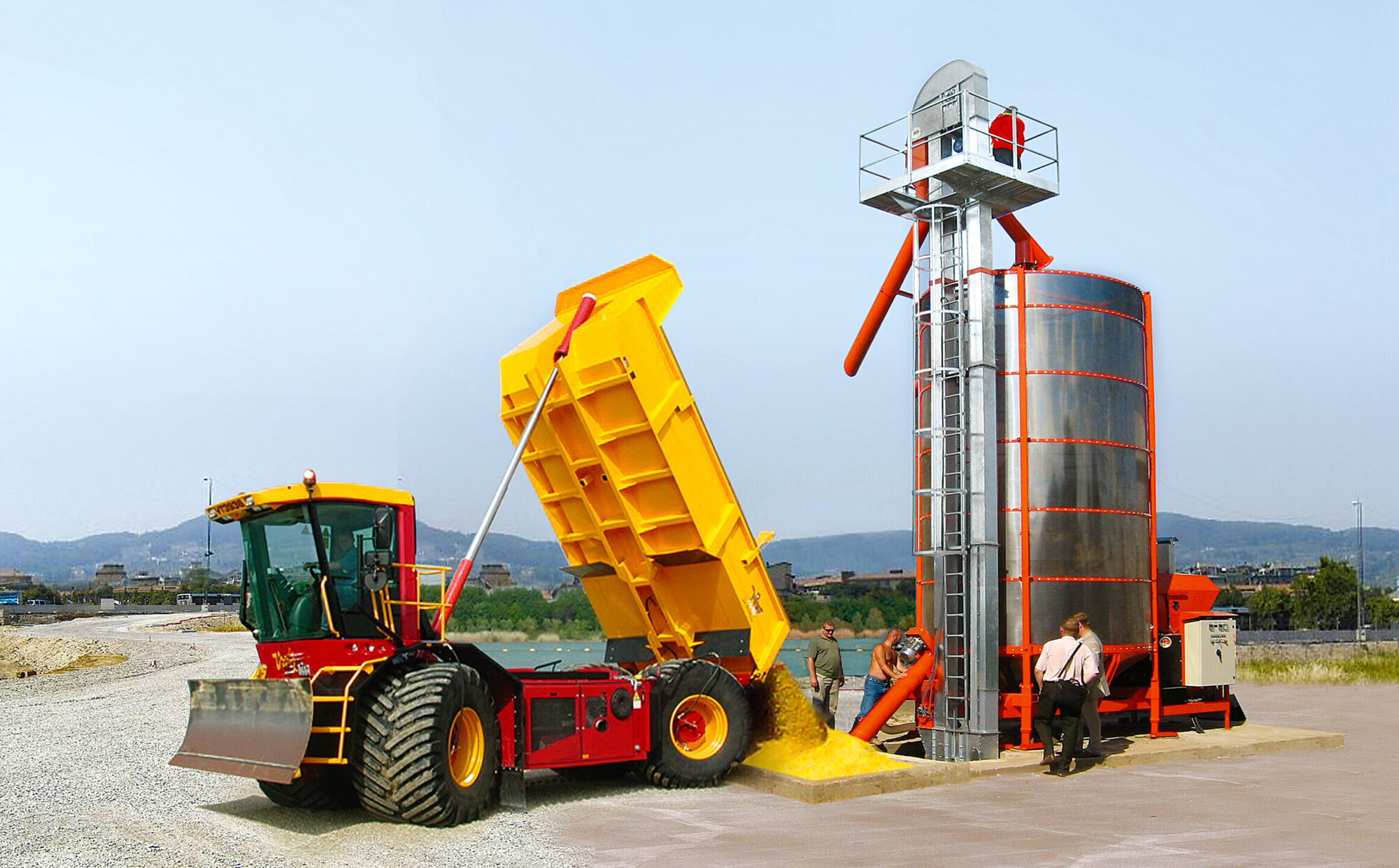
There are situations where a farmer can only acquire a mobile dryer but needs to handle commodity grain, feed grain, and planting stock alike. What is the best approach?
An excellent solution is the Agrex mobile dryer with a bucket elevator instead of an auger. A bucket elevator lifts grain far more gently and does a much better job of protecting seed integrity.
In addition, mobile dryers with an externally positioned auger or elevator do not have the grain-compression effect that occurs at the bottom of the hopper in internal-auger designs — another source of seed damage that is thereby eliminated.
Dryers for Corn on the Cob
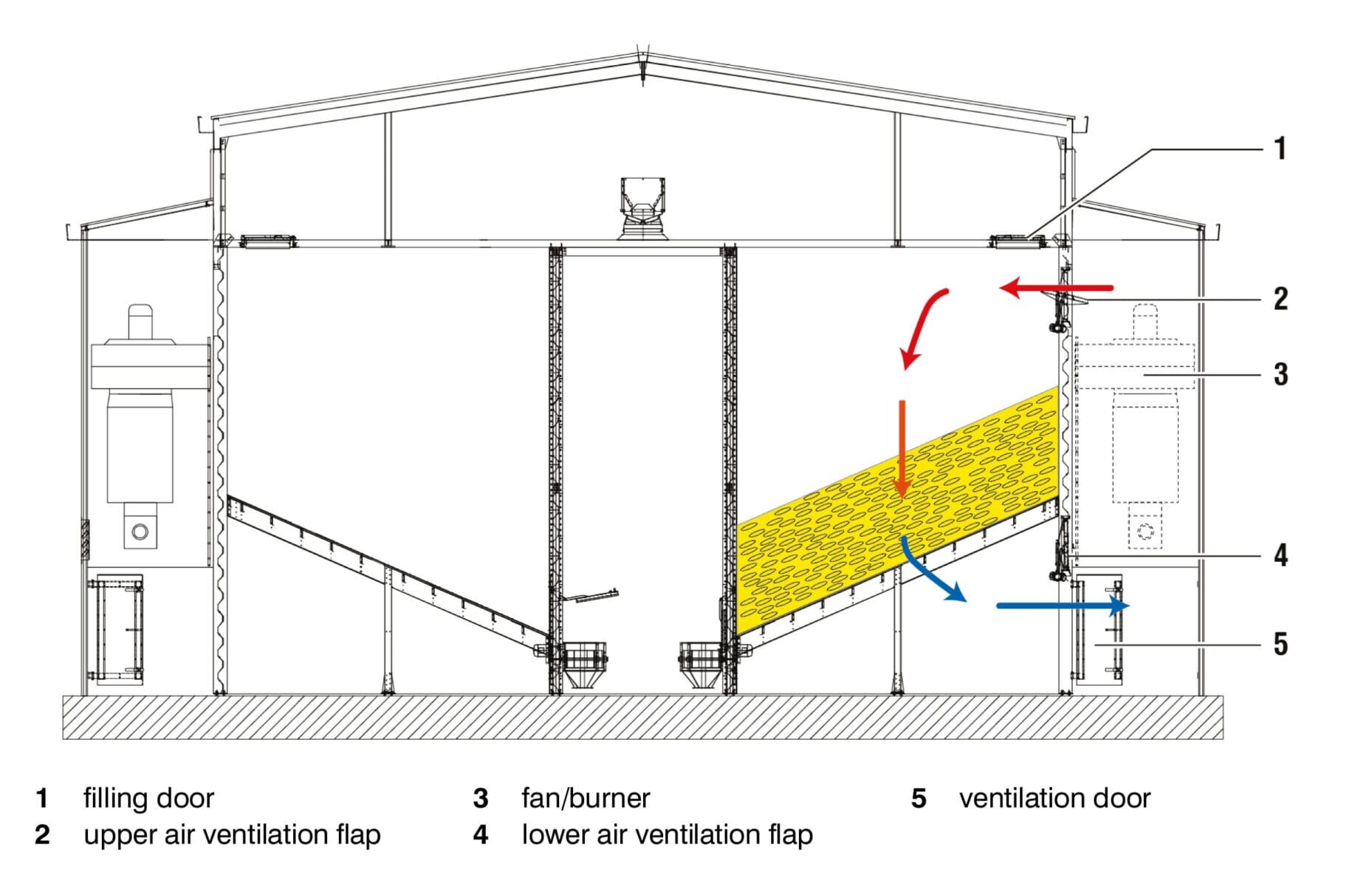
A special mention goes to cob corn dryers. In seed maize production, grain is often dried on the cob to preserve maximum quality and germination. Dedicated cob dryers use chambers that blow warm air over the cobs over an extended period. After this gentle treatment, the kernels are shelled at optimal moisture without any loss of viability. Equipment for this application is manufactured by Cimbria, LTV, and others.
Service and Maintenance of Seed Dryers
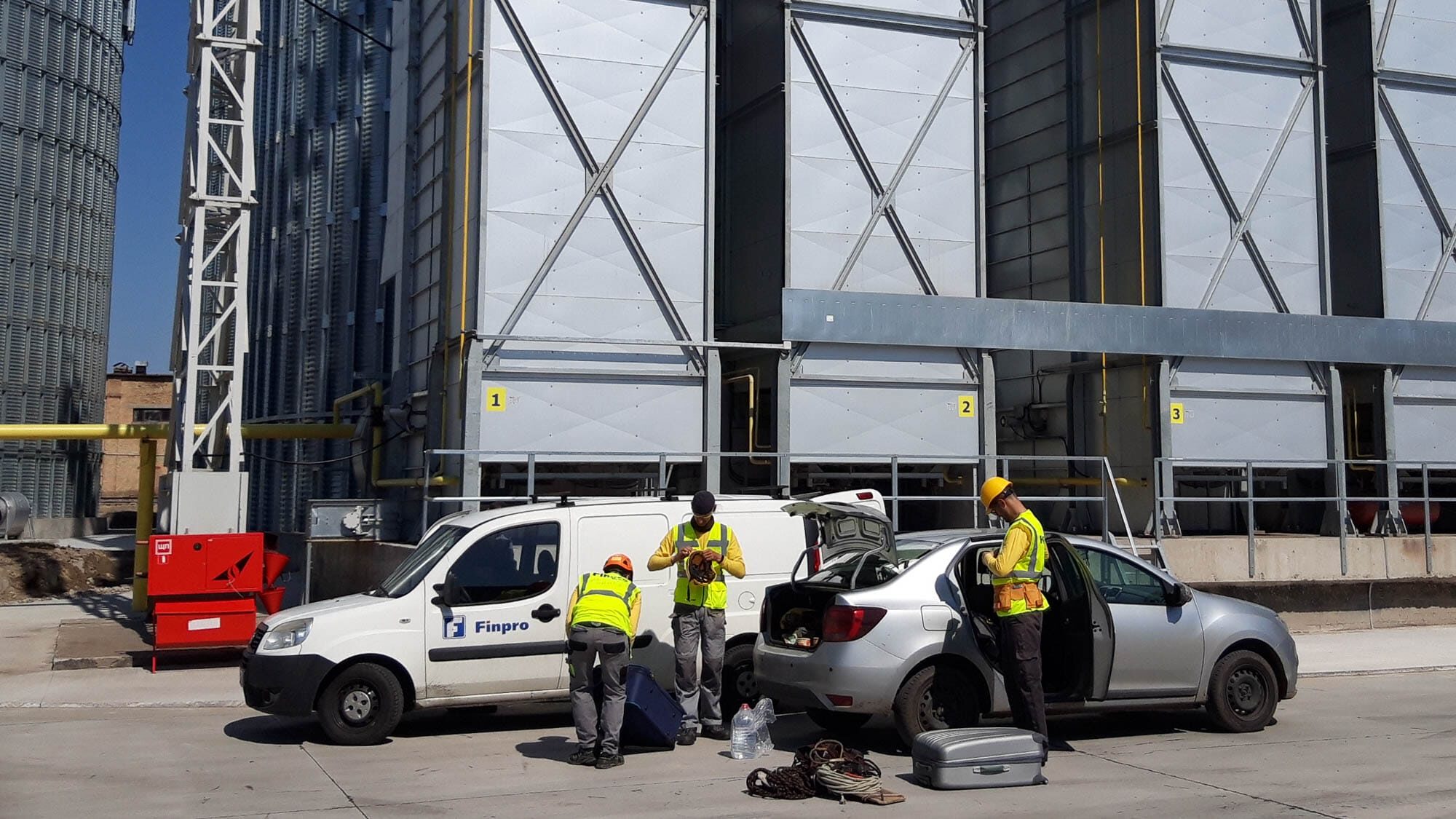
Seed drying operates within an extremely tight time window. Unlike feed grain, which tolerates some flexibility, seed material must be harvested and processed as quickly as possible to achieve the highest germination figures. Extended downtime is not an option.
If the dryer stops while already-harvested wet seed material is waiting, germination can deteriorate rapidly — long before a service team can arrive and complete a repair.
This makes advance planning of service support critically important. If a dryer is difficult to clean and maintain, or spare parts are hard to source, in-season stoppages become inevitable. Choose a model that is easy to operate and a supplier who can provide rapid installation, commissioning, and after-sales service.
Why Work With Finpro
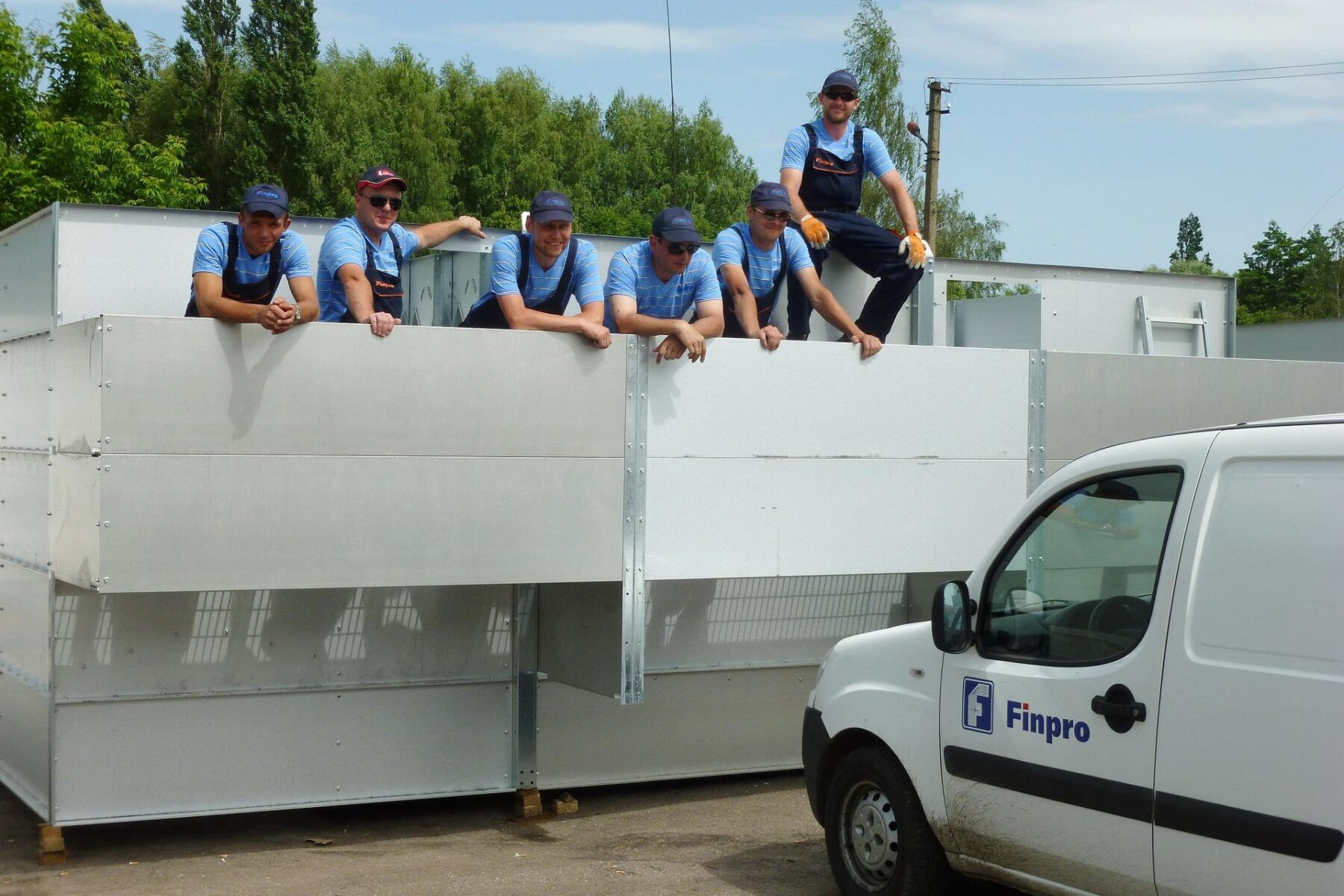
Partnering with Finpro when selecting and procuring a seed dryer provides:
- Expertise and individual selection. Our specialists have extensive experience in grain and seed drying technology. We study your requirements carefully — throughput volumes, crop types, heat source — and recommend the optimal dryer model. This tailored approach ensures the equipment precisely matches the needs of your operation.
- Authorised supply of leading brands. Finpro is an authorised dealer for world-class dryer manufacturers including Alvan Blanch, Scolari, Ravaro, Agrex, and others. You receive genuine equipment, advanced technology (conveyor and shaft systems), and full manufacturer support.
- Supply and integration. We supply the dryer and organise its installation, commissioning and integration into your seed processing line, so that every component of the complex works in concert.
- Service and training. We provide warranty and post-warranty dryer maintenance, organise commissioning and staff training, and provide technical support. Spare parts supply and our service experience minimise downtime — especially critical for seed producers where every hour matters.
- Responsiveness. Whenever possible, we resolve issues immediately by phone — at no charge to our clients. This approach solves the vast majority of problems almost instantly, preventing costly downtime. For more complex tasks, a visit by a service engineer is arranged.
Conclusion
Choosing the right seed dryer is an important step towards preserving seed quality and high yield potential — and therefore towards a stronger return for your operation.
A specialised dryer brings seeds to optimal moisture content gently, preserving their viability and genetic potential. When selecting equipment, consider the dryer type, throughput capacity, reliability, energy efficiency, and ease of maintenance.
By avoiding common mistakes and working with professionals, you get a reliable solution that serves for many years. Finpro is ready to help at every stage — from selecting the right model to commissioning and ongoing service.
Investing in a quality seed dryer is investing in the next harvest.
Our Dryers for Seeds
We supply different types of dryers for seed material. For smaller throughput volumes, these are Italian batch shaft dryers Ravaro or Croatian floor dryers Herbas. At medium scale, good options are British conveyor dryers Alvan Blanch or Italian continuous-batch shaft dryers Ravaro. For industrial-scale volumes we also offer Italian conveyor dryers Scolari.
To find the most suitable solution for your needs, contact us: WhatsApp: +90 (536) 452-1184.
Scolari Vibratory Dryers
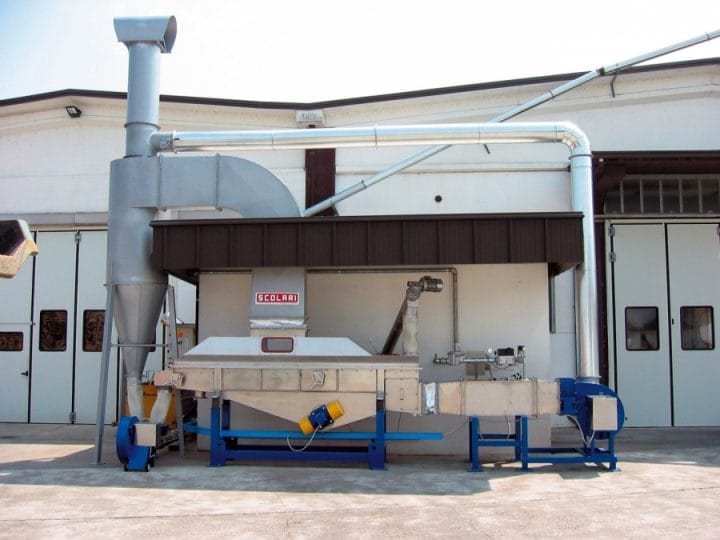
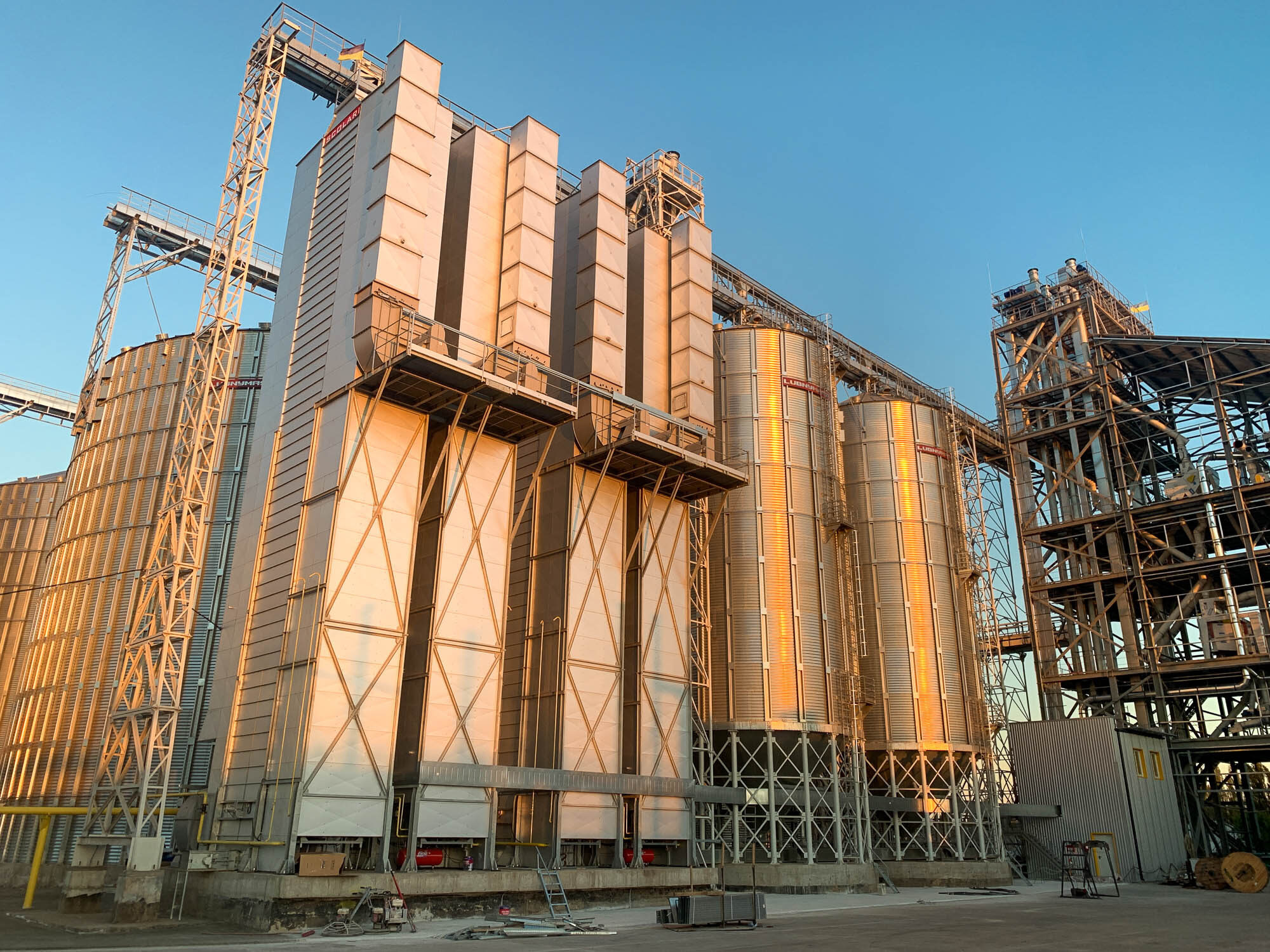
Italian Scolari vibratory dryers create an artificial boiling layer of the material being dried, which allows it to be blown through from all sides and effectively remove surface moisture. Suitable for materials with surface moisture, granulated products, or flowing powders.
Scolari Dryer With Movable Conveyor Belt
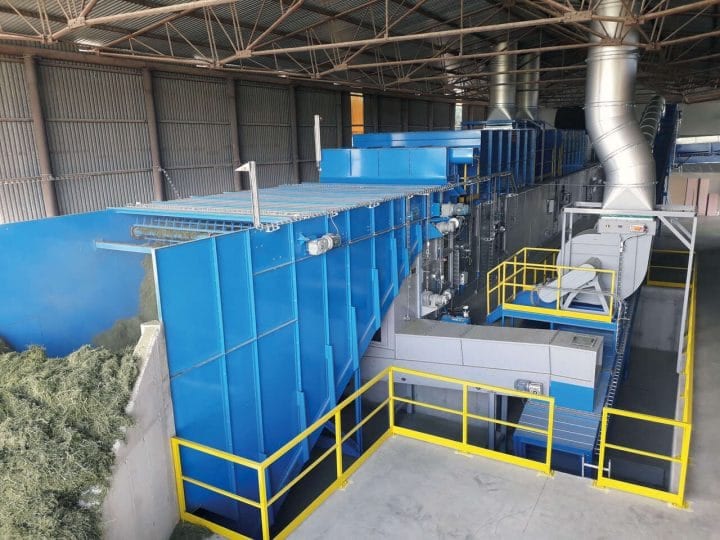
Horizontal dryers feature perforated steel or plastic movable floors designed for drying various materials. Airflow can be configured from top to bottom or vice versa.
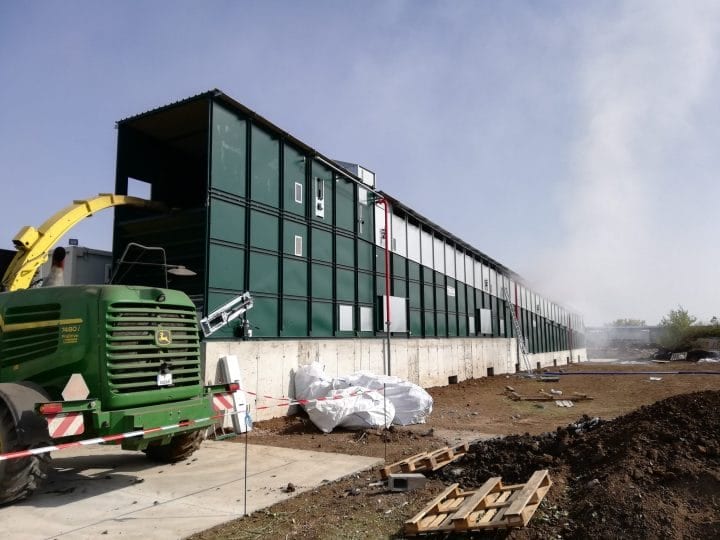
Alvan Blanch Conveyor Dryer
British universal conveyor dryers for non-grain agricultural and industrial products. Thanks to their horizontal design, built-in distribution and stirring systems, they can dry a wide range of materials.
Related article
Questions? Get in touch!
By phone
WhatsApp: +90 (536) 452-1184By e-mail
Write to us: info@finpro.engineering
Related products
Pumpkin seeds
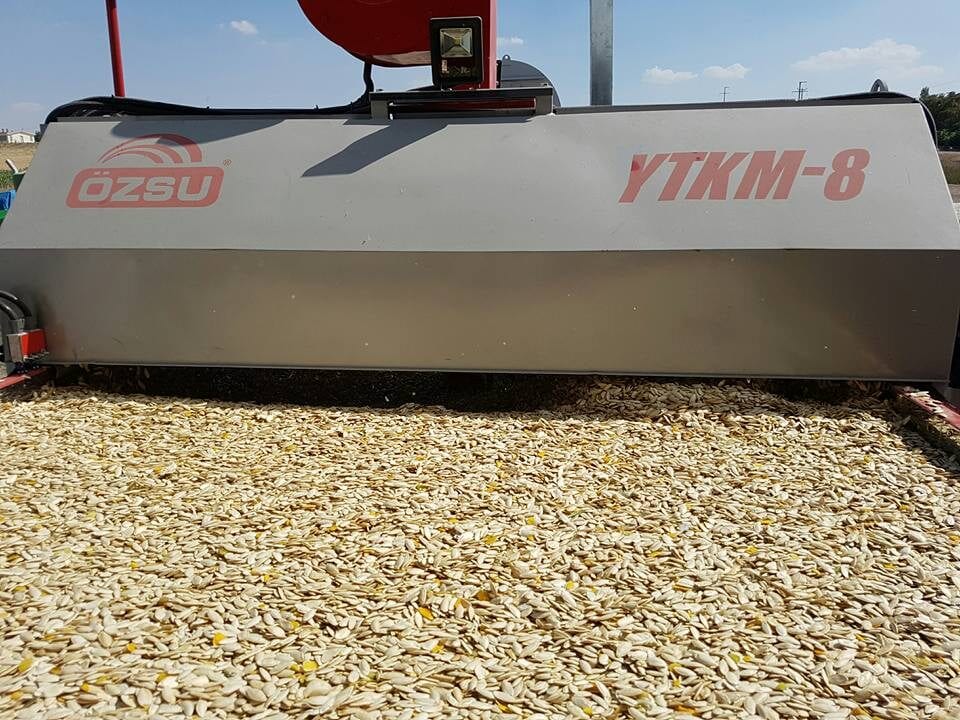
A strong export niche (Austria, Croatia, Turkey). This sticky product is dried on horizontal/conveyor dryers with a mechanical agitator, preserving colour, taste and oil.
Our Products
Universal Dryers
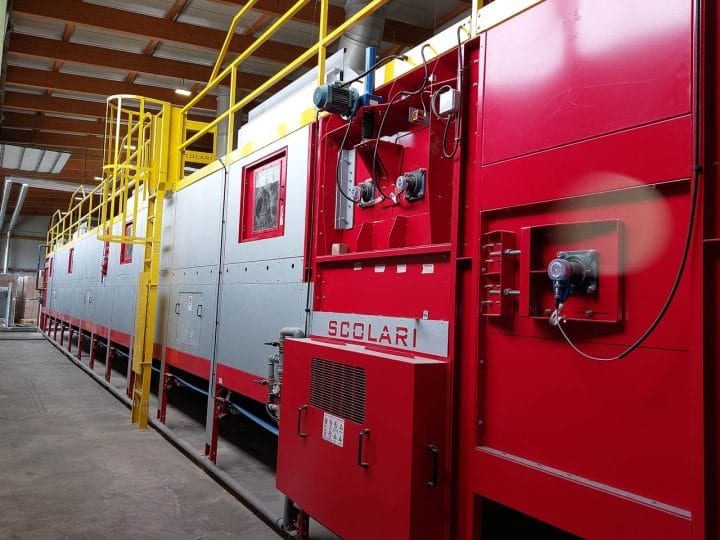
These dryers can be customized to dry any industrial or agricultural product you may require. Depending on the specific product and its moisture content, the dryers can be equipped with mixers, movable floors, vibrating floors, and other advanced technologies.
Grain Dryers
Authorized representative for top European grain dryer manufacturers like Alvan Blanch, FAO, and Agrex. Offering a full range of advanced drying solutions for agriculture.
Contact Us
If you are interested in purchasing any of our products, need a price quotation, or have any questions, comments, or suggestions, please do not hesitate to contact us via our contact form, by phone, or by email.
- WhatsApp: +90 (536) 452-1184
- E-mail: write to us
Our phones:
- Kazakhstan: +7 (747) 095-1626
- Moldova: +373 (22) 011-214
- Romania: +40 (31) 229-8484
- Türkiye: +90 (536) 452-1184 (English)
- Ukraine: +380 (67) 111-6668