
Drying Hemp: Biomass, Inflorescence and Seed
The dryers described below are suitable for drying both industrial hemp and medicinal hemp.
Industrial Hemp
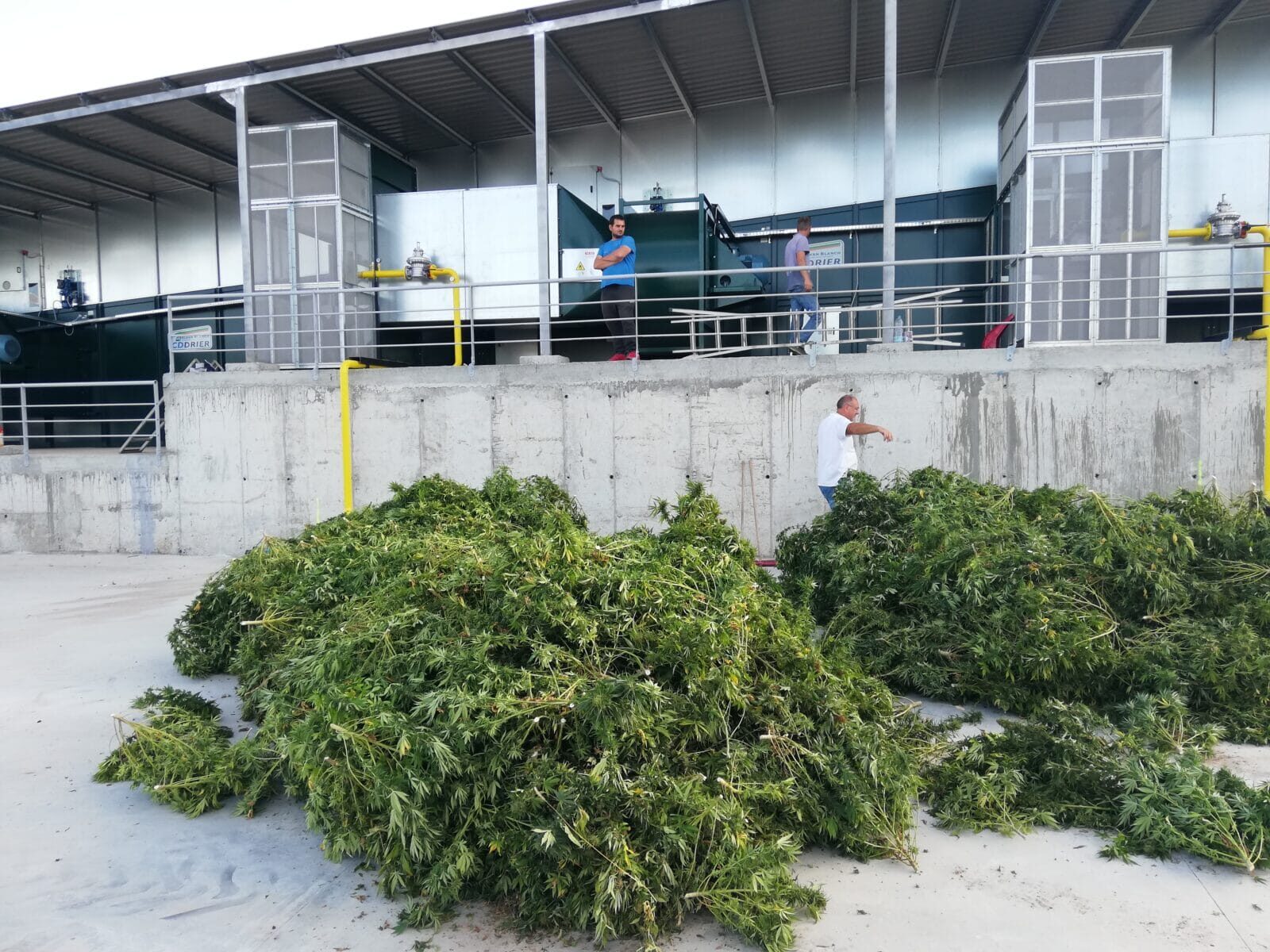
Industrial hemp is a versatile technical crop cultivated on a commercial scale in many countries. Regulatory frameworks governing its production have evolved significantly in recent years, with permitted THC thresholds varying by jurisdiction — typically 0.2% in the EU and 0.3% in countries such as Canada and the United States.
As legal frameworks continue to be updated and harmonised internationally, the industrial hemp sector is experiencing steady growth. Producers are investing in professional drying infrastructure to handle increasing volumes and maintain consistent product quality.
The maximum permissible THC content in industrial hemp is a critical parameter that determines variety selection and market access. In the EU, the current threshold is 0.2%, while Canada, the USA, and China permit up to 0.3%. These limits directly influence which cultivars are economically viable for large-scale production.
Medicinal Hemp
In the hemp cultivation industry, the most commercially attractive product is medicinal hemp rather than industrial hemp. The profitability of medicinal hemp is significantly higher than that of fibre and seed varieties.
Regulatory reforms in many countries are opening new opportunities for medicinal cannabis cultivation and processing. These frameworks typically regulate not only the consumption of medicinal cannabis but also the cultivation and import of raw materials for pharmaceutical manufacturing.
Numerous companies — both domestic producers and international investors — have shown strong interest in this sector. Construction of dedicated cannabis cultivation facilities is underway across multiple countries, reflecting growing confidence in the long-term market outlook.
A dryer is a critical piece of equipment in hemp production. The freshly harvested crop contains very high moisture content which must be removed to ensure product quality, safety, and shelf life. The choice of dryer technology has a significant impact on the final product.
What hemp dryer solutions does Finpro offer?
Rotary Drum Dryers for Hemp
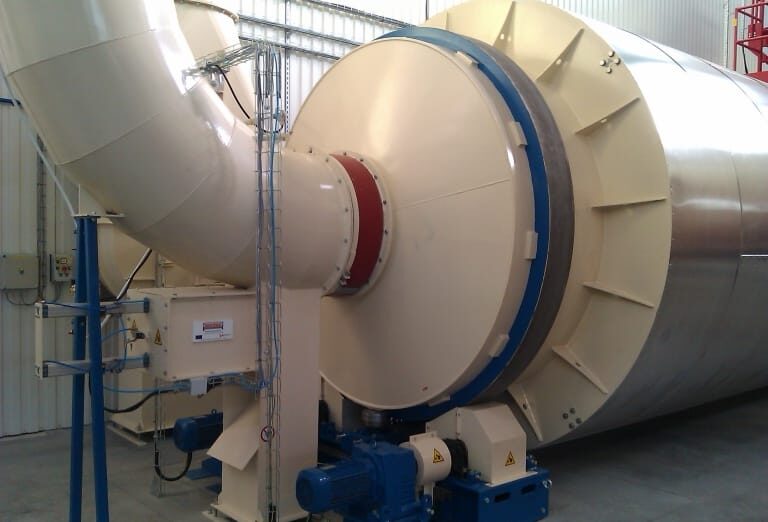
Rotary drum dryers have a number of well-known drawbacks, for example:
- Drum dryers are more demanding in terms of infeed particle size. While a conveyor dryer can accept hemp chopped to 20 cm, a drum dryer ideally requires material no longer than 5–10 cm.
- Due to the use of very high air temperatures (up to 250°C and above), the quality of hemp dried in a rotary drum dryer is generally lower.
- Drum dryers are not equipped with heat recovery and recirculation systems, which would otherwise deliver significant fuel savings.
…and so on.
Nevertheless, rotary drum dryers remain popular as a well-established and familiar technology.
Conveyor Dryers for Hemp with a Turner
Modern conveyor drying technology offers a range of advantages not available with rotary drum technology.
1. HEMP QUALITY
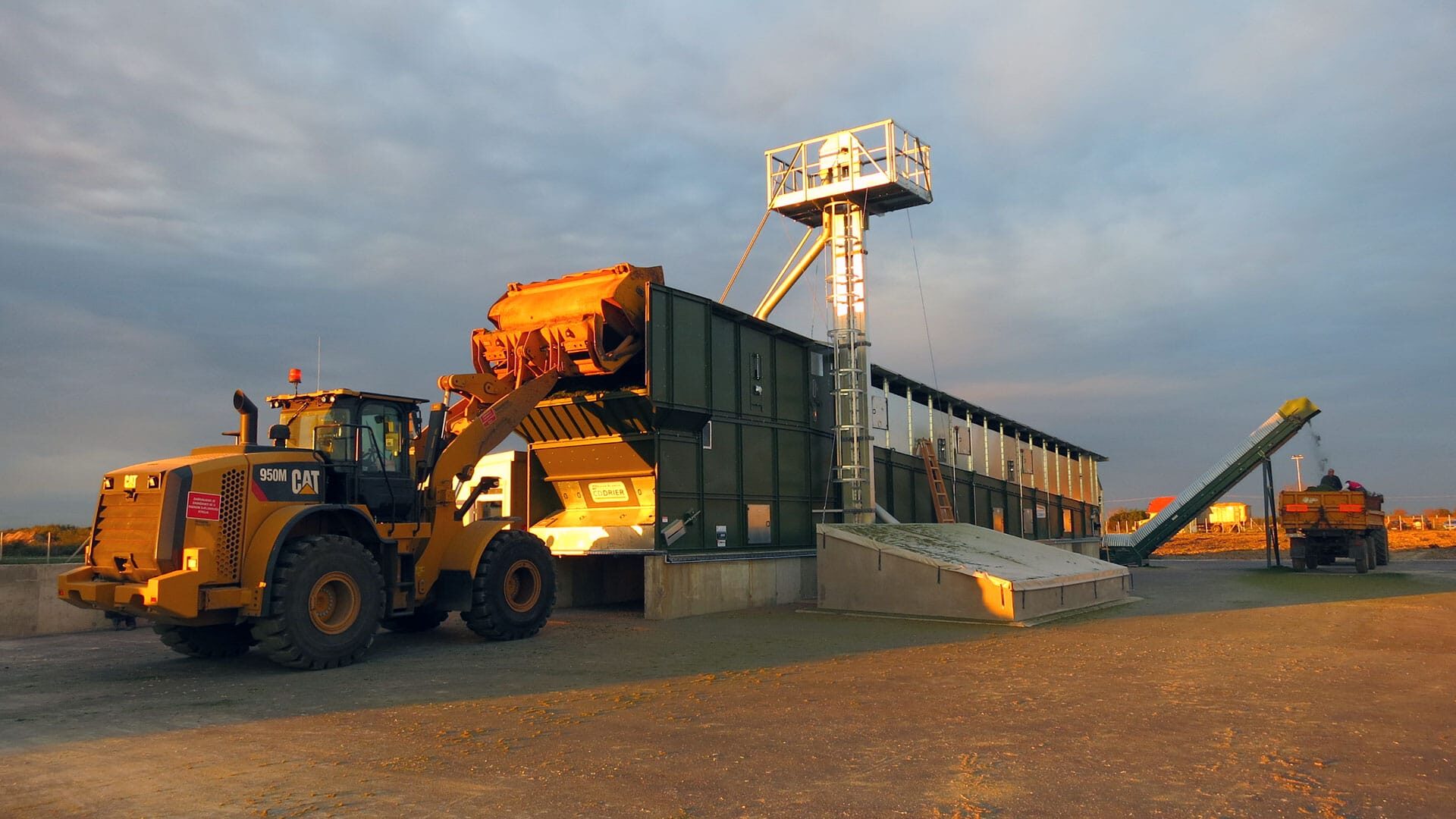
Conveyor dryers produce hemp of significantly higher quality thanks to low-temperature drying regimes, gentle product handling, and the absence of clumping or overheating.
2. LOW-TEMPERATURE HEAT
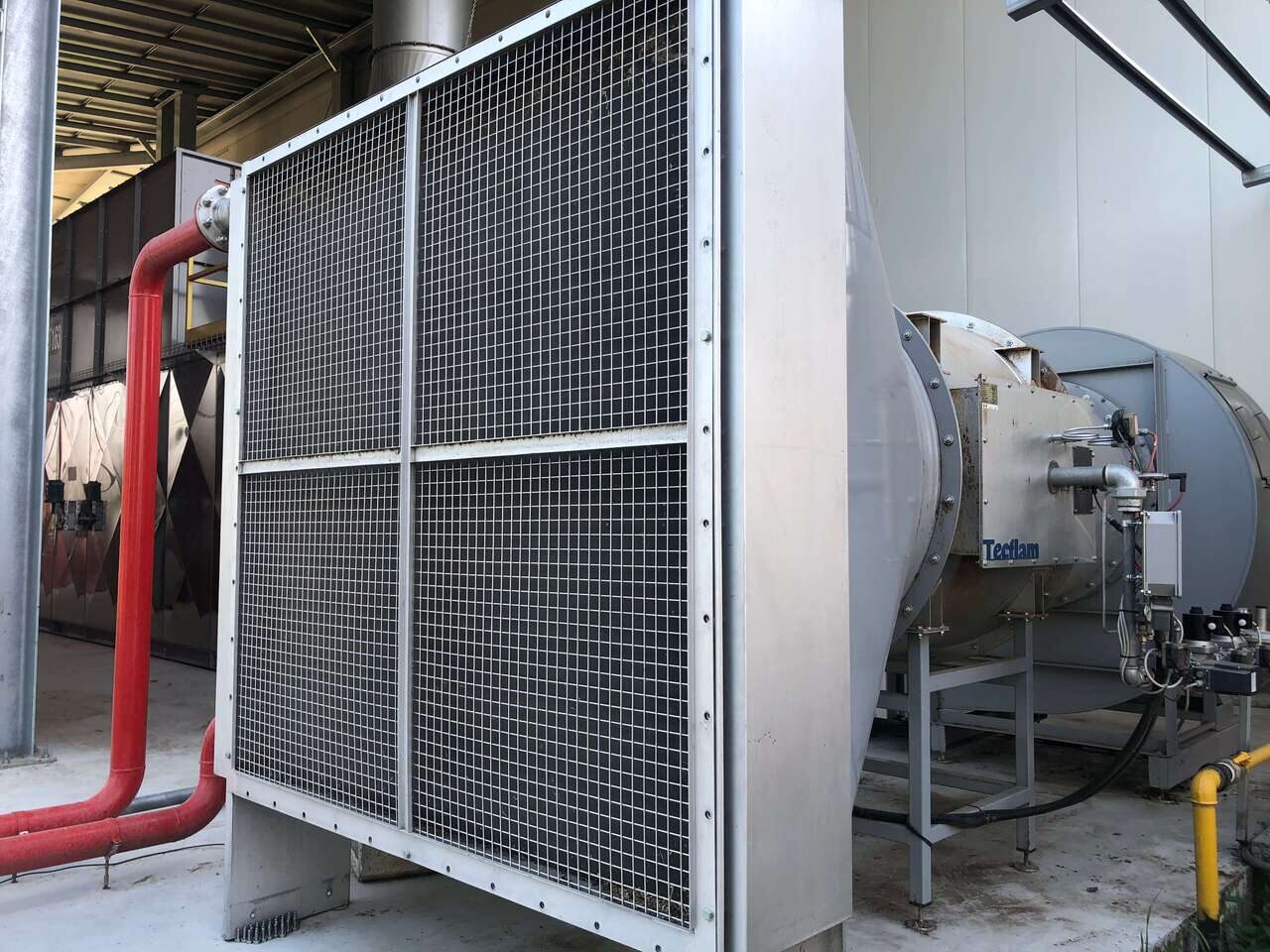
Thanks to the gentle drying regime, conveyor dryers are compatible with not only conventional high-temperature fuel sources (gas, diesel, solid fuel) but also low-temperature heat sources (steam and hot-water heat exchangers, waste heat from CHP units or ORC cycles, etc.). Combinations of heat sources are also possible.
3. VERSATILITY
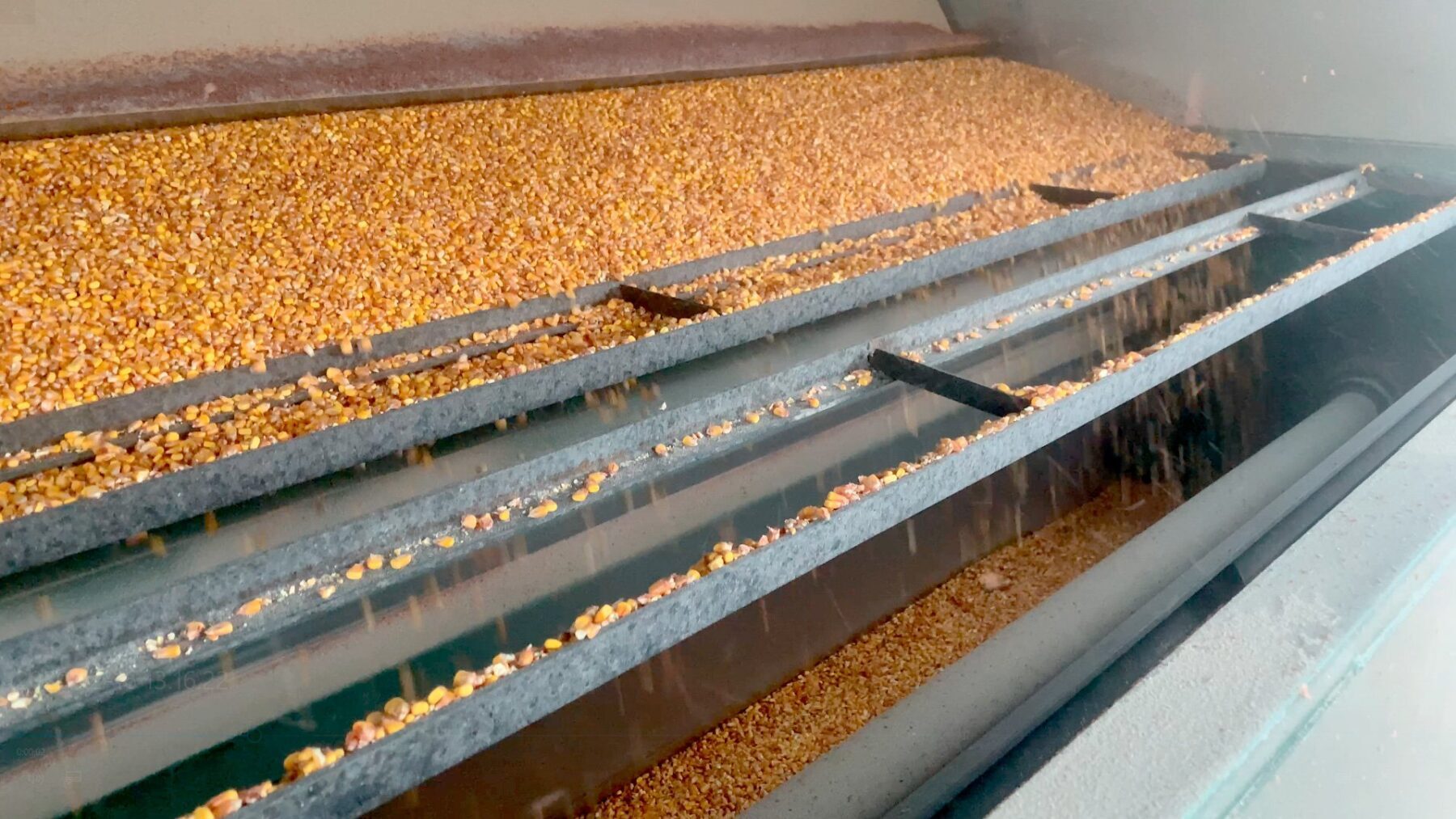
Conveyor dryers are considerably more versatile and flexible than rotary drum dryers. In addition to hemp, a wide range of other products can be dried in the same machine, for example: alfalfa, grape seeds and other fruit kernels, pumpkin seeds, fruit or vegetable pulp and peels, medicinal, aromatic and other herbs, grain, mushrooms, biogas digestate, sewage sludge, wood chips and sawdust. These are just a few examples.
4. MOISTURE UNIFORMITY
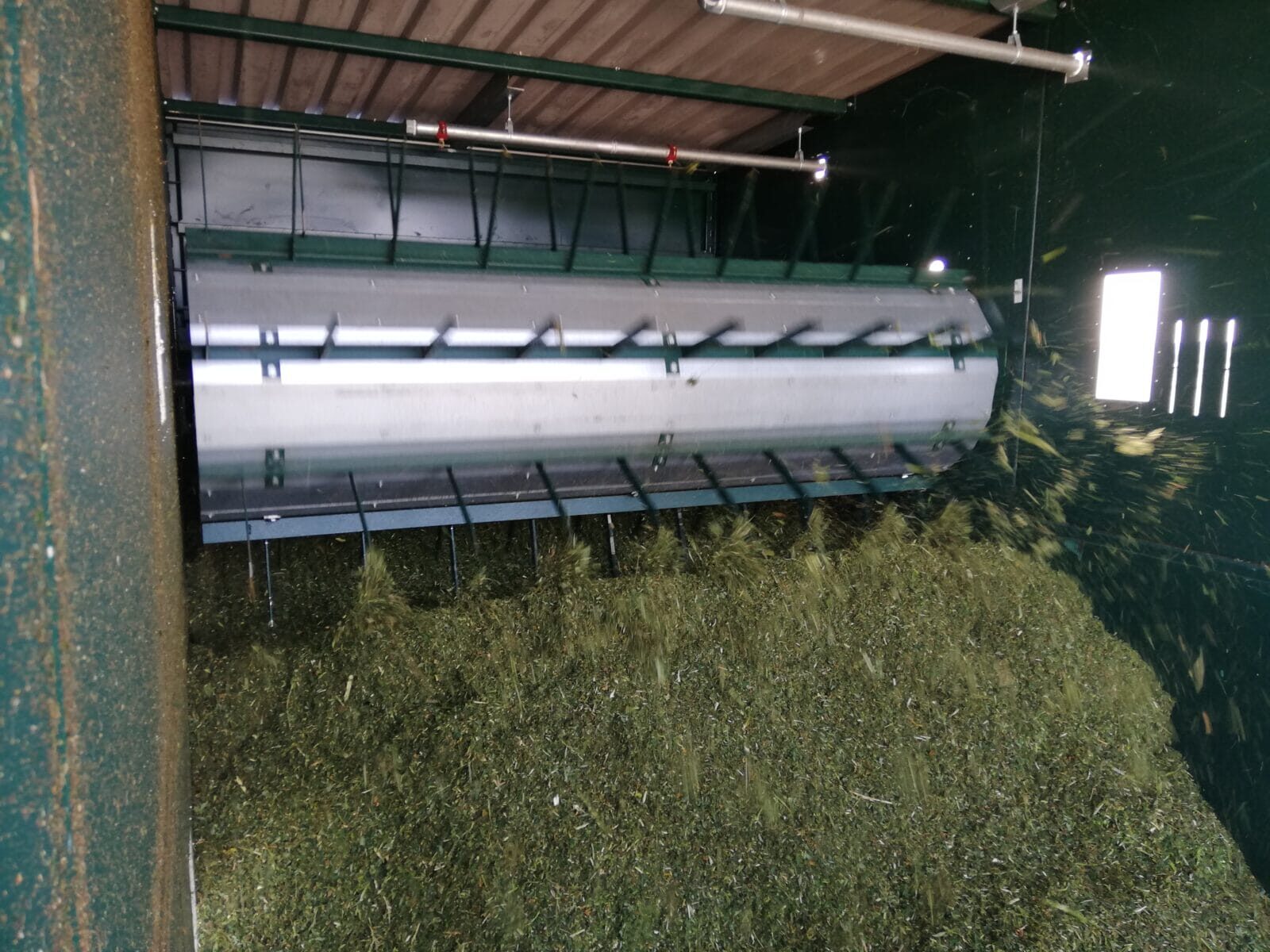
Conveyor dryers for hemp achieve maximum moisture uniformity in the final product, as the material progresses along the belt at a controlled, even rate and every batch is exposed to the drying agent for a precisely defined duration. During drying, the product is turned by dedicated turner units and also mixed when it transitions from the upper belt to the lower belt. Although conveyor dryers are equipped with turners, this should not be a cause for concern. The turners are specifically designed for maximally gentle hemp drying — featuring soft tines rotating at a very low speed to preserve product quality.
5. EASE OF DELIVERY AND INSTALLATION
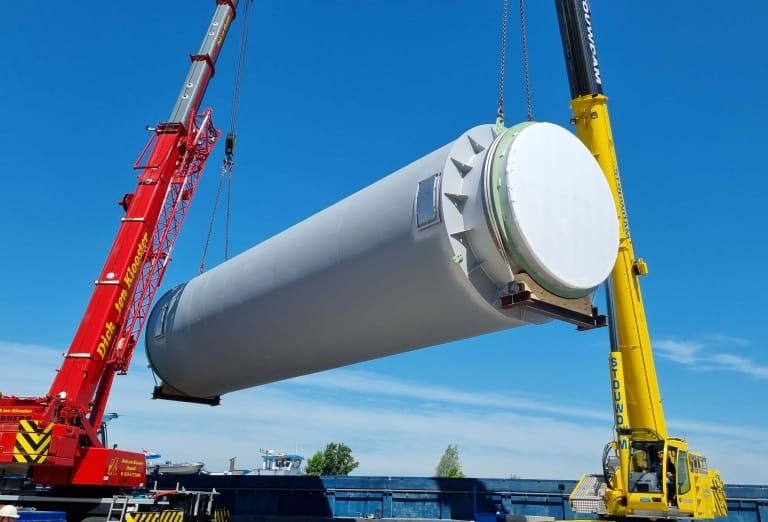
Unlike rotary drum dryers — which require special wide-load transport and involve complex crane-assisted unloading and installation — conveyor dryers are delivered by standard curtain-sided trucks and can be installed with virtually no lifting equipment.
6. MINIMAL MAINTENANCE AND REPAIRS
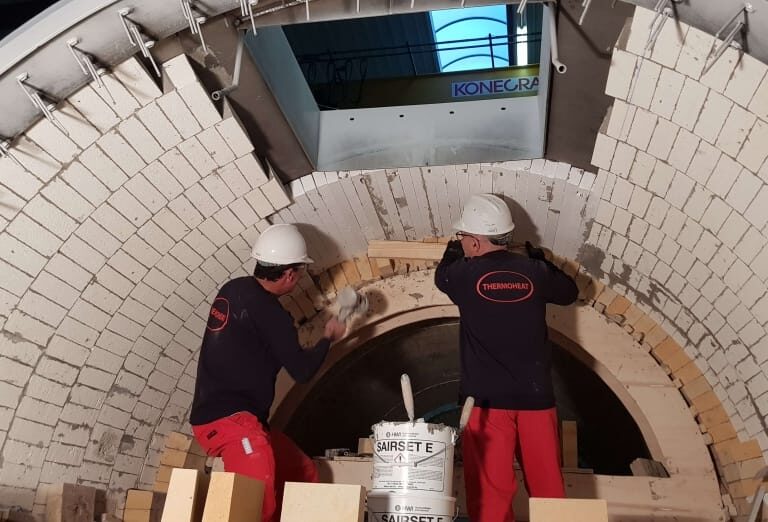
A rotary drum dryer rotates a large, heavy drum lined with refractory bricks. This leads to rapid wear of moving mechanisms and friction-loaded metal components, resulting in high operating costs.
In a conveyor dryer, by contrast, the product moves horizontally on belts driven by low-power motors. As a result, maintenance does not require costly work or materials.
Thanks to these advantages and competitive pricing, conveyor dryers are steadily displacing rotary drum dryers across Europe.
If you are looking for hemp drying equipment, we recommend considering the more modern, energy-efficient and versatile conveyor technology.
Solutions for Smaller Operations
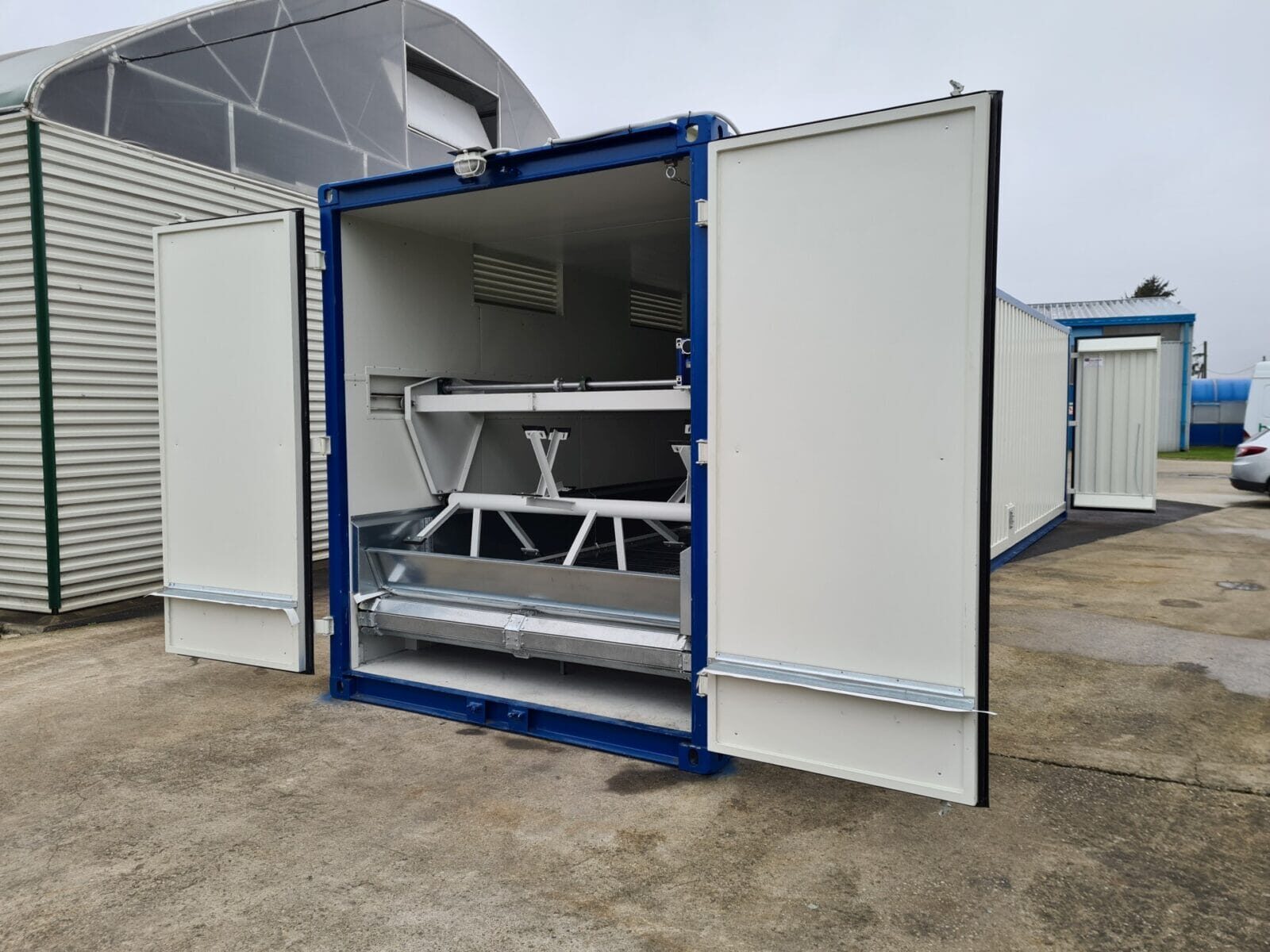
We also offer solutions for those with smaller hemp production volumes or those just starting out in this field. These are containerised mobile and stationary batch floor dryers from the Croatian manufacturer Herbas.
Belt conveyor areas range from 13 m2 to 40 m2. All Herbas dryers are fitted with a solid-fuel heat generator or a diesel burner with a heat exchanger.
A moving floor simplifies loading and unloading of the dryer. The turner, which moves back and forth during the drying process, ensures thorough product mixing for maximum final moisture uniformity.
A defining feature of Herbas dryers is their unique heat recirculation system. The system automatically monitors the temperature and humidity of the exhaust air and, based on these parameters, smoothly adjusts the volume of recirculated air.
Our Hemp Dryers
We supply both types of hemp dryers — rotary drum dryers from Starmax (Turkey) and conveyor dryers from Alvan Blanch (UK), Scolari (Italy), and Herbas (Croatia).
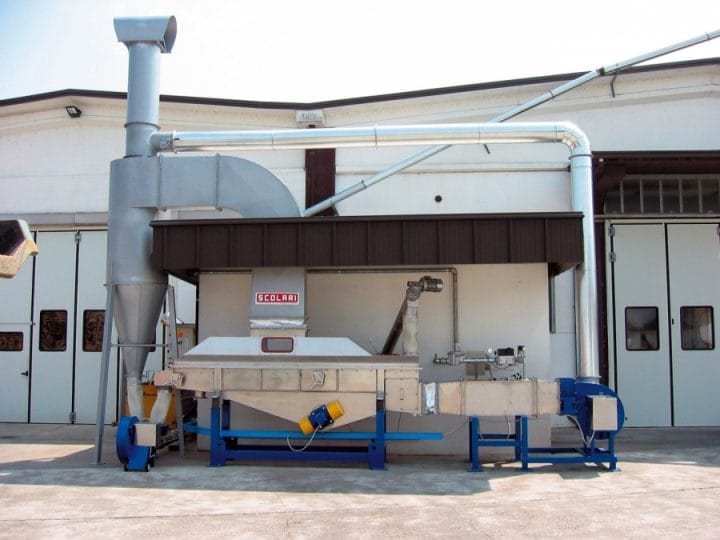
Scolari Vibratory Dryers
Italian Scolari vibratory dryers create an artificial boiling layer of the material being dried, which allows it to be blown through from all sides and effectively remove surface moisture. Suitable for materials with surface moisture, granulated products, or flowing powders.
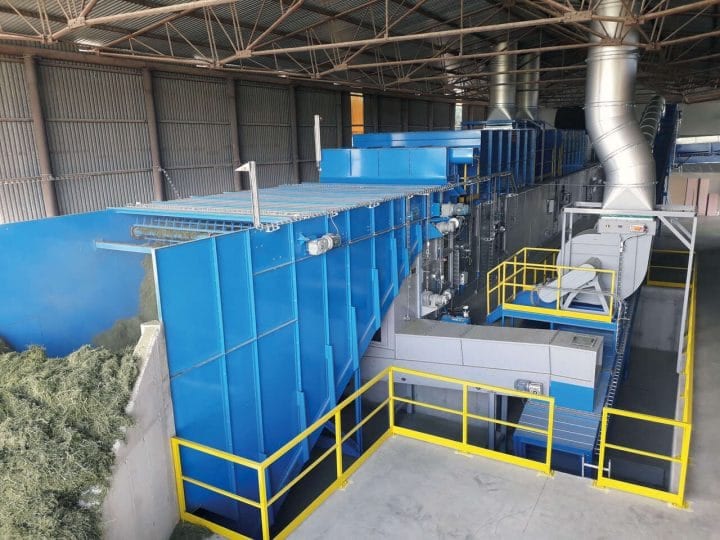
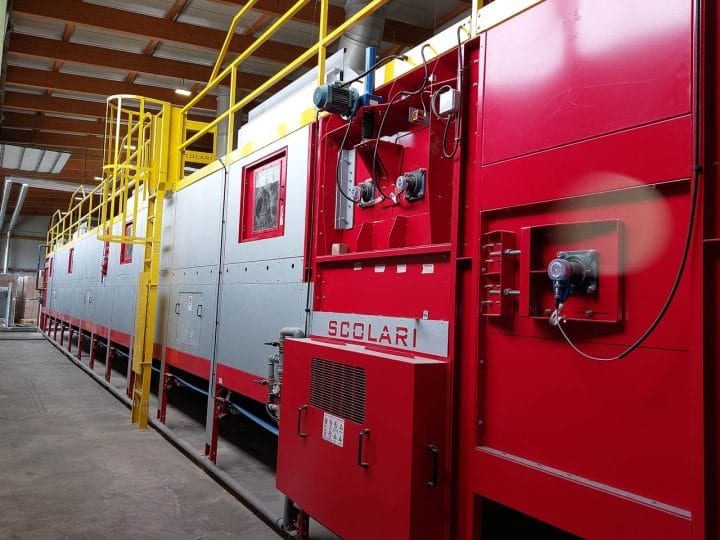
Scolari Dryer With Movable Conveyor Belt
Horizontal dryers feature perforated steel or plastic movable floors designed for drying various materials. Airflow can be configured from top to bottom or vice versa.
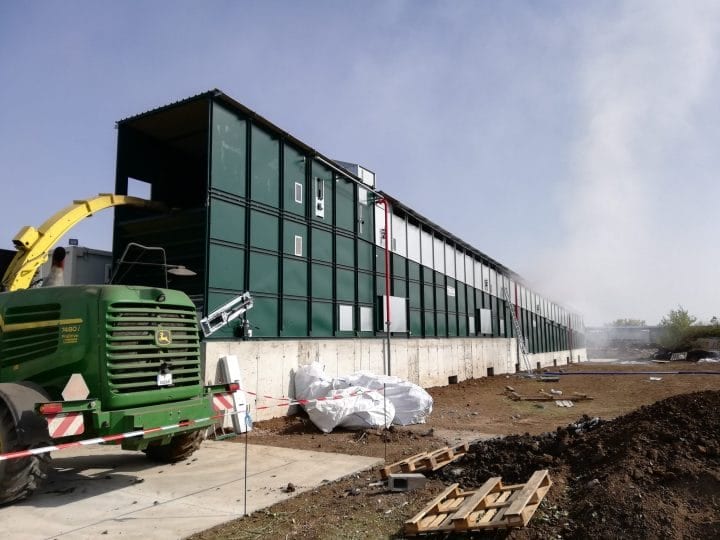
Alvan Blanch Conveyor Dryer
British universal conveyor dryers for non-grain agricultural and industrial products. Thanks to their horizontal design, built-in distribution and stirring systems, they can dry a wide range of materials.
Read Also
All our articles on drying and processing equipment

Whether you are planning a new processing facility or already operating one, this section provides valuable information on drying and handling equipment — its features, maintenance, selection, and use.
Still Have Questions? Contact Us!
By Phone
WhatsApp: +90 (536) 452-1184By E-mail
Our address: info@finpro.engineering
Our Products
Universal Dryers
These dryers can be customized to dry any industrial or agricultural product you may require. Depending on the specific product and its moisture content, the dryers can be equipped with mixers, movable floors, vibrating floors, and other advanced technologies.
Grain Dryers
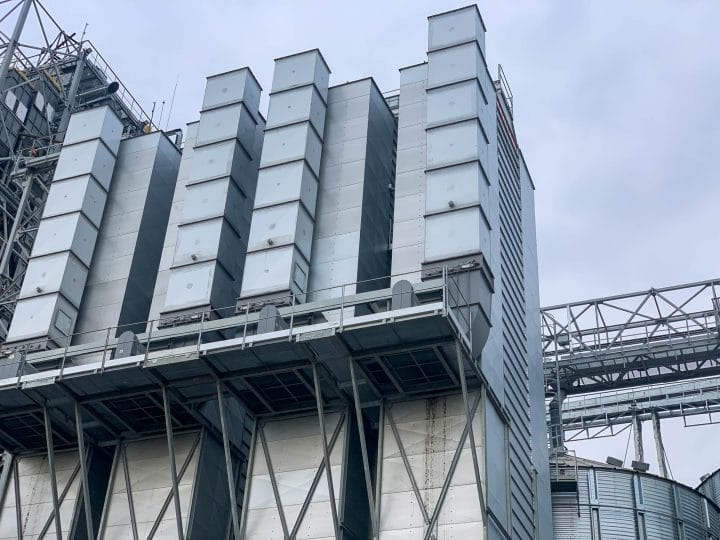
Authorized representative for top European grain dryer manufacturers like Alvan Blanch, FAO, and Agrex. Offering a full range of advanced drying solutions for agriculture.
Contact Us
If you are interested in purchasing any of our products, need a price quotation, or have any questions, comments, or suggestions, please do not hesitate to contact us via our contact form, by phone, or by email.
- WhatsApp: +90 (536) 452-1184
- E-mail: write to us
Our phones:
- Kazakhstan: +7 (747) 095-1626
- Moldova: +373 (22) 011-214
- Romania: +40 (31) 229-8484
- Türkiye: +90 (536) 452-1184 (English)
- Ukraine: +380 (67) 111-6668